The atmosphere at Augusta National Golf Club during the 2026 Masters Tournament carried an unmistakable weight, one that extended far beyond the azaleas in bloom or the familiar roll of the greens. For the second consecutive year, Tiger Woods was absent, and his missing presence left a void that no amount of competitive drama could fully disguise. Rory McIlroy, the defending champion and host of the prestigious Champions Dinner, stood before reporters with visible emotion as he addressed the situation. His voice cracked slightly when he spoke of his close friend, the words laced with genuine regret and affection.
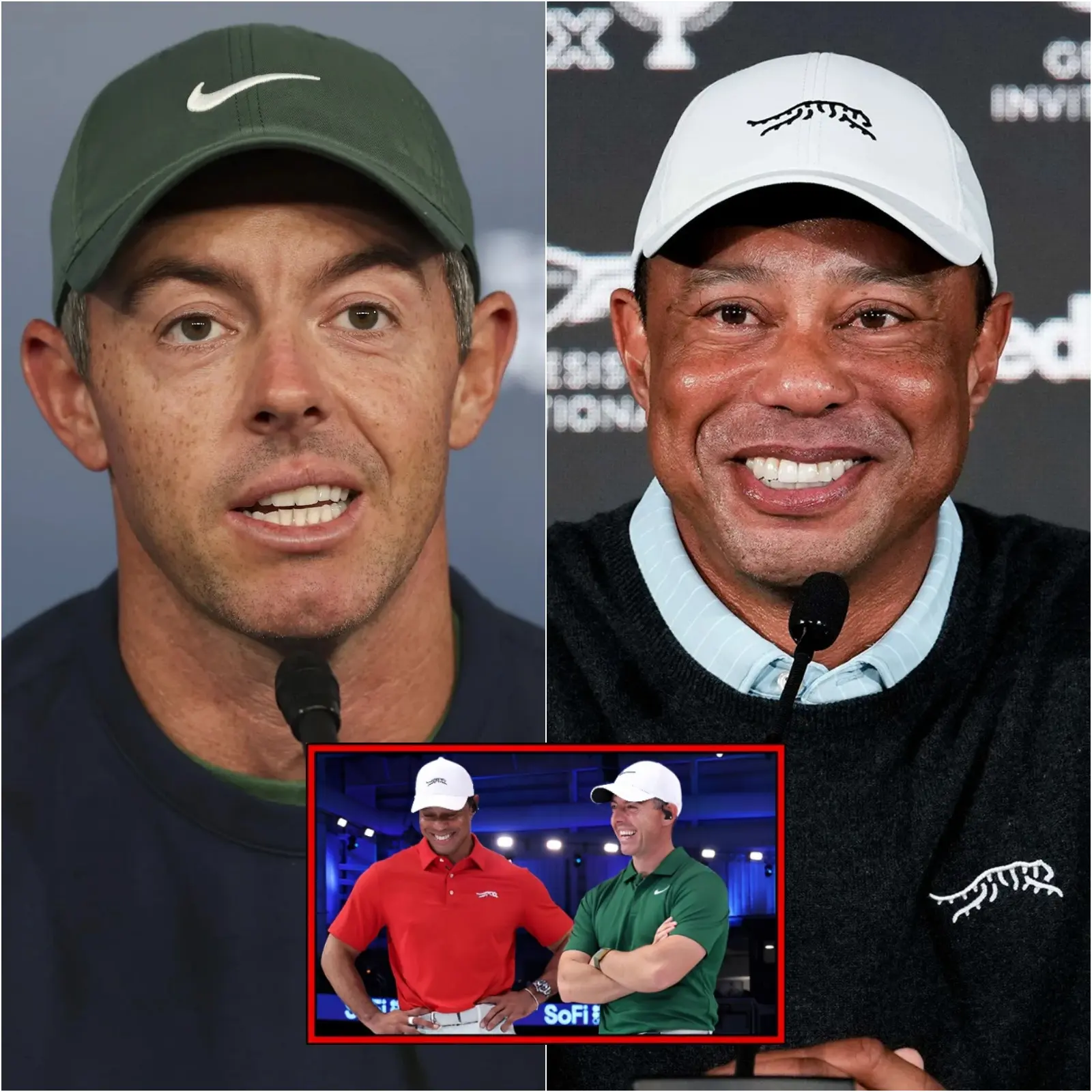
“We miss you so much, Tiger…” McIlroy said, pausing to gather himself. It was a raw moment that captured what so many in the golf world were feeling: the tournament was still the Masters, but without Woods, it felt as though a vital piece of its soul had been stripped away.
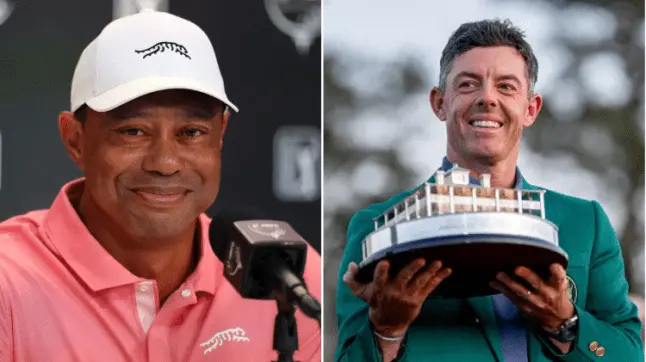
Woods, a five-time Masters champion and one of the most transformative figures in the history of the sport, had not competed at Augusta since his remarkable but ultimately limited showing in 2024. Injuries had plagued him for years—back surgeries, leg issues, and the lingering effects of that devastating 2021 car accident that nearly cost him his right leg. The 2025 Masters came and went without him as he recovered from an Achilles procedure. Fans hoped 2026 would mark a return, even if only in a ceremonial capacity or a limited competitive role.
Woods had hinted at his desire to be part of the week, including involvement with The Loop, the short course he helped design nearby. But life intervened in the most public and painful way.
On March 27, 2026, Woods was involved in a rollover car crash near his home in Jupiter Island, Florida. He was arrested and charged with driving under the influence. Details emerged gradually: medication in his system, a history of physical pain that had long required management, and the immense pressure of a life lived under constant scrutiny. Woods quickly issued a statement announcing he would be stepping away from golf “for a period of time” to focus on his health and seek treatment. Reports placed him at an in-patient facility in Switzerland, prioritizing recovery over competition or public appearances.
He pleaded not guilty to the DUI charge, but the decision to step back was clear and, by all accounts, necessary.
The golf community reacted with a mixture of concern, support, and quiet sorrow. At Augusta, where Woods had delivered some of the most iconic moments in the tournament’s history—his 1997 breakthrough victory by 12 strokes as a 21-year-old phenom, the dramatic 2019 comeback that cemented his legacy as one of the greatest to ever play—the absence was palpable. Players, caddies, and patrons alike spoke of how the grounds felt emptier. Jason Day, who once called Woods his hero, admitted it was difficult to watch someone he admired struggle so openly.
Bubba Watson and others echoed similar sentiments, noting that Tiger’s gravitational pull on the sport had always made every event feel bigger. Even Fred Ridley, the chairman of Augusta National, and the PGA Tour offered messages of support, emphasizing health and well-being above all else.
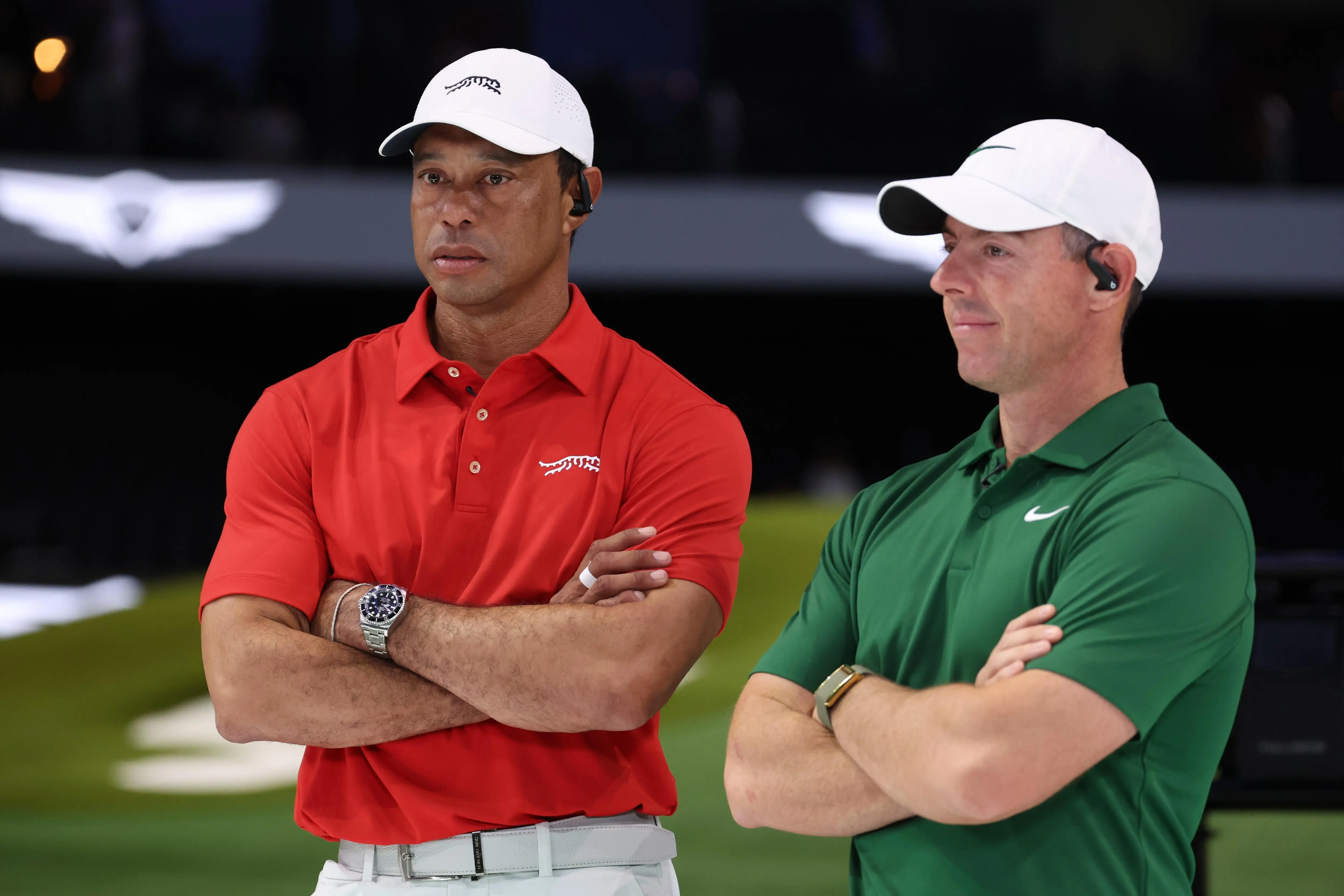
McIlroy’s comments resonated deeply because they came from a place of authentic friendship. The two men, despite their generational difference and occasional on-course rivalry, had developed a genuine bond over the years. McIlroy had often spoken of what Woods meant to him—not just as a competitor who raised the bar for everyone, but as a mentor figure who reshaped professional golf. During the Champions Dinner on Tuesday night, hosted by McIlroy as the reigning champion, he made a point to acknowledge both Woods and Phil Mickelson, who was also absent due to a family health matter.
It marked the first time since 1994 that neither Woods nor Mickelson was part of the field or the traditional gathering. McIlroy kept his remarks brief but heartfelt, describing the dinner as the most exclusive club in sport and expressing gratitude while ensuring the two legends were not forgotten. Those in attendance said he struck exactly the right tone—respectful, warm, and free of unnecessary drama.
The tournament itself proceeded with its usual pageantry, but conversations inevitably circled back to Woods. Fans gathered around the practice areas and in the galleries whispered about his legacy and the uncertainty of his future. Would he return to competitive golf? At 50 years old, with a body that had endured more surgeries and setbacks than most could imagine, the path forward was anything but certain. Some speculated about retirement, others about a possible senior tour appearance or a ceremonial role at future Masters.
Woods had defied odds before—his 2019 Masters win remains one of the most stirring comebacks in sports history—but this latest chapter involved deeper, more personal battles.
What took many by surprise in the days following McIlroy’s emotional remarks was a development that shifted the narrative in an unexpected direction. While still in treatment and maintaining a low profile, Woods released a short but significant update through his representatives. He expressed deep appreciation for the outpouring of support from fans, fellow players, and the golf community at large. More notably, he confirmed that his focus remained squarely on long-term health and recovery, but he also hinted at a renewed perspective on life beyond the ropes.
Those close to him suggested that the time away had prompted reflection not only on his physical well-being but on his overall purpose—perhaps opening the door to new ways of contributing to the game he had dominated for so long.
This news, modest as it was, sparked a wave of cautious optimism mixed with ongoing concern. Golf analysts debated whether Woods could realistically mount another competitive comeback or if his greatest contributions moving forward would be off the course: through his foundation work, course design, or mentoring the next generation. His TGL involvement earlier in the year had shown flashes of the old fire, but the body—and now the broader life circumstances—demanded respect.
The crash and its aftermath served as a stark reminder that even the most indomitable figures in sport are human, vulnerable to the same struggles as anyone else.
As the 2026 Masters unfolded, with McIlroy in the mix as defending champion and a strong field battling for the green jacket, the sport continued its march forward. Scottie Scheffler, Xander Schauffele, and others delivered compelling performances, reminding everyone that golf remains rich with talent. Yet the shadow of Woods loomed large. His absence underscored how much one individual had elevated the game’s global profile, drawing in casual fans and corporate sponsors alike during his prime.
Television ratings, sponsorship interest, and even attendance at events had long carried a “Tiger factor.” Without him at Augusta, the energy felt subtly subdued, even as the competition remained world-class.
Looking ahead, the uncertainty surrounding Woods’ return adds layers of intrigue to future majors. The 2027 Masters will no doubt carry heightened anticipation if he signals any intent to play. In the meantime, the golf world rallies around him with messages of encouragement. McIlroy’s public show of emotion served as a poignant emblem of that support— a bridge between generations and a reminder that rivalries on the course often blossom into friendships off it. Woods has always been a fighter; his career is defined by resilience in the face of physical pain, personal turmoil, and immense expectation.
This latest challenge, while different in nature, tests that same spirit.
For fans who grew up watching Woods redefine excellence, the current chapter evokes a complex mix of nostalgia and empathy. They remember the fist pumps, the impossible shots from the rough, the way he commanded the leaderboard with sheer will. They also recognize the toll that greatness can exact. The Masters without Tiger feels different because, in many ways, the modern era of the tournament was built in his image. His five green jackets tell only part of the story; the broader impact on participation, diversity in the sport, and its cultural relevance carries his fingerprints everywhere.
As the final rounds of the 2026 Masters played out under the Georgia pines, one truth stood clear: the game moves on, but it does so while carrying the weight of its history. Rory McIlroy’s words lingered in the air long after they were spoken. They were not just about missing a friend or a legend at one tournament; they reflected a deeper appreciation for what Woods has meant to everyone who loves golf. The hope, shared quietly by millions, is that Tiger finds the peace and strength he needs during this time away.
When—or if—he chooses to step back into the spotlight, the welcome will be warm and the galleries loud.
In the end, the 2026 Masters will be remembered for its champions on the course, but also for the quiet acknowledgment of a missing giant. The tournament endures, azaleas bloom, and putts roll true, yet the soul of the event feels incomplete without the man who once made Sunday at Augusta feel like the center of the sporting universe. Tiger Woods’ journey is far from over, and the golf world waits, with patience and respect, for the next chapter—whatever form it may take. His influence, after all, has never been confined to the leaderboard alone.
It lives in the hearts of players like McIlroy, in the dreams of aspiring juniors, and in the collective memory of a sport forever changed by his presence.