Was the referee biased and deliberately handing the win to the Blues?
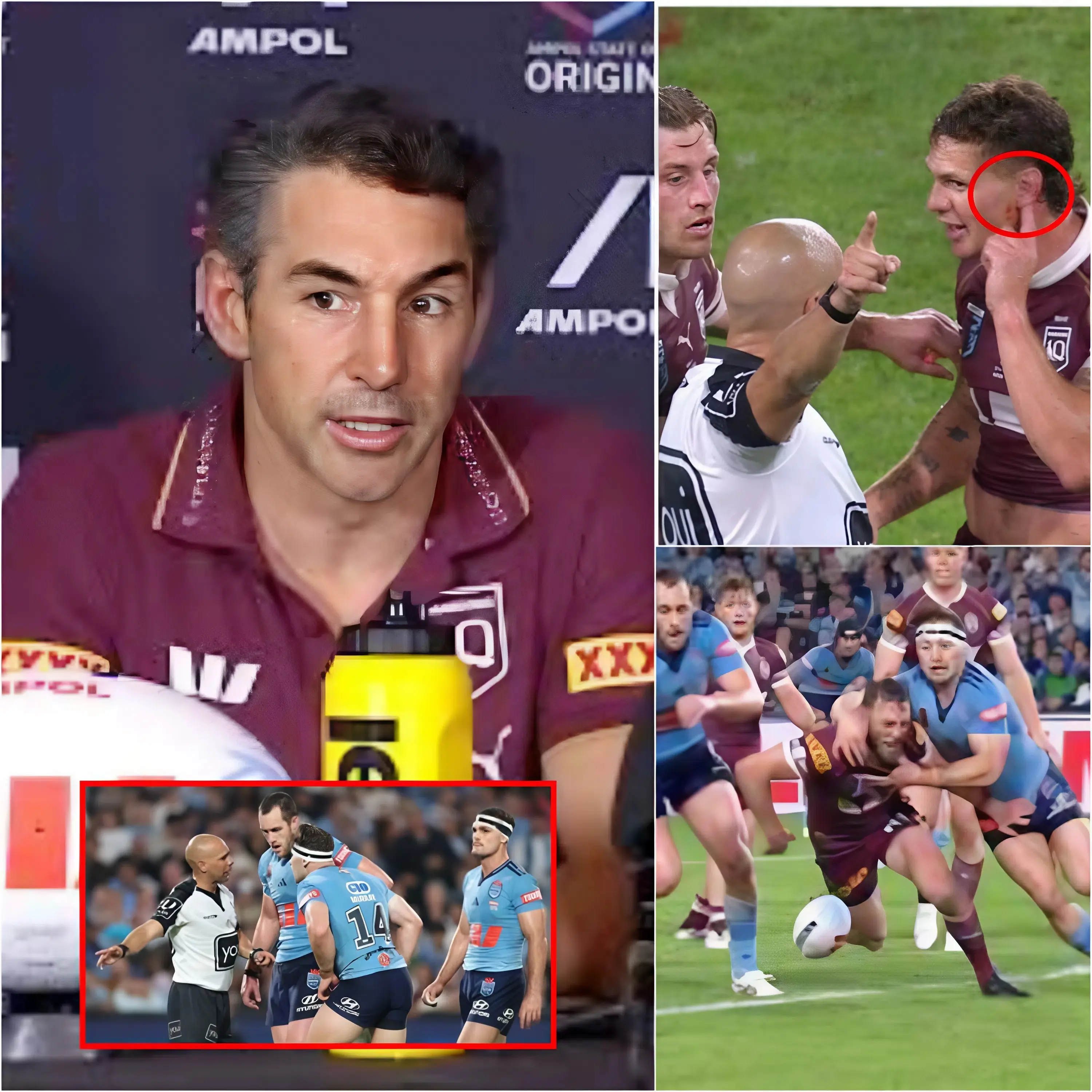
The final whistle had barely sounded at Accor Stadium when Queensland Maroons coach Billy Slater stormed into his post-match press conference, his face flushed with fury. His side had just suffered one of the most heartbreaking collapses in State of Origin history, blowing a 20-0 lead to lose 22-20 to the New South Wales Blues in Game One of the 2026 series. But Slater was not simply lamenting missed opportunities or individual errors.
He was pointing an accusatory finger directly at referee Ashley Klein and the officiating crew, claiming they had been excessively harsh on his Queensland players while turning a blind eye to repeated infringements by the Blues.
The match itself had been a rollercoaster of epic proportions. Queensland exploded out of the blocks, racing to a 20-0 lead inside the first 20 minutes with tries to Robert Toia, Thomas Flegler and Hamiso Tabuai-Fidow, all converted by Sam Walker. The Maroons looked every bit the defending champions, overwhelming a sluggish New South Wales side that had been expected to start strongly on home soil. Nathan Cleary and the Blues eventually clawed one try back through Hudson Young before halftime, but at the break it still felt like Queensland were in total control.
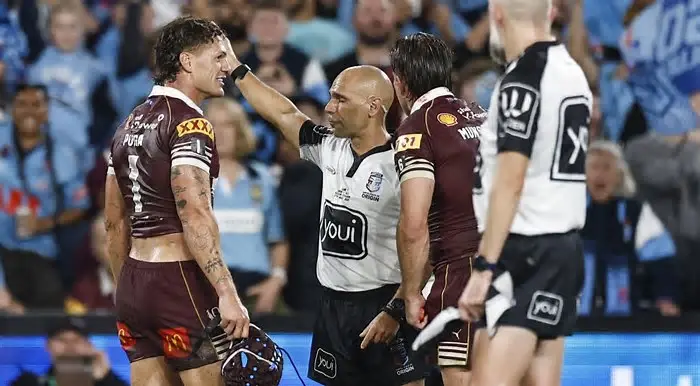
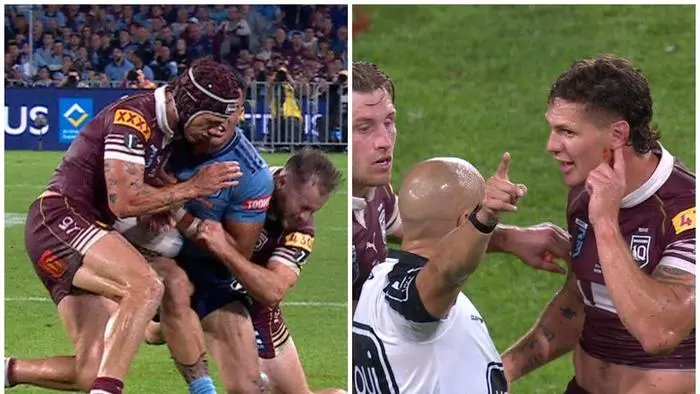
Everything changed in the 57th minute. Fullback Kalyn Ponga, one of Queensland’s most dangerous attacking weapons, was shown a red card for a shoulder charge on debutant NSW winger Tolu Koula. The contact was high, Koula was substituted with concussion symptoms, and after a lengthy bunker review referee Klein overruled the initial sin-bin recommendation and sent Ponga from the field. It was only the seventh send-off in Origin history. Suddenly playing with 12 men for the final 23 minutes, Queensland’s lead evaporated.
Ethan Strange crossed for NSW in the 62nd minute, Cleary added his own try nine minutes later, and with seconds remaining Cleary’s perfectly weighted bomb was plucked from the air by James Tedesco, who juggled and grounded the ball for the match-winning try. The 79,000-strong crowd erupted as the Blues completed the greatest comeback in Origin history.
Slater, however, refused to accept the narrative that Queensland had simply been out-fought after the numerical disadvantage. In a fiery outburst that has sent shockwaves through the rugby league community, he accused Klein of applying inconsistent standards throughout the contest. “The referee was too harsh on my team but lenient on fouls committed by NSW players,” Slater declared, his voice tight with emotion. He cited multiple instances where Queensland forwards were penalised for what he described as “marginal” contact, while high shots and obstruction attempts from the Blues went unpunished.
The Ponga send-off, in Slater’s view, was the most egregious example – a decision that effectively decided the match when the bunker had already indicated a lesser penalty.
The real bombshell, however, came when Slater alluded to a private post-match exchange with New South Wales captain and lock Cameron Murray. According to sources close to the Queensland camp, Slater confronted Murray in the tunnel area after the players had left the field. What transpired in that heated conversation has not been fully disclosed, but Slater’s cryptic references during his press conference suggested Murray had made comments that confirmed the Queensland coach’s suspicions of officiating bias. League insiders claim the exchange became “very animated” and that Murray’s responses left Slater convinced the refereeing had not been impartial.
The mere mention of the private discussion has rocked the NRL, with fans, players and commentators now speculating wildly about what was actually said and whether it points to a deeper problem with how big games are officiated.
Social media erupted within minutes. Hashtags questioning Klein’s integrity trended across Australia, with Queensland supporters flooding timelines with replays of alleged missed calls against the Blues. New South Wales fans hit back, arguing the Ponga send-off was clear-cut and that Queensland’s early dominance had been built on their own ill-discipline. Former players weighed in on both sides. Darren Lockyer expressed shock at the red card, while Paul Gallen bluntly stated the Blues “don’t win that game unless Ponga gets sent off.” The debate quickly moved beyond one match and into broader questions about Origin’s reputation for controversial officiating.
The implications stretch far beyond Game One. With the series now sitting at 1-0 to New South Wales and Game Two scheduled for the Melbourne Cricket Ground on June 17, pressure on the NRL’s match officials has never been higher. Queensland, already without several key players through injury and now facing the psychological blow of this collapse, must regroup quickly. Slater’s public criticism, combined with the mysterious exchange with Murray, has placed the league’s integrity under intense scrutiny.
Calls for an independent review of the officiating have already begun, and there is genuine concern that the “crazy twist” Slater alluded to could overshadow preparations for the decider.
Historically, State of Origin has always thrived on passion, physicality and controversy. From the infamous “blood bin” incidents of the 1980s to more recent high-profile refereeing decisions, the series has never shied away from drama. Yet the 2026 opener has taken things to another level. Slater’s fury, the disputed Ponga dismissal, the unpunished NSW infringements and the explosive private conversation with Murray have combined to create a perfect storm of accusations and counter-accusations.
As the dust settles, one question remains front and centre: was the referee simply making difficult calls in a high-pressure environment, or was there something more deliberate at play that handed the Blues a victory they might not have earned on merit alone? Billy Slater clearly believes the latter. Whether the NRL investigates the claims or simply moves on, the shadow of that post-match exchange with Cameron Murray will linger over the rest of the series. For Queensland, the task is now clear – prove on the field in Melbourne that they were the better team all along.
For the rest of the rugby league world, the debate over bias, consistency and the true cost of one referee’s whistle will continue long after the final siren of Game Three.
The 2026 Origin series has already delivered the kind of theatre that makes this interstate clash the greatest in Australian sport. But with accusations of deliberate favouritism now swirling, the real test may be whether the game itself can emerge unscathed from one of its most dramatic and divisive nights in recent memory.