The bizarre moment when a jockey decided to run alongside his horse in the middle of a race… but quickly regretted it sparked outrage among fans. This ignited a wave of debate among horse racing fans and the equestrian community on social media.
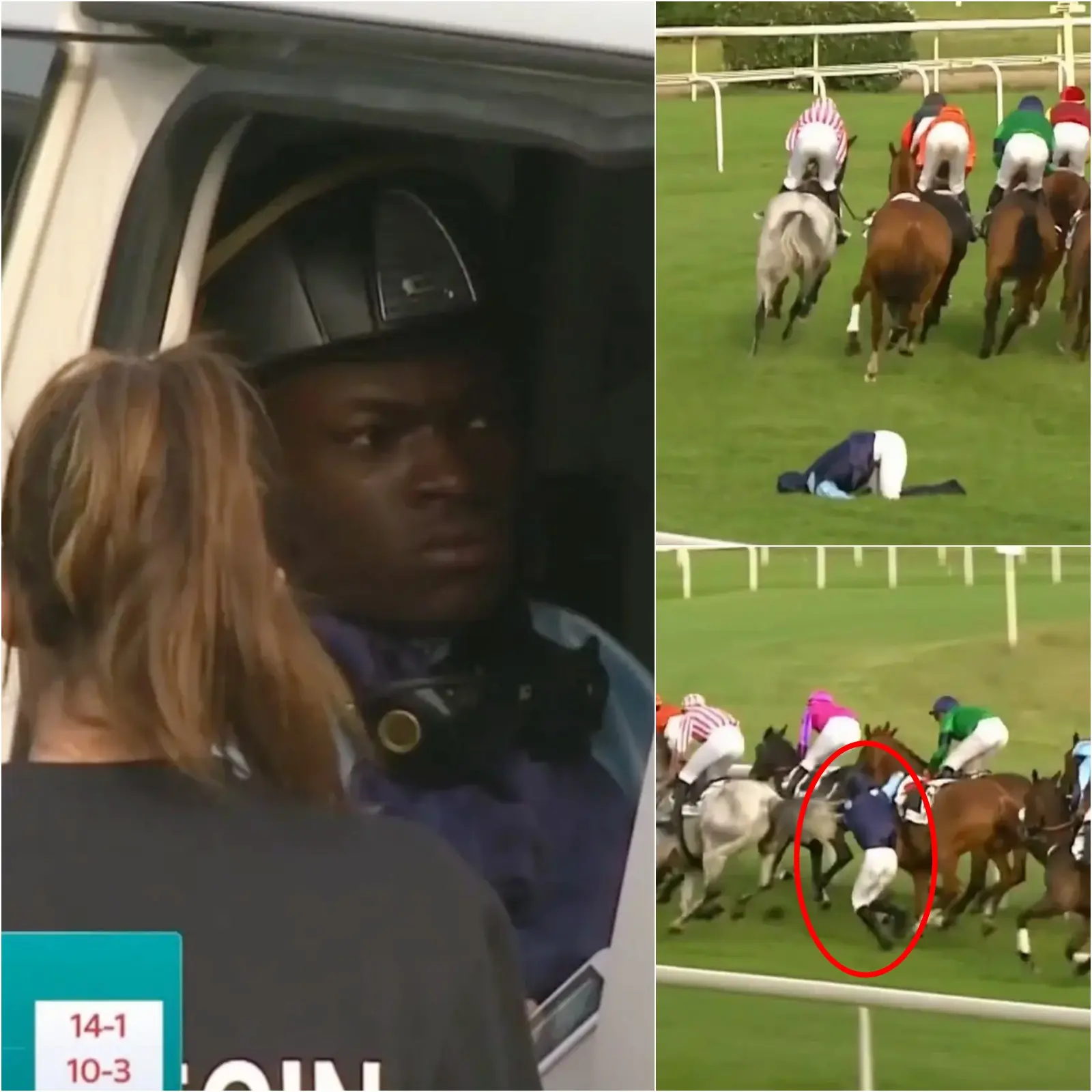
In a jaw-dropping scene that has left the global horse racing world stunned, French jockey Joel Phelippe experienced one of the most bizarre moments in recent racing history during a hurdles race at La Teste de Buch in southwestern France. What began as a routine contest quickly descended into chaos when Phelippe was unseated from his mount, the 16-1 shot Hortense De Gane. Instead of staying down or moving clear, the young rider landed on his feet and inexplicably began sprinting alongside the galloping horse at speeds exceeding 20 miles per hour.
The effort lasted only seconds before he lost his balance, spun wildly across the turf, and crashed in a heap. The horse, now riderless, continued racing and crossed the finish line first, only for the apparent victory to be wiped out under strict racing rules that require a jockey to be aboard for any official result to stand.
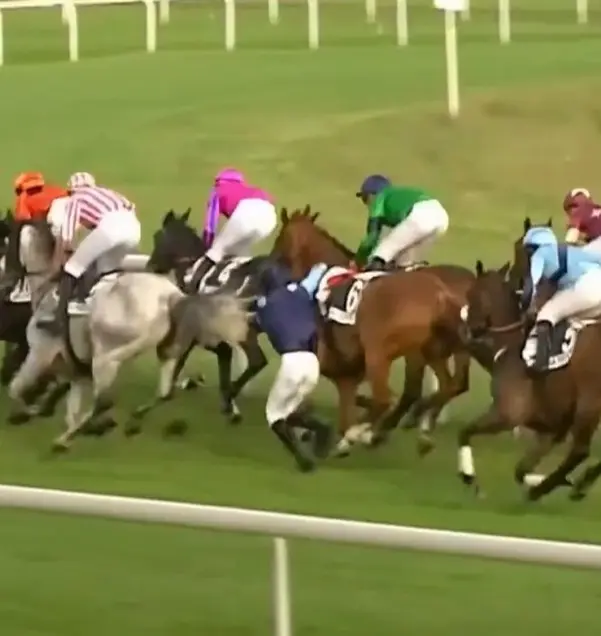
The incident, captured clearly by Sky Sports Racing cameras, has since exploded across social media platforms, amassing millions of views within days. What many initially saw as a surreal athletic feat quickly turned into a lightning rod for criticism. Fans expressed outrage that Phelippe’s split-second decision could have endangered not only himself but also the horse and other competitors still in the race. The clip shows the jockey matching strides with Hortense De Gane for several strides in a desperate, almost instinctive attempt to stay connected with his mount.
Racing insiders note that once a jockey is unseated, remounting is strictly forbidden, and the correct protocol is to move to safety immediately. Phelippe’s choice to keep running defied every standard safety guideline and left viewers questioning his judgment under pressure.
Race officials confirmed that both the jockey and the horse emerged unscathed. Phelippe was attended to by the on-course doctor and cleared after a brief check, while Hortense De Gane was examined and found to be in perfect condition. The horse’s “win” was nullified, meaning bettors who backed the outsider received no payout despite the dramatic finish. Stewards reviewed the footage but have not announced any formal sanctions against Phelippe, though the episode is expected to feature in upcoming safety briefings across French racing.
The video’s rapid spread triggered an immediate firestorm online. On platforms such as X, Instagram, TikTok, and Facebook, users flooded timelines with reactions ranging from disbelief to anger. Many fans argued that the moment highlighted reckless behavior in an already dangerous sport, with some labeling it “utter madness” and calling for mandatory additional training on unseating procedures. Others pointed out the physical impossibility of what Phelippe attempted, noting that horses in full stride generate enormous power and that attempting to run alongside one at race pace borders on suicidal.
Hashtags like #RunningJockey and #BizarreRace trended worldwide, accompanied by countless memes depicting the jockey as a marathon runner or comparing the scene to cartoonish slapstick.
The equestrian community quickly joined the conversation, turning the incident into a broader debate about rider safety, horse welfare, and the public image of racing. Trainers and former jockeys weighed in, with some defending Phelippe’s reaction as a human instinct to protect or control the animal he had been riding moments earlier. “In the heat of the moment, adrenaline takes over,” one anonymous French trainer told racing media.
“You don’t always think rationally when you’re flying through the air.” Others were less forgiving, arguing that professional jockeys undergo rigorous safety training precisely to avoid such situations and that Phelippe’s actions set a poor example for younger riders.
Animal welfare groups seized on the footage to renew calls for greater scrutiny of jumps racing, where falls and unseats occur more frequently than on the flat. While no one was injured here, critics claimed the incident symbolized the inherent risks both horses and humans face in the sport. “This is exactly why we need to keep pushing for reforms,” one prominent welfare advocate posted.
“Moments like these remind the public that racing isn’t just entertainment—it’s a high-risk activity.” Supporters of the industry countered that such bizarre episodes are rare outliers and that modern racing has never been safer thanks to improved helmets, medical protocols, and track surfaces.
The debate extended beyond safety to questions of sportsmanship and rules enforcement. Some fans questioned whether the horse should have been allowed to complete the race at all once riderless, while others praised Hortense De Gane’s professionalism in finishing strongly without guidance. Comparisons were drawn to other recent controversial racing moments, including a high-profile fall at Wexford in Ireland last year and various incidents involving exhausted horses in British jump races. Each time, social media amplified the discussion, forcing governing bodies to respond publicly.
For Joel Phelippe, the episode has thrust him into an unwelcome spotlight. Little was previously known about the young rider outside French racing circles, but his name is now synonymous with one of the strangest clips in the sport’s recent history. Colleagues have rallied around him privately, emphasizing that split-second decisions under extreme pressure are part of the job. Still, the public scrutiny is intense. Career-wise, Phelippe may face increased pressure to prove his professionalism in future rides, as owners and trainers weigh the risks of entrusting him with competitive mounts.
As of late April 2026, the story continues to evolve. Racing authorities in France have yet to issue a detailed public statement, but insiders expect the incident to prompt reviews of unseating response training across European racing. Meanwhile, the video keeps circulating, spawning new reactions daily. What began as a single bizarre moment has become a global talking point, forcing fans, participants, and critics alike to confront uncomfortable questions about the sport they love.
In the end, the La Teste de Buch incident serves as both a cautionary tale and a reminder of racing’s unpredictable drama. While the outrage and debate may eventually fade, the footage will likely live on as one of those rare clips that captures the sport at its most human—and most absurd. For now, the equestrian world watches and waits to see whether this viral sensation leads to meaningful change or simply fades into racing’s long list of unforgettable oddities.
One thing is certain: no one who saw Joel Phelippe sprinting alongside his horse will ever forget the moment he quickly realized he had made a very big mistake.