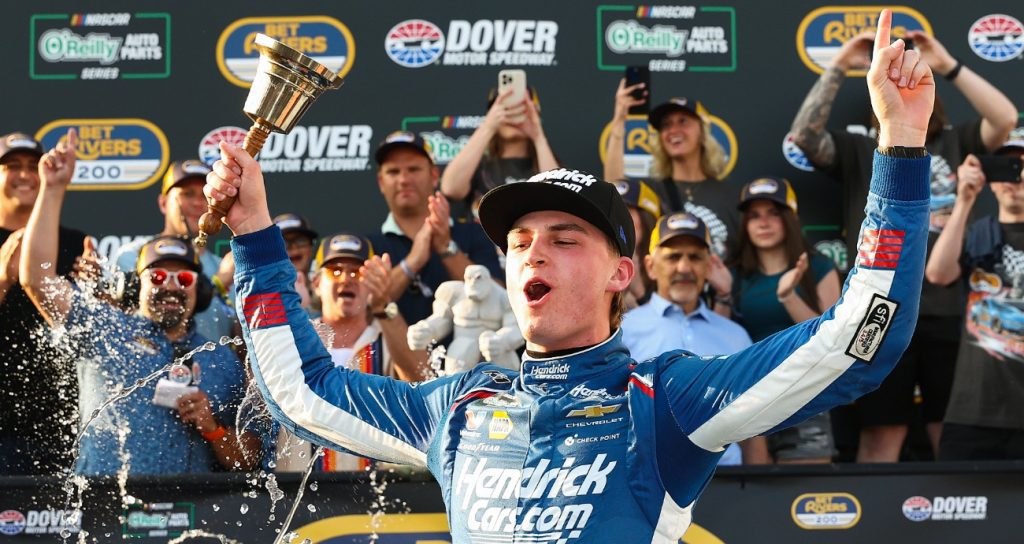
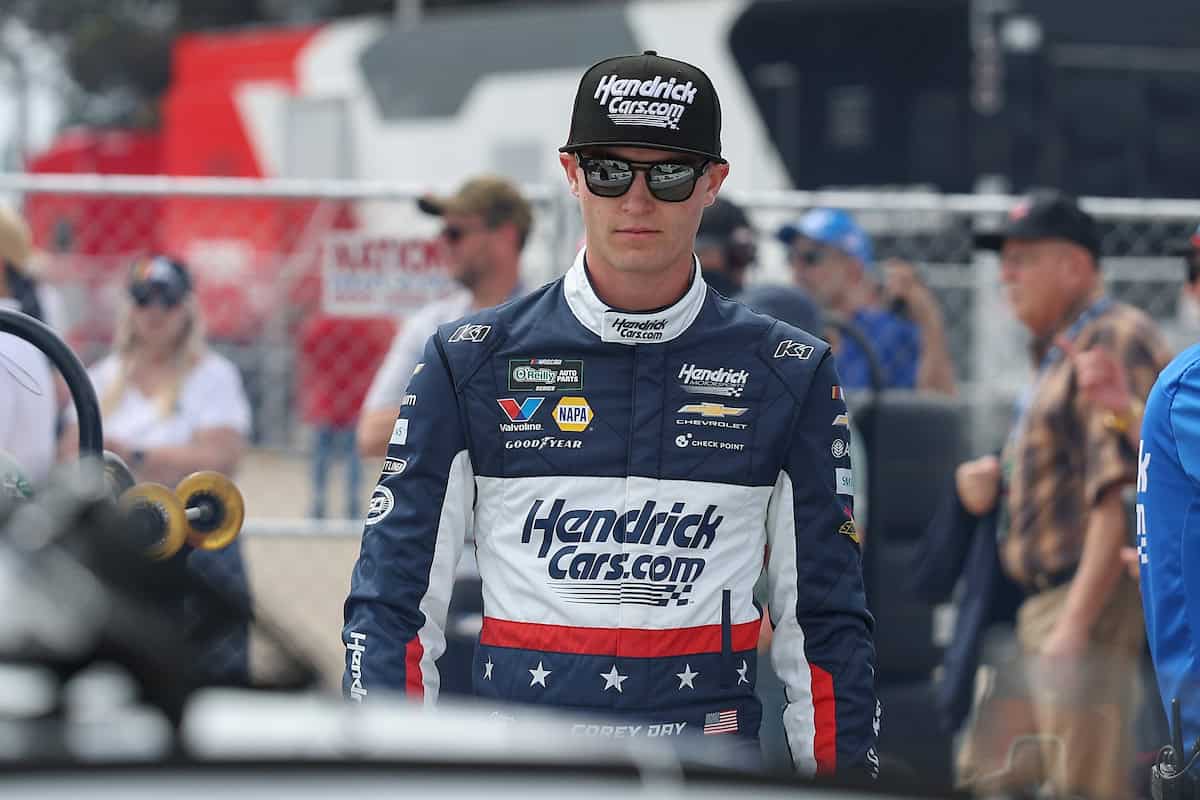
NASCAR has addressed questions surrounding a recent rule adjustment involving Corey Day’s team during the San Diego event at Naval Base Coronado. The explanation came after discussions about why officials made an unusual decision during the race weekend.
The situation gained attention after Day’s No. 17 Chevrolet was damaged early in the O’Reilly Auto Parts Series street race. NASCAR officials reviewed the circumstances and later explained the reasoning behind allowing special treatment under the rules.
According to NASCAR’s explanation, the decision followed a lengthy discussion among officials about whether the normal procedures should apply in this specific situation. The organization emphasized that the circumstances were unusual and required careful consideration before making a final determination.
The incident occurred on the temporary street course at Naval Base Coronado, where the vehicle reportedly suffered damage from a loose sewer cover. NASCAR officials considered the nature of the incident when reviewing whether an exception was appropriate.
In professional motorsport, rules are designed to create consistency among competitors. However, governing bodies sometimes review exceptional situations where applying regulations strictly may not reflect the unique circumstances surrounding an event or competition issue.
NASCAR Vice President of Racing Communications Mike Forde explained that officials discussed whether returning Day’s lost laps would be the right decision. The conversation reportedly involved balancing consistency with fairness under unusual conditions.
The decision was connected to NASCAR’s ability to make adjustments in rare situations. Officials referenced the organization’s “Except in rare instances” clause, which allows certain rules to be adapted when circumstances are considered exceptional.
The San Diego race weekend highlighted the challenges of competing on temporary courses. Street circuits can create unique conditions because they are not permanent racing facilities and may involve factors different from traditional tracks.
NASCAR explained that the situation was viewed differently from typical racing incidents. Officials noted that the damage was caused by an unexpected course-related issue rather than a normal competitive occurrence between drivers.
The organization’s explanation focused on the idea of restoring competitive fairness. NASCAR stated that Day was not considered responsible for the incident, describing it as an unusual circumstance beyond the team’s control.

The decision created discussion among fans because rule adjustments in professional racing often receive close attention. Supporters and analysts regularly examine how officials handle unusual events that may affect race outcomes.
However, NASCAR has emphasized that such adjustments are not made frequently. The organization maintains a high standard before applying exceptions, ensuring that special decisions remain limited to specific circumstances.
The situation involving Day’s team also brought attention to the broader question of how racing rules should respond to unexpected issues. Officials must consider both written regulations and the unique conditions of each event.
Street racing venues can present different challenges compared with traditional circuits. Temporary courses require additional preparation, and unexpected infrastructure issues can become factors that organizers must manage carefully.
Following the incident, NASCAR reportedly repaired the affected sewer cover area and made additional adjustments to other covers around the course before later competition. These steps were taken to address the track conditions.
The response demonstrated the responsibilities of race organizers when unexpected situations occur. Maintaining safety and competitive fairness requires cooperation between officials, track personnel, and participating teams throughout the event.
The discussion surrounding Day’s team was not only about one race result but also about future NASCAR procedures. Officials indicated that similar situations may lead to additional conversations about handling comparable incidents.
NASCAR regularly reviews competition policies to improve consistency across different racing environments. Rule adjustments are often considered when officials identify areas where existing procedures may need clarification.
The San Diego event became an example of how motorsport regulations can evolve. NASCAR’s decisions often involve balancing traditional rules with the realities of modern racing conditions.
For drivers and teams, understanding competition rules is an essential part of preparation. Every organization must be ready to adapt to changing circumstances while following NASCAR’s established guidelines.
The explanation from NASCAR helped clarify why Day’s team received special consideration. Rather than focusing only on the written rule, officials evaluated the broader context surrounding the incident.
Fans have different perspectives on regulatory decisions, especially when they influence race standings. Nevertheless, official statements remain the most reliable source for understanding the reasoning behind NASCAR actions.
The case also reflects the complexity of managing professional racing events. Officials must make decisions quickly while considering safety, fairness, competitive balance, and the expectations of teams and audiences.
NASCAR’s approach demonstrates that racing regulations are not only about strict enforcement. They also include processes designed to address rare situations where unusual circumstances affect competition.
The organization’s explanation emphasized that exceptions are intended for uncommon cases. NASCAR officials stated that they do not frequently adjust procedures and only consider such actions when circumstances justify them.
The Day situation has become part of a wider conversation about racing fairness. Similar discussions often occur whenever governing bodies make decisions that affect teams during major competitions.
Professional motorsport depends on trust between officials, drivers, teams, and fans. Clear communication helps ensure that participants understand how decisions are made and why certain actions are taken.
The San Diego street race provided another example of how unpredictable factors can influence motorsport events. Even with careful planning, temporary venues may create challenges that require immediate attention.
NASCAR’s review process allows officials to examine each situation individually. This approach helps prevent automatic decisions that may not reflect the circumstances of a specific incident.
The adjustment involving Day’s team does not represent a change to every racing rule. Instead, it was described as a response to a specific and unusual event during competition.
As NASCAR continues developing its procedures, future discussions may focus on how similar situations should be handled. Officials aim to maintain fairness while creating consistent expectations for competitors.
The Coronado Naval Base event showed the importance of communication between race organizers and teams. Quick decisions and clear explanations can help reduce uncertainty during major racing weekends.
For the NASCAR community, the story serves as a reminder that racing involves more than speed. Strategy, preparation, regulations, and unexpected circumstances all influence the final outcome.
The organization’s decision regarding Day’s team will likely continue to be discussed by fans and analysts. However, official explanations provide the foundation for understanding the situation.
NASCAR’s responsibility is to protect the integrity of competition while responding appropriately to exceptional circumstances. The balance between consistency and fairness remains a central part of race management.
The temporary street course environment at Naval Base Coronado created conditions unlike traditional racing venues. NASCAR officials considered those differences when reviewing the incident involving the No. 17 Chevrolet.
The event also highlighted the importance of infrastructure reliability in motorsport. Track preparation is a major factor in ensuring that competitors can race safely and fairly.
As the NASCAR season continues, similar situations may lead to further discussions about competition procedures. The organization continues evaluating ways to improve consistency across different racing formats.
The explanation from NASCAR represents an effort to provide transparency to fans and participants. By discussing the reasoning behind the decision, officials helped clarify the process.
The case involving Day’s team illustrates how modern racing requires flexibility. While rules remain essential, exceptional situations sometimes require careful review by experienced officials.
NASCAR’s decision was based on the circumstances surrounding the event rather than a routine adjustment. The organization continues to treat unusual situations individually to protect competitive fairness.
The discussion following the San Diego event reflects the passion of the NASCAR community. Fans closely follow every decision because competition outcomes matter greatly to teams and supporters.
Ultimately, the situation involving Corey Day’s team demonstrates the complexity of professional racing management. Officials must consider many factors when making decisions that affect competition.
The NASCAR community will continue monitoring future updates and policy discussions. The organization’s commitment to transparency and fair competition remains a key part of maintaining trust in the sport.