‘Completely robbed of opportunity, it was blatant robbery’
Australian sprinter Josh Azzopardi has unleashed a scathing attack on the national selection committee, declaring in a pointed social media statement that he was “completely robbed of opportunity” and describing the decision as “blatant robbery” after being overlooked for the men’s 100-metre individual event at the upcoming 2026 Commonwealth Games in Glasgow.
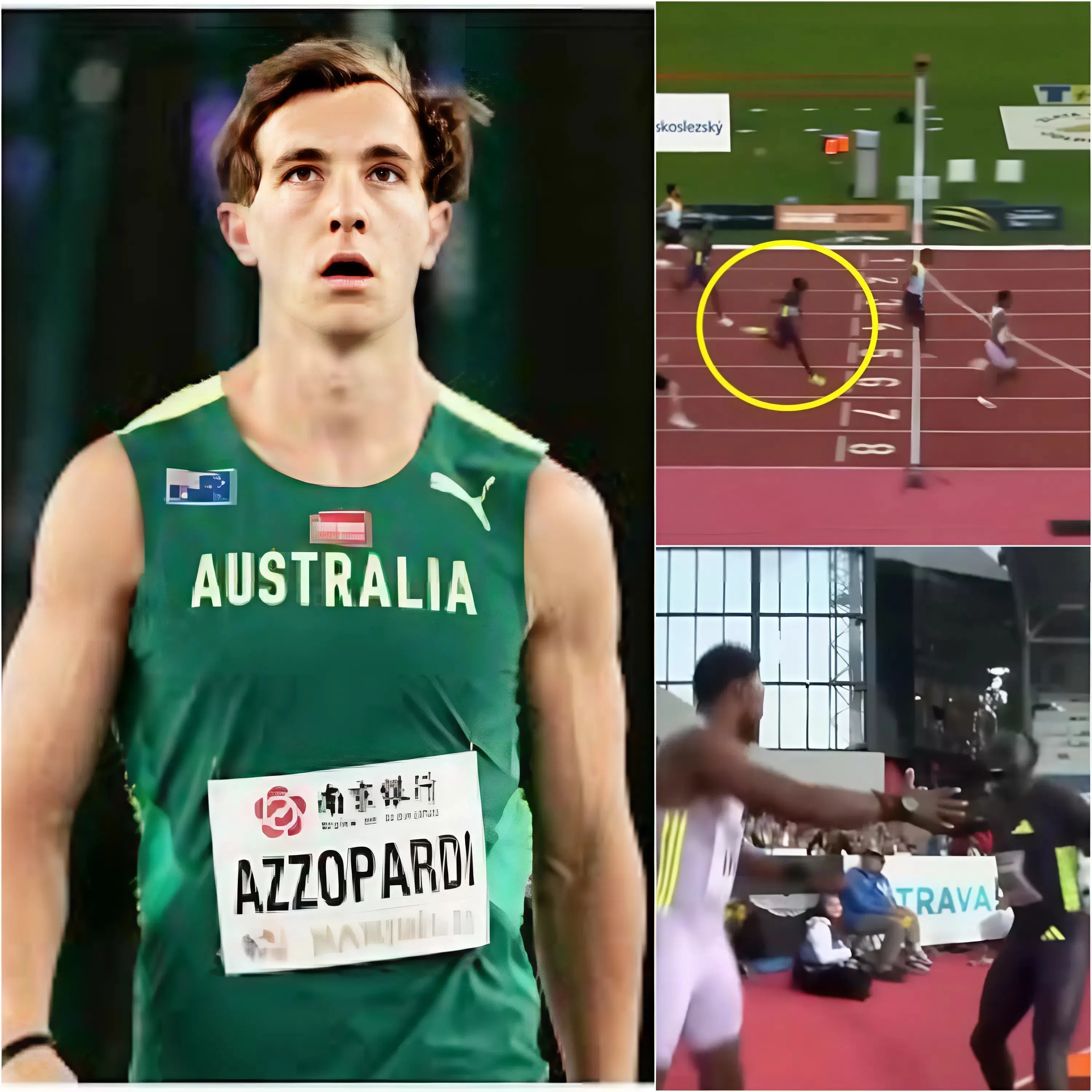
The controversy erupted on June 22, 2026, shortly after Australian Athletics announced its full 86-strong track and field team for the Games, set to run from July 23 to August 2. Azzopardi, a proven performer with a personal best of 10.09 seconds and recent successes including defending his Oceania 100m title, was named only for the 4x100m relay squad alongside teammates like Lachlan Kennedy, Rohan Browning, Calab Law, and Christopher Ius. The individual 100m spots went to Kennedy, Browning, and newcomer Eddie Nketia, igniting fierce debate over selection criteria, fairness, and the future of Australian sprinting.
Azzopardi, 26, did not hold back in his Instagram post, which quickly spread across Australian sports circles. “I feel absolutely robbed to have not been given a 100m selection,” he wrote. “The reasonings I still don’t completely understand after a consistent and what I would say a successful domestic season. Disappointed with how the outcome has been reached.” He went on to acknowledge support from the athletics community, noting that “everyone knows what the decision should’ve been,” and highlighted the personal toll of selectors controlling athletes’ futures from a distance.
This outburst marks a significant escalation in what has become a high-profile dispute. Azzopardi appealed the decision through the National Sports Tribunal, arguing his superior recent results warranted the spot over Browning. He finished second to Kennedy at the 2026 Australian Championships in April (10.16s to Browning’s 10.19s) and recorded a faster qualifying time of 10.09s compared to Browning’s best of 10.19s in the period. Neither met the automatic qualifying standard of 10.00s, leaving the final call to selectors’ discretion. The appeal was ultimately unsuccessful.
The selection process, overseen by Australian Athletics chairman of selectors Peter Hamilton, has come under intense scrutiny. Hamilton defended the choices in a recent appearance on The Call Room podcast, emphasizing a holistic evaluation. “There are three spots in the 100 metres, and they were the last ones we looked at,” he explained. “We discuss each one on their merits: what their performances have been historically and how far apart they were…
In the end, it’s a gut call from the team to pick those who we believe are going to be most successful there.” He acknowledged the tight margins, noting Browning’s stronger career personal best of 10.01s and Olympic experience from Tokyo 2021, where he reached the semifinals.
Critics, however, point to inconsistencies. Azzopardi’s track record includes being the sixth-fastest Australian of all time over 100m, contributing to Australian relay records (including a 37.87s national mark), and consistent performances across domestic and international meets. He represented Australia at the Paris Olympics in 2024, running a heat time of 10.20s and anchoring the relay team to a national record. His resilience story—overcoming a severe toe injury in 2021 that nearly ended his season early—adds weight to perceptions of unfair treatment.
The drama is compounded by other notable team decisions. Teenage sensation Gout Gout opted out to focus on under-20 competitions, while Nketia, the fastest Australian in all conditions with wind-assisted times under 9.8s, secured an individual spot despite limited recent training integration with the Australian squad. Nketia was notably omitted from the relay team, reportedly due to his U.S.-based training, raising further questions about team cohesion versus individual merit.
Azzopardi’s frustration resonates deeply within the sprinting community, where selection battles are notoriously fierce and subjective. Sprinting demands peak performance on specific days, and with only narrow differences separating top athletes, discretionary picks often spark debate. Supporters of Azzopardi highlight his head-to-head edge over Browning this season and his reliability in relay duties, where he has excelled as both lead-off and anchor. The fact that he and Browning must now collaborate in the 4x100m relay in Glasgow adds an intriguing layer of required professionalism amid personal disappointment.
This is not the first time Hamilton’s selections have drawn fire. Previous controversies, such as the non-selection of veteran marathoner Lisa Weightman for Paris 2024, suggest a pattern that has athletes questioning transparency and accountability. Athletics Australia has not issued a detailed public response to Azzopardi’s claims beyond general statements on the process, further fueling speculation.
Beyond the immediate controversy, the incident underscores broader challenges in Australian athletics. The sport has enjoyed a golden era with talents like Kennedy, Nketia, and rising stars, yet resource allocation, injury management, and equitable opportunities remain critical. Azzopardi’s journey—from Little Athletics roots in Camden, New South Wales, balancing rugby league ambitions with track pursuits—exemplifies the dedication required. Coached by Rob Marks and supported by the NSW Institute of Sport, he has transformed setbacks into comebacks, including strong showings at World Relays and Oceania Championships.
As the Australian team prepares for Glasgow, where medal prospects in the sprints and relays are realistic, the focus shifts to performance under pressure. Azzopardi has signaled his commitment, stating the relay squad is “ready to cook” and expressing pride in wearing the green and gold. His ability to channel disappointment into motivation could prove pivotal, especially given the relay’s potential to challenge for podium places against strong Commonwealth nations.
The broader implications extend to athlete mental health and trust in governing bodies. High-performance sport is inherently stressful, and public criticism like Azzopardi’s highlights the human element often overlooked in selection spreadsheets. Fans and fellow athletes have rallied in support, with many echoing his view that recent form should carry significant weight.
Looking ahead, the 2026 Commonwealth Games represent a key opportunity for Australian sprinting to shine on the global stage. Kennedy enters as a favorite, Nketia brings explosive potential, and Browning will seek to validate his selection. Azzopardi, meanwhile, will aim to make his mark in the relay and perhaps force future selectors to reconsider criteria.
This saga serves as a reminder that behind every team announcement lie stories of sacrifice, rivalry, and resilience. While Azzopardi feels robbed of a singular opportunity, his ongoing career and contributions to the relay team affirm his place among Australia’s sprint elite. As the Games approach, all eyes will be on whether results in Glasgow vindicate the selectors or amplify calls for reform in how talent is nurtured and rewarded.

In the cutthroat world of elite athletics, where hundredths of a second define careers, debates like this are inevitable. Azzopardi’s bold stance may yet inspire greater transparency, ensuring future generations of sprinters face decisions grounded in clarity and fairness. For now, the controversy adds extra intrigue to what promises to be a compelling chapter in Australian track and field history.