“Be careful what you wish for.” A rule change that robbed Geelong a goal – and arguably, a win – has sparked fury in a controversial moment from Friday night’s game.
The MCG was electric on Friday night as Geelong and Carlton delivered a thriller that lived up to every expectation of a classic Friday night blockbuster. Over 60,000 fans packed the stands for what promised to be a high-stakes clash between two sides with plenty to play for in the 2026 season. Yet by the final siren, after Carlton had clawed back from a 20-point deficit to win 12.16 (88) to Geelong’s 12.12 (84), the dominant talking point had nothing to do with Patrick Cripps’ match-sealing goal or the Blues’ remarkable comeback under interim coach Josh Fraser.
Instead, all eyes were on a single moment in the opening minute that has ignited a firestorm of debate across the AFL world.

In the very first attacking foray of the match, Geelong looked to have drawn first blood. A long ball from Mark Blicavs found its way inside 50, where Ollie Dempsey, the in-form winger, reacted quickest. With the ball bobbling awkwardly on the goal line, Dempsey instinctively used his shin to steer it through the big sticks for what replays would later confirm was a clear and undeniable goal. The Cats bench erupted. The crowd roared. But goal umpire David Rodan, a former player with 185 AFL games behind him, had other ideas.
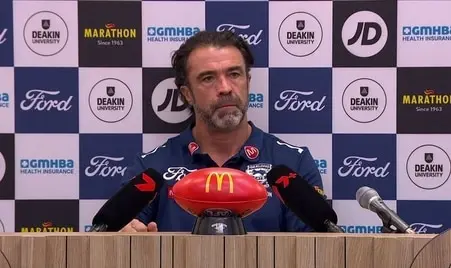
Rodan, positioned right on the line, was clipped from behind in the scramble by Carlton’s Blake Acres. The contact sent the experienced official tumbling, and in the split-second he regained his footing, he signalled a rushed behind. Dempsey’s celebration froze. The ball was immediately brought back into play by Nic Newman, and the game rolled on. No review was called. No intervention from the AFL Review Centre (ARC). Just like that, Geelong had been denied the opening goal of the night.
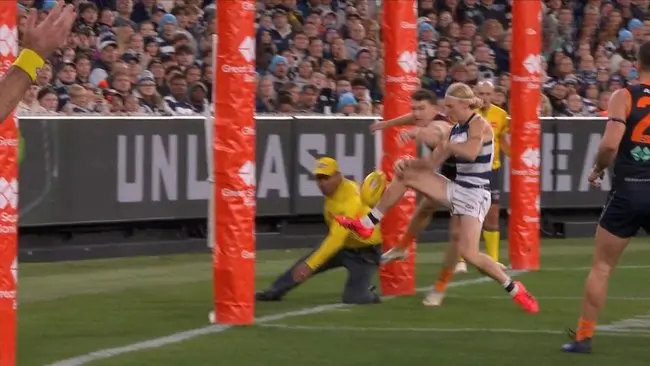
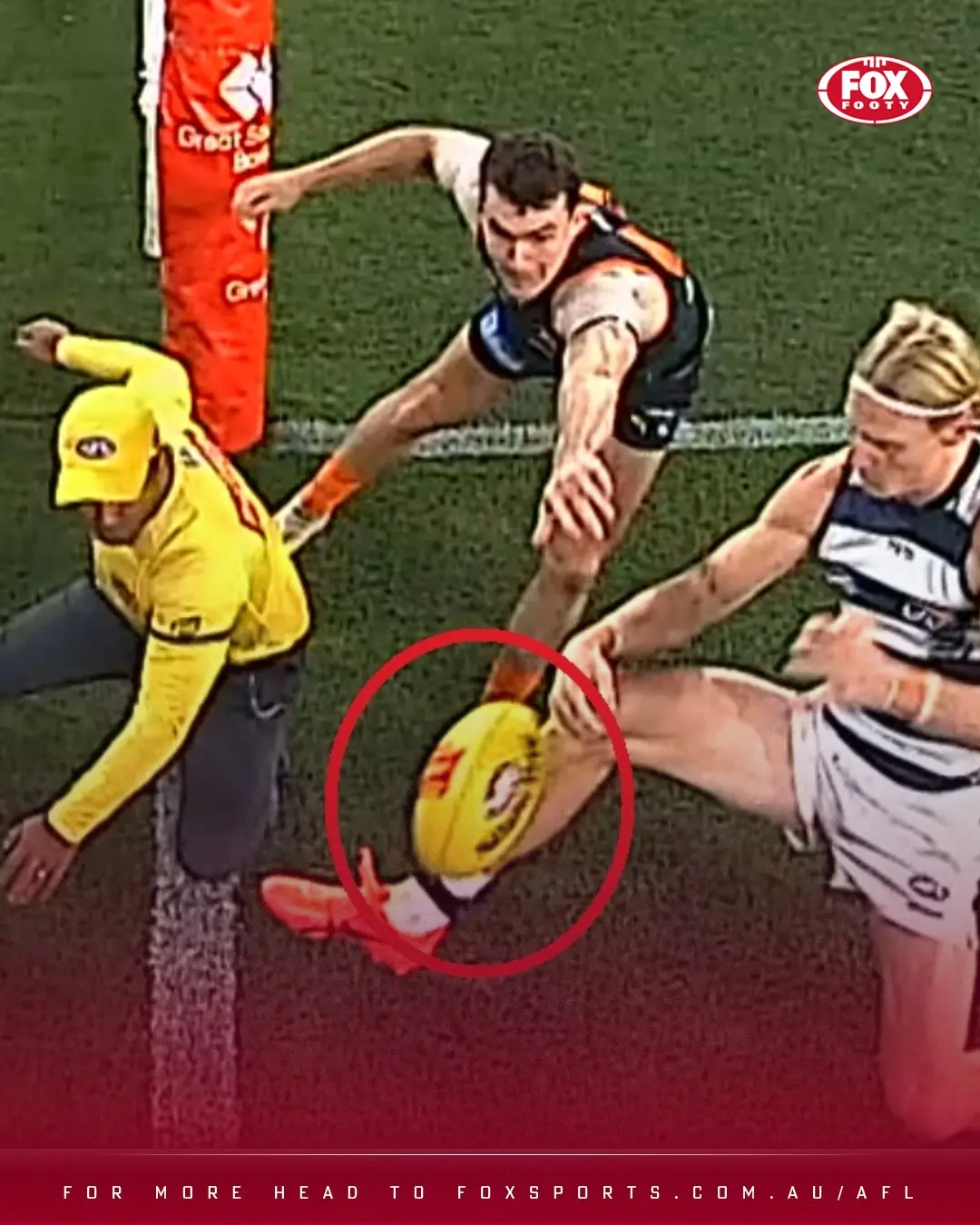
What made the moment even more galling for the Cats and their supporters was the timing and the context. This was not a marginal call or a 50-50 decision. Multiple camera angles showed the ball clearly crossing the line after Dempsey’s shin contact. It was, as Geelong coach Chris Scott would later describe it, a “howler” – an obvious error that the technology the AFL has invested millions in was supposed to catch.
The irony runs deep. Only last month, the AFL had changed its score review protocols following a chaotic incident in a St Kilda versus West Coast game. In that match, Rowan Marshall was awarded a mark and goal by the ARC more than 30 seconds after play had resumed, leading to nearly a minute of game time being scrubbed from the contest. League football boss Greg Swann had acted swiftly, announcing that the ARC would no longer be permitted to intervene and overrule a goal umpire’s decision once play had restarted – unless the on-field official specifically requested a review.
The stated goal was to protect the flow of the game and avoid the lengthy stoppages that had frustrated fans and coaches alike.
That well-intentioned tweak has now come back to bite the competition hard. Because goal umpire Rodan did not wave for assistance – whether through being knocked off balance, a momentary lapse in concentration, or simply not seeing the replays in real time – the ARC’s hands were tied. Play had already resumed. The technology sat idle while an obvious mistake went uncorrected. Geelong had lost what should have been their first goal of the evening, and with the final margin just four points, the “what if” questions have been relentless ever since.
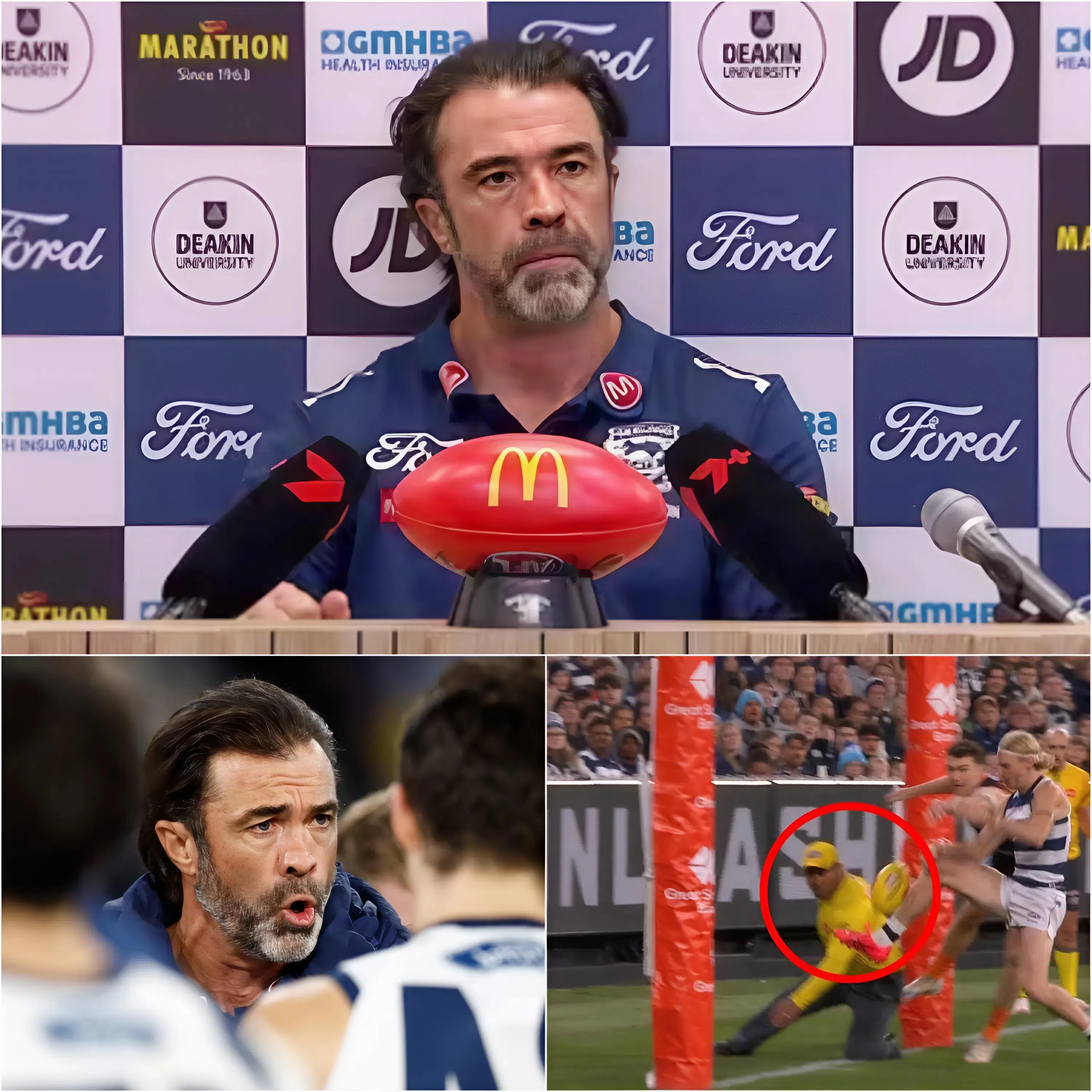
Chris Scott did not hold back in his post-match press conference, delivering a measured but pointed assessment that has resonated across the league. “The goal umpire got knocked over,” Scott said. “I’d probably disagree in principle with the idea that someone’s sitting in the ARC and they can’t see it.
The technology is there for the howler, and someone within the ARC should have seen that was a howler within seconds.” The coach, whose side had entered the match in strong form, was quick to note that he would not blame the loss solely on the decision – it came too early, and Carlton deserved credit for their fightback. Yet he left little doubt about his frustration with the system. “From the outset I thought it was worthy of a review,” he added. “It’s surprising it wasn’t picked up in real time, but I’m easily surprised with this stuff.”
Scott’s comments have struck a chord. On social media and talkback radio, the phrase “Be careful what you wish for” has gone viral, perfectly capturing the sentiment that the very rule change many had welcomed to speed up the game has now robbed a team of a legitimate score in a contest decided by the slimmest of margins. Fans have flooded forums with replays, slow-motion breakdowns, and calls for the AFL to urgently revisit the protocol.
Some have questioned whether goal umpires should be mandated to refer any close call inside the goal square, while others have suggested the ARC should retain limited powers to flag obvious errors even after play has restarted – perhaps within a strict 10- or 15-second window.
The AFL has not remained silent. In a statement released on Saturday, the league conceded that the Dempsey incident should have been reviewed and confirmed that replays showed a goal had been scored. It was a rare admission that the system had failed on this occasion, though officials stopped short of promising an immediate rule reversal. Instead, they indicated a review of review processes would be undertaken to ensure such “howlers” are caught in future without reintroducing the long delays that prompted the original change.
For Geelong, the sting is particularly sharp. The Cats had started the game with intent, and Dempsey – who finished with two goals and 18 disposals – had been one of their most dangerous players. To be denied what would have been his third major of the night in such controversial circumstances has left a bitter taste. Yet Scott was philosophical in defeat, redirecting attention to the areas his team must improve. “The last 109 minutes will be our focus in review,” he said, refusing to let one moment define the performance.
Carlton, meanwhile, will celebrate a third consecutive victory under Josh Fraser, with Patrick Cripps once again proving the difference in the dying stages. The Blues’ ability to absorb pressure and hit back when it mattered most was impressive, and they will head into the next round full of confidence. Still, even their most ardent supporters have acknowledged the controversy, with many conceding that a different opening scoreline might have altered the psychological momentum of the contest.
The broader debate now raging across the AFL is about balance. How does the league maintain the integrity of scoring decisions while preserving the fast-paced, free-flowing spectacle that fans love? Technology has improved dramatically in recent years, yet incidents like this expose the gaps that remain when human error collides with rigid protocols. The goal umpire’s role is one of the most pressurised in the game, and Rodan – a respected figure – will no doubt be reflecting on a split-second call that has overshadowed an otherwise brilliant night of football.
As the dust settles on Friday night’s thriller, one thing is clear: the AFL’s experiment with tighter review windows has delivered an early and painful lesson. The technology exists to eliminate obvious mistakes, yet the rules as they stand prevented it from doing its job. Whether the league now adjusts course – perhaps by empowering the ARC with a short post-resumption window or by requiring goal umpires to automatically refer line-ball decisions – remains to be seen.
What is certain is that the conversation will continue long after the final siren, with coaches, players, and fans alike wondering whether the pursuit of speed has come at too high a cost to accuracy.
For Geelong, the pain of what might have been will linger. For the rest of the competition, the warning is stark: in a sport where margins are measured in single points and centimetres, even the best-intentioned rule changes can have unintended consequences. The technology is there. The replays are clear. The only question now is whether the AFL will listen to the chorus of voices demanding that obvious howlers are never again allowed to stand simply because play has moved on. Friday night’s controversy has ensured that question will not go away anytime soon.