A RARE COINCIDENCE HAS OCCURRED
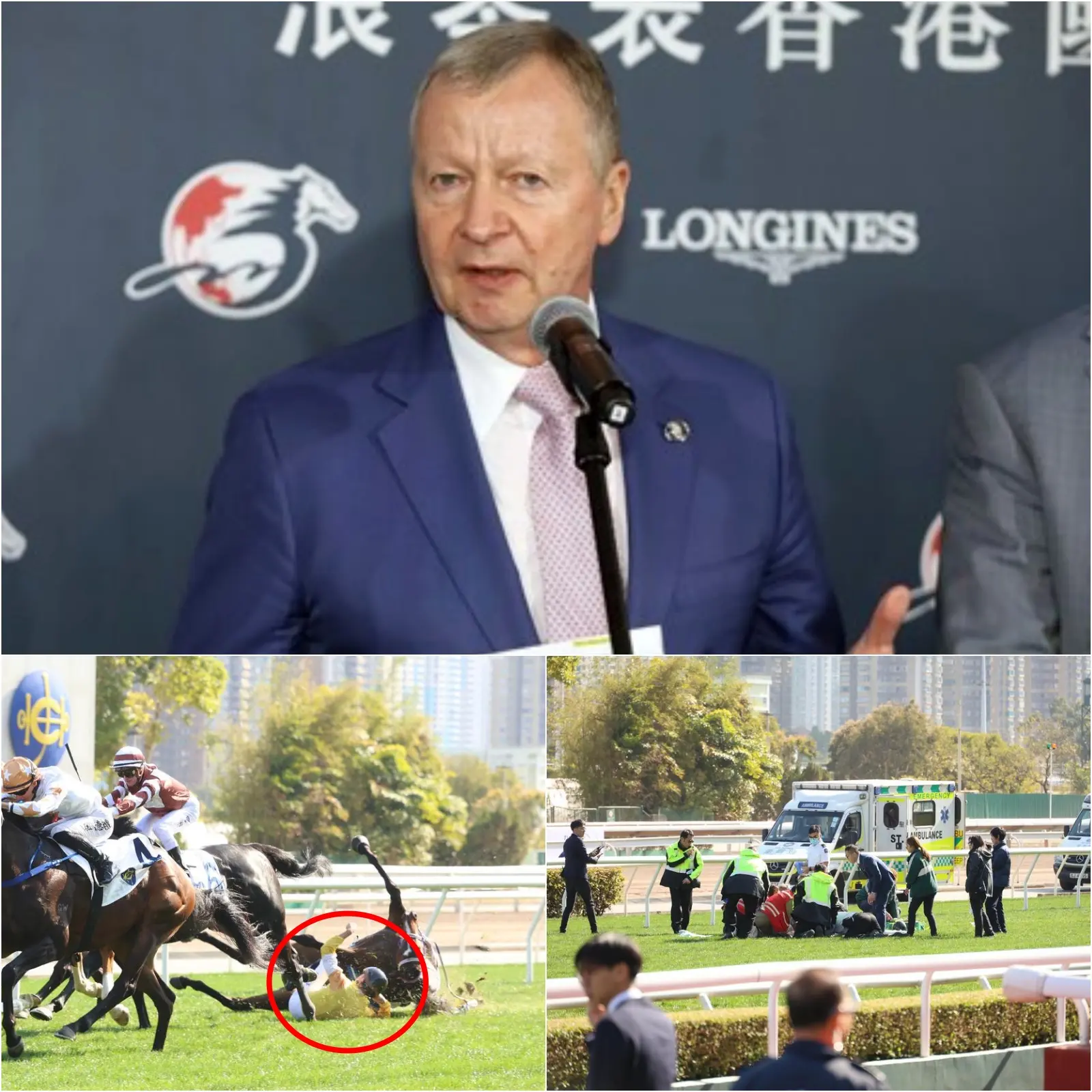
In a chilling reminder of the razor-thin margins between triumph and tragedy in horse racing, two serious accidents struck on the same afternoon at Hong Kong’s iconic Sha Tin Racecourse, sending four jockeys to hospital after dramatic falls in separate races. What made the day even more unsettling was the sheer coincidence of the timing – two unrelated incidents unfolding within hours of each other on an otherwise routine 11-race card. The events have reverberated far beyond Hong Kong, prompting the International Federation of Horse Racing Associations to accelerate and tighten its regulations governing smart helmets and new-generation protective equipment.
While these advanced safety tools promise better protection, they remain deeply controversial among riders who question their comfort, weight, and long-term practicality.

The afternoon began under clear skies with large crowds filling the stands at Sha Tin, one of the world’s premier racecourses known for its fast turf and high-stakes competition. In the sixth race, a 1,200-metre handicap, leading local jockey Vincent Ho was aboard Oldtown, a horse he had guided with confidence through the early stages. As the field swung into the home straight for the final dash, Oldtown appeared to clip heels with another runner. The stumble sent the horse crashing to the turf in a sickening tangle of legs and dust.
Ho was catapulted forward and hit the ground hard, lying motionless for several anxious moments while paramedics sprinted across the track. The horse eventually scrambled to its feet and galloped riderless past the post, but Ho remained down. He was stretchered off with suspected fractures to his neck and shoulder region. Initial reports confirmed he was conscious and able to move his limbs, yet the severity of the impact left everyone fearing the worst. Ho was rushed to Prince of Wales Hospital, where he spent the night under close observation.
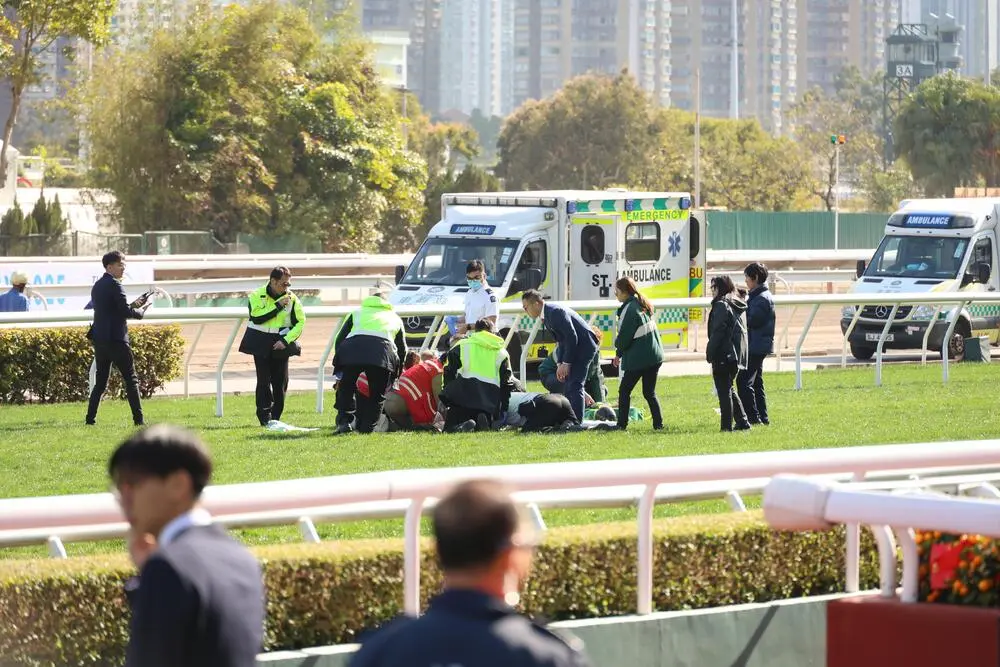
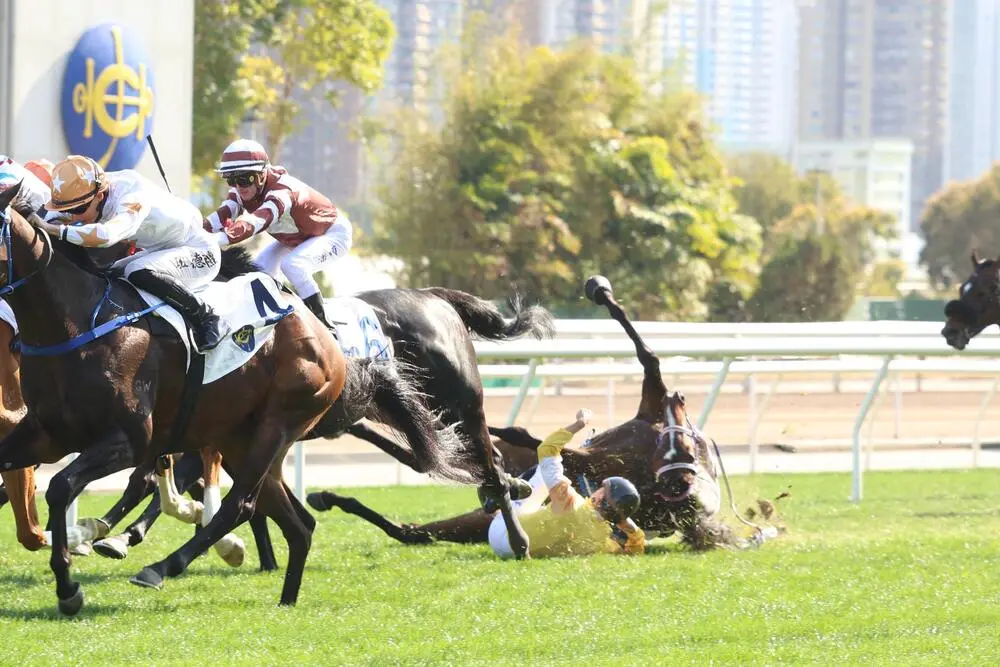
Just three races later, disaster struck again in the ninth event, an 1,800-metre handicap. Jockey Angus Chung was riding the four-year-old New Zealand import Legend St. Paul’s when the gelding suddenly broke down in its left front leg approximately 150 metres from the finish. The horse collapsed dramatically, pitching Chung to the ground. In the chaos that followed, Zac Purton aboard Silvery Breeze and Keith Yeung on Lupo Solitario had no time to avoid the fallen animal. Both riders were brought down in a violent three-horse pile-up that left the track strewn with bodies and equipment. Legend St.
Paul’s sustained catastrophic injuries and was humanely euthanised on the spot, a heartbreaking loss that added to the day’s grim tally. Chung emerged with bruising to his face and upper body. Purton suffered a dislocated toe on his left foot along with possible damage to his ankle and knee. Yeung sustained bruising to his arm and thigh. All three were transported to hospital alongside Ho, where the quartet spent the night undergoing scans and treatment. None rode the following Wednesday meeting.
The Hong Kong Jockey Club immediately launched inquiries into both incidents and held urgent safety discussions with the riding fraternity. Executive officials emphasised that rider safety remains the absolute priority, yet the double occurrence on a single card was described by many observers as a “rare coincidence” that defied normal statistical probability. In the days that followed, the global racing community watched closely. The International Federation of Horse Racing Associations, the sport’s overarching regulatory body, responded by fast-tracking stricter certification requirements for smart helmets and the latest generation of body protectors.
These new rules demand enhanced impact-absorption technology, mandatory integration of concussion-detection sensors in many jurisdictions, and tighter testing protocols for rotational brain injury protection.
Smart helmets represent the cutting edge of rider safety. Equipped with embedded accelerometers and gyroscopes, they can instantly transmit data on the force and angle of any impact to trackside medical teams, potentially shaving precious seconds off response times. Some models incorporate multi-directional impact protection systems that reduce the risk of concussions far more effectively than traditional designs. New-generation protective vests now feature lightweight composite materials and strategic padding that allow greater flexibility while shielding vital organs.
The IFHA’s updated framework requires all participating racing authorities to align their approved equipment lists with these higher benchmarks, with phased implementation timelines already circulating among member countries.
Yet the push for technological advancement has not been universally welcomed. Many professional jockeys argue that the added bulk and weight of smart helmets can compromise comfort during long races under Hong Kong’s often humid conditions. Some report restricted peripheral vision or an unnatural feeling of pressure on the neck, which they fear could affect split-second decision-making at speeds exceeding 60 kilometres per hour. Others worry about the higher purchase and maintenance costs, particularly for apprentice riders and those competing in lower-tier meetings where prize money is modest.
Comfort concerns have sparked heated debates in jockey rooms worldwide: does superior protection justify equipment that feels cumbersome or distracting? A few vocal riders have even suggested that over-engineered gear might create a false sense of security, leading to riskier riding styles. Manufacturers counter that extensive field testing and rider feedback sessions are ongoing, with iterative designs already addressing many of these issues through lighter shells, improved ventilation, and custom-fit options.
The Sha Tin incidents have intensified these conversations. In the broader context of horse racing safety, falls remain an occupational hazard that no amount of regulation can entirely eliminate. Historical data shows that while modern helmets have dramatically reduced fatalities, concussions and long-term neurological effects still plague the profession. High-profile cases of riders forced into early retirement or suffering permanent injuries have kept the spotlight on equipment standards.
The IFHA’s move comes at a time when several national bodies – including the British Horseracing Authority and the Horseracing Integrity and Safety Authority in the United States – have already raised minimum specifications for helmets and vests in recent seasons. The federation’s tightened oversight aims to create a unified global baseline, ensuring that a jockey competing in Hong Kong benefits from the same protective standards as one riding in Europe or Australia.
Beyond equipment, the incidents have renewed calls for improved track maintenance, better pre-race veterinary screening, and enhanced rider education on risk awareness. The Hong Kong Jockey Club has already reinforced its protocols, including more frequent discussions with riders about race tactics and positioning. Trainers and owners, meanwhile, face difficult questions about pushing young or inexperienced horses too hard in competitive fields. The euthanasia of Legend St. Paul’s served as a stark reminder that equine welfare and human safety are inextricably linked; a single breakdown can cascade into multiple casualties.
As the dust settles, the four injured jockeys are on the road to recovery, though their return timelines vary. Vincent Ho faces the longest lay-off, potentially several weeks, while the others are expected back sooner pending medical clearance. Their resilience mirrors that of the wider racing community, which continues to balance the sport’s undeniable excitement with an ever-present duty of care.
The IFHA’s regulatory tightening on smart helmets and advanced protective gear marks a significant step forward, yet its success will ultimately depend on genuine collaboration with the men and women who risk their lives every time they swing into the saddle.
For fans and stakeholders alike, the Sha Tin double calamity serves as both a warning and an opportunity. Horse racing has evolved enormously from the days of basic leather caps and minimal padding. Today’s equipment incorporates aerospace-grade materials and real-time telemetry. Still, the human element – split-second judgements, the bond between rider and horse, the sheer unpredictability of 500-kilogram athletes travelling at full speed – remains the heart of the spectacle. Regulators must walk a delicate line: pushing innovation without alienating the very athletes they seek to protect.
Ongoing dialogue, transparent testing data, and rider input will be essential if the new standards are to gain widespread acceptance rather than reluctant compliance.
In the weeks since the incidents, social media and racing forums have buzzed with tributes to the fallen horse and messages of support for the jockeys. Many supporters have called for increased investment in safety research, including studies into track surfaces that reduce impact forces and training regimens that better prepare riders for high-speed falls. The IFHA has indicated it will monitor compliance closely and may introduce further refinements based on real-world performance of the upgraded equipment.
Whether these measures will prevent another “rare coincidence” remains to be seen, but they represent the sport’s clearest commitment yet to learning from tragedy.
Ultimately, the events at Sha Tin underscore a timeless truth: in horse racing, as in life, safety is never static. It demands constant vigilance, technological progress, and an unwavering respect for the athletes – both equine and human – who make the sport possible. As the four jockeys mend and the regulatory wheels turn, the global racing family watches, hopes, and prepares for a future where such afternoons of carnage become rarer still. The thrill of the race endures, but only if those who participate can do so with the greatest possible protection.
That, more than any single regulation, is the legacy this rare and sobering coincidence must leave behind.