THE WORST TRAGEDY IN THE HISTORY OF WORLD HORSE RACING
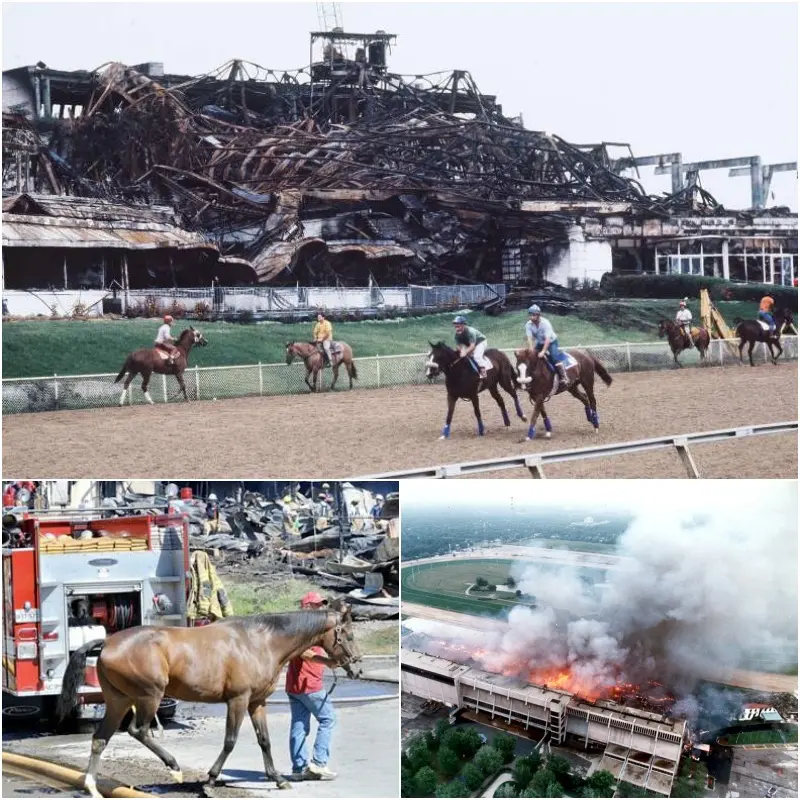
On February 26, 1918, the Happy Valley Racecourse in British Hong Kong became the site of one of the most devastating disasters ever to strike the sport of horse racing. What began as a joyous celebration of the annual Lunar New Year Derby Day races ended in unimaginable horror, claiming over 600 lives and leaving hundreds more injured.
The catastrophe, triggered by the collapse of a temporary bamboo grandstand followed by a raging fire, stands as the deadliest incident in the long history of horse racing worldwide, surpassing any other known accident or fire at a racetrack in terms of human loss.
Horse racing had been a fixture in Hong Kong since the mid-19th century. The Happy Valley Racecourse, constructed in 1845 on reclaimed marshland once known as Wong Nai Chung Valley, was originally intended to provide entertainment for the British expatriate community. The flat terrain made it ideal for the track, and the first races were held in December 1846. Over the decades, the sport gained immense popularity among Chinese residents as well, transforming the annual events into major social gatherings. By the early 20th century, the races drew thousands of spectators eager to wager, cheer, and enjoy the spectacle.
The Derby Day races were particularly significant, held over several days during the Lunar New Year period. In 1918, the event attracted an enormous crowd, with estimates suggesting over 10,000 people from diverse backgrounds—Chinese locals, Europeans, and others—flocked to the venue. To accommodate the surge in attendance, temporary structures known as matsheds were erected. These were lightweight grandstands made of bamboo poles and matting, a common and inexpensive building method in Hong Kong at the time. Food stalls operated beneath and around these structures, serving hot meals to the excited patrons.
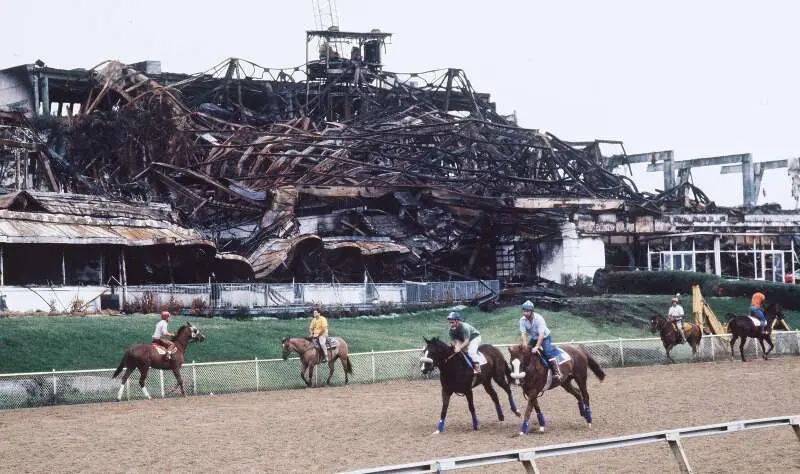
The races proceeded normally that afternoon, with the Derby itself generating tremendous enthusiasm. Spectators packed the temporary grandstands, many standing or sitting closely together in the excitement. Just after one of the key races concluded, disaster struck without warning. A loud cracking sound, likened by witnesses to exploding firecrackers, echoed across the track. Almost immediately, one of the long bamboo matsheds—overloaded with spectators—collapsed like a house of cards. The structure fell in a domino-like chain reaction, pulling down adjacent sections and sending debris crashing everywhere.
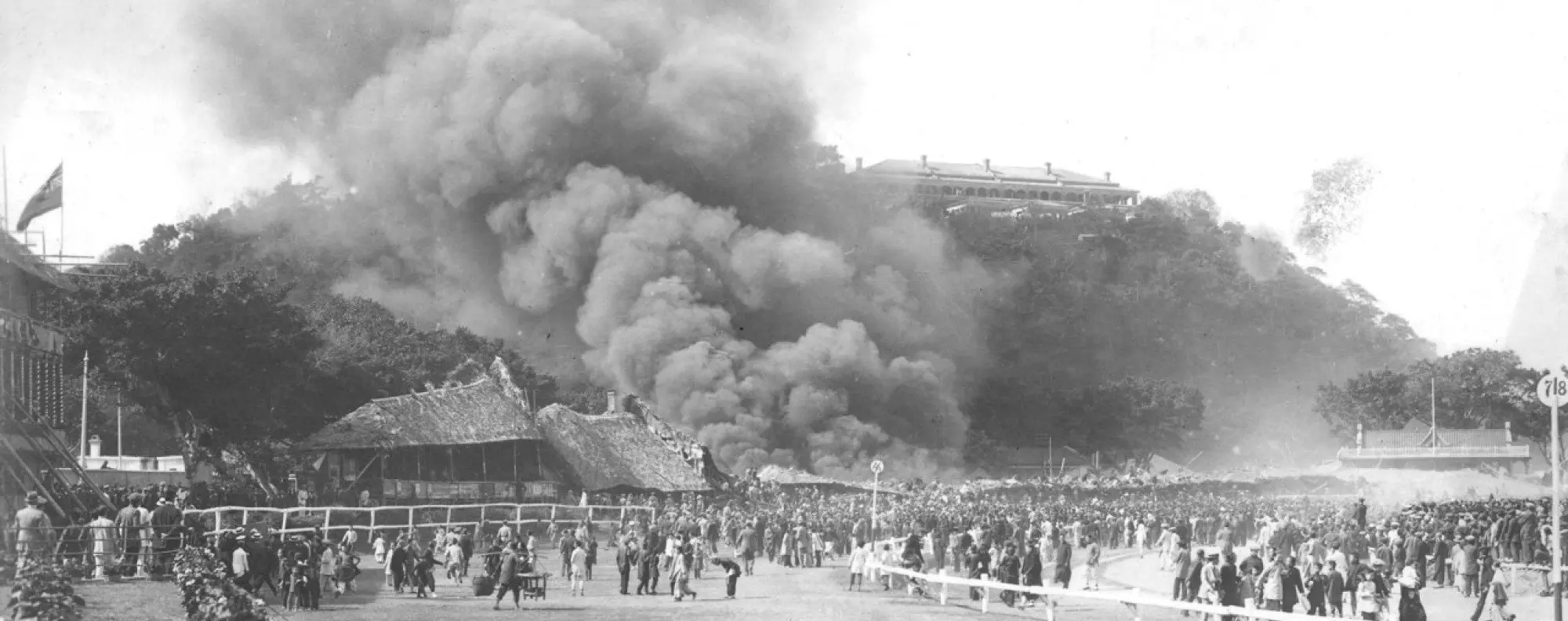
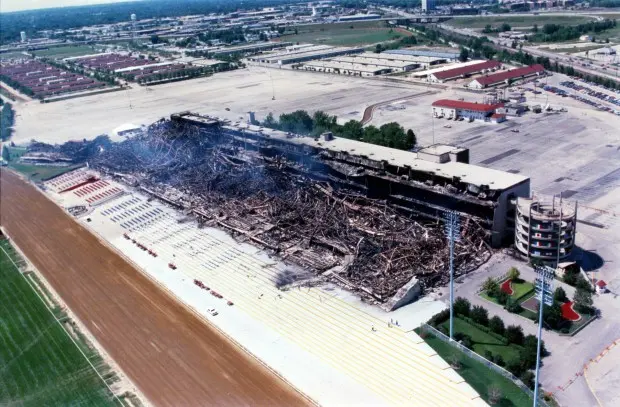
The collapse itself was catastrophic, but it was the fire that turned the scene into a nightmare. As the bamboo and matting tumbled, it knocked over cooking stands and food stalls where fires were burning for meal preparation. Hot coals and open flames ignited the highly flammable materials instantly. Within moments, the entire row of matsheds erupted into a blazing inferno. Thick smoke billowed across the racecourse, and flames spread rapidly through the dry, late-winter conditions. Panic ensued as people trapped beneath the wreckage struggled to escape, while others farther away tried desperately to flee the encroaching fire.
The death toll mounted quickly. Many victims were crushed in the initial collapse or trapped under fallen debris, unable to move as the fire consumed everything around them. Others perished from burns, smoke inhalation, or being trampled in the chaos. The fire brigade, already present at the venue for routine duties, was overwhelmed. The district’s resources proved insufficient, and marine police had to be summoned to assist. Bucket chains were formed from nearby hydrants, including one at the adjacent golf club, but the blaze was too intense and widespread.
Within half an hour, the matsheds were reduced to a smoldering heap.
By the following day, reports confirmed staggering losses. The Hongkong Telegraph and other newspapers documented at least 576 deaths initially, with the final count reaching 614 according to most historical records. Victims included men, women, and children from Chinese, European, and other communities, reflecting the inclusive nature of the event. Many bodies were charred beyond recognition, complicating identification. The Tung Wah Hospital and other organizations mobilized quickly to aid the injured and recover the dead. A mass burial took place in the nearby So Kon Po area, now the site of the Hong Kong Stadium.
The aftermath brought shock and mourning across Hong Kong. The disaster exposed serious deficiencies in safety standards for large public gatherings. An official inquiry criticized inadequate construction oversight and insufficient precautions by authorities, including the Director of Public Works and police officials. The temporary matsheds, while practical, lacked structural integrity and fire resistance, especially when combined with cooking facilities. In response, stricter regulations were eventually introduced for future events, though these changes came too late for those lost.
A memorial was erected in 1922 through public donations, managed later by the Tung Wah Group of Hospitals. Known as the Race Course Fire Memorial, it stands in a Chinese cemetery behind the current stadium’s east stand. The site features an archway inscribed with characters for fortune, riches, and longevity, alongside marble plaques listing victims’ names—primarily Chinese—and dedicating the grave to men and women from East and West. Declared a monument in 2015, it remains a somber reminder of the tragedy.
The Happy Valley fire holds a unique and grim place in history. No other horse racing incident has approached its scale of human tragedy. While modern racetracks worldwide have seen fatal accidents involving jockeys, horses, or smaller crowds, none match the 1918 death toll. The event also ranks among Hong Kong’s worst fires and one of the deadliest public disasters in 20th-century China, as noted in various mainland sources.
Today, Happy Valley Racecourse thrives as a premier venue, hosting night races that draw thousands in a modern, safe environment. The Hong Kong Jockey Club has transformed it into a tourist attraction with live music and amenities. Yet the memory of February 26, 1918, lingers. What was meant to be a day of excitement and community became a profound loss, forever marking the darkest chapter in the global story of horse racing. The tragedy underscores the fragility of human celebrations and the enduring need for vigilance in public safety.