Mick Schumacher has long carried the weight of one of the most iconic names in motorsport history. As the son of Michael Schumacher, the seven-time Formula 1 world champion whose dominance defined an era, Mick has navigated a career perpetually measured against an almost unattainable standard. That immense legacy, while a source of pride and motivation, has also cast a long shadow—one that Mick recently acknowledged made it difficult for him to fully assert himself in Formula 1, contributing to the premature end of his time in the pinnacle of open-wheel racing.
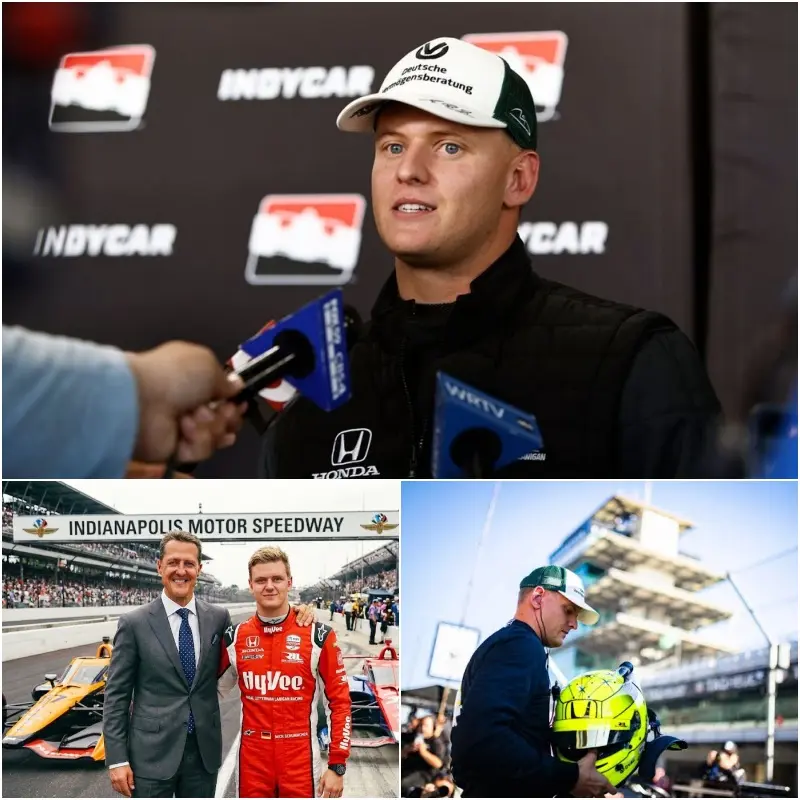
Mick’s Formula 1 journey began with high expectations. After winning the Formula 2 championship in 2020, he joined Haas in 2021, a team aligned with Ferrari through the driver academy that had nurtured him. The Schumacher name opened doors, but it also amplified every misstep. Critics scrutinized his performances with an intensity rarely applied to other rookies, and the constant comparisons to his father’s unparalleled success created an environment of unrelenting pressure. Mick has spoken in past reflections about how the surname magnified everything—successes were expected, failures dissected as evidence of inadequacy.
This burden stifled the confidence needed to thrive in the high-stakes world of F1, where mental resilience is as crucial as raw speed.
By the end of 2022, after two challenging seasons marked by incidents and limited points finishes, Haas opted not to renew his contract. The decision marked a tragic and premature conclusion to what many had hoped would be a long and distinguished F1 career. Mick’s exit from the grid was not due to a lack of talent—he had shown flashes of pace and determination—but rather the cumulative toll of expectations that never allowed him to race freely as his own driver.
The shadow proved too overwhelming, hindering his ability to build momentum and secure the stability required for growth in such a competitive series.
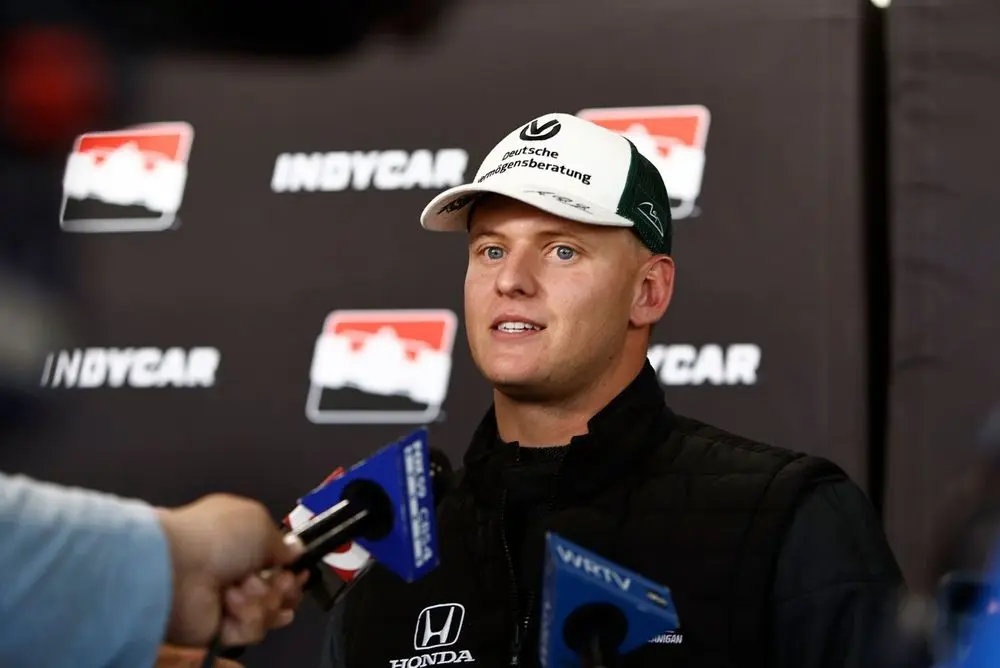
In the years that followed, Mick stepped away from full-time single-seater racing, competing in the World Endurance Championship with Alpine. It was a period of recalibration, away from the spotlight’s glare, allowing him to rebuild privately. Yet the pull of open-wheel competition remained strong. The opportunity to join Rahal Letterman Lanigan Racing (RLL) for the 2026 NTT IndyCar Series season emerged as a fresh chapter—one that offered a new continent, new challenges, and a chance to redefine his path without the immediate weight of F1’s history.
The move to IndyCar represents both escape and continuation. Mick chose the No. 47 for his car, a deliberate nod to his family heritage. He has explained that the number combines elements meaningful to him: echoes of his own past numbers from junior categories and a subtle reference to his father’s iconic No. 7 from his record-breaking championships. “I would not feel comfortable letting that one go,” he said recently when discussing the significance.
Wearing 47 proudly keeps the Schumacher legacy alive in single-seater racing, even as he ventures into a series far removed from the European circuits his father conquered.
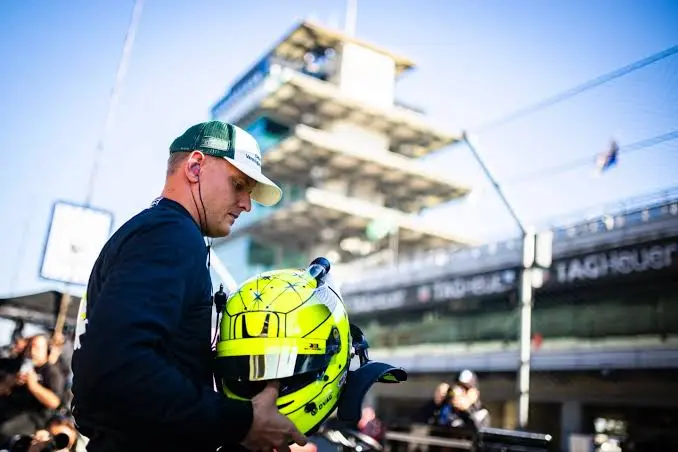
Yet the transition is not without its own pressures. IndyCar demands adaptation to unfamiliar elements: the absence of power steering in the cars, the unique demands of oval racing, and the reliance on spotters for high-speed pack racing. Mick has been candid about the learning curve, particularly with ovals, which require mastering lines, aero management, and the art of drafting in close quarters. His recent private test at Homestead-Miami Speedway on February 4, 2026, marked a milestone—his first experience on an oval in an IndyCar.
Completing 97 laps and reaching speeds up to 194 mph, he described the day as “great” and “fun,” expressing positive early impressions. “Hopefully we’ll see you soon, definitely in St. Pete,” he posted afterward, referring to the season opener.
The team has surrounded him with support to ease the adjustment. Veteran Graham Rahal provides leadership, while former IndyCar driver Ryan Briscoe serves as a dedicated coach, particularly focused on oval proficiency. Engineer Mike Pawlowski, with extensive series experience, handles race engineering duties tailored to Mick’s needs. These resources reflect RLL’s commitment to his success in what will be a rookie campaign alongside teammates Rahal and Louis Foster.
Despite the optimism surrounding his IndyCar debut, the legacy’s shadow lingers. Mick has admitted that the immense expectations tied to his father’s achievements made it hard to assert his own identity, even now as he embarks on this new journey. The pressure once stifled his confidence in F1, contributing to an early exit from that stage. In IndyCar, he seeks a environment where he can race on his terms—free from constant reminders of what his surname “should” achieve.
The series’ emphasis on driver skill over machinery parity could play to his strengths, offering a platform to rebuild self-belief lap by lap.
As the 2026 season approaches, with oval tests continuing—including a full-field session at Phoenix Raceway in mid-February—Mick’s focus remains on preparation and progress. The excitement is palpable: a new car, a new country, and the promise of rewriting his narrative. Yet the question persists—can he step fully out from under the shadow? The legacy is too big to ignore, but in IndyCar, Mick Schumacher has the chance to make it his own foundation rather than a burden.
His early feedback from testing suggests enthusiasm and determination, signs that this chapter could finally allow the talent within to shine without the weight of history holding him back.
For a driver who has endured scrutiny and setbacks, the move represents resilience. Mick continues to honor his father’s enduring impact while carving a distinct path. Whether success comes quickly or gradually, the journey itself is a testament to perseverance in the face of an overwhelming inheritance. As engines fire for the season ahead, fans and observers alike will watch to see if the shadow diminishes—or if Mick finally steps into his own light.