The most haunting moment in live television history remains etched in the collective memory of millions: the tragic death of Eight Belles at the 2008 Kentucky Derby. On May 3, 2008, Churchill Downs in Louisville, Kentucky, hosted what is often called the most exciting two minutes in sports. The 134th running of the Kentucky Derby drew a massive crowd of 157,770 spectators, the second-largest in the event’s history, and countless more watched from home as NBC broadcast the race live across the United States.
The atmosphere was electric, filled with tradition, mint juleps, elaborate hats, and the raw anticipation of seeing which three-year-old thoroughbred would claim the blanket of roses.
Eight Belles, a striking gray filly trained by Larry Jones and owned by Rick Porter’s Fox Hill Farms, entered the race as a longshot with compelling credentials. She was the only filly in a field of 20, mostly colts, attempting to become just the fourth female horse to win the Derby in its long history. Trained meticulously and ridden by Gabriel Saez, she broke cleanly from post position five and settled into a stalking position early. As the field thundered down the stretch, Eight Belles unleashed a powerful drive, surging past several rivals.
Big Brown, the eventual winner, held on to take the victory by a commanding 4¾ lengths, but Eight Belles crossed the wire in a strong second place, her performance earning admiration for her courage and speed against the boys.
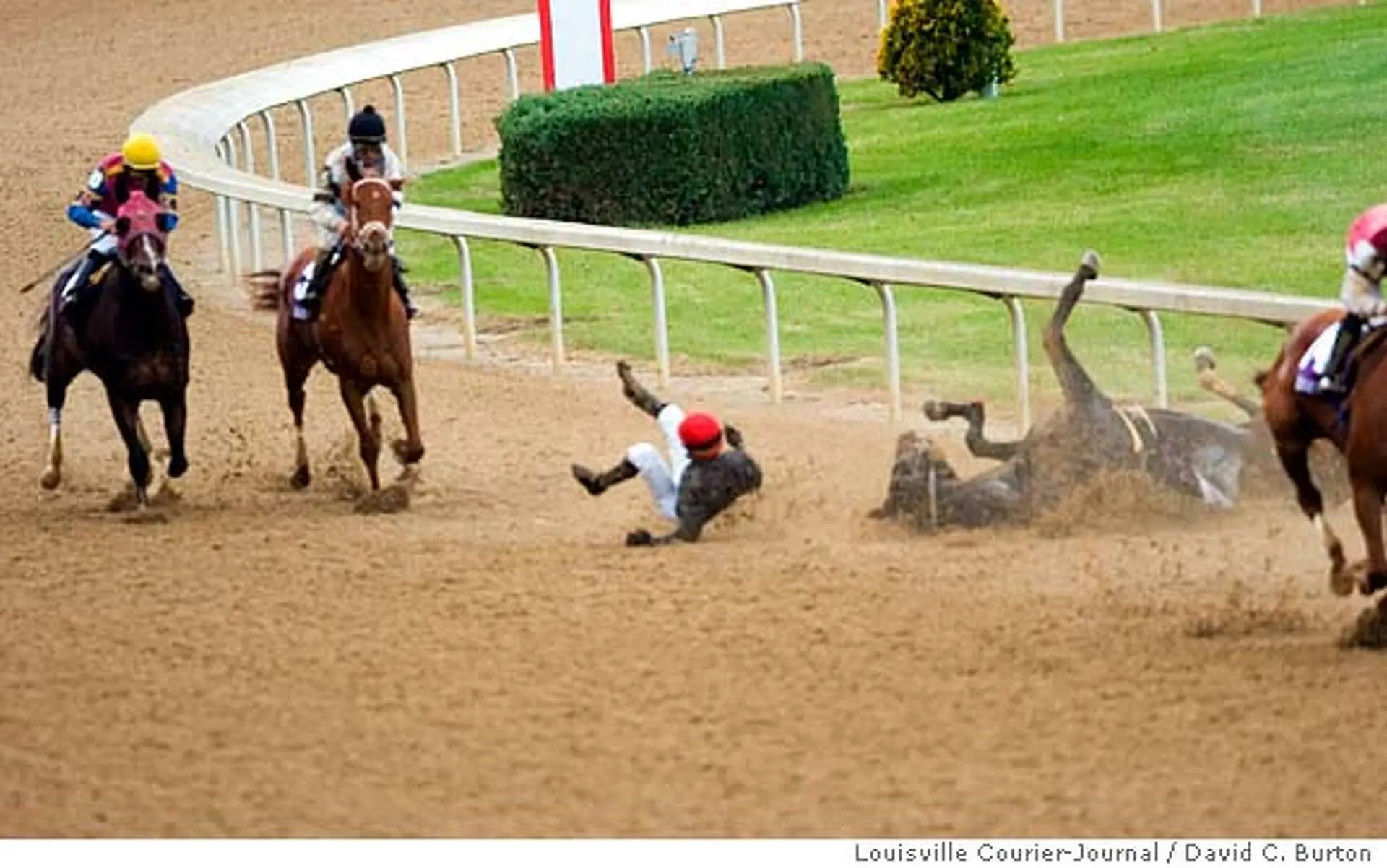
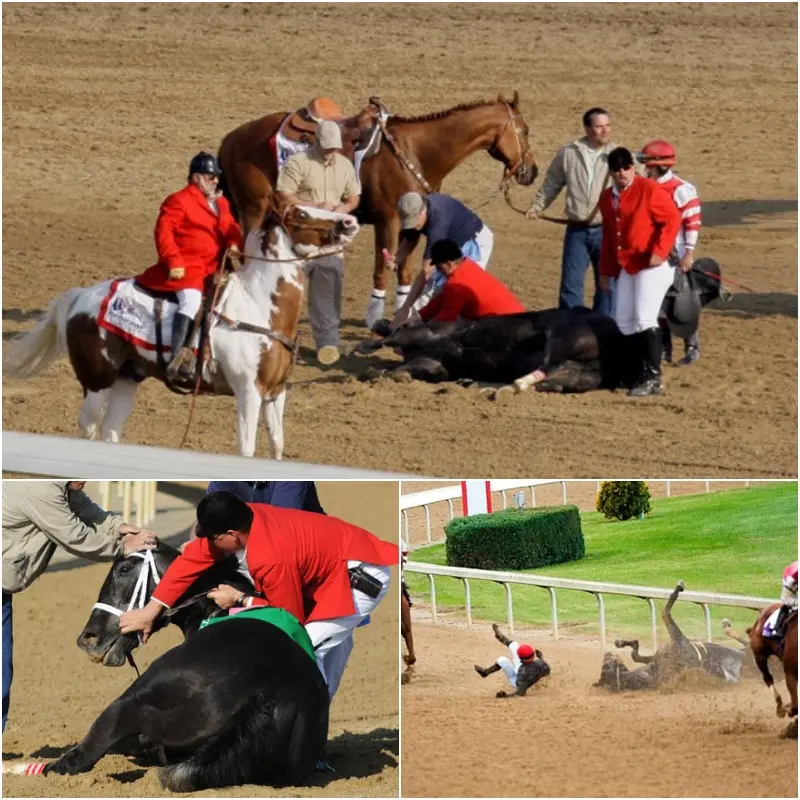
The jubilation for Big Brown’s triumph, however, turned to horror in an instant. As the horses began to pull up after the finish line, Eight Belles suddenly faltered. Viewers watching on television—and those in the stands—saw the filly’s front legs buckle beneath her. She collapsed heavily onto the dirt track, her momentum carrying her forward until she came to a painful stop. The cameras, still rolling in the aftermath of the race, captured the devastating scene: the filly lying prone, unable to rise, her body trembling from shock and pain.
Track veterinarians rushed to her side, but the diagnosis was immediate and grim. Eight Belles had suffered catastrophic compound fractures in both front fetlock joints—the ankles shattered under the immense stress of the race and the sudden deceleration.
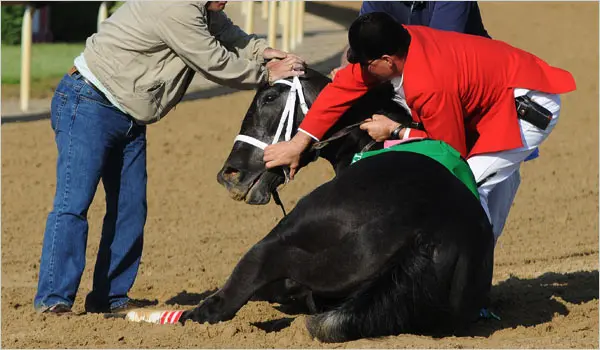
In thoroughbred racing, such injuries are almost always fatal. Horses rely heavily on their slender legs to support their massive bodies, and a broken leg prevents them from standing or bearing weight without excruciating pain. Recovery is rarely possible due to the risk of infection, laminitis (a painful inflammation of the hoof), and the psychological toll on the animal. With no viable path to treatment or transport—her legs offered no support even for splinting—the on-track veterinarian, Dr. Larry Bramlage, made the humane but heartbreaking decision.
Eight Belles was euthanized right there on the track with a lethal injection, mere minutes after her heroic effort. The image of her lifeless form, surrounded by officials and the distant roar of the still-celebrating crowd for the winner, played out in real time on national television.
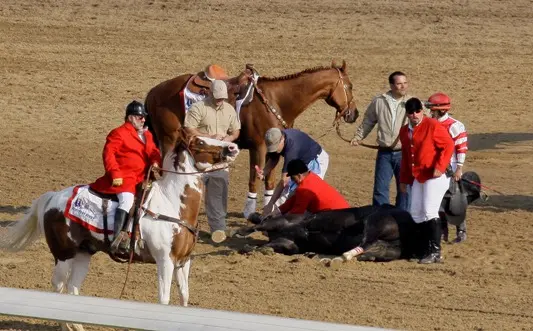
The broadcast itself added to the raw impact. Unlike some incidents where cameras quickly cut away, the moment unfolded live for millions. Commentators struggled to find words as the scene shifted from triumph to tragedy. The juxtaposition was stark: cheers for Big Brown mingled with gasps and cries from those who witnessed the filly’s fall. For many viewers, it was the first time they had seen such an event so graphically and immediately. The Derby, a celebration of equine athleticism and human tradition, had suddenly exposed its darkest reality.
The aftermath was swift and intense. Animal rights groups seized on the incident to renew calls for greater scrutiny of horse racing, questioning breeding practices, the physical demands on young horses, and the use of certain medications. Critics pointed to Eight Belles’ pedigree, noting lines that some experts believed predisposed her to unsoundness, echoing concerns from previous high-profile breakdowns like those of Ruffian in 1975 and Barbaro in 2006.
Barbaro’s injury at the Preakness two years earlier had already heightened public awareness of racing’s risks, but Eight Belles’ death—occurring right after the finish line in the most watched race of the year—amplified the debate exponentially.
In the days and weeks following, the industry faced intense media scrutiny. Trainer Larry Jones defended the sport, expressing profound sorrow while arguing that such tragedies were rare and that the filly had been treated with care. Owner Rick Porter shared similar sentiments, mourning the loss of a horse he described as exceptional. Yet the conversation extended beyond this single event. Discussions about track surfaces gained traction—some pointed to dirt tracks like Churchill Downs’ as potentially more hazardous than synthetic ones, which had shown lower injury rates in other jurisdictions.
Calls for stricter medication rules, better pre-race veterinary inspections, and limits on racing two-year-olds also intensified.
Over the years since 2008, the industry has implemented reforms aimed at reducing fatalities. Organizations like The Jockey Club and the Grayson-Jockey Club Research Foundation advanced initiatives on horse welfare, including enhanced data collection on breakdowns, improved breeding guidelines to avoid risky genetic crosses, and investments in track maintenance. Studies showed modest declines in race-related fatalities in some regions, including Kentucky, though critics argue progress has been uneven and that the sport’s inherent dangers persist.
Annual reports from groups monitoring racing deaths continue to highlight ongoing issues, with hundreds of thoroughbreds still lost each year across the United States to racing injuries.
Eight Belles’ story endures not just as a moment of sorrow but as a symbol of the fine line between glory and heartbreak in horse racing. She ran with extraordinary heart, proving her class in one of the toughest tests in the sport, only to pay the ultimate price in full view of the world. The image of her collapse—swift, irreversible, and broadcast without filter—captures the fragility beneath the pageantry.
For those who watched it unfold live, it remains one of the most haunting spectacles in television history: a reminder that even in triumph, the pursuit of speed can exact a devastating toll. The Kentucky Derby goes on each spring, filled with hope and tradition, but the memory of Eight Belles lingers as a poignant cautionary tale about the cost of the chase.