The 1993 Grand National Race That Never Happened
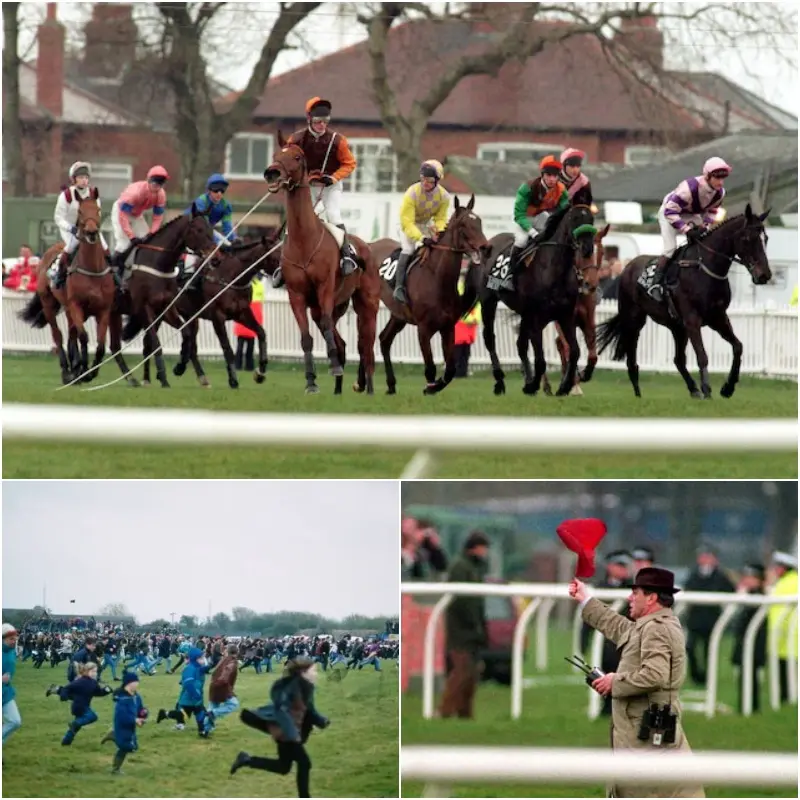
On April 3, 1993, the world tuned in to watch what should have been the 147th running of the Grand National, the iconic steeplechase held annually at Aintree Racecourse near Liverpool, England. Billed as one of the most prestigious and unpredictable events in horse racing, the race attracts massive crowds and billions in bets worldwide. That day, however, it became something far more infamous: the only Grand National in history to be declared void, forever remembered as “the race that never was.”
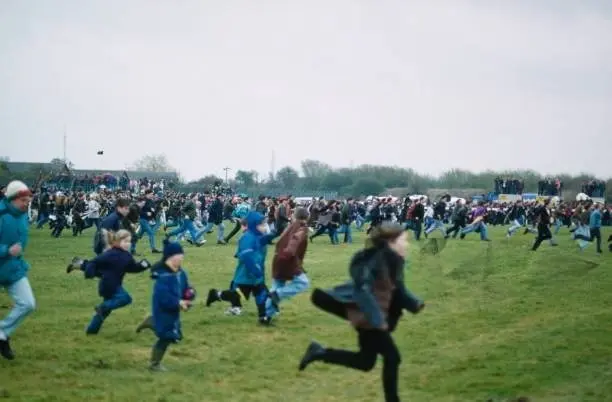
The troubles began well before the scheduled start time. Animal rights protesters, determined to highlight their opposition to horse racing, invaded the course near the first fence. Fifteen activists breached security and positioned themselves on the track, forcing officials to delay the proceedings while police and stewards cleared the area. This disruption echoed a similar protest at the 1991 Grand National but proved only the prelude to greater chaos. The incident heightened tensions and contributed to an already fraught atmosphere, with the race starting nine minutes late after the course was finally deemed safe.
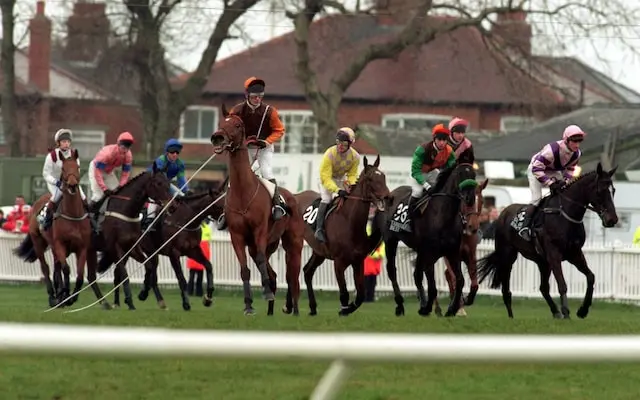
With the 39-horse field finally lined up under starter Keith Brown, the first attempt to get the race underway ended in disaster. As the runners surged forward, several horses and jockeys became entangled in the starting tape—a traditional ribbon-like mechanism stretched across the track. The tape failed to release cleanly, prompting Brown to signal a false start. Red recall flags were waved, and the field was called back to reform at the line. Jockeys pulled up where they could, but the incident foreshadowed the communication breakdowns that would follow.
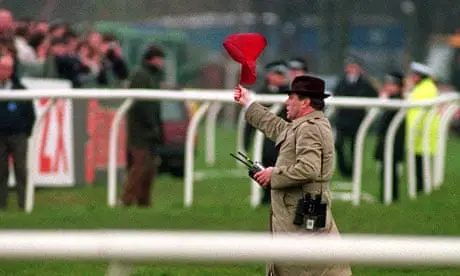
Undeterred, Brown prepared for a second start. The horses approached the tape once more, but history repeated itself in even more dramatic fashion. This time, the tape snagged around the neck of jockey Richard Dunwoody, riding one of the favorites. Brown immediately called another false start, frantically waving his red flag and sounding the recall. Some jockeys noticed the signal and halted their mounts, but the majority—30 out of 39—failed to see or hear the stop command amid the noise, confusion, and the sheer momentum of the charge toward the first fence.
What followed was surreal. Those 30 horses continued as if the race were official, thundering over the famous Aintree fences—the towering Becher’s Brook, the Chair, the Canal Turn—oblivious to the fact that the event had been aborted. Meanwhile, a handful of riders who had pulled up milled about in bewilderment near the start. BBC commentator Peter O’Sullevan captured the unfolding pandemonium live: “And they’re away—oh, and once again the tape has snagged, and it’s a recall… It was caught round Richard Dunwoody’s neck, the tape.
And they’ve been recalled—but the majority don’t realise that it is a recall! They’re going down to jump the first, they’re going to!”
The rogue field pressed on for the full four miles and 30 fences. Some horses tired and were pulled up along the way, but seven completed the punishing circuit. Esha Ness, a 50-1 outsider ridden by John White and trained by Jenny Pitman, crossed the line first in what would have been the second-fastest time in Grand National history. Behind came Cahervillahow, Romany King, and The Committee. Bookmakers initially faced payouts on what appeared to be a stunning upset victory.
But reality soon intervened. Stewards and the Jockey Club reviewed the footage and circumstances. The false start rules were clear: if a recall is not heeded by the majority, and the race proceeds irregularly, it cannot stand. With no fair or complete contest having taken place, officials had little choice. The race was declared void—the first and only time in the Grand National’s long history. No winner was crowned, no trophy awarded, and no official result recorded.
The fallout was immediate and severe. Punters had wagered an estimated £75 million (around $115 million at the time) on the event. Bookmakers, bound by industry rules, refunded bets in full, sparing themselves massive losses but leaving many bettors frustrated at the anticlimax. Connections of Esha Ness felt particular disappointment; the horse’s “win” was erased, and the achievement faded into a quirky footnote. Jenny Pitman, one of racing’s most successful trainers, later reflected on the bitterness of the moment, while jockey John White spoke of the strange sensation of crossing the line only to learn it meant nothing.
The Jockey Club launched a formal inquiry into the debacle. Investigations pointed to multiple failures: the outdated starting tape mechanism, which had proven unreliable; inadequate communication systems between starter, jockeys, and officials; and the compounding effect of the earlier protest delay, which may have frayed nerves and focus. Critics argued that the sport’s traditions, while cherished, had left it vulnerable to modern scrutiny and logistical shortcomings.
In the years since, the 1993 Grand National has prompted lasting reforms. Starting procedures were overhauled, with the traditional tape replaced by more reliable starting stalls and electronic signals. Recall protocols were strengthened, including better visibility for flags and improved radio communication. Animal rights protests continued to shadow the event in subsequent years, but security measures at Aintree have evolved significantly to prevent course invasions.
Three decades on, the episode remains a cautionary tale in sporting history. It exposed the fragility of even the grandest traditions when human error, technical glitches, and external interference collide. For those who witnessed it—whether in the stands, on television, or among the jockeys thundering blindly onward—it stands as a bizarre, almost farcical reminder that sometimes, the greatest races are the ones that never officially happen.
The void result stripped away glory but added an indelible chapter to the Grand National’s lore. Esha Ness’s phantom triumph, the tangled tape around Dunwoody’s neck, O’Sullevan’s incredulous commentary—all endure as vivid snapshots of chaos on one unforgettable April afternoon. In a sport defined by unpredictability, few moments have proven quite so unpredictable as the 1993 Grand National that never was.