In the heart of England’s industrial powerhouse, Birmingham, once stood a beacon of excitement and elegance: Bromford Bridge Racecourse. Opened in 1895, it quickly became a symbol of sporting grandeur, drawing crowds from across the Midlands and beyond. Known officially as “Birmingham” in racing circles, the flat track spanned 180 acres along the River Tame, offering a thrilling escape amid the smoke and clamor of the city’s factories. At its peak, it was hailed as one of England’s most perfect masterpieces, a venue where speed, strategy, and spectacle converged.
What set it apart was its legendary bar, reputed to be the world’s longest at an astonishing 334 feet—surpassing even a famed establishment in Victoria, Australia. This continuous counter, nestled in the grandstand, served as a social hub where punters, jockeys, and spectators mingled over pints, sharing tales of triumphs and near-misses.
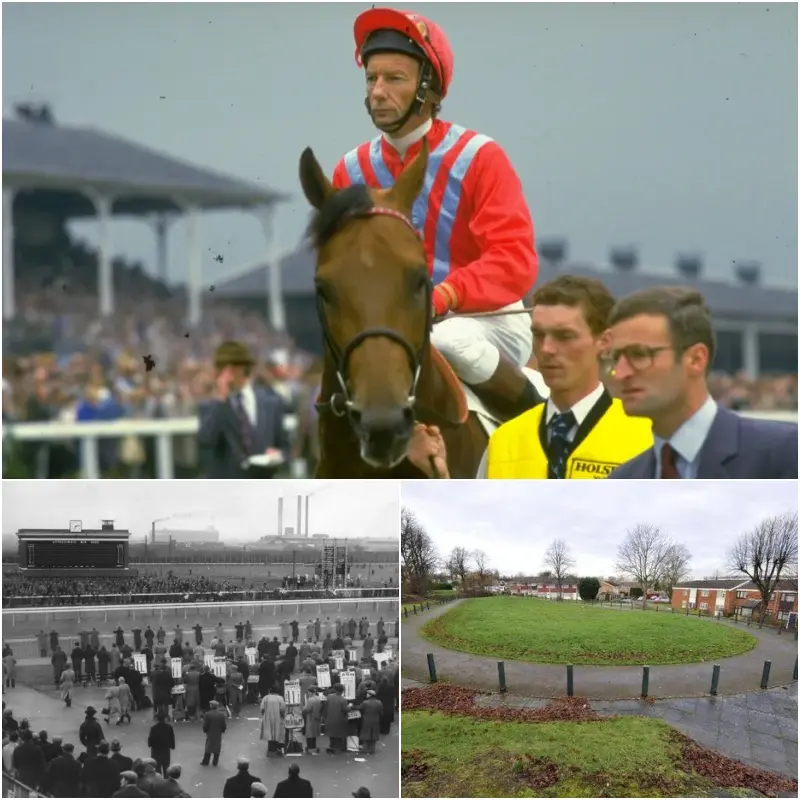
The golden age of Bromford Bridge unfolded in the early to mid-20th century, a time when horse racing was woven into the fabric of British life. The course hosted prestigious events like the City of Birmingham Cup, attracting top talent and massive audiences. On race days, special trains pulled into the on-site station, and buses ferried eager fans from the city center. Crowds swelled to over 10,000, especially during the popular two-day meetings in spring and summer. The atmosphere was electric: the thunder of hooves on the turf, the roar of the stands, and the sharp cries of bookmakers.
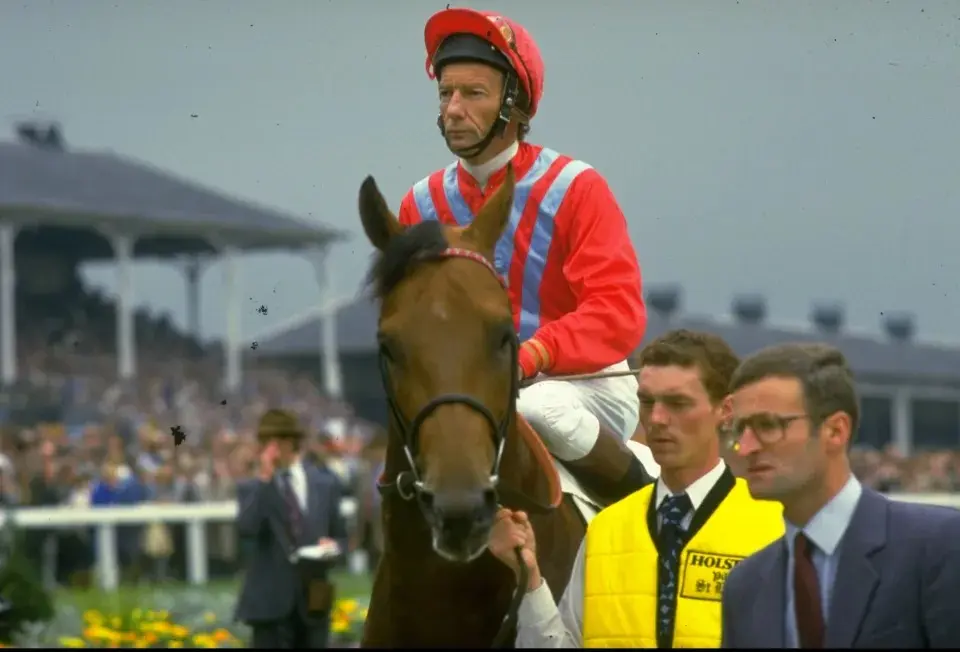
Legends were forged here, none more immortal than Lester Piggott, the masterful jockey whose career spanned decades. Piggott, with his signature style and unyielding determination, graced the Bromford turf multiple times, etching his name into racing lore. In one memorable outing, he piloted winners amid the course’s challenging bends and straights, captivating tens of thousands who packed the enclosures. The venue’s quirky features, like its riverside location and the grandstand’s opulent design, added to its allure.
The long bar wasn’t just a gimmick; it was a engineering marvel, allowing seamless service during peak hours, symbolizing the era’s blend of innovation and indulgence.
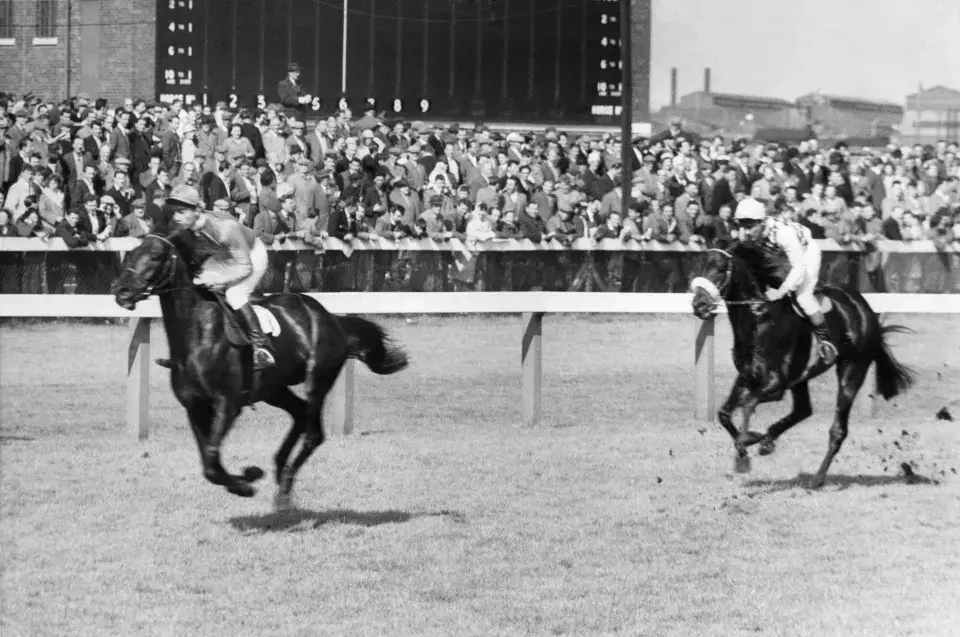
Yet, beneath the glamour, cracks began to form. Post-World War II, Bromford Bridge enjoyed a brief resurgence, with attendances holding steady into the 1950s. But the 1960s brought a perfect storm of challenges. The legalization of off-course betting shops in 1961 siphoned away casual punters, who no longer needed to brave the elements for a flutter. Harsh winters led to frequent cancellations—six of eight January meetings in 1965 were abandoned due to frost and snow. Average crowds dwindled to around 5,000, a far cry from the halcyon days.
Racegoers increasingly favored rural tracks like Warwick or Stratford, accessible by the growing number of private cars, over Bromford’s urban backdrop of factories and wire mills. Financial losses mounted for the Birmingham Racecourse Company, exacerbated by rising maintenance costs and competition from other leisure pursuits.
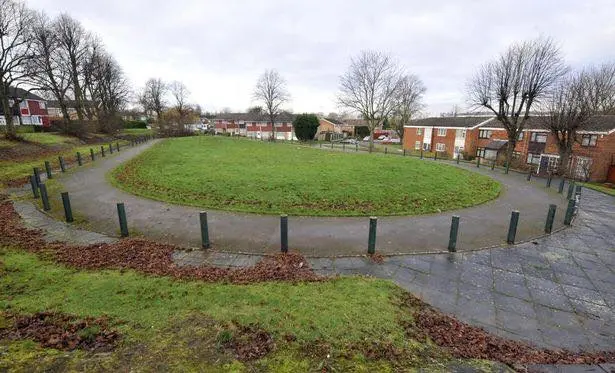
The secret behind this horrific collapse, which still stuns and saddens the racing community, lies in a confluence of societal shifts and opportunistic urban development. While declining interest played a role, the true catalyst was Birmingham Corporation’s insatiable hunger for land amid post-war housing shortages. The city was grappling with slum clearances, displacing thousands from inner-city areas blighted by poverty and decay. Bromford’s 180-acre site, flat and strategically located near major roads, became prime real estate. In 1964, the corporation offered £1.25 million—an equivalent of over £20 million today—for the land, a sum the shareholders couldn’t refuse.
This deal sealed the fate of the racecourse, prioritizing housing over heritage. Whispers in racing circles suggest internal mismanagement and a failure to modernize contributed, but the overarching “secret” was the inexorable march of progress: a city rebuilding itself from wartime ruins, sacrificing cultural landmarks for social necessities. The Jockey Club’s oversight on safety and viability may have hastened the end, but urban expansion was the executioner.
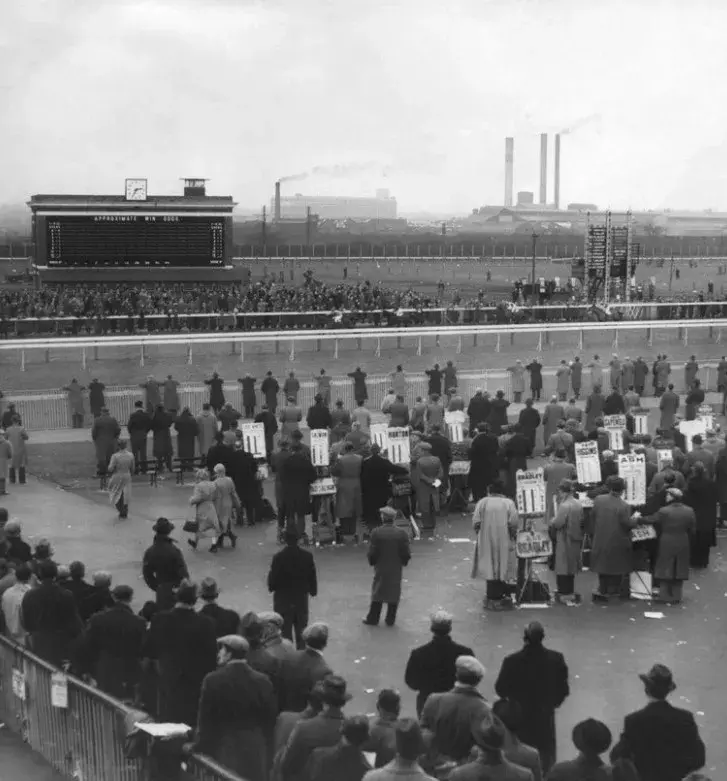
The final meeting on June 21, 1965, was a poignant farewell. Under gloomy skies and persistent rain, 12 runners contested the aptly named Farewell Maiden Plate. Lester Piggott wasn’t there that day, but Greville Starkey claimed the last victory aboard Welshman. Only weeks later, bulldozers arrived, erasing the grandstand, stables, and that iconic bar. Today, the site is a sprawling housing estate in Hodge Hill, shadowed by the M6 motorway. What remains is far from the desolate, eerie ruin one might imagine; instead, it’s a transformed landscape of homes, streets, and greenspaces.
Subtle nods to the past endure: roads named after famous courses like Kempton Park Road and Sandown Close, or horses such as Arkle Croft. The old parade ring survives as a circular pathway around a grassy oval in Tulyan Close, a quiet remnant where locals walk dogs or children play, oblivious to the ghosts of galloping steeds.
The racing community remains regretful, lamenting the loss of a venue that embodied the sport’s golden era. Historians like Chris Pitt have chronicled its story, noting how housing booms devoured similar sites across the UK. In 2015, the 50th anniversary prompted nostalgic articles and forums sharing photos and memories. More recently, as of 2026, community groups occasionally discuss the site’s heritage, with online posts highlighting surviving elements like that parade ring. Proposals for plaques or a small museum have surfaced but faded amid modern priorities.
Yet, the spirit lingers—Bromford Bridge wasn’t just a track; it was a chapter in Birmingham’s soul, a reminder that even in ruins, history whispers of glory days gone by. The city’s rebirth came at a cost, leaving enthusiasts to ponder what might have been if the longest bar had poured one more round.