‘…that’s been normal all along, since I was a child.’ Why the Horse Racing Scandal Should Be Britain’s Wake-Up Call
In the quiet corners of rural Britain, a child watches their father train the family dog for the hunting field. “You have to get the dog used to the hunting environment,” the parent explains, as the young animal is exposed to the sights, sounds and smells of pursuit and kill. Decades later, that same child, now an adult, reflects on the practice with a shrug: “That’s been normal all along, since I was a child.” It is a casual acceptance of desensitisation, a cultural shrug that has echoed through generations.
Today, that same normalisation stares back at Britain from the grandstands of Ascot, the fences of Aintree and the abattoir gates where exhausted racehorses meet their end. The latest figures from the racing industry lay bare a scandal that can no longer be dismissed as isolated mishaps or the unfortunate cost of tradition. It is time to ask why an entire sector built on the routine infliction of suffering continues to enjoy public tolerance, and why this moment must become Britain’s moral reckoning with animal exploitation.
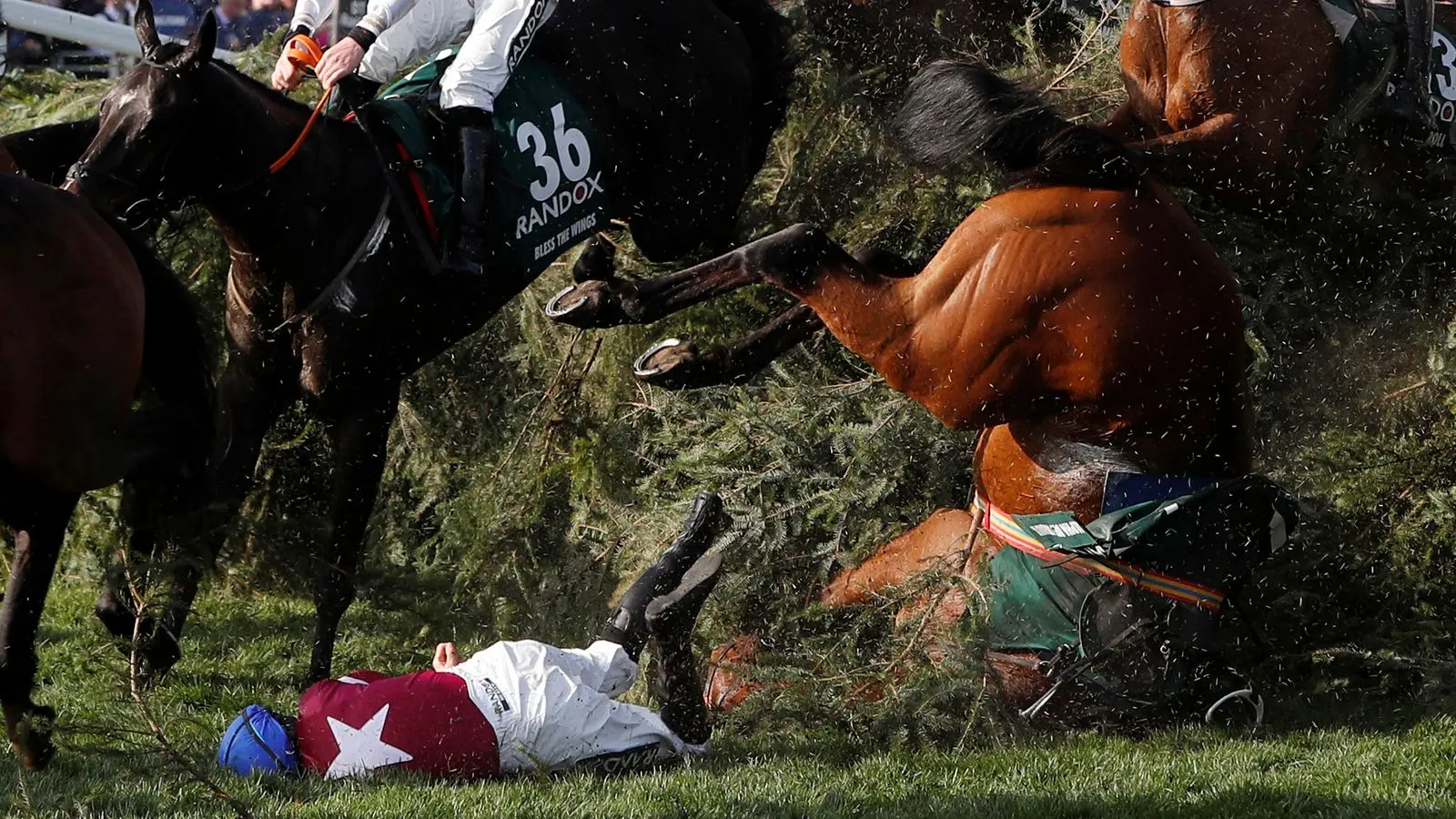
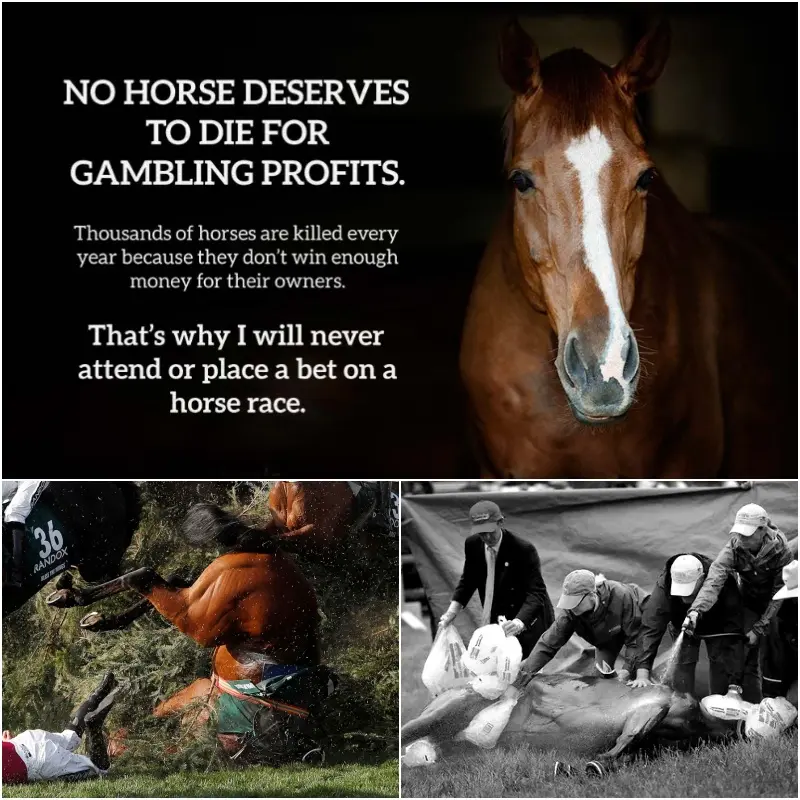
The numbers are stark and relentless. In 2024 alone, 214 horses were killed or destroyed on British racecourses – a more than 20 per cent rise on the previous year. Four died in a single afternoon at Newton Abbot in June, the highest single-day toll in nearly two decades. At the Grand National meeting, two more perished in 2025, adding to the grim tally of 67 deaths at the festival since 2000. These are not freak accidents.
They are the predictable result of forcing young, still-developing thoroughbreds to gallop at breakneck speeds over punishing obstacles, their bodies pushed beyond natural limits for human entertainment and profit. Heart attacks, shattered legs, broken necks – the causes are as brutal as they are routine.
Yet the suffering does not end when the race is over. Data obtained by Animal Aid through Freedom of Information requests reveal that 598 horses bearing racing industry passports were sent to slaughter in England throughout 2024. In just the first five months of 2025 that figure had already climbed to 317, with 186 of them five years old or younger. Many had been shipped across the Irish Sea after Ireland’s only licensed horse slaughterhouse was shut down amid its own abuse scandal.
These animals, bred in their thousands each year – around 13,000 foals annually across Britain and Ireland – are treated as disposable assets. Those who fail to deliver prize money quickly enough, or whose bodies simply wear out, are loaded onto lorries for stressful journeys that end in a captive-bolt gun. Vyta Du Roc, who once earned more than £175,000 on the track, was slaughtered just three months after his final race. The industry’s glossy image of champagne and silk cannot mask this industrial-scale discard.
At the heart of the cruelty on the track itself lies the whip. British rules still permit jockeys to strike horses six times in flat races and seven times in jumps races. In 2024, stewards recorded 557 whip offences. Jockeys exceeded limits on 537 occasions; five horses were left with visible weals from excessive force. Regulators insist the whip is a “steering aid,” but footage and veterinary evidence tell another story. Exhausted horses slowing under the strain of fatigue are punished with sharp, stinging blows to keep them moving.
The RSPCA has long warned that such use causes real pain and forces animals to run beyond their natural capacity, dramatically raising the risk of catastrophic injury. If a member of the public whipped a tired dog in the street to make it run faster, they would face prosecution. On the racecourse, it is standard procedure.
This is the “cruelest animal industry” precisely because it wraps systemic violence in the language of heritage and spectacle. The Grand National, billed as Britain’s most famous steeplechase, demands horses navigate drops, ditches and the notorious Becher’s Brook – hazards so dangerous that campaigners have begged for their removal for years. Officials refuse, arguing that the thrill of risk is what draws crowds and betting money. Meanwhile, the public is fed a narrative of noble athletes and devoted trainers. The reality is one of over-breeding, routine medication to mask injuries, and a throwaway culture once the horses’ economic usefulness expires.
Undercover investigations have repeatedly shown thoroughbreds, some raced in Britain only days earlier, arriving at abattoirs traumatised and neglected.
What makes the horse-racing scandal particularly insidious is how it mirrors and reinforces a broader societal conditioning to accept animal suffering. Return to that childhood dog-training scene. In parts of rural Britain, young people are still taught that exposing dogs to the violence of the hunt – the chase, the cornering, the kill – is necessary “desensitisation.” The phrase “get the dog used to the hunting environment” is repeated without irony, as though teaching an animal to suppress its natural aversion to bloodshed is a wholesome rite of passage.
The same logic operates in racing: horses must be “broken” to the whip, “conditioned” to ignore pain, “pushed” for our pleasure. Both practices rely on the same psychological sleight of hand – framing cruelty as preparation, normalising violence by embedding it in tradition from an early age. Once a society learns to look away from a whipped dog or a whipped horse, the threshold for empathy shifts. What begins as acceptance of animal pain quietly erodes our collective capacity to recognise suffering anywhere.
The impact stretches far beyond the animals themselves. When industries profit from desensitising the public to cruelty, they shape cultural values. Children who grow up watching horses whipped on television or hearing hunting stories romanticised at the dinner table absorb a dangerous lesson: some lives matter less if they serve human entertainment or status. This moral erosion has consequences. It dulls outrage at other forms of exploitation – factory farming, wildlife trade, the global trade in horses for meat. It undermines the very notion of compassion that Britain often claims as a national virtue.
Polls already show shifting attitudes: more than 20 per cent of the public now say they do not support the use of horses in sport, and attendance at flagship events like Epsom is noticeably down. The social licence that once protected these industries is fraying.
Britain stands at a crossroads. The horse-racing establishment will argue for incremental reform – stricter whip rules, better aftercare, more veterinary oversight. Yet the data prove these measures are cosmetic. Deaths continue to rise, slaughter numbers surge, and whip offences persist even under existing regulations. Independent regulation, a total ban on the whip, and a mandatory aftercare policy that guarantees every bred horse a natural lifespan are the bare minimum required. Ultimately, however, the question is more fundamental: should we continue to breed sentient beings solely to exhaust, whip and discard them for sport?
The scandal unfolding in plain sight – 214 deaths in 2024, hundreds more slaughtered in 2025, exhausted horses punished with the whip while the crowds cheer – is not merely about racing. It is about who we are as a nation. If we can watch a horse collapse at the final fence and still call it entertainment, if we can accept that “that’s been normal all along,” then we have already surrendered something essential. The wake-up call is not coming from protesters alone.
It is written in the veterinary reports, the slaughterhouse statistics, and the quiet testimony of every animal that never chose to run or hunt for our amusement. Britain has prided itself on moral leadership on animal welfare issues in the past. The time has come to prove it again – by recognising that no tradition, no matter how gilded or nostalgic, justifies the routine infliction of suffering. The horses, and the dogs trained in quiet fields, deserve nothing less. The public, if it chooses to look, will see the truth.
The question is whether we are finally ready to act on it.