Tadej Pogačar is getting his own VIP secuity detail for training rides after rise in incidents with content-crazed fans.

The modern superstar cyclist is no longer just racing rivals on mountain passes; he is increasingly navigating a new kind of obstacle course shaped by smartphones, social media algorithms, and fans desperate for viral moments. According to sources close to his camp, Tadej Pogačar will now be accompanied by a dedicated VIP security detail during certain training rides, following a noticeable rise in unsafe and intrusive encounters with overzealous supporters.
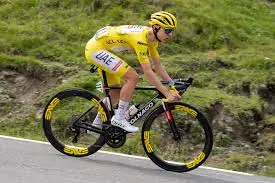
Pogačar, widely regarded as the defining rider of his generation, has long enjoyed an unusually close relationship with fans. Unlike many elite athletes who retreat into privacy between competitions, he often trains on open roads, waves to spectators, and occasionally stops for photos. That openness, however, has begun to backfire. In recent months, fans chasing social media content have reportedly followed him in cars, ridden dangerously close on bicycles, and even run alongside him on narrow mountain roads while filming for TikTok, Instagram Reels, or YouTube shorts.
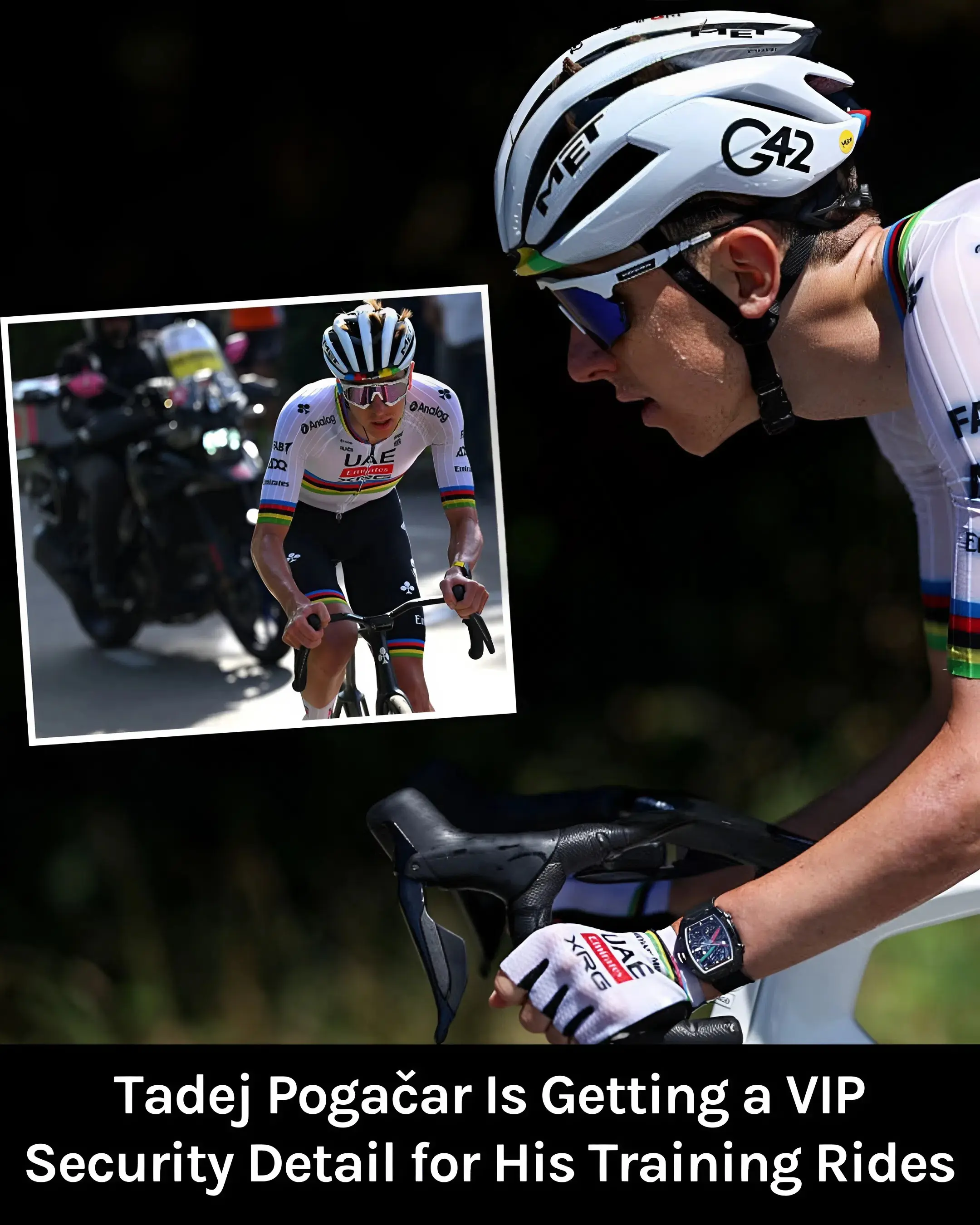
What once felt like harmless admiration has evolved into a safety concern. Team insiders describe situations where fans slowed abruptly in front of him to capture dramatic footage, swerved across lanes for a better angle, or shouted questions mid-effort during high-speed descents. In a sport where a split-second distraction can lead to catastrophic crashes, the risks are obvious. For a rider who routinely exceeds 70 km/h on descents and trains at the absolute limit of human performance, unpredictability on the road is unacceptable.
The decision to introduce a VIP-style security presence is not about creating distance between Pogačar and the public, but about restoring basic safety. The security team’s role is reportedly low-key: riding or driving ahead and behind him on selected routes, managing traffic when necessary, and discouraging fans from getting dangerously close. There are no flashing lights or dramatic interventions, just a quiet buffer designed to allow him to train as a professional athlete rather than a moving film set.
This move reflects a broader shift in how elite cyclists are forced to operate in the age of influencer culture. Training rides, once private and almost meditative, are now treated by some fans as live entertainment. For riders of Pogačar’s stature, every climb is content, every grimace a potential meme. The line between support and intrusion has blurred, and teams are scrambling to adapt.
Those close to Pogačar emphasize that the decision was not taken lightly. He is known within the peloton for his approachable personality and genuine appreciation of supporters. Friends say he finds energy in knowing people care enough to stand roadside, even during training. But the tone has changed. When fans prioritize their own online engagement over an athlete’s safety, something has gone wrong.
Cycling has faced similar challenges before, though rarely at this scale. In recent years, several high-profile riders have complained about spectators leaning into the road during climbs, running alongside the peloton, or filming inches from handlebars. What makes Pogačar’s case different is the sheer intensity of attention. As a multiple Grand Tour winner and the face of a new, aggressive era of racing, he attracts fans far beyond traditional cycling circles. Many are new to the sport and unfamiliar with its unwritten rules of respect and distance.
There is also a psychological dimension. Training is not just physical preparation; it is mental space. Constant surveillance, even when well-intentioned, erodes focus. Knowing that any mistake, any off-day, could be clipped, captioned, and judged online adds pressure that athletes never consented to. The presence of security may provide not only physical protection but also a sense of calm, allowing Pogačar to reconnect with the rhythms that made him great in the first place.
Critics may argue that security details risk turning cycling into an elitist spectacle, separating stars from the fans who sustain the sport. Yet many within the peloton see this step as inevitable. As one former professional put it, “You can’t train like an artist if the studio is full of people grabbing your brushes.” The road must remain a workspace, not a stage.
For now, the security detail will reportedly be used selectively, particularly on popular climbs and during key phases of preparation. Pogačar is expected to continue engaging with fans at races, official events, and controlled settings where interaction is safe and welcome. The message is not “stay away,” but “give space.”
In many ways, this moment captures a tension at the heart of modern sport. Access has never been greater, and heroes have never felt closer. But with that closeness comes responsibility. As Pogačar prepares for the next chapter of his already historic career, the hope is that fans will rediscover a simple truth: the greatest sign of admiration is not the perfect video clip, but the restraint to let greatness happen undisturbed.