The war of words between IndyCar and the Oregon Ducks college football team escalated after the IndyCar president fired back at a series of mocking comments that were seen as “disrespectful” of America’s most prestigious race, turning the sports conflict into a storm that spread across social media.
Nobody saw this coming. What began as a lighthearted jab from a college football mascot during a high-profile ESPN College GameDay segment has ballooned into one of the more unexpected cross-sport feuds of recent memory, pitting the storied Indianapolis 500 against the flashy, high-recruiting Oregon Ducks. The incident has highlighted the passionate loyalties that define American sports fandom, where even a mascot’s sign can ignite thousands of online reactions, memes, and retorts from drivers, team officials, and everyday fans.
It all started in early October 2025, when ESPN’s College GameDay crew set up in Eugene, Oregon, ahead of a highly anticipated matchup between the Oregon Ducks and the Indiana Hoosiers. The Ducks, riding high as one of the top teams in the newly expanded College Football Playoff landscape, were expected to showcase their talent on a national stage.
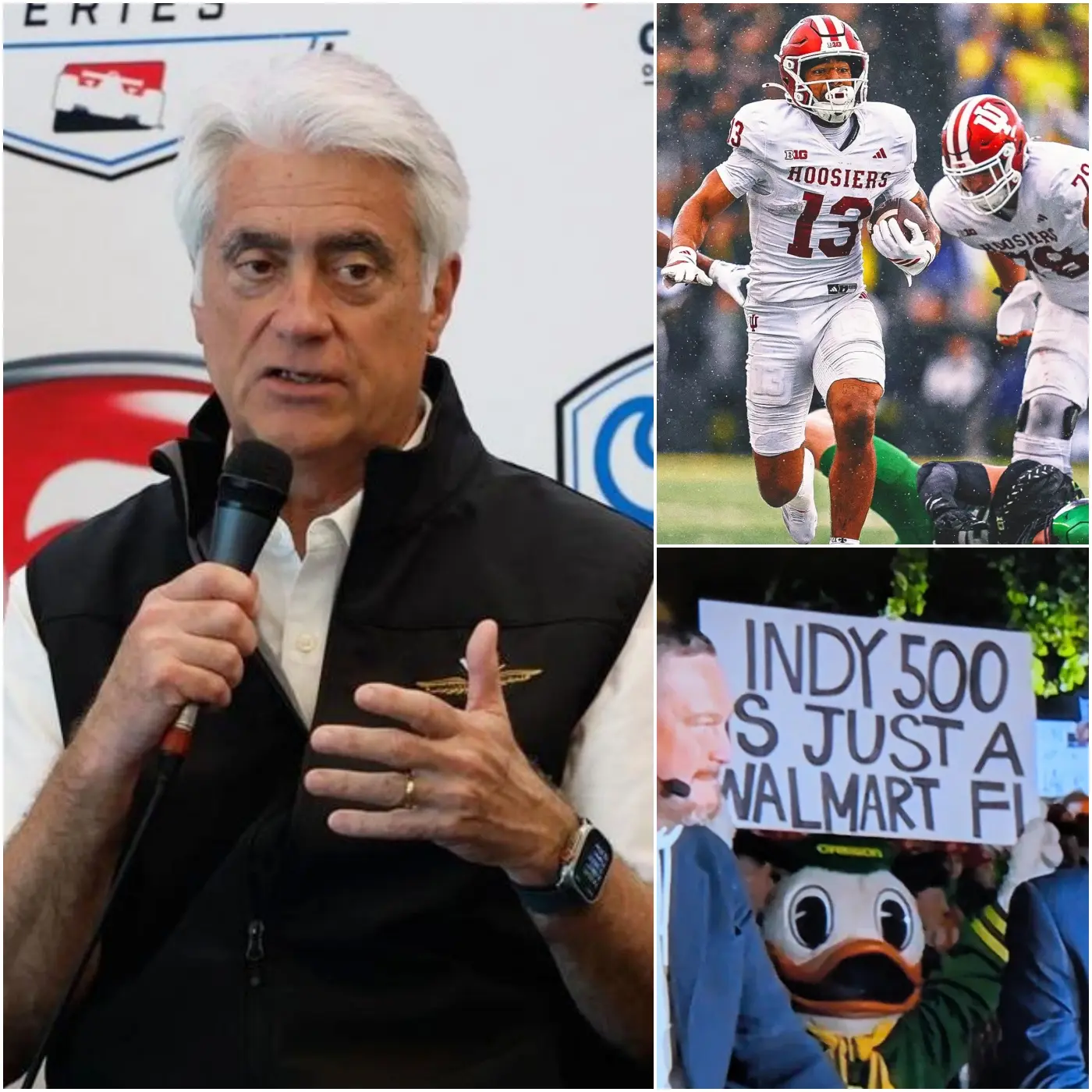
During the broadcast, the Oregon Duck mascot—famously energetic and theatrical—held up a sign that read something along the lines of “Indy 500 is Walmart F1,” a cheeky dig implying that the Indianapolis 500, the crown jewel of IndyCar racing, was a discount or knockoff version of Formula 1. The comment played into long-standing rivalries in motorsports, where F1’s global glamour often overshadows IndyCar’s deep American roots, but it struck a nerve in Indiana, where the Indy 500 is not just a race—it’s a cultural institution dating back to 1911.
The sign quickly went viral on social media platforms like X (formerly Twitter), Reddit, and Instagram. Motorsport accounts reposted it with captions like “Oregon tried to roast the Indy 500… Indiana served roasted duck instead,” foreshadowing what was to come. Fans from the Midwest flooded comment sections with prideful defenses of the “Greatest Spectacle in Racing,” pointing out the event’s massive attendance, historical significance, and unique oval-racing tradition. Others mocked Oregon’s perceived reliance on flashy uniforms and big-money recruiting, labeling the Ducks a “Walmart Alabama” in one particularly biting reply that circulated widely.
The Ducks’ confidence seemed justified at the time. Oregon entered the game as heavy favorites, boasting elite recruits and a high-powered offense. But the Indiana Hoosiers, representing the same state that hosts the Indy 500, delivered a stunning upset, defeating Oregon 30-20 in a game that felt like poetic justice to many observers. The loss was Oregon’s first of the 2025 season, and it amplified the online narrative: talk trash, get hit. IndyCar-related accounts and personalities seized the moment.
Drivers from teams like Juncos Hollinger Racing, including Conor Daly, jumped in with playful jabs, while fans flooded threads with images of “roasted duck” memes.
The feud didn’t end on the football field. It escalated when Mark Miles, the president and CEO of Penske Entertainment (which oversees IndyCar and the Indianapolis Motor Speedway), weighed in directly. In a pointed response shared on X, Miles fired back in the same cheeky format as the original insult. He mirrored the “Walmart” phrasing to dismiss the Ducks’ jab, emphasizing the Indy 500’s prestige and longevity compared to college football antics. His reply was seen by many as a measured yet firm defense of the series’ heritage, refusing to let the mocking comment slide unchallenged.
“Disrespectful” became a key word in discussions, with supporters arguing that trivializing the Indy 500— an event that draws hundreds of thousands to Indianapolis each May and commands global attention—was out of line.
What made the exchange particularly spicy was the timing and context. The Indy 500 had long been a symbol of American motorsport resilience, especially amid debates about its place relative to F1’s growing U.S. popularity. Oregon’s sign tapped into that insecurity, but the backlash revealed how deeply protective fans are of the race’s legacy. Social media amplified everything: hashtags like #RoastedDuck trended briefly, Reddit’s r/INDYCAR subreddit exploded with threads dissecting the mascot’s sign and the subsequent football result, and Instagram posts from motorsport outlets garnered tens of thousands of likes and comments.
The storm didn’t fade quickly. Months later, into early 2026, references to the incident resurfaced. When Indiana advanced deep into the College Football Playoff—eventually facing Oregon again in a semifinal and delivering another decisive thrashing, this time 56-22—the old wounds reopened. IndyCar fans and personalities piled on once more, with posts celebrating the Hoosiers’ dominance as a form of delayed payback for the mascot’s slight. One viral thread noted how the Ducks, despite their recruiting prowess and talent, had been “embarrassed again” after the initial cheap shot at the Indy 500.
Even IndyCar drivers rubbed salt in the wound, sharing content that tied the football outcomes back to the original feud.
IndyCar’s president’s response stood out because it elevated the spat from fan banter to official commentary. In an era where sports leagues increasingly engage directly on social media to build community and defend their brand, Miles’ retort was strategic: witty enough to match the mascot’s energy, but authoritative enough to remind everyone of the Indy 500’s unmatched status in American racing. It also underscored a broader point about cross-sport respect—or the lack thereof. While rivalries fuel excitement, dismissing an iconic event like the Indy 500 as “Walmart” anything risked alienating a passionate fanbase that sees the race as sacred.
The fallout extended beyond laughs and memes. It sparked conversations about how college football’s massive media presence can inadvertently poke at other sports, and how quickly digital platforms turn isolated moments into nationwide stories. For IndyCar, the episode served as free publicity, reminding younger audiences—who might be more tuned into college football Saturdays—of the series’ existence and cultural weight. For Oregon, it became a cautionary tale about mascot antics in the viral age: what seems harmless on GameDay can linger for months, especially when tied to on-field results.
In the end, this unlikely clash between open-wheel racing and college gridiron proved that sports rivalries don’t need shared arenas to ignite. A simple sign, a football upset, and a pointed reply from a league executive were enough to create a storm that nobody anticipated. As social media continues to blur lines between sports worlds, expect more of these moments—where a mascot’s joke becomes a president’s rebuttal, and a single comment spirals into a full-blown, multi-month saga. The Indy 500’s prestige remains intact, and the Ducks learned a hard lesson in humility.
In American sports, sometimes the best comebacks happen off the track and off the field—right on the timeline.