In an emotional moment that reverberated through the Quarter Horse racing community, veteran jockey Cruz Mendez broke down in tears as he announced his immediate retirement from the sport.
The 40-year-old rider, once a dominant force at Los Alamitos Race Course, revealed that he had become completely paralyzed in both legs following a devastating racing accident earlier this year.
The news marked a heartbreaking end to a career defined by grit, consistency, and remarkable success in one of the most demanding disciplines in horse racing.
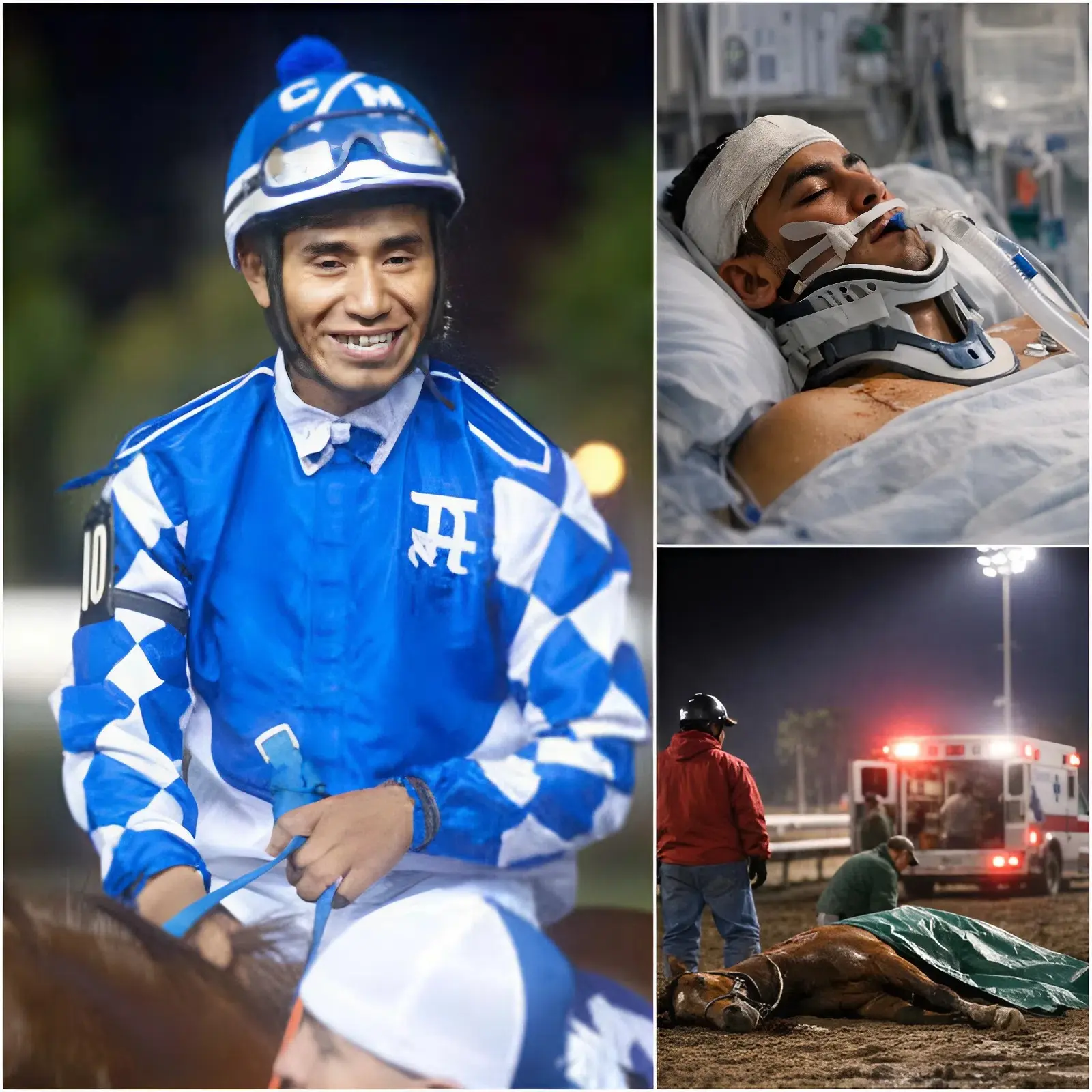
The incident occurred on January 24, 2026, during the fifth race at Los Alamitos, a premier venue for Quarter Horse competition in Southern California. Mendez was aboard the 3-year-old filly Imm Relentless, trained by Sergio Morgin, in a 400-yard sprint.
According to race charts from Equibase, the filly suddenly “lost action” late in the contest and fell, resulting in catastrophic injuries. The horse was euthanized on the track due to a severe back injury.
Mendez suffered a serious spinal cord injury in the fall and was rushed to Long Beach Memorial Hospital, where he underwent spinal surgery the following day.
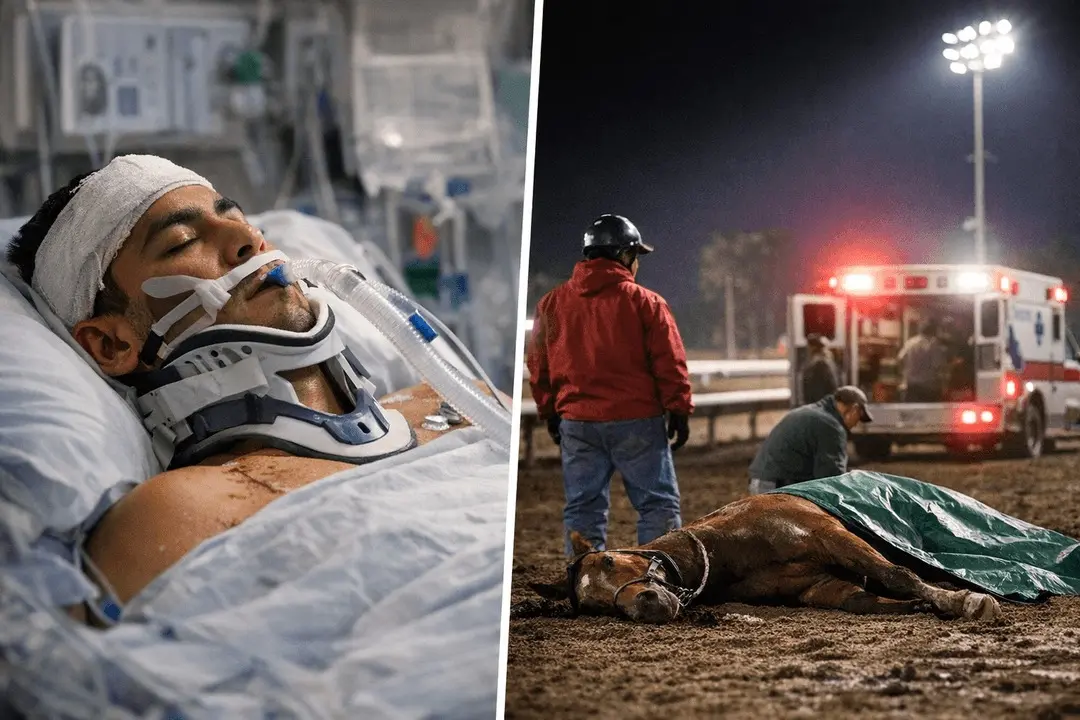
Initial reports from friends and racing officials expressed deep concern over the possibility of permanent paralysis in his legs. As days turned into weeks, medical assessments confirmed the worst fears: the damage to his spinal cord was irreversible, leaving him unable to walk or regain use of his lower limbs.
Despite hopes for a “miracle” recovery voiced by colleagues and supporters in the days immediately after the surgery, the reality set in that his days as a jockey were over.
Mendez, who had built a reputation as one of the toughest and most resilient riders in Quarter Horse racing, faced the grim prospect of a life forever changed.
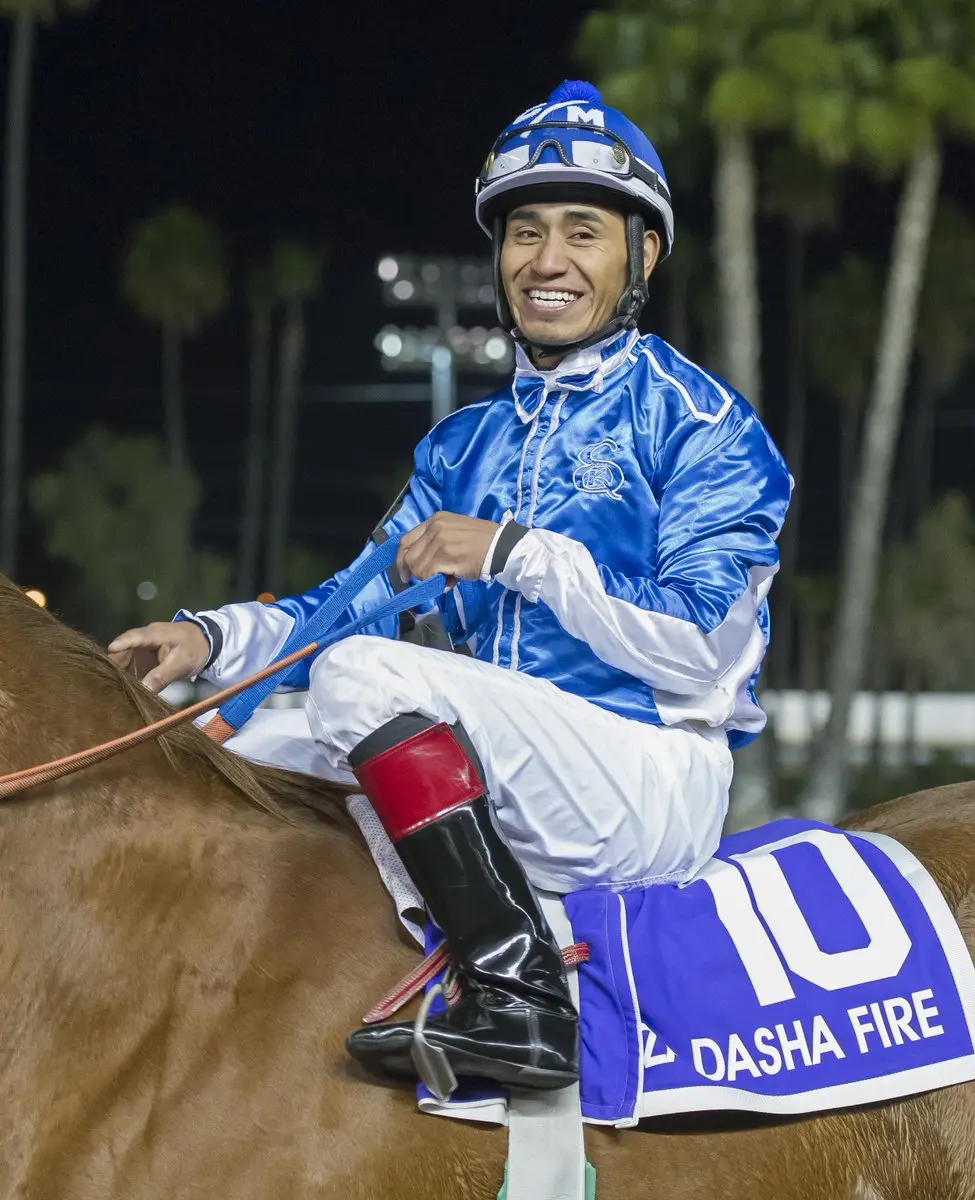
Mendez’s career statistics underscore why his departure is such a profound loss. Since beginning his professional journey in 2010, he amassed 1,184 victories in Quarter Horse races, a testament to his skill and longevity in a high-risk profession.
Among those wins were 17 at Grade 1 level, the pinnacle of the sport. At Los Alamitos, he claimed the riding title five times, with his most recent championship coming in 2023.
In 2024, he was honored with the Sam Thompson Memorial Jockey Award, recognizing his excellence and contributions to the industry.
Known for his quiet determination and ability to handle the explosive speed of Quarter Horses, Mendez was more than a statistic—he was an icon of perseverance in a sport where falls are frequent and consequences can be dire.
The accident has sent shockwaves beyond personal tragedy, prompting renewed scrutiny of safety protocols in racing.
While Mendez wore standard protective gear at the time of the incident, the severity of his spinal injury has highlighted vulnerabilities in current equipment, particularly for high-speed Quarter Horse events where falls often involve greater force due to the short, intense bursts of acceleration.
The International Federation of Horseracing Authorities (IFHA), which sets global standards for the sport, has responded by accelerating efforts to mandate advanced protective technologies.
In the wake of the accident, the IFHA announced plans to tighten regulations on so-called “smart helmets” and next-generation body protectors. These innovations include helmets with integrated sensors for real-time impact monitoring, enhanced energy-absorption materials, and improved neck support designs aimed at reducing spinal trauma.
Similarly, upgraded safety vests with better spinal alignment features and impact-dispersing layers are under consideration for mandatory adoption across member jurisdictions.
The push for these changes, however, has not been without controversy. Some jockeys and industry stakeholders have raised concerns about the practicality of the new gear.
Critics argue that smart helmets, while potentially life-saving in detecting concussions or severe impacts, could add weight or restrict peripheral vision and airflow, leading to discomfort during races that last mere seconds but demand absolute focus.
Others worry about the cost implications for riders, many of whom operate on modest earnings in the Quarter Horse circuit compared to Thoroughbred racing. There are also questions about whether the technology has been sufficiently tested in real-world racing conditions, where heat, sweat, and high G-forces test equipment limits.
Proponents, including safety advocates and medical experts, counter that the human cost of inaction is too high. Spinal cord injuries like Mendez’s are rare but catastrophic, often ending careers abruptly and imposing lifelong challenges.
The IFHA’s move is seen as a proactive step to evolve safety standards, drawing from advancements in motorsports and other high-risk athletics. Discussions are ongoing about phased implementation, pilot programs at select tracks, and collaboration with manufacturers to balance protection with jockey comfort.
Mendez’s tearful announcement came during a virtual gathering with fellow riders, trainers, and fans who have followed his journey. Visibly moved, he spoke of his love for the sport that shaped his life, thanking the community for its support during his recovery.
“Racing gave me everything,” he said, his voice breaking. “But now it’s time to step away and focus on what’s next.” Friends described the moment as raw and poignant, a reminder of the fragility that underlies the thrill of the track.
As the Quarter Horse world mourns the loss of one of its brightest stars, Mendez’s story serves as a catalyst for change. His mandatory retirement, born of tragedy, may ultimately lead to safer conditions for those who continue to chase the wire.
In a sport built on speed and courage, the industry now grapples with how best to protect the humans at its heart. For Cruz Mendez, the finish line has come too soon, but his legacy—as a champion rider and unwitting pioneer for safety—endures.