The British Horseracing Authority (BHA) has officially updated information about Broadway Boy following its “horrific” fall at the Grand National, sparking a wave of debate among horse racing fans and the equestrian community on social media.
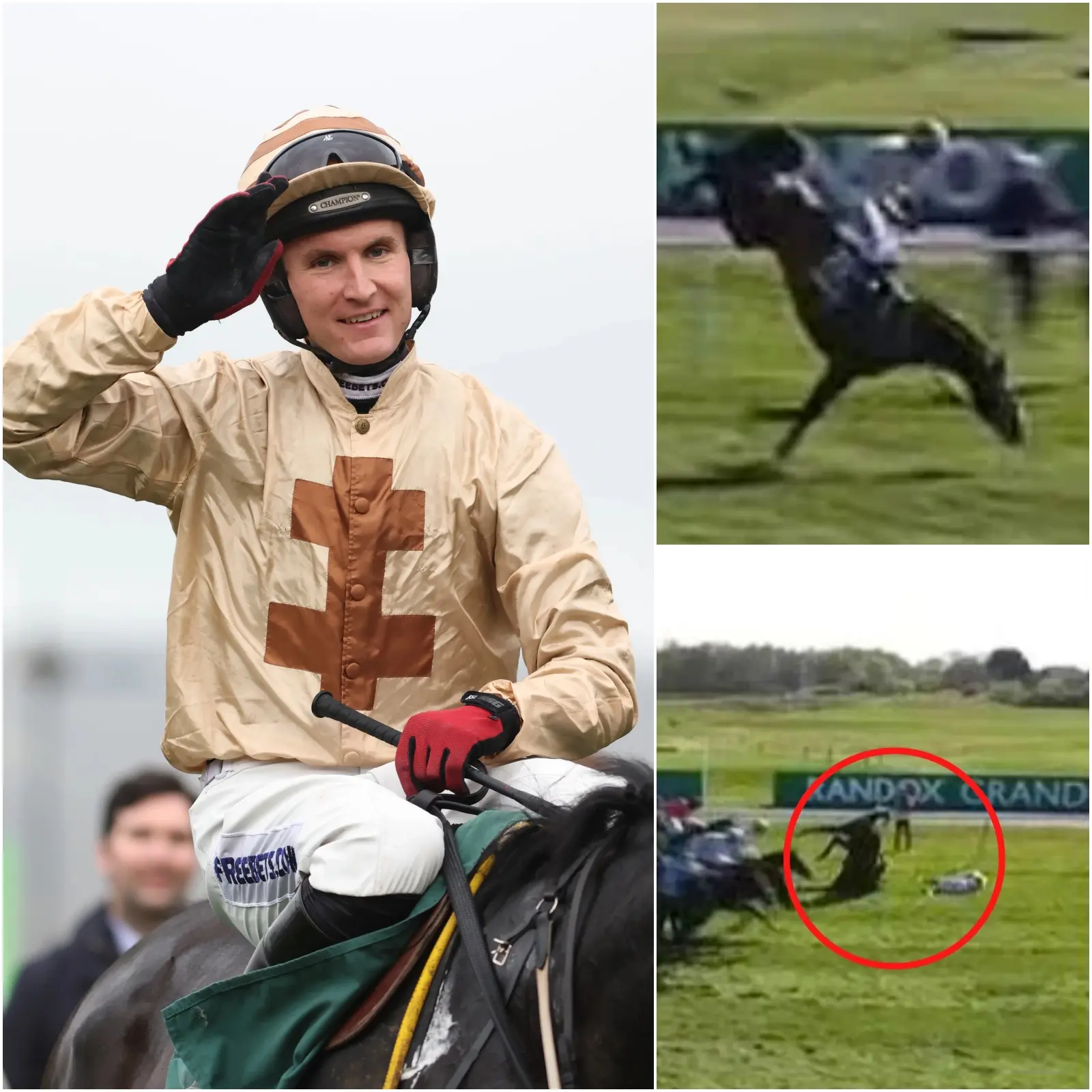
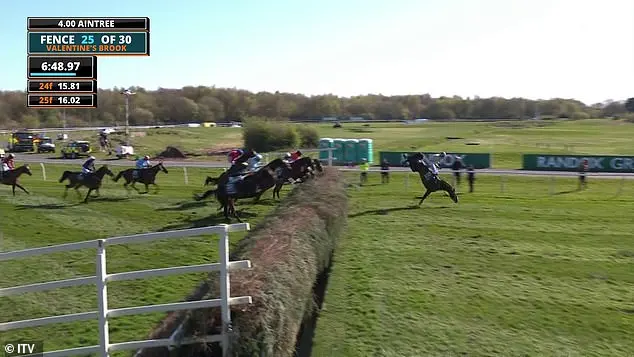
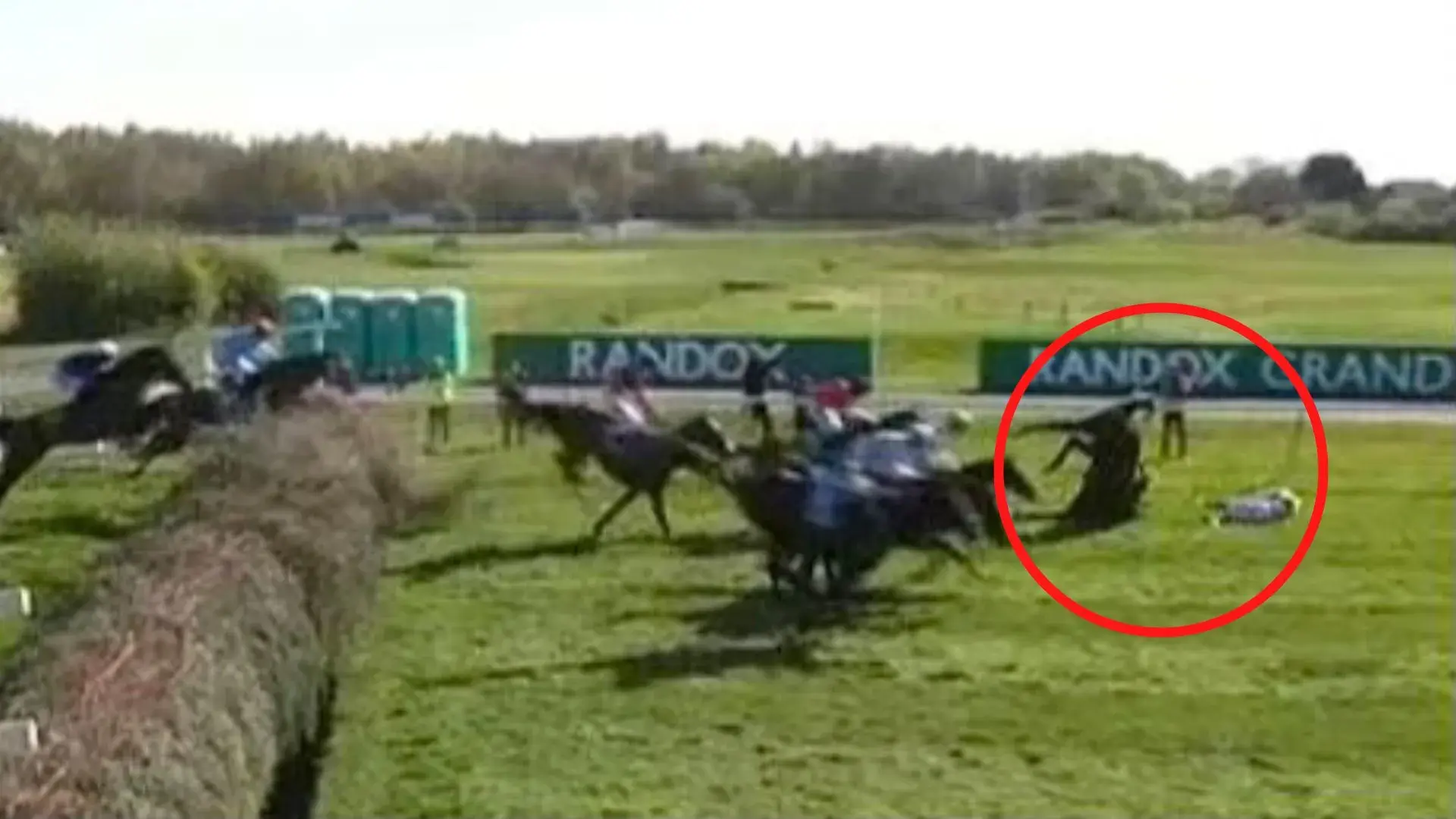
In the dramatic climax of the 2025 Randox Grand National at Aintree Racecourse, Broadway Boy, a promising seven-year-old gelding trained by Nigel Twiston-Davies, was leading the field with authority when disaster struck at the 25th fence, Valentine’s Brook. The horse, ridden by jockey Tom Bellamy, took a heavy tumble that left spectators gasping in horror. For a heart-stopping moment, Broadway Boy lay motionless on the turf, prompting immediate fears that the worst had happened.
Screens went up, veterinary teams rushed in, and the images of the fall circulated rapidly across television broadcasts and online platforms, igniting fresh scrutiny over the safety and ethics of one of Britain’s most iconic horse races.
The BHA, along with The Jockey Club which oversees Aintree, moved quickly to provide clarity. Initial statements confirmed that Broadway Boy had walked unaided onto the horse ambulance and was transported for further assessment. Unlike Celebre D’Allen, another horse that collapsed later in the race and tragically died two days afterward, Broadway Boy’s condition allowed for a more optimistic outlook from the outset. Vets on course were reportedly “hopeful,” and the horse was monitored closely overnight before being cleared to return to the Twiston-Davies yard in Gloucestershire the following day.
Subsequent updates painted a picture of steady recovery. By early April 2025, reports indicated Broadway Boy was “stiff and sore” but comfortable back in his stable, receiving round-the-clock care. Trainer Nigel Twiston-Davies and his team, including joint-trainer Willy Twiston-Davies, shared positive notes: the horse was “looking brighter every day,” eating well, and showing signs of his resilient personality returning. By mid-April, he still required intensive monitoring, but the worst appeared to be over. A July 2025 update from the stable described him as “absolutely A1” in spirits, though questions lingered about any long-term impact on his racing future.
By October 2025, indications suggested he was unlikely to race again at the highest level, with the Grand National fall likely marking the end of his competitive career as a six-time winner who had earned over £200,000 in prize money.
This sequence of events, however, has not quelled the controversy. On social media, the hashtag-laden discussions exploded almost instantly. Supporters of the sport hailed the rapid veterinary response and Broadway Boy’s survival as evidence of how far horse welfare standards have come. Modern Grand National fences have been modified—softened and reshaped over the years—to reduce the risk of rotational falls, the kind that can prove fatal when a horse lands awkwardly. The BHA points to comprehensive data showing fewer fatalities in recent decades, improved track conditions, and rigorous pre-race veterinary checks.
Fans argued that racing remains one of the most regulated animal sports, with horses receiving top-tier medical care that many human athletes might envy. “It’s not a scam; it’s a high-risk sport where every precaution is taken,” one prominent racing commentator posted, emphasizing that millions are invested annually in welfare research and safety innovations.
Critics, however, see it differently. Animal rights groups seized on the “horrific” footage of Broadway Boy’s fall, arguing that no amount of fence modification can eliminate the inherent dangers of forcing horses to gallop at speed over large obstacles while carrying weight. The death of Celebre D’Allen amplified their voices, with some activists labeling the entire Grand National a “cruel spectacle” that prioritizes entertainment and betting revenue over equine lives.
Posts flooded platforms like X and Facebook: videos slowed down the moment of impact, captions questioned why such risks are tolerated in 2025, and petitions circulated calling for the race’s reform or outright ban. Even casual viewers, tuning in for the spectacle, expressed discomfort at seeing a leading horse crash so violently on live television. “How many more ‘miracle’ survivals do we need before admitting it’s all a scam?” read one viral comment thread.
The debate touches deeper issues within the equestrian community. Horse racing has long faced accusations of being an industry that discards animals once they are no longer profitable. While Broadway Boy’s story offers a relatively happy ending—he is now recuperating with dedicated care and a potential future in retirement or lower-level activities—detractors point out that not every fallen horse is so fortunate. Statistics from welfare organizations highlight ongoing concerns about injury rates, the psychological stress on horses, and the fate of thousands of thoroughbreds exiting the sport each year.
Defenders counter that the vast majority of racehorses live longer, healthier lives than many pleasure horses, thanks to specialized nutrition, veterinary access, and aftercare programs funded by the industry itself. The BHA’s updated information on Broadway Boy, they say, demonstrates transparency and accountability, not a cover-up.
Social media has amplified both sides, turning a single incident into a proxy war over the soul of British racing. Hashtags like #BanTheGrandNational trended alongside #SupportRacing and #HorseWelfareFirst. Influencers from the racing world shared behind-the-scenes footage of recovery, while celebrities and politicians weighed in, some calling for stricter regulations. The Twiston-Davies team paid tribute to the resilience of their charge while quietly managing the emotional toll on staff and connections. Jockey Tom Bellamy, who sustained a broken wrist in the unseating, also featured in updates, highlighting the human risks involved too.
As months passed, Broadway Boy’s recovery continued to be monitored publicly. He transitioned from intensive stable care to more normal routines, offering hope that thoroughbreds can bounce back from even the most visually shocking incidents. Yet the questions persist: Are the modifications to fences sufficient, or do they create new problems by altering how horses approach jumps? Is the Grand National’s prestige worth the occasional tragedy? And fundamentally, in an era of heightened animal welfare awareness, can a race that demands such extreme athleticism from horses ever be truly “safe”?
The BHA’s official updates serve as a reminder of the delicate balance the sport must strike. They provide facts—Broadway Boy walked away, received expert treatment, and is progressing—but they cannot silence the emotional responses the fall provoked. For fans, the Grand National remains a thrilling test of courage, breeding, and training. For opponents, it symbolizes an outdated tradition that exploits sentient animals for human gain. Broadway Boy’s case, with its mix of horror, relief, and ongoing uncertainty about his future, encapsulates this tension perfectly.
Ultimately, whether one views horse racing as a noble tradition or a problematic enterprise, the conversation ignited by this “horrific” fall shows no signs of fading. The BHA and racing authorities face continued pressure to evolve, investing more in safety technology, retirement programs, and transparent reporting. Meanwhile, Broadway Boy himself, resting in his yard, represents both the risks and the resilience at the heart of the sport. His story is not just about one dramatic moment at Aintree; it is a microcosm of the larger debate that will shape the future of British horse racing for years to come.