The 2026 College Football Playoff National Championship game between the Indiana Hoosiers and the Miami Hurricanes delivered high drama both on and off the field, culminating in Indiana’s first-ever national title with a hard-fought 27-21 victory. However, the postgame spotlight shifted dramatically to Miami head coach Mario Cristobal, whose explosive accusations against the officiating crew ignited a firestorm of controversy.
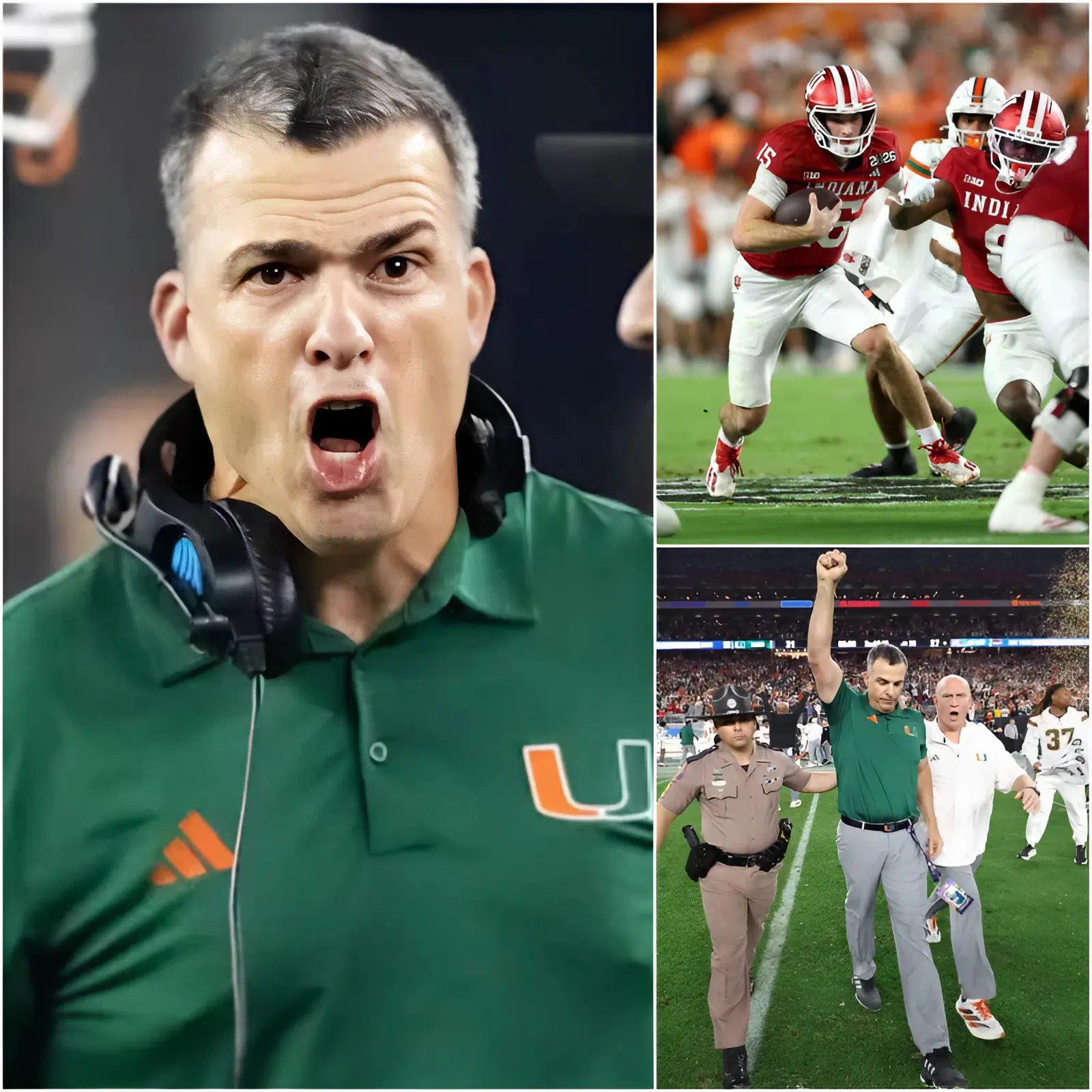
In his postgame press conference following the January 19 matchup at Hard Rock Stadium in Miami Gardens, Florida, Cristobal unleashed a scathing tirade directed at the game’s referees. He claimed that three officials deliberately overlooked key plays that disadvantaged his Hurricanes in the fourth quarter, specifically pointing to what he described as ignored fumble recoveries by Miami that were wrongly disallowed. According to Cristobal, these non-calls put his team at a severe disadvantage during the game’s decisive moments, when Indiana was protecting a narrow lead.
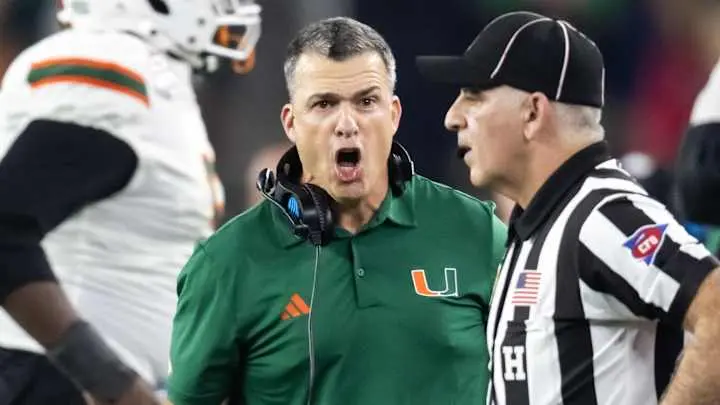
“If they want the Indiana Hoosiers to win at all costs, just give them the national championship and don’t make us play these meaningless games,” Cristobal stated emphatically. He went further, directly accusing the referees of cheating and singling out one official—identified in reports as part of the Big 12 crew led by referee Michael VanderVelde—by name, referring to him in heated terms. Cristobal reportedly called facing this official “a disgrace to my career” and labeled him a “cheat,” escalating the rhetoric to personal levels rarely seen from a head coach in such a high-profile setting.
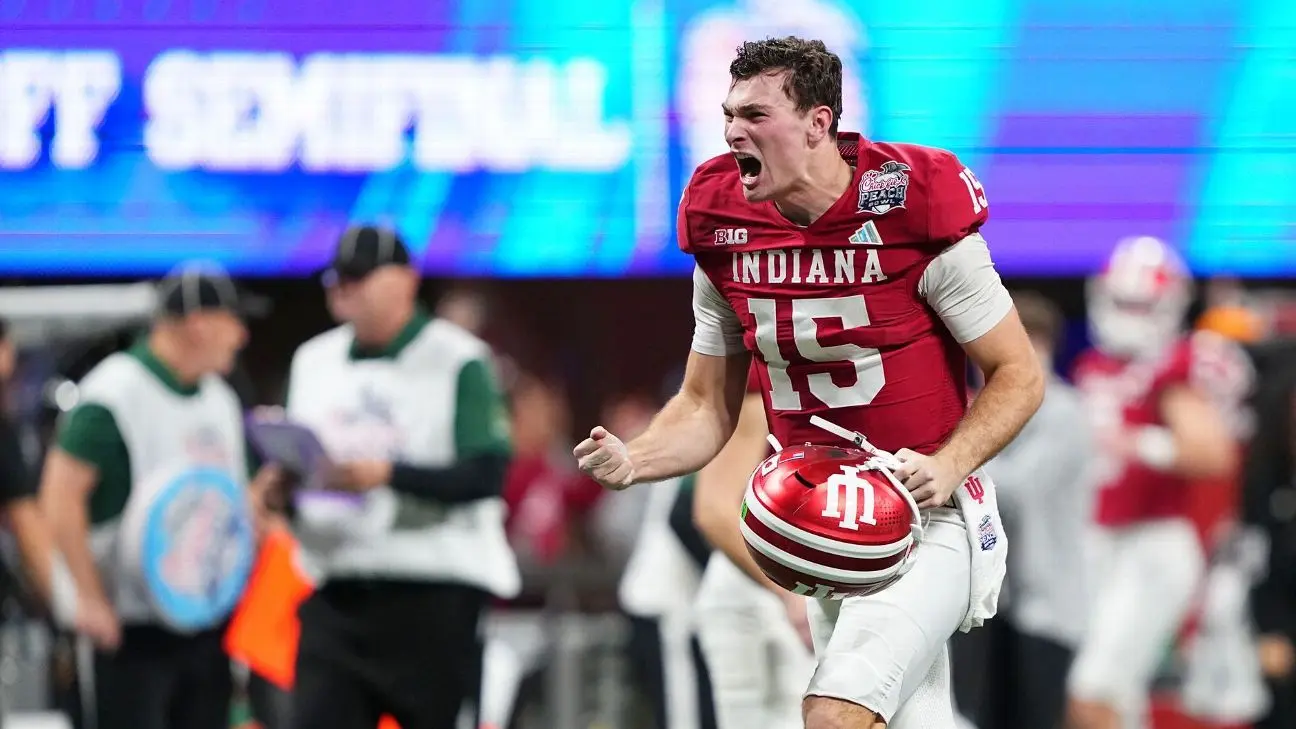
The outburst came amid a game already thick with officiating tension. Throughout the contest, both sides voiced frustrations over missed calls. Indiana head coach Curt Cignetti had been vocal at halftime, criticizing the crew for failing to flag multiple personal fouls on Miami defenders targeting Hoosiers quarterback Fernando Mendoza, the Heisman Trophy winner. One particularly glaring non-call involved Miami defensive back Jakobe Thomas delivering a high hit that bloodied Mendoza’s lip, yet no penalty was thrown despite replays suggesting potential targeting or roughing the passer. Cignetti described three such “obvious” personal fouls in a single drive as inexcusable.
Cristobal’s comments, however, took the criticism to another level by implying intentional bias rather than mere incompetence. The accusations echoed broader frustrations from Miami’s playoff run, which included earlier gripes over a controversial targeting ejection of defensive back Xavier Lucas in the Fiesta Bowl semifinal against Ole Miss. That call, upheld after review, forced Lucas to miss the first half of the title game, further fueling perceptions of inconsistent officiating impacting the Hurricanes.
The NCAA and president Charlie Baker moved swiftly to address the situation and prevent further escalation. Within hours of Cristobal’s remarks, the organization announced a substantial fine against the Miami head coach for his comments, which were deemed conduct detrimental to the integrity of the game and public criticism of officials in an inflammatory manner. While the exact amount was not immediately disclosed, sources indicated it was significant enough to serve as a strong deterrent, aligning with recent NCAA efforts to curb postgame outbursts that undermine confidence in officiating.
The fine drew mixed reactions across the college football landscape. Supporters of Cristobal argued that his passion reflected legitimate concerns about officiating consistency in an era of expanded playoffs and high stakes. Critics, including many in the Indiana camp celebrating their undefeated 15-0 season and historic breakthrough, viewed the remarks as sour grapes from a team that fell short despite home-field advantage. Mendoza’s performance—efficient passing and key runs—combined with Indiana’s stout defense held Miami’s offense, led by quarterback Carson Beck, in check for much of the night.
The game itself was a thrilling back-and-forth affair befitting a national championship. Indiana built an early lead, capitalizing on Mendoza’s poise and a defense that pressured Miami relentlessly. The Hurricanes mounted a comeback in the later stages, narrowing the gap and keeping fans on edge until an interception in the final minutes sealed Indiana’s victory. The Hoosiers’ triumph marked one of the most improbable championship stories in recent memory, transforming a program long mired in futility into a national powerhouse under first-year head coach Curt Cignetti.
Yet the aftermath has been dominated by the officiating debate rather than the on-field heroics. Cristobal’s fine underscores the NCAA’s commitment to maintaining decorum, even as broader conversations about referee accountability, rule enforcement, and the challenges of the 12-team playoff format continue. With the sport evolving rapidly—amid revenue-sharing changes, transfer portal chaos, and ongoing legal settlements—the incident serves as a reminder that the pursuit of a title can sometimes overshadow the game itself.
As Indiana celebrates its crowning achievement and Miami reflects on a valiant but ultimately unsuccessful run, the focus now shifts to the offseason. For Cristobal, the fine may sting, but his unfiltered defense of his team has solidified his reputation as a fiery leader unwilling to accept perceived injustices quietly. In a season filled with surprises, this championship will be remembered not just for Indiana’s breakthrough, but for the raw emotions that spilled over when the final whistle blew.