Colton Herta revealed his retirement plans, aiming to return to IndyCar after his F1 career ends. This has sparked much debate between F1 and IndyCar fans.
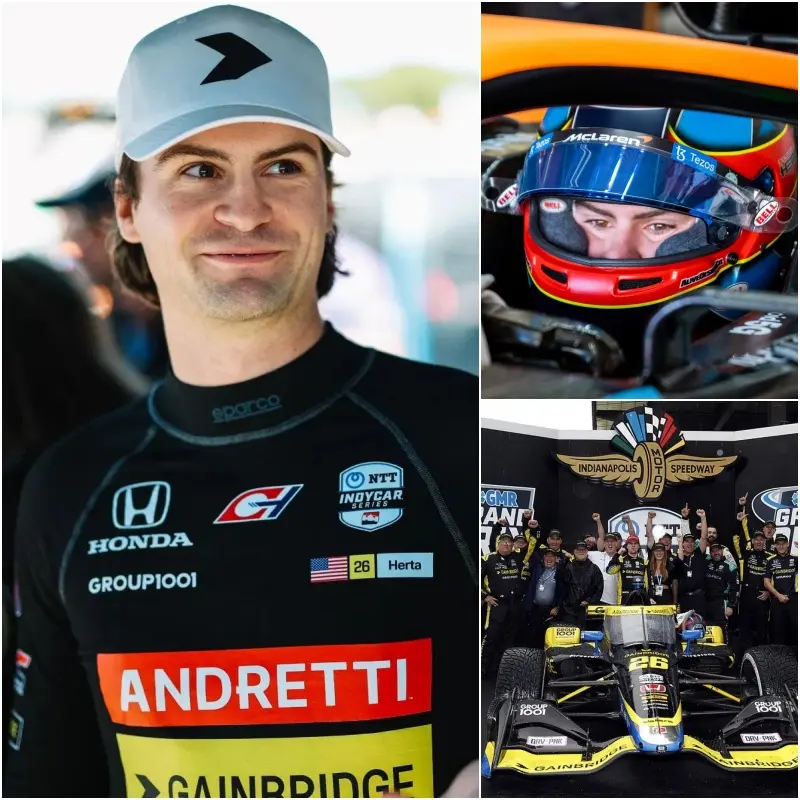
“I hope I can return (to the Indy 500) this year. It would be great to be back.” These words from Colton Herta, spoken during a recent interview at the Rolex 24 Media Day, have reignited excitement and discussion across the open-wheel racing world. The 25-year-old American driver, once a standout in the NTT IndyCar Series, is now embarking on a bold new chapter in his career, stepping away from full-time IndyCar competition to pursue ambitions in Formula 1 through the Cadillac program.
Yet, his candid comments about a potential return—particularly to the iconic Indianapolis 500 in 2026—highlight the deep ties he maintains to his American racing roots.
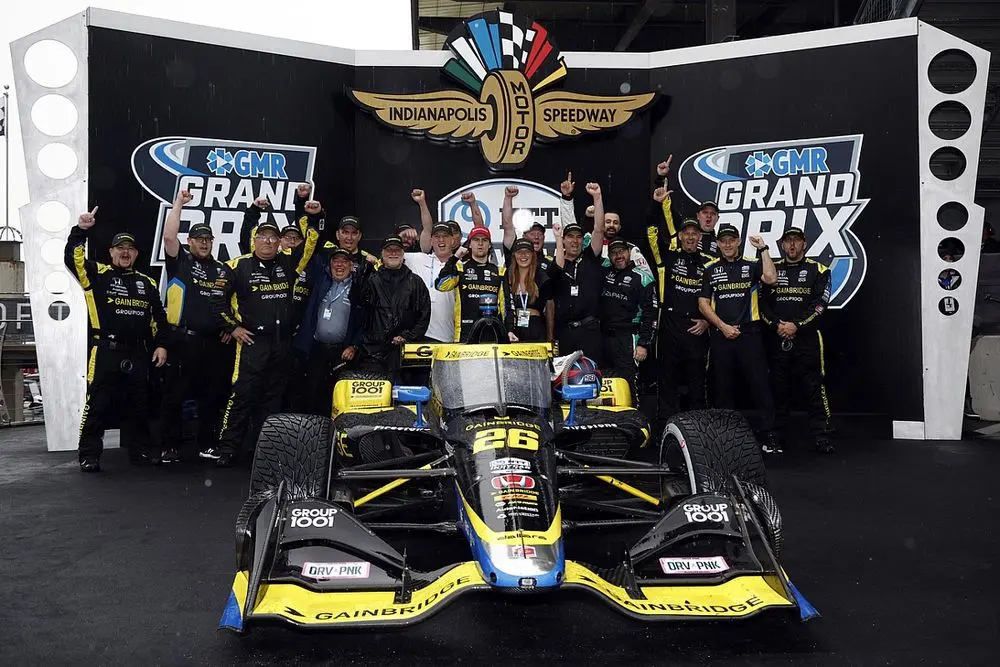
Herta’s journey has been anything but conventional. He burst onto the IndyCar scene in 2018 with Andretti Global, quickly establishing himself as one of the series’ most talented and aggressive drivers. At just 18 years old, he became the youngest winner in IndyCar history in 2019, claiming victory at the Honda Indy 200 at Mid-Ohio. Over the next seven seasons, he amassed nine race wins, 16 pole positions, and 19 podium finishes, culminating in a strong runner-up finish in the 2024 championship standings.
His speed on road and street courses was undeniable, and he often showed flashes of brilliance that suggested he could dominate the series for years to come.
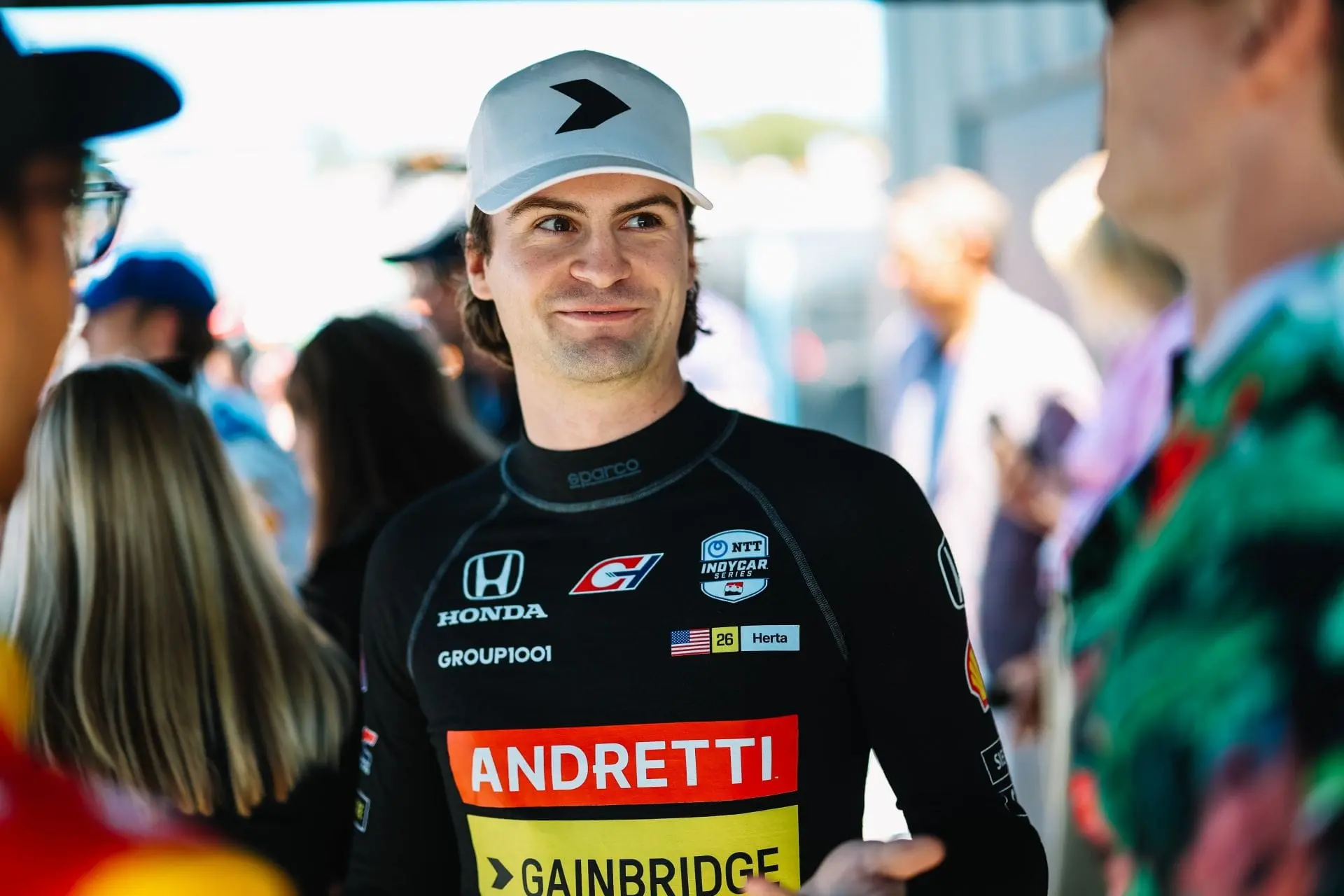
However, the allure of Formula 1 proved too strong to ignore. Despite his success in IndyCar, Herta had long harbored dreams of competing at the pinnacle of motorsport. The challenge was securing the necessary FIA super license points, a requirement that has historically been difficult for drivers outside the European ladder to accumulate. In September 2025, Cadillac Formula 1 Team—set to make its debut on the F1 grid in 2026—announced Herta as their test and development driver. This role positioned him within the organization while allowing him to build credentials elsewhere.
To facilitate that path, Cadillac and Herta agreed to a move to FIA Formula 2 for the 2026 season with Hitech TGR. The decision was unconventional: a proven IndyCar winner “going backward” to a feeder series at age 25. Yet, it made strategic sense. Formula 2 races on the same weekends as F1 events, offering direct exposure to teams, engineers, and the F1 environment. The 2026 F2 calendar, with 28 races across 14 weekends, provides ample opportunity to rack up points and prove his adaptability to single-seater machinery closer to F1 specifications.
The move sparked immediate interest within the F2 paddock. Series CEO Bruno Michel later revealed that multiple teams competed to sign Herta, drawn by his impressive resume and marketability as an American talent. Hitech ultimately secured the deal, and Herta has already begun preparations, including a postseason test at Yas Marina Circuit in Abu Dhabi in late 2025. He has described the transition as a return to “basics,” acknowledging the differences in car handling, tire management, and race formats compared to IndyCar.
Amid this European shift, Herta’s comments about the Indianapolis 500 stand out. The 110th running of the event is scheduled for May 2026, and crucially, the F2 calendar has no conflicts that month—no races overlapping with the Memorial Day weekend classic. This scheduling gap opens the door for Herta to potentially compete in the Indy 500 with Andretti Global, the team he called home for so many years. In his interview, he expressed optimism about making it happen, saying it would be “awesome” to return to the Brickyard.
Such a one-off appearance would be a rare and thrilling crossover. IndyCar has seen drivers dip into other series before, but Herta’s situation is unique: a driver who left the series for F1 aspirations yet remains eager to race at its biggest event. Andretti Global has not yet confirmed an entry for him, but discussions are reportedly underway, and the possibility has generated buzz among fans and insiders. If realized, it would mark a poignant homecoming for Herta, allowing him to reconnect with the ovals, the massive crowds, and the traditions that shaped his early career.
Herta’s broader retirement vision adds another layer to the story. He has made it clear that he does not intend to end his open-wheel career in Europe or F1. “My hopes would be to come back at some point,” he said. “I don’t want to retire my open-wheel career in F1 or in Europe. I want to come back to America and do IndyCar again.” The timeline remains uncertain—whether after a few years in F2 and potentially F1, or longer—but the sentiment underscores his loyalty to IndyCar. He views his current path as a detour, not a permanent departure.
This dual allegiance has fueled heated debate among fans. F1 supporters see Herta’s move as validation of their series’ global prestige, arguing that even a successful IndyCar driver must prove himself in the feeder system to earn a shot at the top. They point to the technical demands of F1 cars, the intense competition, and the super license system as necessary hurdles. For many in the F1 community, Herta’s willingness to take this risk demonstrates ambition and respect for the sport’s hierarchy.
IndyCar fans, meanwhile, express a mix of pride and frustration. Pride in one of their own chasing the F1 dream, but frustration at losing a homegrown star to a series often perceived as less accessible to Americans. Some argue that IndyCar’s high level of competition—featuring ovals, road courses, and street circuits—deserves more recognition, and that Herta’s success there already proved his elite status. Others worry about the precedent: if top talents continue to leave for Europe, it could impact IndyCar’s star power and depth.
The debate extends beyond fandom to broader questions about the relationship between IndyCar and F1. With Cadillac’s entry bringing an American manufacturer to the grid, and drivers like Herta bridging the two worlds, there is potential for greater crossover and collaboration. Yet, the super license points system remains a barrier, prompting calls from some quarters for reform to better accommodate drivers from different ladders.
As 2026 unfolds, all eyes will be on Herta. His performance in F2 will be scrutinized—not just for personal progress toward an F1 seat, but as a litmus test for how IndyCar experience translates to the European single-seater ecosystem. A strong showing could accelerate his path to Cadillac’s race lineup, while also elevating perceptions of IndyCar talent globally. At the same time, any participation in the Indy 500 would serve as a reminder that his heart remains tied to American open-wheel racing.
For now, Herta balances ambition with nostalgia. Pursuing F1 while keeping the door open for IndyCar—and specifically the Greatest Spectacle in Racing—embodies the spirit of a driver unwilling to choose between dreams. Whether he graces the Indianapolis Motor Speedway in May or focuses solely on his F2 campaign, one thing is certain: Colton Herta’s story continues to captivate, bridging two worlds in a way few drivers ever have.