The world recently said goodbye to an extraordinary horse whose story transcended the boundaries of disability and limitation. “He never saw the world… but he taught the world how to see.” These trembling words came from his devoted owner, Morgan Wagner, as she bid farewell to Endo the Blind, the remarkable Appaloosa who lived for 26 unforgettable years without sight yet achieved feats that inspired millions.
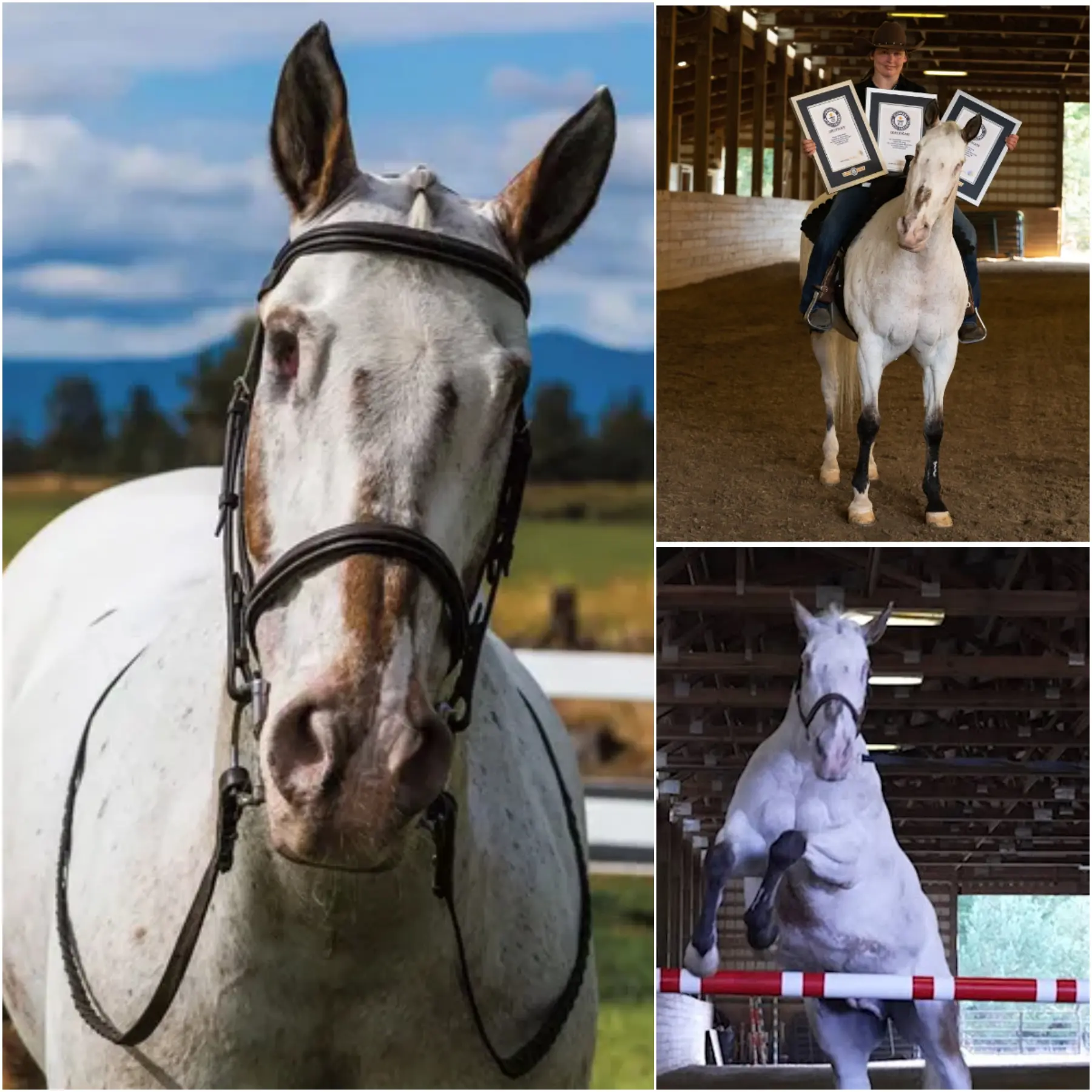
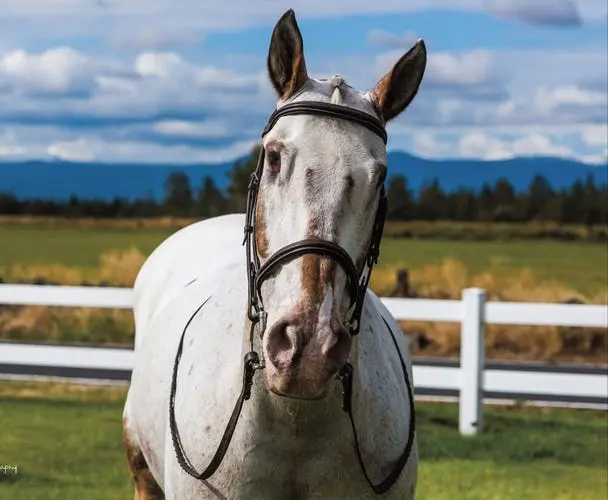
Endo was born in 2000 in Oregon, an Appaloosa foal with the distinctive spotted coat typical of the breed. Morgan Wagner first encountered him as a teenager when her grandmother allowed her to choose a horse from the family farm. At just 13 years old, Morgan picked Endo out from among the foals, drawn to his bold personality. “He thinks he’s the greatest horse in the world and he wants everybody to know that,” she later recalled. The two grew up together, forming an unbreakable bond through years of training and shared adventures.
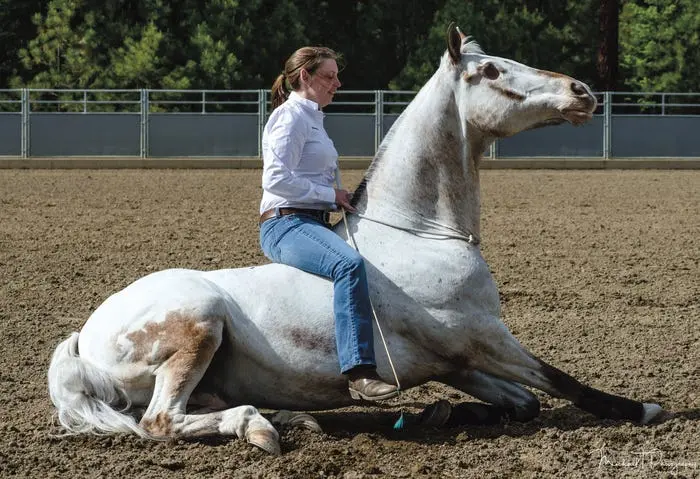
Endo learned to respond to verbal commands, navigate obstacles, and perform complex maneuvers—all built on trust rather than visual cues.
Tragedy struck years later when Endo developed equine recurrent uveitis, a painful condition also known as moon blindness, which led to glaucoma and cataracts. Eventually, both of his eyes had to be surgically removed due to severe complications. Many might have assumed that a blind horse could no longer lead an active life, let alone compete or perform. Experts often advised restricting such animals to quiet, predictable environments to avoid injury. But Morgan refused to accept those limitations. She continued working with Endo, adapting their training to rely entirely on her voice, touch, and consistent routines.
Endo learned to trust her guidance implicitly, moving forward with confidence where others would hesitate.
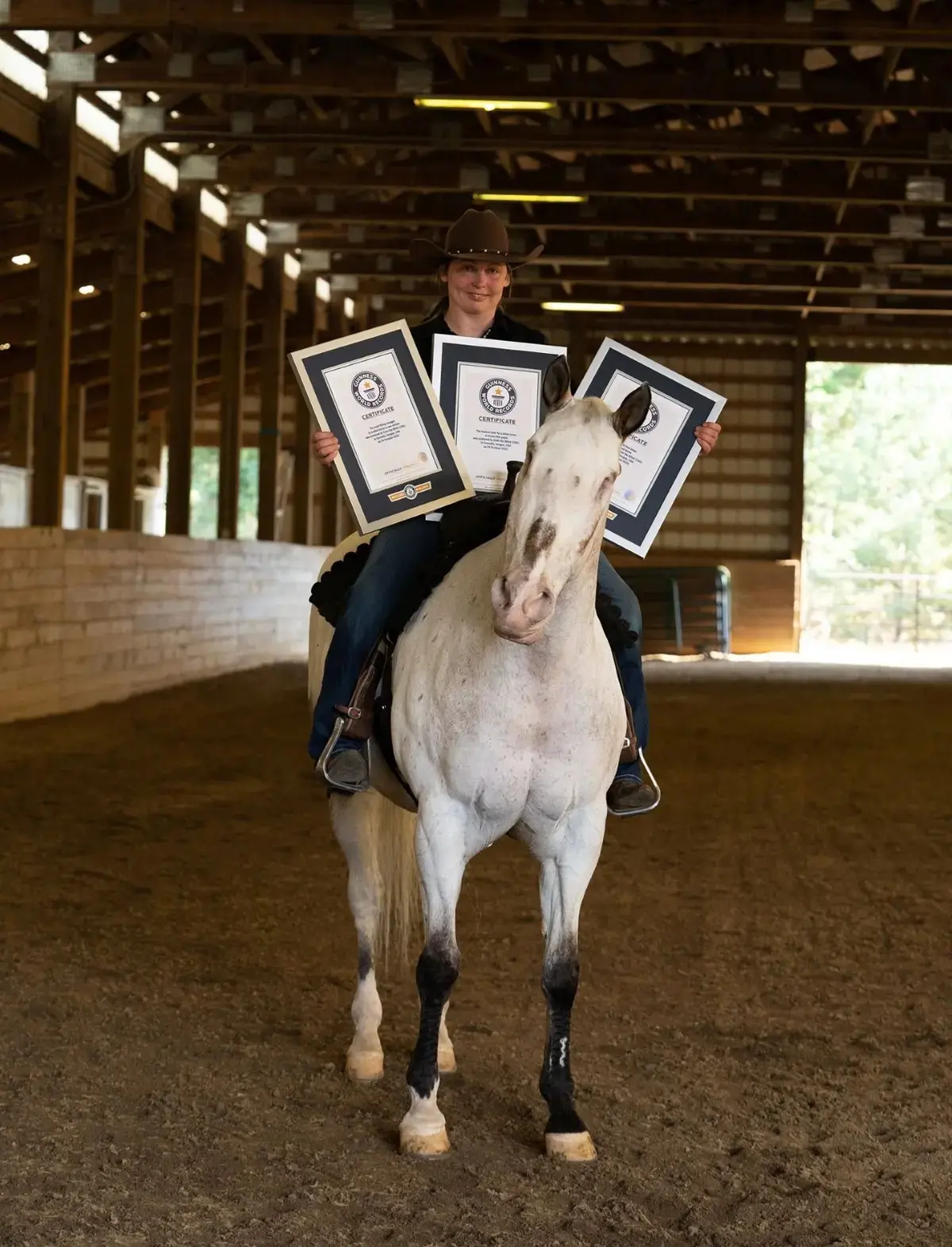
What followed was a journey that defied expectations. Endo did not merely survive his blindness—he thrived. He mastered dressage elements, jumped obstacles, and navigated intricate patterns, all without the benefit of sight. His achievements culminated in October 2022, when, at 22 years old, he and Morgan set three Guinness World Records in Corvallis, Oregon. These included the highest free jump by a blind horse at 106 cm (3 feet 5.73 inches), the most flying changes by a horse in one minute at 39, and the fastest time for a blind horse to weave through five poles at 6.93 seconds.
The records were not just technical accomplishments; they were powerful statements about capability and potential. Morgan expressed profound gratitude to Guinness World Records for providing a platform to demonstrate that blind horses “are still capable of anything.”
Endo’s story spread rapidly across social media, where his page amassed more than 700,000 followers. Videos of him clearing jumps, executing precise lead changes, and responding to Morgan’s calm instructions went viral, touching people far beyond the equestrian community. Viewers saw not a disabled animal but a partner full of spirit and determination. Endo became a symbol of resilience, showing that limitations are often more perceived than real. His journey encouraged owners of blind or visually impaired horses to explore what their animals could still achieve, shifting perspectives in the horse world and inspiring those facing their own challenges.
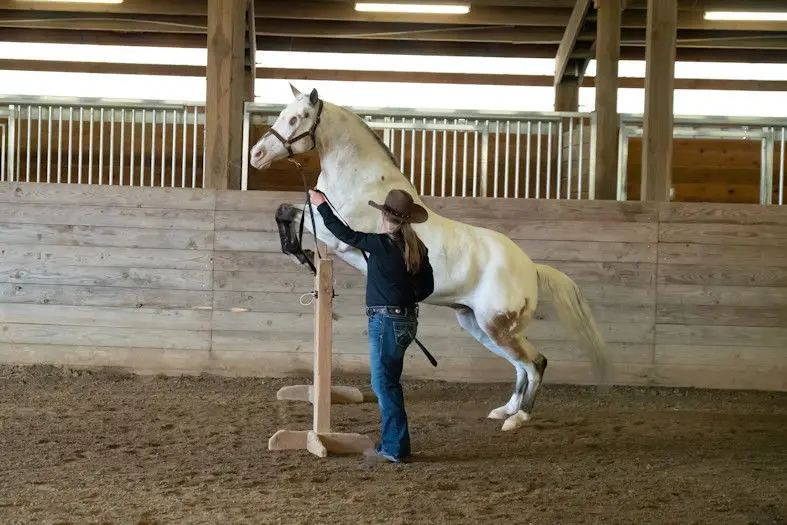
Behind the public triumphs, however, were quieter, more vulnerable moments. Training a blind horse required immense patience. Endo’s early steps after losing his sight were tentative, filled with uncertainty. Morgan spent countless hours whispering encouragement, guiding him gently over new terrain, and celebrating every small victory. There was always an undercurrent of concern—the fear that a misstep could lead to injury, or that a new challenge might overwhelm him. Yet Endo’s trust in Morgan never wavered. He moved forward because he knew her voice meant safety.
Their partnership was built on mutual reliance: she provided direction, and he offered unwavering courage.
As Endo aged, health issues arose, including edema and other complications common in older horses. By early 2026, at the remarkable age of 26, his condition declined. Morgan made the heartbreaking decision to let him go peacefully. In his final moments, Endo walked slowly across the grass, ears pricked forward, following the familiar voice that had guided him for more than two decades. There were no crowds, no flashing cameras—just a quiet farewell between a horse and the human who had believed in him when few others did.
Endo’s legacy endures through the lives he touched. His records remain official testaments to what is possible, but more importantly, he reminded the world that true sight comes from trust, perseverance, and heart. Morgan Wagner continues to honor his memory, sharing stories and advocating for blind horses to ensure his inspiration lives on. In a world quick to define potential by visible abilities, Endo proved otherwise.
He never saw the world with his eyes, but through his example, countless people learned to see beyond limitations—to recognize courage in its purest form and to trust in the bonds that guide us forward.