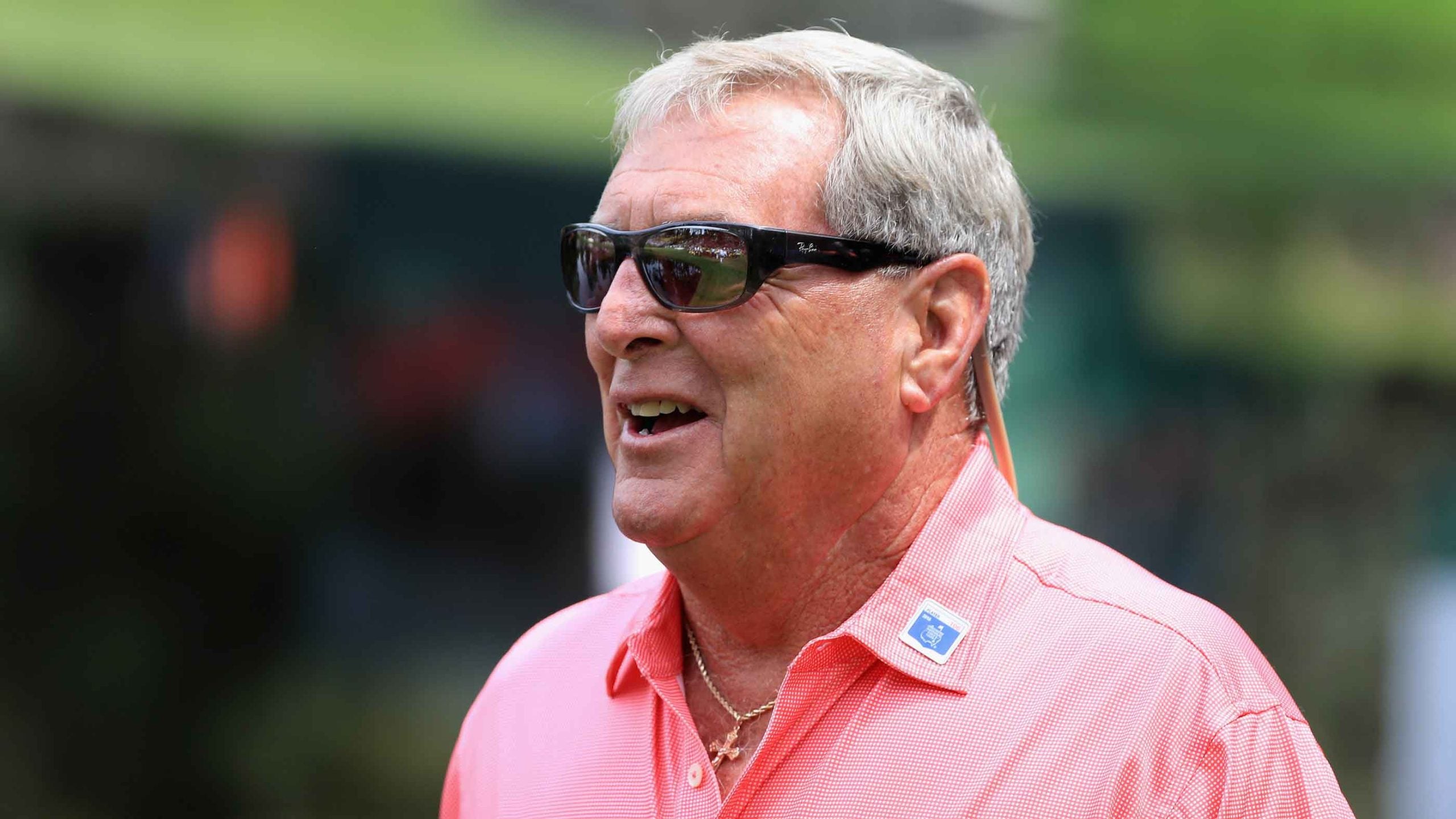
Fuzzy Zoeller, once a celebrated name in golf, faced a dramatic fall from grace following a controversial comment about Tiger Woods in 1997. This incident not only tarnished his reputation but also led to the loss of sponsorships and a significant decline in his career.
His story serves as a cautionary tale about the fragility of public image.
Fuzzy Zoeller, born Frank Urban Zoller Jr. in 1951, emerged as a golf sensation after winning the Masters on his debut in 1979. His charm and humor made him a fan favorite.
Yet, behind the scenes, his lifestyle choices began to undermine his image, setting the stage for his eventual downfall.
The pivotal moment came in April 1997 when Woods, at just 21, won the Masters. Zoeller’s offhand comments about what Woods might serve at the champion’s dinner, steeped in racial stereotypes, ignited a firestorm of backlash. His attempt at humor was perceived as deeply offensive, leading to widespread condemnation.

Major sponsors like Kmart and Dunlop swiftly severed ties with Zoeller, marking a swift and brutal end to his lucrative endorsements. Despite his public apology and Woods’ acceptance of it, the damage was done. The incident overshadowed his achievements, forever altering the narrative of his career.
As Zoeller transitioned to the Champions Tour, he managed to secure some wins, but the shadow of his past loomed large. His victories were often accompanied by reminders of the controversy, making it difficult for him to regain his former status in the sport.
In 2007, Zoeller faced another setback when false claims about his personal life surfaced online. He attempted to combat these damaging rumors legally, but the struggle highlighted the challenges of controlling one’s public image in the digital age.
Despite the challenges, Zoeller sought to redefine his legacy. He ventured into golf course design and launched a vodka brand, showcasing his entrepreneurial spirit. However, the stigma from his past remained a significant hurdle, reminding him of how quickly public perception can shift.
By the mid-2010s, while he made fewer public appearances, Zoeller remained active in charity events. Those who met him often noted his unchanged demeanor—down-to-earth and humorous, yet more cautious with his words. His journey became one of resilience and reflection.
Zoeller’s story is a stark reminder of the power of words and the lasting impact of public opinion. His legacy, once built on triumph, became a complex narrative of humor, controversy, and survival.
In the end, it serves as a lesson for athletes about the importance of character and the potential consequences of their actions.
The backlash was swift and severe. Sponsor Kmart terminated its endorsement deal with Zoeller, citing the comments as contrary to company values.
Death threats followed, and Zoeller withdrew from the upcoming Greater Greensboro Classic, tearfully stating he needed to “make things right with Tiger first.” He issued multiple apologies, insisting the joke was misconstrued and not reflective of his character: “I’ve been on the tour for 23 years and anybody who knows me knows that I am a jokester.
It’s too bad that something I said in jest was turned into something it’s not.”
Woods, traveling internationally, took two weeks to respond publicly. When he did, he accepted the apology gracefully: “I respect Fuzzy as a golfer and as a person…
I know he is a jokester; and I have concluded that no personal animosity toward me was intended.” The two were paired together in the 1998 Masters, where tension lingered initially but eased over time.

Despite the reconciliation, the damage to Zoeller’s reputation proved lasting. Once a fan favorite, he faced boos from crowds and a tarnished public image. In a 2008 Golf Digest article, Zoeller reflected bitterly: “I’ve cried many times.
I’ve apologized countless times for words said in jest that just aren’t a reflection of who I am…
Still, I’ve come to terms with the fact that this incident will never, ever go away.” The controversy highlighted broader issues of race in golf, amplifying discussions about inclusion at a time when Woods was revolutionizing the sport.
Zoeller continued playing into the senior circuit but never fully escaped the shadow. His major wins and personality were footnotes to the 1997 remark in many obituaries and retrospectives.
While some argued the punishment outweighed the intent—a misguided joke from a known prankster—the episode underscored the power of words in the public eye, especially amid evolving societal sensitivities.
Fuzzy Zoeller passed away on November 27, 2025, at age 74. Tributes poured in praising his achievements and character, but inevitably referenced the controversy that haunted his later years.
His story serves as a cautionary tale: in the high-stakes world of professional sports, one offhand comment can redefine a lifetime of accomplishment, turning triumph into tragedy in the court of public opinion.
The “fried chicken” quip didn’t end Zoeller’s career outright—he competed for years after—but it irrevocably altered its trajectory, costing him endorsements, goodwill, and a cleaner legacy. In golf’s annals, Zoeller remains a two-time major champion and affable icon… forever linked to the day his words crossed an unforgivable line.