Emma Davies, wife of racing legend Scott Dixon, recently surprised fans by sharing some of the bizarre and unique traditions of the Indy 500: from drinking a glass of whole milk immediately after a victory to kissing the sacred bricks at the starting line after her husband qualified for his 109th Indy 500. Do these strange rituals really only exist at this legendary race?
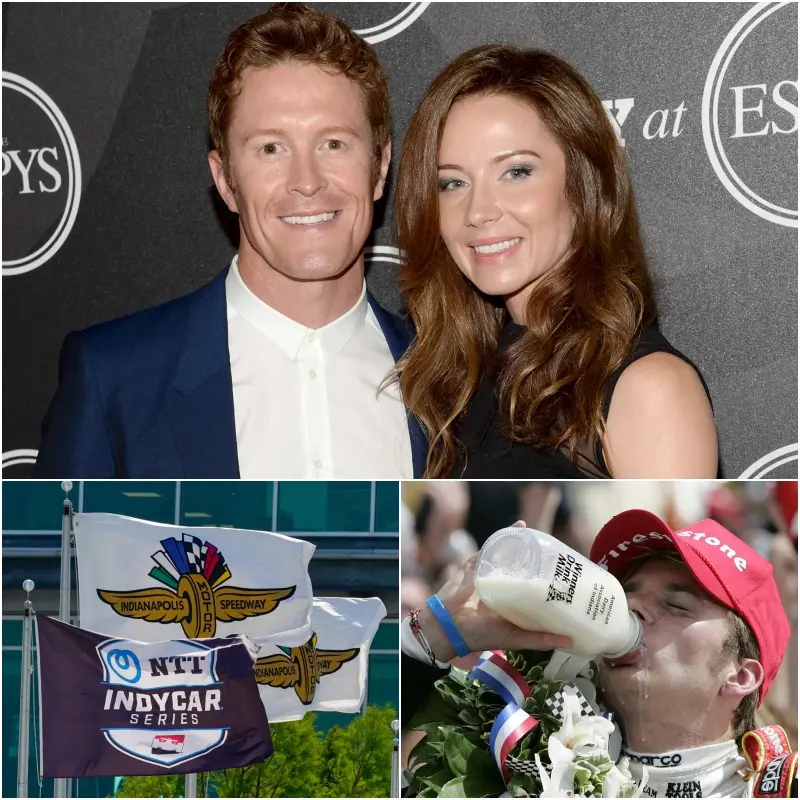
In the world of motorsport, few events carry the weight of history and eccentricity quite like the Indianapolis 500. Emma Davies, the wife of six-time IndyCar Series champion Scott Dixon, captured the imagination of racing enthusiasts when she took to social media during the buildup to the 109th running of the race in 2025. Sharing glimpses of the rituals that define the “Greatest Spectacle in Racing,” Davies highlighted traditions that seem almost otherworldly to outsiders.
From the obligatory swig of milk in victory lane to the reverent kiss on the track’s historic bricks, her posts reminded fans why the Indy 500 stands apart. But are these customs truly exclusive to this iconic event, or do echoes of them appear elsewhere in the racing world?
Davies, a former international 800-meter running champion from Wales, has been a fixture in the IndyCar paddock since marrying Dixon in 2006. The couple, who share three children, often blend family life with the high-octane demands of the sport. In May 2025, as Dixon prepared for what would be his 23rd start in the Indy 500, Davies posted on Instagram about the race’s quirks. “Another Indy 500 in the books,” she wrote after the event, expressing disappointment over Dixon’s early troubles—his car caught fire on the opening laps, leading to a 20th-place finish despite qualifying fourth.
Yet, her earlier shares delved into the lighter, more whimsical side of the race, surprising fans with details that underscore the event’s blend of superstition, history, and Midwestern charm.
One of the most famous traditions Davies spotlighted is the victory milk chug. Winners of the Indy 500 don’t pop champagne like their counterparts in Formula 1 or NASCAR; instead, they gulp down a cold bottle of milk, often pouring the remainder over their heads in jubilation. This ritual dates back to 1933, when driver Louis Meyer requested buttermilk after his second victory, citing his mother’s advice to drink it on hot days for refreshment. Meyer repeated the act in 1936, and a savvy dairy executive noticed, turning it into a promotional staple.
By the 1950s, it was formalized, with the American Dairy Association sponsoring the tradition and offering a bonus to the winner for participating. Drivers now submit their milk preferences—whole, 2%, skim, or even chocolate—ahead of time, and a “rookie milkman” from a local farm delivers the bottle amid the chaos of victory lane.

Is this unique? Absolutely. While other races feature celebratory drinks—think the champagne showers at the Monaco Grand Prix or the beer-soaked podiums in some endurance events—no other major motorsport event mandates milk. The Indy 500’s tie to Indiana’s dairy industry makes it a distinctly American quirk, one that has endured despite occasional pushback. In 1993, Emerson Fittipaldi famously opted for orange juice to promote his Brazilian citrus business, drawing boos from the crowd. He later sipped milk to appease fans.
Dixon himself experienced the tradition in 2008, when he won his sole Indy 500 title, choosing whole milk as his post-race refreshment. Davies’ recounting of this in her 2025 posts evoked nostalgia, reminding followers how the simple act symbolizes the race’s roots in the heartland.
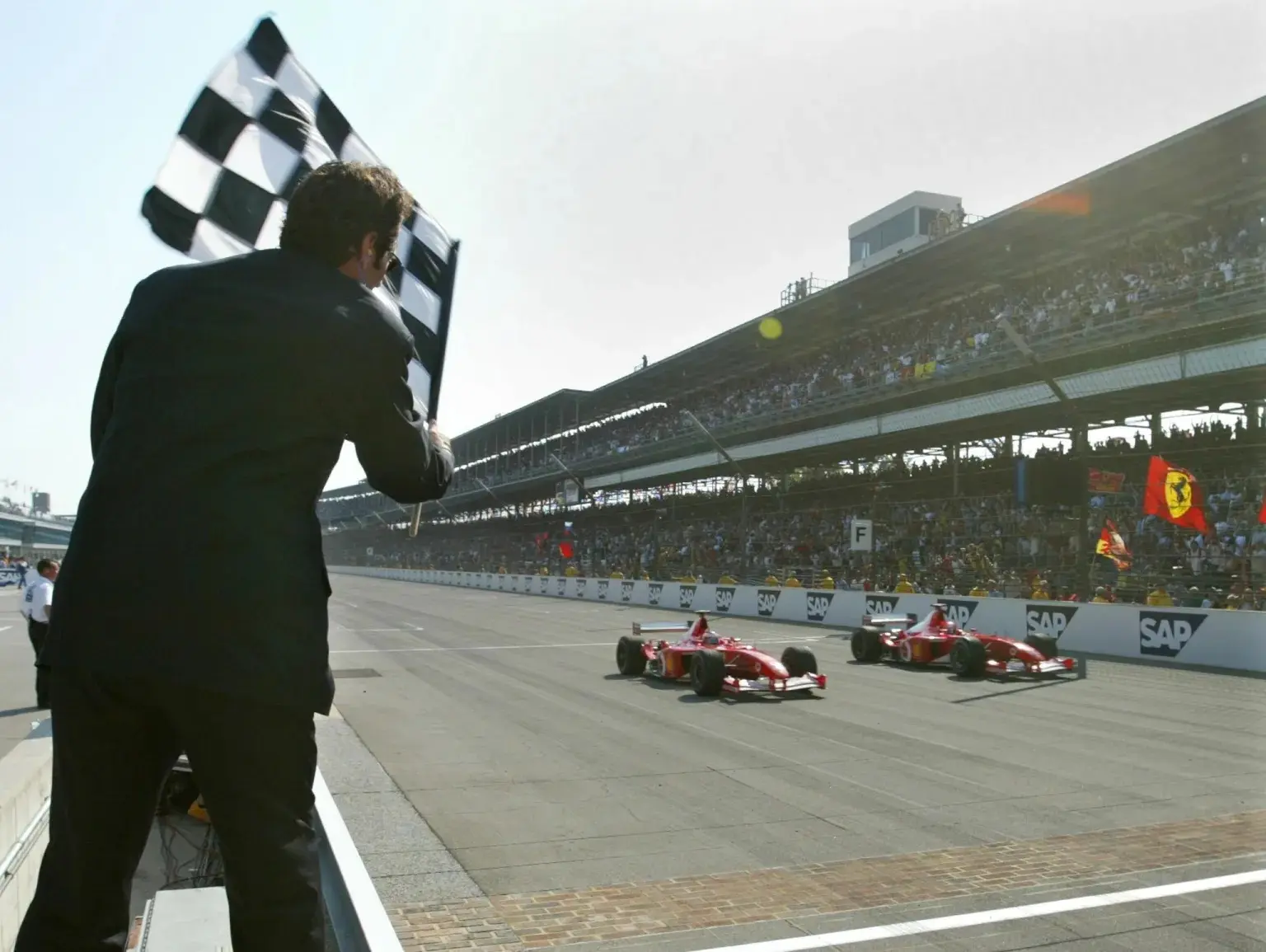
Equally intriguing is the brick-kissing ceremony, another highlight from Davies’ shares. The Indianapolis Motor Speedway, nicknamed the “Brickyard,” was originally paved with 3.2 million bricks in 1909 to create a durable surface. Though most were covered with asphalt by 1961, a three-foot-wide strip remains at the start-finish line as a nod to history. Winners and their teams kneel to kiss these “sacred bricks” after the race, a gesture of respect for the track’s legacy. Contrary to popular belief, this isn’t an ancient Indy tradition—it originated in 1996 during NASCAR’s Brickyard 400, when Dale Jarrett and his crew started it spontaneously.
The Indy 500 adopted it in 2003 with Gil de Ferran’s victory, and it has since become standard.
Davies shared a photo of Dixon participating after qualifying for the 109th race, where he started fourth but faced misfortune early on. While not exclusive to the Indy 500—NASCAR drivers at the same venue do it too—the ritual feels inherently tied to the Speedway’s identity. No other track boasts such a historic paving material, making the kiss a singular act of homage. In other races, winners might wave flags or do burnouts, but nothing matches the quiet reverence of pressing lips to century-old bricks.
Beyond these, the Indy 500 overflows with peculiarities that Davies touched upon, painting a picture of a race that’s as much pageant as competition. The pre-race singing of “Back Home Again in Indiana,” performed since 1946 and famously by Jim Nabors for decades until his passing, evokes Hoosier pride with balloons released during the chorus. The command to start engines, traditionally “Ladies and gentlemen, start your engines!” (updated for inclusivity), echoes from the Hulman-George family lineage.
Memorial Day ties bring solemn moments like the playing of “Taps” and military flyovers, honoring fallen soldiers and tying into the race’s scheduling since 1911.
Superstitions abound too: green cars are avoided as bad luck, stemming from early 20th-century accidents; peanuts are banned in the garage area after a 1937 incident; and the number 13 is rarely used. The “Curse of the Smiths” notes no driver with that surname has ever started the race. These folklore elements, while not entirely unique—racing worldwide has its taboos, like avoiding the color green in some cultures—are amplified at Indy due to its longevity.
Davies’ revelations sparked discussions among fans about whether these rituals could exist elsewhere. In truth, while motorsport shares universal elements like national anthems or victory laps, the Indy 500’s traditions are a unique cocktail. The milk and bricks are Speedway-specific, born from local history and marketing savvy. Other races have their own flair—the 24 Hours of Le Mans features French elegance with podium ceremonies, while NASCAR’s Daytona 500 emphasizes Southern hospitality—but none match Indy’s eccentric Midwestern vibe.
As the 2026 season approaches, with Dixon eyeing a seventh series title and perhaps another shot at Indy glory, Davies’ insights remind us why the race endures. In a sport of evolving technology and global appeal, these bizarre customs ground it in tradition. Whether Dixon adds to his 59 career wins or finally claims a second Indy crown, the rituals will persist, surprising new fans and delighting veterans. The Indy 500 isn’t just a race; it’s a cultural phenomenon, one that Emma Davies continues to illuminate with her personal touch.