The Toronto Blue Jays are facing a pivotal decision regarding left-handed pitcher Eric Lauer as spring training unfolds in 2026. The 30-year-old veteran, who emerged as one of the team’s unsung heroes during the 2025 season, is actively pushing for a full-time spot in the starting rotation. However, with a crowded and talented group ahead of him, the club may need to weigh his preferences against their need for versatile depth, potentially leading to a trade or a continued hybrid role.

Lauer’s comments have been direct and consistent. “Being able to lock in mentally and physically as a starter is what works best for me,” he stated following his appearance in the Blue Jays’ Grapefruit League opener. This sentiment echoes his longstanding preference for starting, a role he held consistently from 2018 to 2022 before injuries and roster shifts altered his path. Last season, Lauer began in Triple-A Buffalo before earning a call-up in late April. He quickly became indispensable, delivering 15 starts and 13 relief appearances while posting an impressive 3.18 ERA over 104 2/3 innings.
His performance included a strong stretch from June to August, where he went 6-1 in 13 starts with two or fewer runs allowed in 10 of those outings. He even contributed in the postseason, appearing five times with the same 3.18 ERA.

That versatility proved crucial for a Blue Jays team that cycled through numerous starters due to injuries and inconsistencies. Lauer stabilized the rotation during a challenging period, earning praise from teammates and coaches alike. Outfielder Ernie Clement called him “probably our unsung MVP” midway through the campaign. Manager John Schneider has acknowledged Lauer’s desire, noting, “He’s going into this saying he wants to be one of the starters. If that’s the case, that’s the case.” Yet the reality of the roster complicates matters.
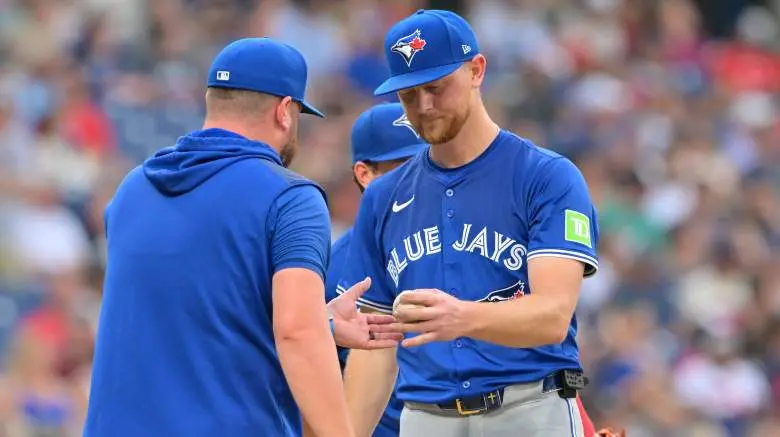
Toronto’s starting rotation appears set with five established arms: Kevin Gausman, the reliable ace; Dylan Cease, acquired in a blockbuster offseason move; breakout prospect Trey Yesavage; Cody Ponce, another recent addition; and José Berríos, who remains in the mix despite past struggles. Shane Bieber, who exercised his option to stay, is ramping up slowly from injury concerns and may begin on the injured list. This depth leaves Lauer as the projected No. 6 starter—stretched out as a starter in spring but likely destined for the bullpen as a long reliever or swingman unless an injury creates an opening.

The situation is further complicated by Lauer’s contract status. Entering his final year before free agency, he lost an arbitration case this offseason, settling for $4.4 million instead of the $5.75 million he sought. He has suggested that transitioning to relief late in 2025 may have impacted his case, as arbitrators often value consistent starting roles more highly. A full season as a starter could significantly boost his market value in 2027, where established starters command higher salaries than multi-inning relievers.
Reports indicate the Blue Jays value Lauer’s flexibility immensely. After enduring rotation chaos in 2025, the team prioritizes having reliable depth. Keeping him stretched out as a starter allows him to step in quickly if needed, reducing the risk of scrambling for replacements. However, if the rotation stays healthy through spring and into the regular season, Lauer could be squeezed into a low-leverage bullpen role—something he has made clear he wants to avoid.
Insiders have floated the possibility of a trade if no rotation spot materializes, as other teams might offer him the starting opportunity he craves in exchange for assets Toronto could use elsewhere.
Spring training performances will be key. Lauer started the Grapefruit League opener, a nod perhaps to his contributions last year and an effort to smooth tensions post-arbitration. His outings will be scrutinized not just for results but for how well he builds endurance and showcases the consistency that made him valuable in 2025. Schneider has emphasized preparation for a starting role while framing Lauer as an “option” rather than a locked-in starter.
For the Blue Jays, the choice is tough but familiar in modern baseball. Teams increasingly prize pitchers who can handle multiple roles, especially in an era of high injury rates and six-man rotation experiments. Lauer’s track record as both a starter and reliever makes him ideal for that hybrid function, but his preference—and potential trade value—adds pressure. If he excels early and an injury hits, he could reclaim a spot seamlessly. If not, the club might decide to move him for prospects or bullpen help, allowing him to pursue starting elsewhere.
Lauer’s journey reflects broader trends in the sport: the value of adaptability versus the desire for specialization. He proved his worth in a team-first capacity last year, helping Toronto contend deeply into the playoffs. Now, as the Blue Jays aim to build on that success, they must balance his individual goals with collective needs. The coming weeks in Florida will reveal whether Lauer secures the role he believes suits him best or if the organization charts a different path for one of its most reliable arms.
Either way, his impact on the pitching staff remains undeniable, and his determination could force the front office’s hand sooner rather than later.