The Freedom 250 Grand Prix of Washington, D.C., has generated significant buzz in the motorsport world with the recent unveiling of its official street circuit map. Set to take place on August 23, 2026, as the 15th round of the NTT IndyCar Series, the event commemorates the 250th anniversary of the signing of the Declaration of Independence. This historic one-off race will mark the first time open-wheel cars have ever competed on the National Mall and surrounding iconic streets of the nation’s capital.
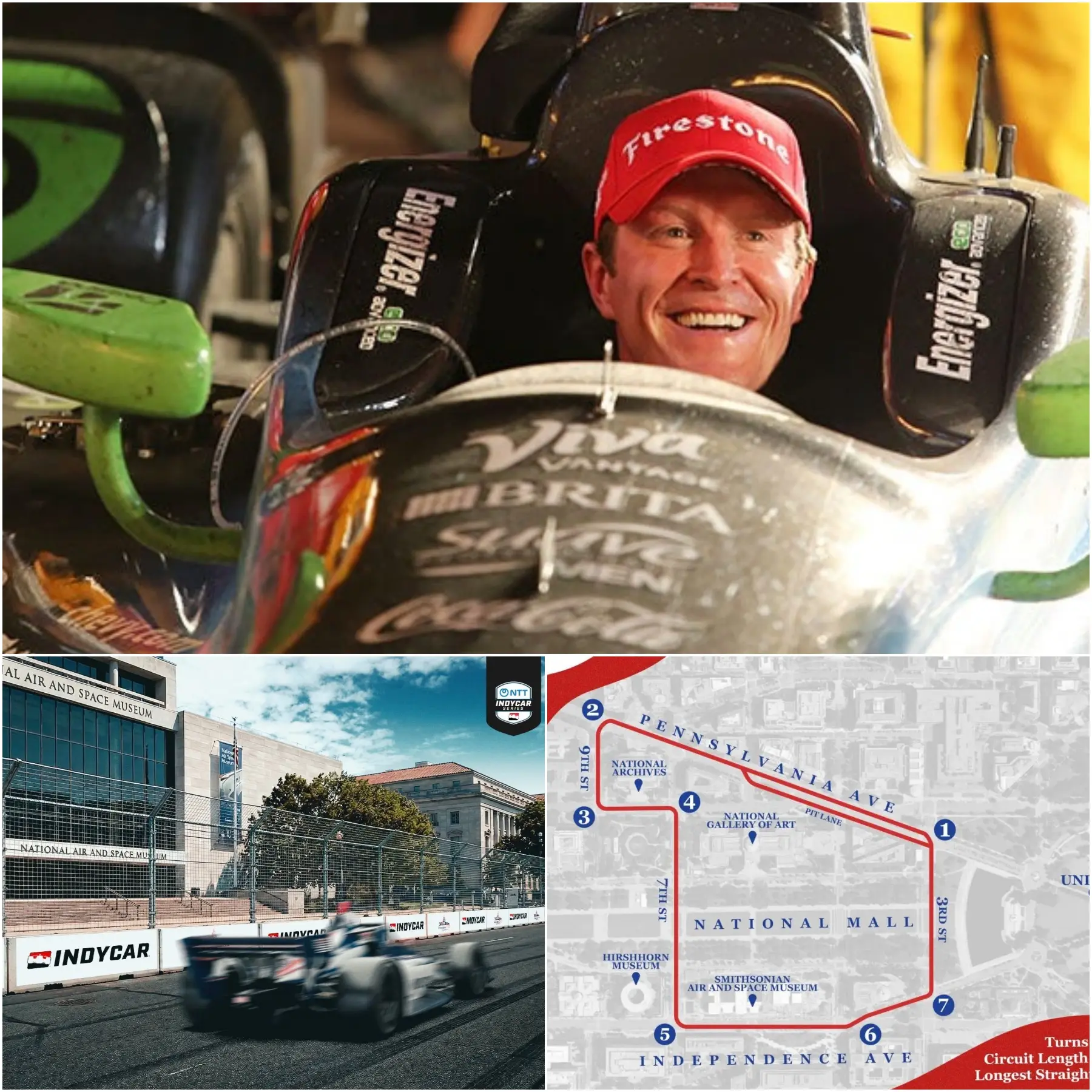
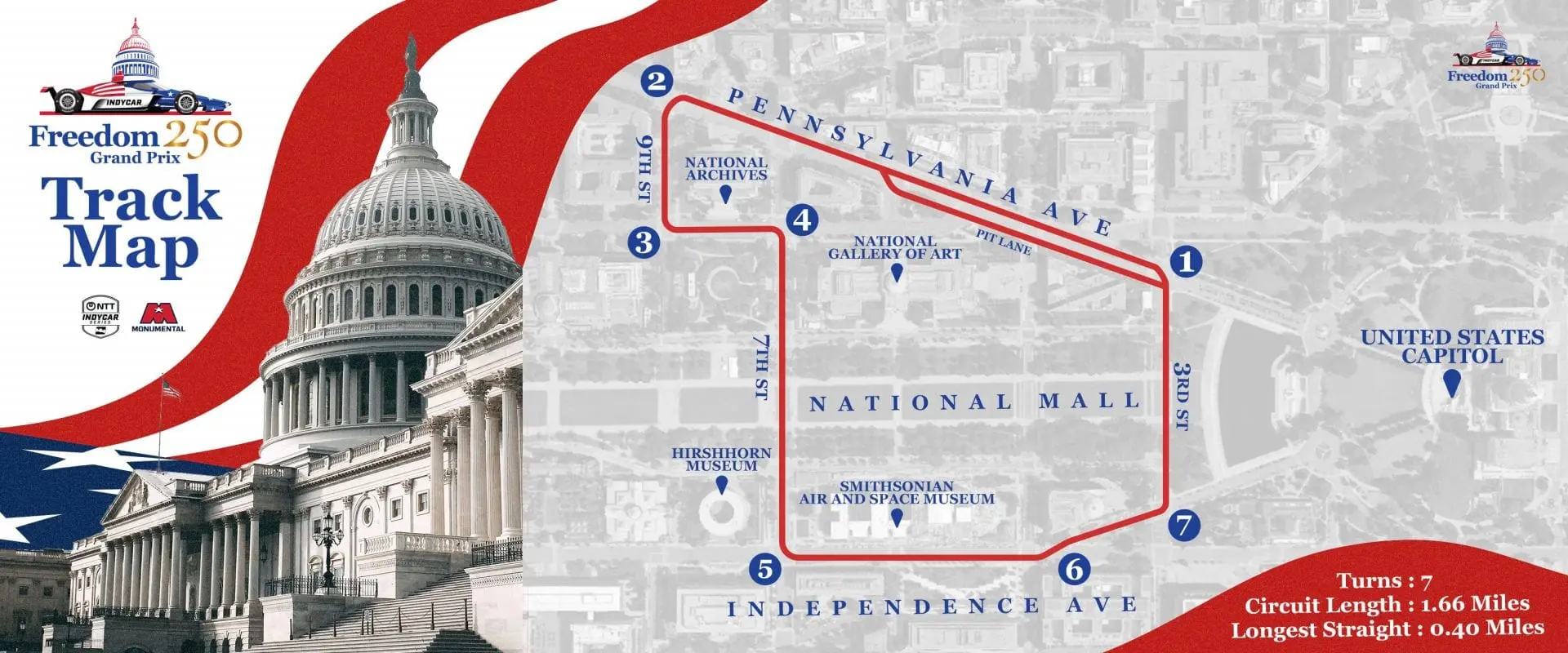
The track layout, revealed just days ago, measures approximately 1.7 miles (about 2.7 kilometers) and consists of only seven turns. It features a sweeping 0.4-mile frontstretch along Pennsylvania Avenue, framed dramatically by the Washington Monument and the U.S. Capitol. The course winds around the National Mall, passing landmarks such as the Smithsonian National Air and Space Museum, the National Gallery of Art, the National Archives, and other cultural treasures.
Pit lane is positioned on Pennsylvania Avenue between Turns 1 and 2, and the circuit blends high-speed sections—where drivers are expected to reach speeds exceeding 180 mph—with tighter, technical areas that demand precision.

Organizers, including INDYCAR and partners like Penske Corporation, have emphasized the event’s accessibility: the entire weekend (August 22-23) will be free and open to the public, allowing fans unprecedented views of the high-powered Indy cars against one of America’s most recognizable backdrops. The race promises around 100 laps, combining blistering straights with challenging corners that test both speed and strategy.

However, the release of the track map has sparked a wave of frustration among some fans and observers. Many took to social media and forums to voice disappointment over the configuration, pointing out its unusually low number of turns for a street circuit. Critics described it as overly simplistic, lacking the complexity typically seen in premier IndyCar street races like those in Long Beach, Toronto, or St. Petersburg. Comments highlighted concerns that the layout might lead to processional racing, with limited overtaking opportunities and reduced excitement compared to more twisty, demanding courses.
Some even joked about the design resembling basic shapes or questioned whether it truly captures the “high-skill” essence expected from top-tier open-wheel competition.
Adding fuel to the conversation, six-time IndyCar champion Scott Dixon weighed in with a comment that quickly caught attention. The Chip Ganassi Racing driver, known for his dry wit and straightforward demeanor, posted sarcastically: “Awesome!! A dramatic race track with many complex elements requiring high skill!!” His remarks, dripping with irony, appeared to mock the fans’ complaints by exaggerating the opposite—portraying the seven-turn layout as an overly challenging masterpiece when many view it as quite the contrary.
Dixon’s quip surprised and amused parts of the IndyCar community. As one of the series’ most respected and successful drivers, his sarcasm highlighted the divide: while fans lamented the perceived lack of intricacy, Dixon’s response suggested a more pragmatic or perhaps optimistic take. Some interpreted it as a subtle defense of the event’s unique nature—after all, racing past the U.S. Capitol and Washington Monument at full throttle is unprecedented, regardless of turn count. Others saw it as classic Dixon humor, poking fun at the online outrage over what is fundamentally a celebratory, patriotic spectacle rather than a conventional championship-defining track.

The reaction to Dixon’s comment has been mixed. Supporters praised his ability to cut through negativity with clever sarcasm, noting that veteran drivers often prioritize different aspects of a circuit, such as rhythm, braking zones, and overall flow, over sheer corner quantity. Detractors, however, felt it dismissed legitimate concerns about racing quality in a series that prides itself on competitive, skill-intensive events. Online discussions exploded, with threads dissecting the map’s potential for passing, tire management, and strategy, while others defended the layout’s simplicity as a deliberate choice to emphasize spectacle and accessibility over pure technical difficulty.
Despite the controversy, anticipation for the Freedom 250 remains high. The event carries strong political and cultural undertones, having been authorized via executive order earlier in 2026 to tie into America’s semiquincentennial celebrations. With drivers set to navigate at extreme speeds amid historic monuments, the race could deliver unforgettable visuals and moments, even if the track itself sparks debate.
For Dixon and his competitors, the focus will soon shift to preparation. The Kiwi ace, a master of adapting to any circuit, will likely approach the Washington streets with the same calculated precision that has defined his career. Whether the layout proves as “dramatic” and “complex” as his tongue-in-cheek praise suggests—or lives up to fans’ more critical assessments—remains to be seen when the green flag drops in August.
As the IndyCar Series heads toward this landmark weekend, the conversation around the track map underscores the passion of its fanbase. In a sport where every detail matters, even a simple seven-turn design can ignite lively debate. The Freedom 250 promises to be more than just a race; it’s a historic fusion of speed, heritage, and national pride, with Scott Dixon’s sarcastic endorsement adding a memorable layer to the buildup.