The incident at Huntingdon racecourse on January 22, 2026, has ignited widespread outrage across the British horse racing community and beyond, prompting the British Horseracing Authority (BHA) to launch a formal investigation into what many are calling one of the most disturbing safety failures in recent memory. Jockey Callum Pritchard, a talented Welsh rider, suffered a horrific fall from his mount Limier d’Arthel during the opening hurdle of a two-mile maiden hurdle event.
The horse, owned by prominent businessman JP McManus and making its first appearance in 648 days, landed awkwardly after the jump, unseating Pritchard and leaving him vulnerable on the turf.
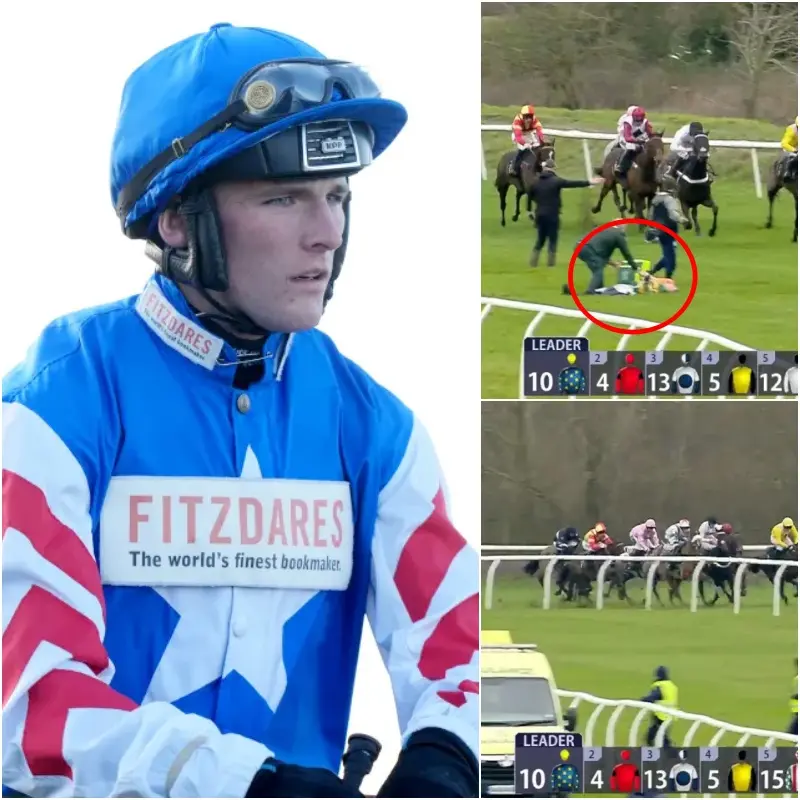
In footage that has since circulated widely online and drawn sharp criticism, Pritchard lies motionless as the remaining field thunders past, some horses appearing to trample over or dangerously close to the stricken jockey. His helmet was knocked off in the initial impact, exposing him further to risk, and reports indicate he was stepped on or struck during the chaos. Medical staff rushed to his aid, but the failure to immediately halt the race or deploy protective screens around him has become the central point of contention.
Pritchard was quickly attended to on the course before being transported to hospital for X-ray examinations, primarily focused on his leg injuries. While initial updates suggest he avoided life-threatening harm, the physical and psychological toll of such an event remains significant for any rider.
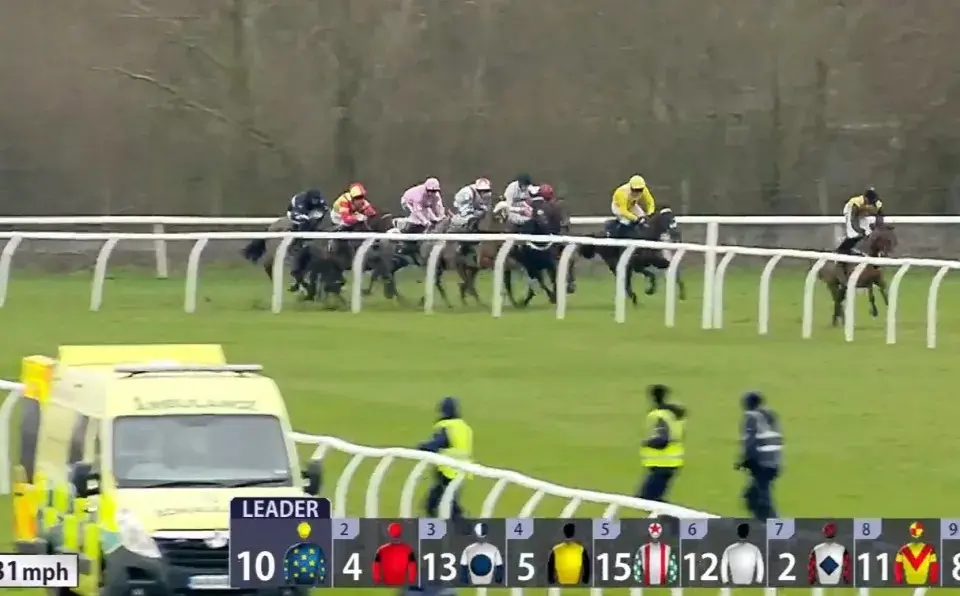
The BHA stewards at the track conducted an initial inquiry, with their report noting concerns over why screens were not deployed around the fallen jockey. The matter has since been escalated to the BHA’s head office for a more thorough review, signaling the seriousness with which the governing body is treating the lapse. Screens, a standard safety measure in British racing when a jockey or horse is down, are intended to shield the individual from oncoming traffic and provide a visual barrier that might prompt riders to take evasive action.
Their absence in this instance allowed the race to continue unabated, turning what might have been a routine unseating into a scene of potential catastrophe.

Public reaction has been swift and unforgiving. Social media platforms have been flooded with clips of the incident, accompanied by comments labeling it “appalling,” “horrific,” and a “disgrace” to the sport. Fans, former jockeys, and racing enthusiasts have questioned the protocols in place, asking how a jockey could be left exposed while the race proceeded. Some have drawn comparisons to past tragedies in the sport, where delayed responses or inadequate protections contributed to worse outcomes. The outrage underscores a broader anxiety about safety standards in National Hunt racing, where falls are frequent and the margins for error are razor-thin.
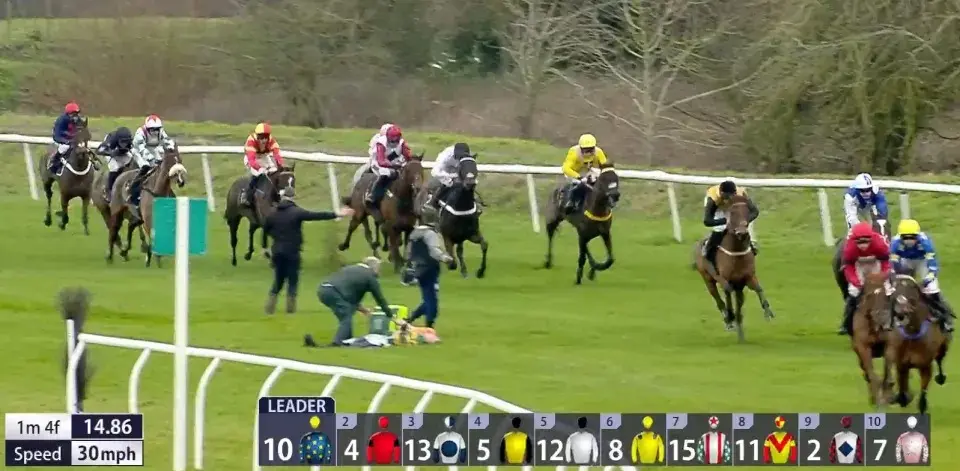
Horse racing has long prided itself on stringent safety protocols, from mandatory protective gear to on-course medical teams and rapid-response ambulances. Yet incidents like this expose vulnerabilities that persist despite those measures. The decision not to stop the race immediately—likely due to the belief that the fallen jockey was clear of the main path—proved disastrously misguided when horses veered close enough to make contact. Critics argue that in an era of high-definition broadcasting and instant replays, there should be mechanisms for quicker intervention, perhaps through race control centers empowered to red-flag events in real time.
Pritchard, known for his determination and skill in the saddle, now faces a period of recovery that could sideline him for weeks or months, depending on the extent of his injuries. The young jockey’s experience serves as a stark reminder of the physical dangers inherent in the profession. Jockeys routinely put their bodies on the line, enduring falls, kicks, and collisions, often with little fanfare until something goes gravely wrong. Supporters have rallied online, wishing him a speedy recovery and praising his resilience.
The broader implications for the sport are profound. The BHA’s investigation will likely examine not only the specific circumstances at Huntingdon—such as communication between stewards, course staff, and medical teams—but also whether current guidelines on screen deployment and race continuation need revision. Calls have already emerged for enhanced training on incident management and possibly technological aids, like drone monitoring or advanced tracking, to better assess risks during races.
This episode arrives at a challenging time for British horse racing, which continues to balance tradition with modern expectations around welfare, both equine and human. High-profile campaigns have improved aftercare for retired horses and tightened rules on whip use, but jockey safety remains a perennial concern. Tragedies and near-misses alike fuel debates about whether the sport does enough to protect its human participants.
As the BHA delves deeper, the hope is that lessons from this “worst mistake,” as some have bitterly described it, will drive meaningful change. Pritchard’s ordeal, captured in those harrowing moments where he lay helpless amid charging hooves, has shocked the nation and forced a reckoning. The sport’s reputation for bravery and excitement must not come at the expense of basic safeguards. Only through transparent investigation and decisive action can trust be restored and future incidents prevented.
For now, the racing world waits for the BHA’s findings, while wishing Callum Pritchard strength in his recovery from an avoidable nightmare that has left an indelible mark on all who witnessed it.