The tragic death of British event rider Georgie Campbell has sent shockwaves through the equestrian community, highlighting ongoing concerns about rider safety in high-risk disciplines like eventing. Campbell, a 36-year-old (reported in some sources as 37) accomplished competitor from Cranbrook, Kent, lost her life on May 26, 2024, following a rotational fall during the cross-country phase of the CCI4*-S at the Bicton International Horse Trials in Devon, England. She was riding her experienced and favored horse, Global Quest, when the incident occurred at an obstacle, resulting in fatal traumatic head injuries.
She passed away at the scene despite immediate medical response.
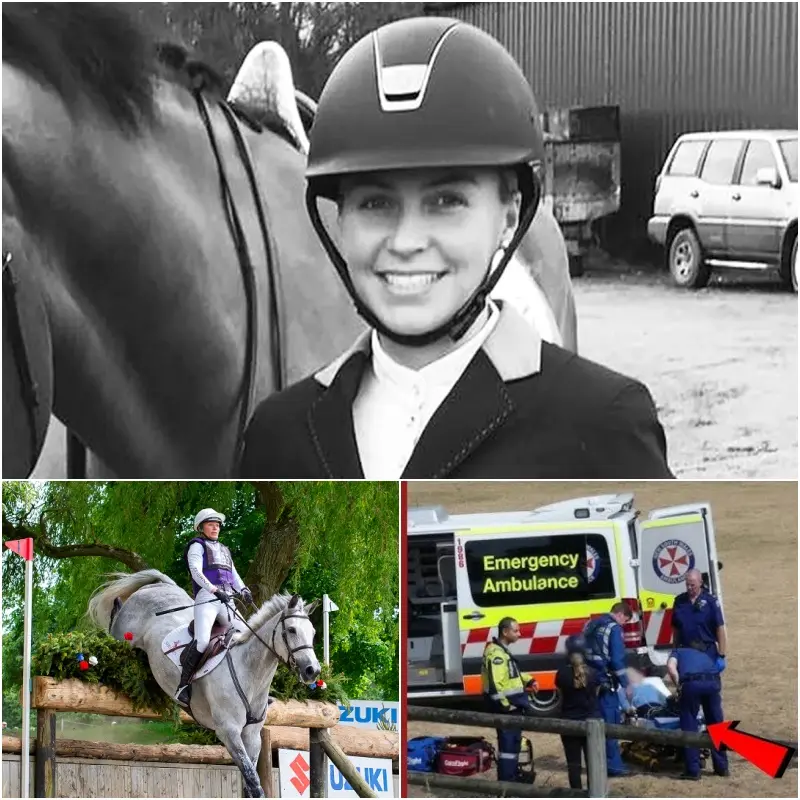
Campbell was a respected figure in British eventing, known for her dedication, skill, and passion for the sport. Tributes poured in from family, friends, and fellow riders following the news, with many describing her as a “fantastic” equestrian whose enthusiasm inspired those around her. Her husband, Jesse Campbell, shared heartfelt remembrances, and her funeral later drew emotional recollections of her vibrant personality and contributions to the sport. The establishment of The Georgie Campbell Foundation in her memory underscores her legacy, particularly in advocating for enhanced safety measures to prevent similar tragedies.
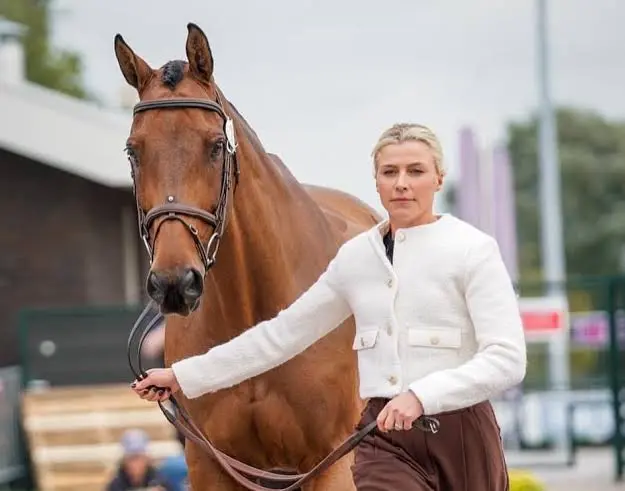
The incident has reignited intense debate within the international equestrian community over protective equipment standards, particularly the role of modern “smart” helmets and next-generation safety gear. Eventing, which combines dressage, cross-country, and show jumping, remains one of the most dangerous Olympic sports due to the speeds, fixed obstacles, and potential for rotational falls—where a horse somersaults or flips, often leading to severe impacts on the rider’s head and upper body. Campbell’s death occurred despite her wearing standard approved protective headgear and a body protector, raising questions about whether current regulations are sufficient to mitigate such risks.
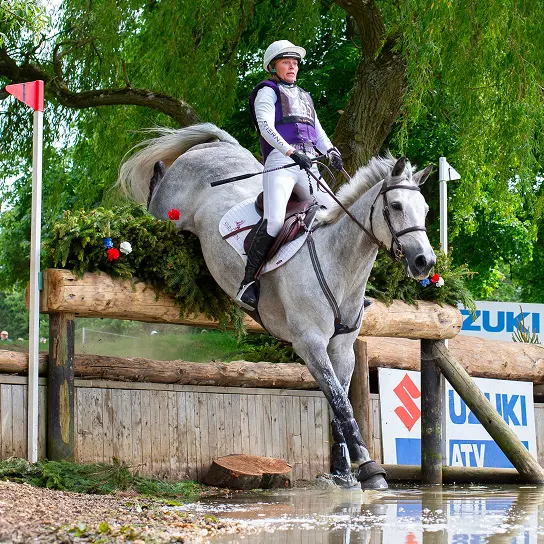
Smart helmets represent one of the most promising yet contentious advancements in equestrian safety. These helmets incorporate technologies such as impact sensors, which can detect and record the force and direction of blows, potentially alerting medical teams in real time or providing data for post-incident analysis. Some models integrate multi-directional impact protection systems (MIPS) or similar low-friction layers designed to reduce rotational forces on the brain, a key factor in concussions and traumatic brain injuries. Other innovations include improved ventilation for comfort during long competitions, lighter materials, and better fit to encourage consistent use.
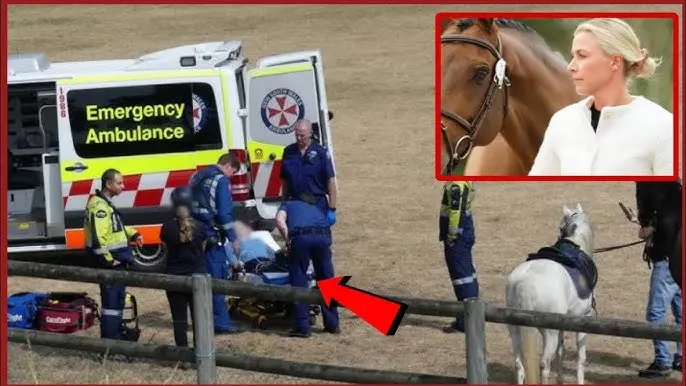
However, the adoption of these technologies has been slow and divisive. Regulatory bodies like the Fédération Equestre Internationale (FEI) and national federations, including British Eventing, mandate helmets meeting specific certification standards—such as ASTM F1163 with SEI mark in many jurisdictions, or equivalent European norms like VG1 or PAS015. While these standards ensure a baseline level of protection against linear impacts, critics argue they fall short in addressing rotational acceleration, which is implicated in many fatal head injuries in equestrian falls.
Debates center on several issues: comfort versus protection, cost barriers for amateur riders, and the risk that overly rigid or heavy “smart” features could deter use or cause fatigue during extended events. Some riders and officials express skepticism about unproven technologies, fearing they might create a false sense of security without delivering proportional benefits. There are also concerns about data privacy from sensors and the need for standardized testing protocols for emerging features.
In the wake of Campbell’s accident, alongside previous fatalities in eventing—including notable cases in recent years that prompted safety reviews—the call for mandatory upgrades has grown louder. Organizations like the Georgie Campbell Foundation explicitly focus on safety advocacy, documenting patterns in fatal falls and pushing for innovations like frangible (breakable) obstacles, which have been implemented in some jurisdictions but were not universally present in the UK at the time of her incident (noting that sturdy hanging logs were not frangible in British competitions then).
The broader equestrian industry faces pressure to evolve. Eventing has seen incremental changes, such as stricter course design reviews, enhanced medical presence at events, and encouragement of concussion protocols. Yet, high-profile deaths continue to expose gaps. Campbell’s tragedy serves as a stark reminder that even with state-of-the-art equipment available, the sport’s inherent dangers persist when catastrophic rotational falls occur.
Experts emphasize that no helmet can eliminate risk entirely—prevention through better obstacle design, rider education, and horse welfare remains crucial. Still, the conversation around smart helmets has gained urgency. Proponents argue that integrating sensors could enable faster intervention and long-term data collection to refine standards. Detractors worry about over-reliance on tech without addressing root causes like course difficulty or fatigue.
As the community mourns Campbell, the incident has prompted renewed scrutiny of protective regulations. British Eventing and international bodies may face calls to accelerate the approval and mandating of advanced helmet technologies, balancing innovation with practicality. The goal is clear: to honor fallen riders like Georgie Campbell by making eventing safer for future generations, ensuring that passion for the sport does not come at an unacceptable cost.
This loss underscores the fragility of life in equestrian competition and the collective responsibility to prioritize safety without diminishing the thrill that draws so many to the discipline. The equestrian world, while grieving, is channeling sorrow into action, hoping that from this tragedy, meaningful progress will emerge to protect those who dedicate their lives to horses.