BREAKING NEWS: Firefighters have been battling a massive fire at the grandstands of the abandoned 100-year-old Balmoral Park racecourse in the town of Crete, Will County, Illinois, about 30 miles south of Chicago.
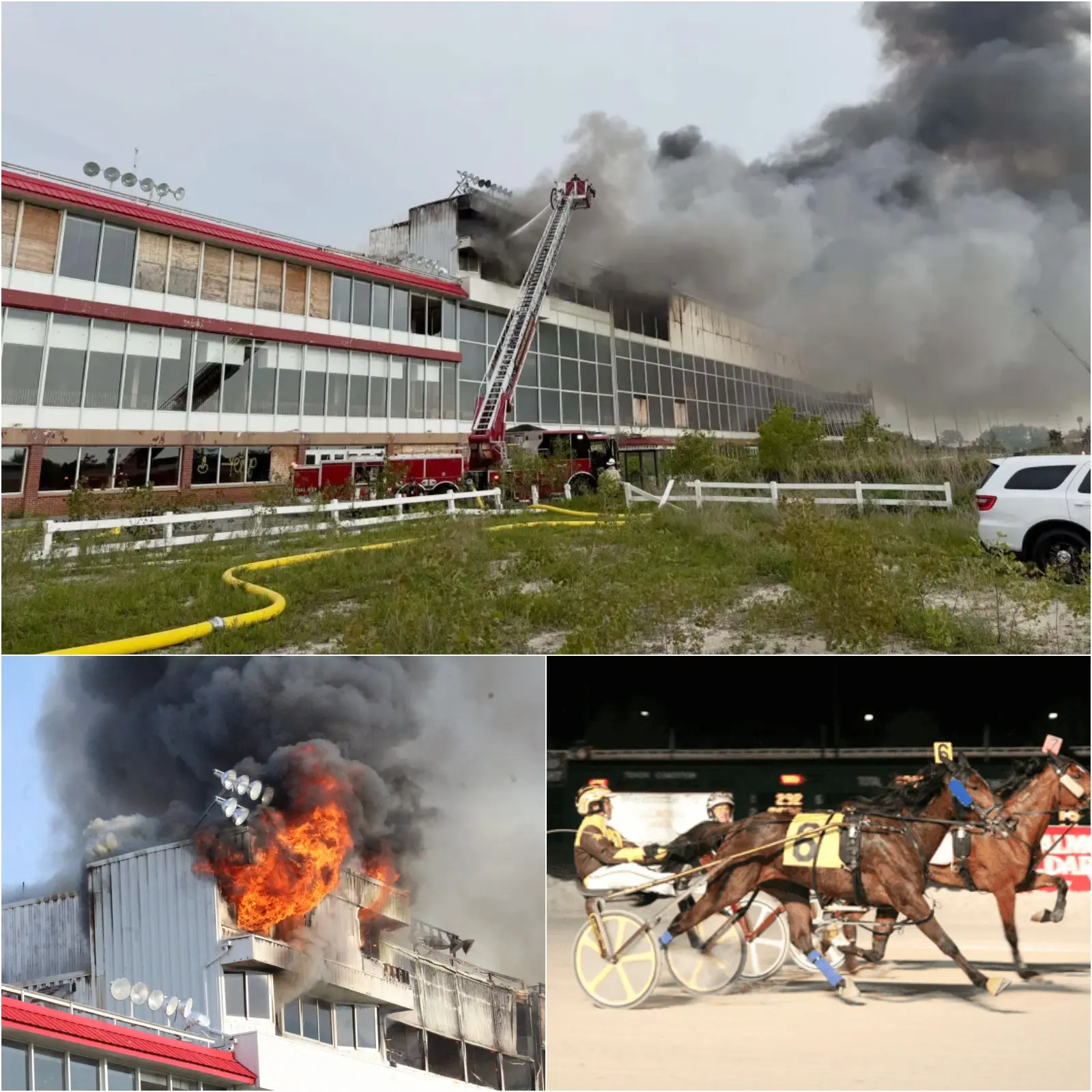
In the predawn hours of May 17, 2026, a fierce blaze erupted at the long-vacant Balmoral Park racetrack, rapidly consuming the iconic grandstands that once echoed with the thunder of hooves and the cheers of thousands. Firefighters from more than two dozen departments across the Chicago suburbs and northwest Indiana converged on the 200-acre site along Dixie Highway in Crete Township, battling flames that shot through the roof and tore through the aging wooden and steel structure.
The fire, which began around 6 a.m., sent towering plumes of thick black smoke billowing into the sky, visible for miles and casting a hazy blanket over the village of Crete and surrounding south suburban communities.

Local authorities issued urgent public safety warnings about heavy smoke and reduced visibility, advising residents to stay indoors if possible and keep windows closed. Highway access in the immediate area, including sections between Crete-Monee Road and nearby lanes, was temporarily restricted to emergency vehicles only, allowing fire apparatus and water tankers to maneuver freely without civilian interference.
The scale of the response was extraordinary, with crews from Crete Township, the villages of Crete, South Chicago Heights, Beecher, Monee, Steger, Chicago Heights, Manhattan, Lansing, Park Forest, Frankfort, Tinley Park and others, plus mutual aid teams from Cedar Lake, Lowell and Munster in Indiana. One Indiana unit alone delivered an estimated 12,000 gallons of water to support the effort.
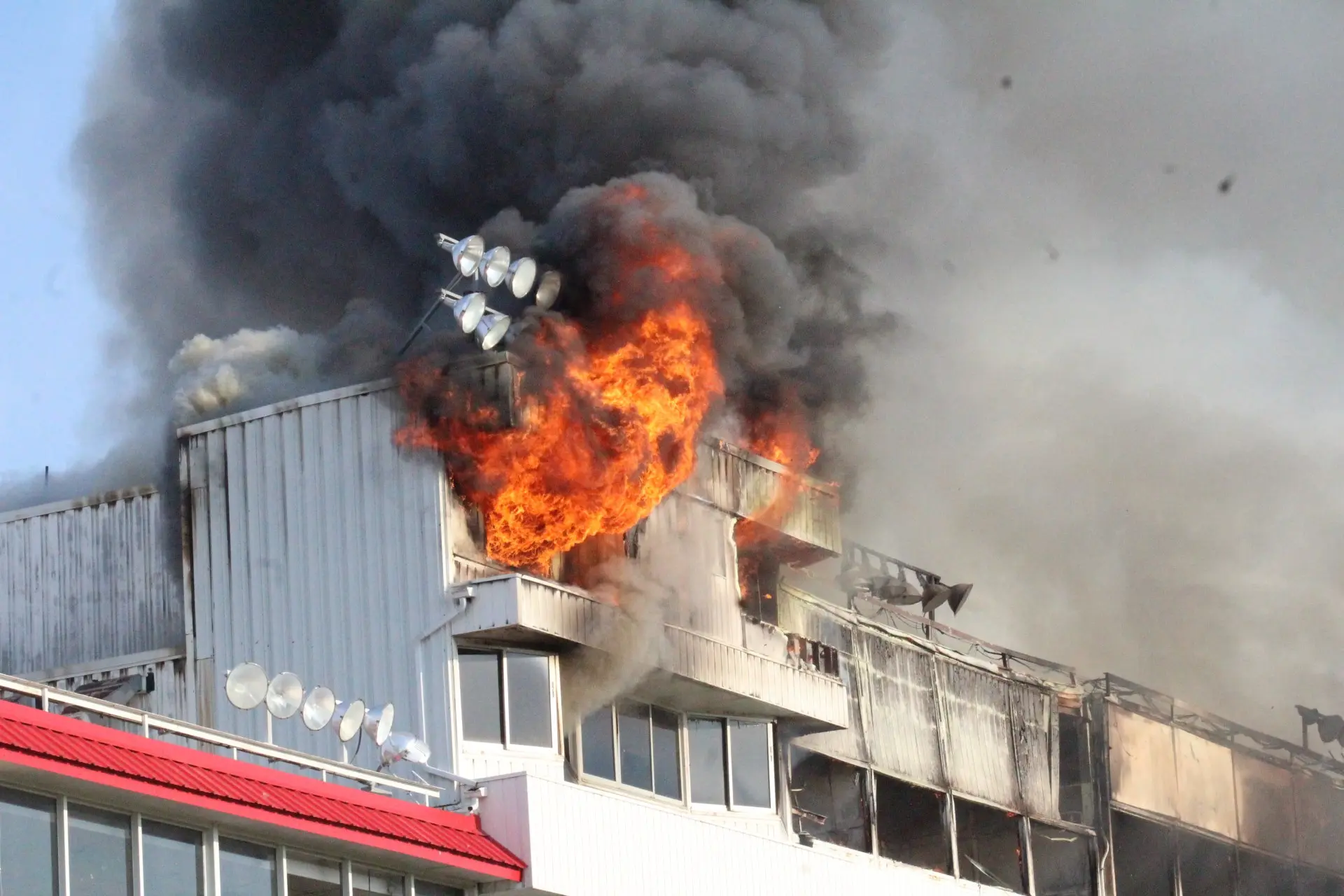
Crews initially attempted an aggressive interior attack but quickly shifted to a defensive posture as the fire proved too intense and the grandstand too compromised. The structure, capable of seating more than 70,000 spectators in its heyday, was already showing advanced deterioration after years of neglect. Firefighters focused on protecting exposures and containing the blaze to the main grandstand area rather than risking lives inside the unstable building. Crete Township Fire Protection District Chief Don Radtke later noted that the sheer size and unusual shape of the grandstand made operations particularly challenging, requiring coordinated aerial and ground tactics.
By 1:30 p.m., the main body of the fire was under control, though firefighters remained on scene for several additional hours to extinguish stubborn hot spots and ensure complete overhaul.
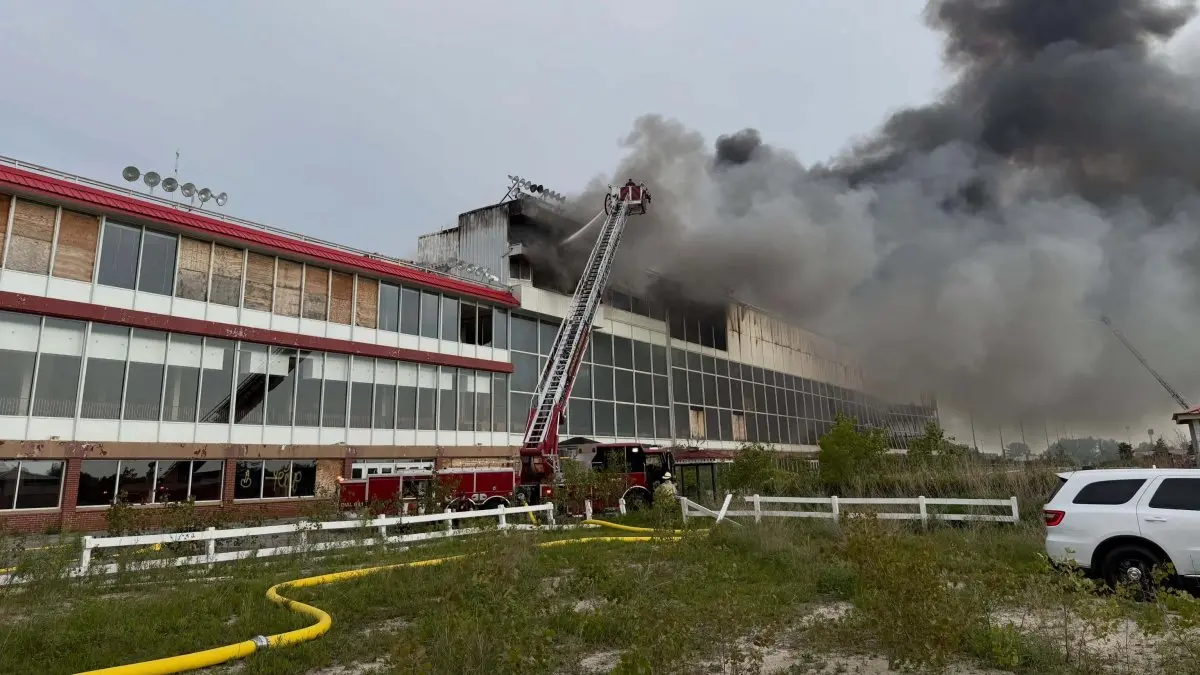
No injuries were reported among the hundreds of responders, a testament to disciplined incident command and the decision to prioritize safety once it became clear the building could not be saved. The grandstand was ultimately destroyed, reduced to a smoldering skeleton of twisted metal and charred timber. Remaining outbuildings and the broader grounds sustained varying degrees of damage from radiant heat and falling debris, but the primary loss was the historic seating and viewing structure that had defined the property for a century.
The cause of the fire remains undetermined. The Illinois State Fire Marshal’s office has led the investigation since the day of the blaze, examining the origin point in the roof and reviewing any potential electrical, structural or accidental factors. As of late June 2026, officials have not released a determination, and the probe continues as an active and open matter. Investigators have ruled out any immediate evidence of foul play, but the full picture will depend on detailed forensic analysis of the heavily damaged remains.
Balmoral Park’s story stretches back to 1926, when it first opened as Lincoln Fields and quickly became a cornerstone of Illinois horse racing. Over the decades it hosted both thoroughbred and harness racing, drawing crowds from across the Midwest. Notable owners included shopping-mall developer Edward DeBartolo Sr. and members of the Steinbrenner family, who brought star power and investment to the venue. A previous fire damaged the grandstand during 1952 renovations, forcing a temporary relocation of races, while the track itself stepped in to host displaced meetings after the devastating 1985 Arlington Park fire.
By the early 1990s, Balmoral had shifted primarily to harness racing, a discipline that continued until the final races in 2015.
Financial pressures and changing industry dynamics led to the track’s closure that year amid bankruptcy proceedings. In 2016 the property was purchased for $1.7 million by New York-based Horse Shows in the Sun (HITS), which converted the grounds into a show-jumping and equestrian facility. The first competitions under the new management took place in 2017, breathing temporary life into the barns and arenas. However, the venture proved short-lived. By 2019 the site had gone quiet again, and it has remained largely abandoned and vacant ever since.
In 2020 the Chicago Tribune reported the 200-acre estate was once more listed for sale with an asking price of $4 million. A key clause in the 2016 deed of ownership prohibited gambling on the property until 2026, a restriction that was still in effect when the fire struck.
Recent ownership changes added another layer of uncertainty. In 2021 the site was acquired by Balmoral Park 21 LLC, reportedly with plans to use portions of the property for truck parking, storage and maintenance rather than racing or equestrian events. At the same time, local observers and some prospective developers have expressed interest in reviving harness racing now that the long-standing gambling restriction has lifted with the arrival of 2026. The destruction of the grandstand, however, removes one of the most visible and symbolic pieces of infrastructure, complicating any immediate return to live racing or large-scale public events.
For longtime residents of Crete and Will County, the loss feels deeply personal. Many remember attending races with family, watching legendary drivers and horses compete under the lights, or simply driving past the landmark and feeling a connection to the area’s heritage. Social media posts and local conversations in the days after the fire were filled with expressions of sadness and nostalgia—“It’s so sad,” one resident wrote, capturing a sentiment shared by generations who grew up with Balmoral as part of the south suburban landscape.
The fire also highlights broader challenges facing historic racing venues across the United States: aging infrastructure, high maintenance costs, shifting entertainment preferences and regulatory hurdles. Illinois’ horse-racing industry has faced consolidation and competition from other forms of gaming for years, making the preservation of sites like Balmoral both a cultural and economic question. With the grandstand now gone, any future redevelopment will likely require significant new investment, whether the vision involves a scaled-down racing return, mixed-use commercial development, logistics facilities, or another equestrian concept.
In the immediate aftermath, the focus remains on public safety and completing the fire investigation. Environmental crews have monitored air quality in the wake of the heavy smoke, while property owners and township officials assess structural stability of any surviving buildings. The 200-acre parcel continues to sit largely empty, its future now more uncertain than ever after the dramatic events of May 17.
For a community that has watched the property cycle through glory, decline, attempted revival and now destruction, the fire marks another painful chapter in Balmoral Park’s long and storied history. While the flames have been extinguished and the smoke has cleared, the questions of what caused the blaze and what, if anything, will rise from the ashes linger on. As the calendar turns past the 2026 milestone that once promised new possibilities, residents and racing enthusiasts alike are left wondering whether this iconic south suburban landmark will ever again host the roar of the crowd or the thunder of hooves.
For now, the grandstands stand only in memory, a stark reminder of time’s toll on even the most beloved institutions.