“BREAKING NEWS: Shohei ‘Shotime’ Ohtani proposes eliminating Pride Month.”
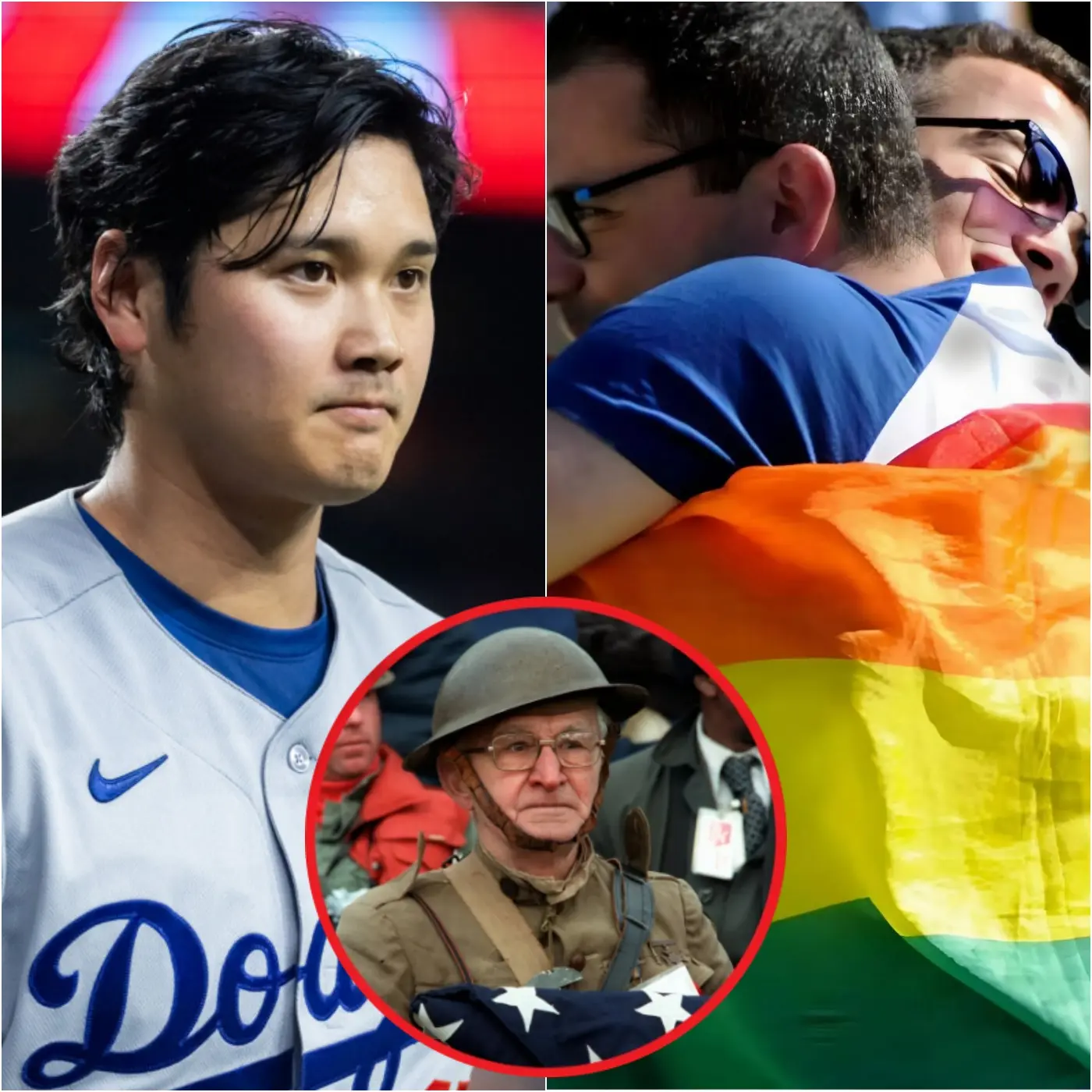
Within hours, the claim had spread far beyond its obscure origin, igniting outrage, confusion, and fierce debate. For millions who know Shohei Ohtani as a once-in-a-generation talent—an athlete whose quiet discipline speaks louder than words—the allegation felt jarringly out of character. But in the algorithm-driven chaos of online discourse, plausibility often takes a back seat to virality.
So where did this story actually come from?
Tracing the digital breadcrumbs reveals a familiar pattern. The claim appears to have originated from an unverified account—one with no credible journalistic affiliation, no direct quotes, and no supporting evidence. There was no video, no transcript, no press release. Just a bold assertion crafted in the language of urgency: “breaking news,” “stunning proposal,” “permanent elimination.” Words designed not to inform, but to provoke.
Yet as the post gained traction, it began to morph. Some users reframed it as a patriotic stance, suggesting Ohtani was advocating for greater recognition of American veterans. Others condemned it as an attack on LGBTQ+ communities. Each interpretation layered new meaning onto a claim that, at its core, remained entirely unsubstantiated.
What makes this particular rumor so potent is the collision of identities it invokes. Ohtani is not just a baseball star; he is an international icon, a symbol of cross-cultural admiration between Japan and the United States. His public persona has been meticulously consistent—focused on performance, humility, and respect. He has rarely, if ever, waded into political or cultural debates, especially those as deeply polarizing as this one.
And that’s precisely why the claim spreads so effectively.
“It’s the shock factor,” explains one media analyst who tracks misinformation trends. “When you attach a controversial statement to someone widely perceived as neutral or universally admired, people are more likely to click, share, and react—because it disrupts their expectations.”
But disruption is not the same as truth.
A review of credible news outlets, official team communications, and Ohtani’s own public channels yields no evidence supporting the claim. No interviews, no statements, no policy proposals. Silence—not the evasive kind, but the absence of any record that such words were ever spoken.
In fact, those close to Ohtani’s career describe him as intensely private and singularly focused on baseball. Teammates and coaches consistently highlight his work ethic and his reluctance to engage in off-field controversies. “He lets his game do the talking,” one former coach noted in a past interview. “That’s who he is.”
So how does a baseless claim gain such momentum?
Part of the answer lies in the architecture of social media itself. Platforms reward engagement, not accuracy. A post that sparks outrage—whether justified or not—travels faster and farther than a measured correction. By the time fact-checkers weigh in, the narrative has already taken root in thousands of minds.
There’s also a deeper, more human element at play. In an era marked by cultural and political divisions, people are primed to interpret information through the lens of their existing beliefs. For some, the rumor confirmed suspicions about hidden agendas. For others, it felt like a betrayal by a beloved figure. In both cases, the emotional response overshadowed the need for verification.
And then there’s the broader context—the ongoing debates around Pride Month, national identity, and the recognition of veterans. These are complex, deeply felt issues that deserve thoughtful discussion. But when they’re reduced to a viral soundbite attributed to someone who never said it, the conversation becomes distorted.
It’s worth pausing here to consider the real-world implications of such misinformation. For public figures like Ohtani, false claims can damage reputations and create unnecessary controversy. For communities already navigating sensitive issues, they can inflame tensions and deepen divisions.
More importantly, they erode trust.
When audiences repeatedly encounter sensational claims that turn out to be false, skepticism grows—not just toward social media, but toward legitimate journalism as well. The line between fact and fiction blurs, and the space for meaningful dialogue shrinks.
So what can be done?
The first step is deceptively simple: slow down. Before sharing a headline that provokes a strong reaction, take a moment to যাচ verify its source. Is it coming from a reputable outlet? Are there direct quotes or corroborating reports? If the answer is no, caution is warranted.
The second step is to recognize the mechanics of virality. Not every “breaking news” alert is news. Sometimes, it’s just noise—crafted to capture attention in a crowded digital landscape.
And finally, there’s the responsibility of storytelling itself.
As journalists, investigators, and even everyday users, we shape narratives through what we choose to amplify. In this case, the more compelling story is not the false claim, but the way it spread—the anatomy of a rumor in real time, revealing both the power and the pitfalls of our interconnected world.
Because in the end, the truth about Shohei Ohtani is far less dramatic, but far more grounded. He remains what he has always been: an extraordinary athlete, a global ambassador for the sport, and a figure whose silence on divisive issues speaks volumes in its own right.
The controversy, it turns out, says less about him—and far more about us.