The world of professional darts thrives on a delicate balance between intense psychological warfare and strict professional etiquette. In a sport where competitors stand mere feet away from one another, sharing the same stage and breathing the same air, the mental pressure can often become overwhelming. This inherent tension was pushed to its absolute limits during the recent Nordic Darts Masters, a premier event on the Professional Darts Corporation World Series circuit.
While the tournament was designed to showcase the elite talents of global darts in Scandinavia, the post-match fallout from a high-stakes encounter between world champion Luke Humphries and veteran competitor Jeffrey de Graaf quickly became the central talking point of the weekend. What began as a routine, albeit highly competitive, dart match ultimately transformed into a complex debate regarding the boundaries of gamesmanship, the psychology of elite athletes, and the unwritten rules of sportsmanship that govern the modern game.
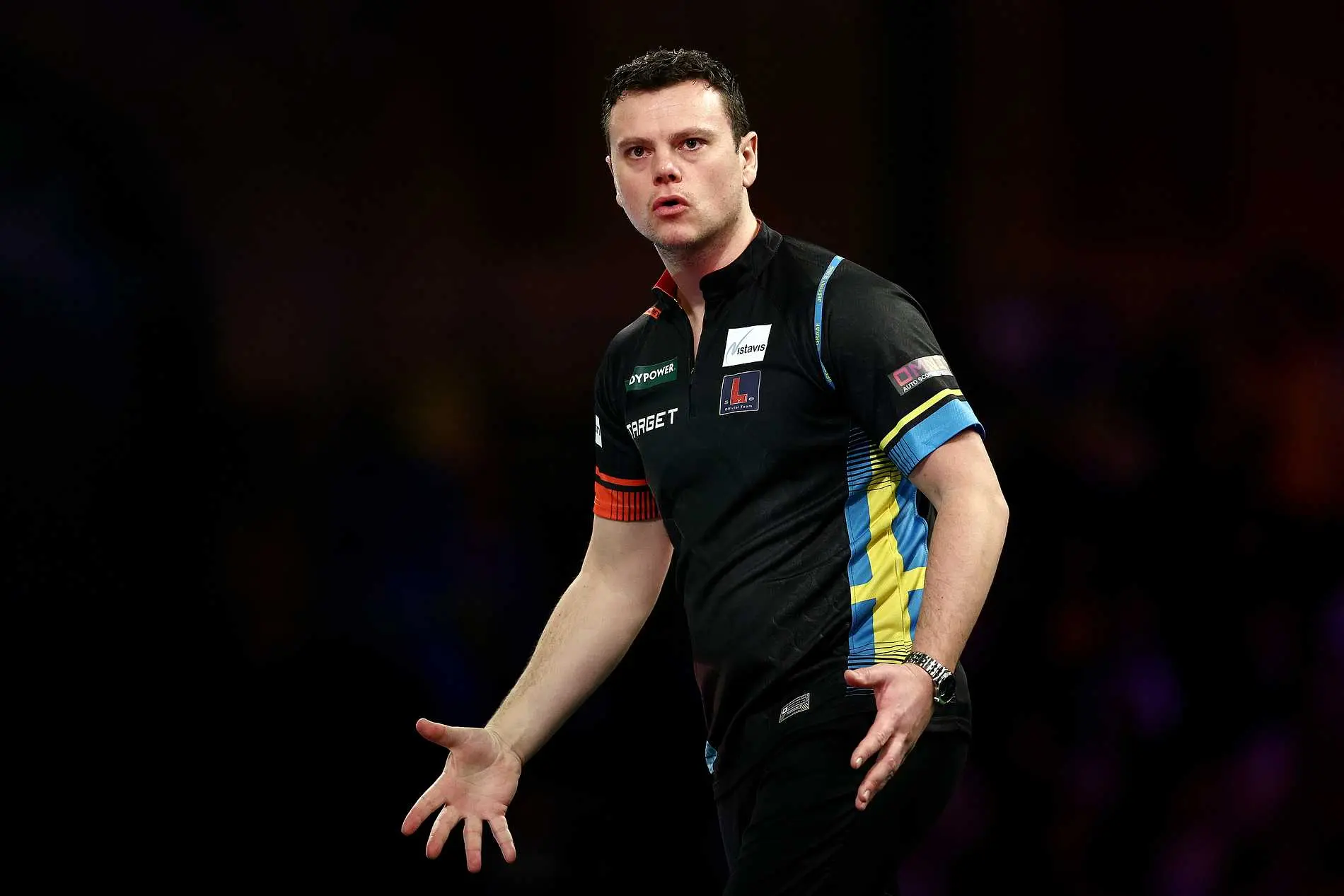
To fully understand the friction that developed between the two players, one must first examine the context of the match itself. Luke Humphries entered the tournament carrying the immense weight of being the reigning world champion, a title that inherently places a target on a player’s back. Every opponent steps onto the stage with an elevated level of motivation, eager to prove themselves against the very best in the business.
Jeffrey de Graaf, representing Sweden on the international stage, viewed the encounter not just as an opportunity for personal advancement, but as a chance to secure a landmark victory for Nordic darts in front of a passionate home crowd. The atmosphere inside the arena was electric, with fans creating a wall of sound that amplified every single throw. In such an environment, the margin for error is razor-thin, and the psychological demands are exponentially magnified. Every sigh, every movement in the peripheral vision, and every facial expression can be interpreted as a tactical move designed to disrupt an opponent’s rhythm.
As the match progressed, the contrasting styles and demeanors of the two competitors became increasingly apparent. Humphries, known for his rapid throw and intense stage presence, looked to establish dominance early on. De Graaf, conversely, preferred a more deliberate and methodical approach to the board, relying on a steady cadence to find his targets. It was within this clash of tempos that the initial seeds of frustration were planted. In professional darts, the pace of play is a frequent source of contention.
A player who prefers a faster rhythm can easily become exasperated by an opponent who slows the game down, while a deliberate player can feel rushed or pressured by a rival who snaps at their heels. Observers noted that as Humphries pushed ahead, his natural exuberance and vocal self-encouragement began to visibly grate on de Graaf. What the crowd viewed as standard elite-level intensity, de Graaf increasingly perceived as a calculated attempt to undermine his concentration.

The breaking point, however, occurred not during the throwing sequences themselves, but in the immediate aftermath of the match. Following the final double that secured the victory for Humphries, the traditional handshake at the board lacked its customary warmth. In the post-match media zone, a visibly agitated de Graaf did not mince his words, launching into a detailed critique of Humphries’ behavior on stage. The Swedish international alleged that the world champion had crossed the line from passionate competitiveness into outright unsportsmanlike conduct.
Specifically, de Graaf pointed to instances where he felt Humphries was moving unnecessarily while standing behind the oche, a zone that is traditionally respected as a sanctuary for the player currently throwing. Furthermore, de Graaf expressed deep resentment over a specific verbal exchange that took place between the two men as they exited the stage, characterizing Humphries’ parting words as profoundly disrespectful and unbefitting of a world champion.
In the court of public opinion and within the darts community, these allegations immediately sparked a wider conversation about the nature of modern gamesmanship. The term itself is loosely defined in sports; it encompasses the use of dubious, though not strictly illegal, methods to win a game or gain an advantage. In darts, this can range from slow walking to the board, heavy footfalls on the stage, or strategic celebrations aimed at rattling the opponent. De Graaf’s grievances centered on the idea that Humphries had utilized these subtle disruptions to throw him off balance during crucial legs.
For de Graaf, this was not a case of simply losing to a better player on the day, but rather an instance where the spirit of fair play had been compromised for the sake of victory. He argued that the governing bodies need to look closer at these micro-interactions on stage to ensure a level playing field for all competitors.
When presented with these criticisms, the camp of Luke Humphries and his supporters offered a vastly different interpretation of the evening’s events. From their perspective, the world champion’s behavior was nothing more than the raw manifestation of elite competitive drive. To maintain the number one ranking in the world, a player must cultivate an intense, almost bulletproof mindset on stage. Humphries’ vocal outbursts and passionate celebrations are well-documented aspects of his game, tools he uses to maintain his own adrenaline and focus rather than malicious tactics directed at his rival.
Supporters argued that de Graaf’s frustration was merely the byproduct of a disappointing defeat on home soil, a natural emotional reaction to a match that slipped away. They contended that elite sports are inherently hostile environments where players must be resilient enough to block out any external stimuli, including the natural movements and emotions of their opponents.
This incident highlights a growing challenge facing the Professional Darts Corporation as the sport continues to expand its global footprint and commercial appeal. As prize money increases and the pressure to perform escalates, the temptation to engage in gamesmanship inevitably grows. The line between acceptable passion and unacceptable disruption remains notoriously blurry, left largely to the discretion of the on-stage referee. In this specific instance, the tournament officials did not intervene during the match, suggesting that Humphries’ actions did not violate any explicit rules in the PDC handbook.
However, the fact that a veteran player like de Graaf felt compelled to speak out so strongly indicates that a structural tension exists between the written regulations of the sport and the unwritten code of conduct shared among the players themselves.
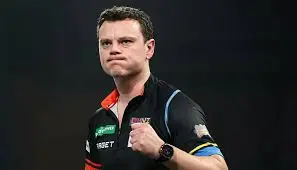
Ultimately, the controversy at the Nordic Darts Masters serves as a stark reminder of the intense human element that underpins professional darts. Beneath the metrics of three-dart averages, checkout percentages, and tournament brackets lies a psychological battlefield where two individuals clash in a test of pure nerve. The disagreement between Luke Humphries and Jeffrey de Graaf is unlikely to be resolved anytime soon, as both men view the events through the lens of their own competitive realities.
As the darting calendar moves forward to the next major tournament, the sporting world will undoubtedly keep a close eye on future encounters between these two professionals. Whether this friction evolves into a long-standing rivalry or dissolves into a mutual understanding remains to be seen, but it has undeniably added a compelling layer of drama to the ongoing narrative of the modern darts season.