Scottie Scheffler shouted, “I don’t know what to do. I can’t hear a word you’re saying.”
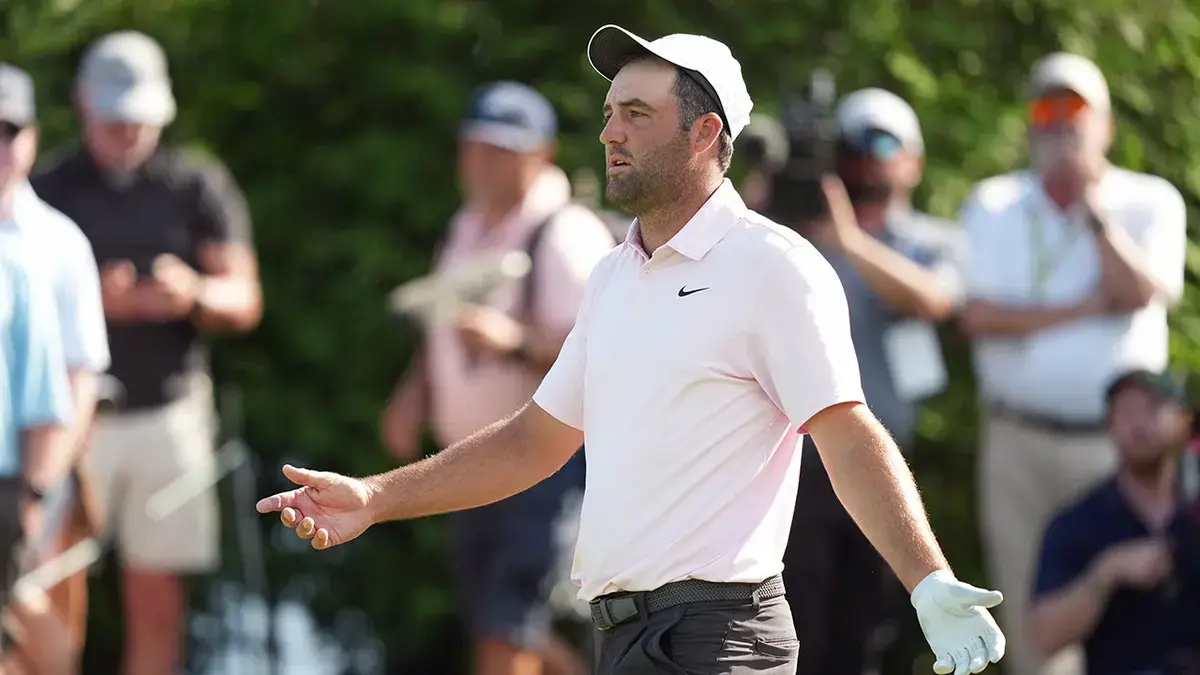
For most golfers, a reaction like that would barely make headlines. For Scottie Scheffler, the calmest and most consistent player in the world, it instantly became one of the most talked-about moments of the opening round at the Memorial Tournament.
The scene unfolded on the 16th hole at Muirfield Village, a course that has become one of Scheffler’s favorite hunting grounds over the years. The World No. 1 arrived in Ohio as one of the overwhelming favorites, having already won the Memorial twice and built a reputation for mastering one of the toughest layouts on the PGA Tour schedule.
Yet golf has a way of humbling even the greatest players.
Scheffler entered the week carrying enormous expectations. Although his 2026 season has been strong by almost any standard, it has not quite matched the astonishing dominance he displayed during the previous two years. In 2024, it felt as if he won nearly every tournament he entered. The Players Championship, The Masters, the Memorial Tournament, the Tour Championship, and even Olympic gold all found their way into his trophy collection.
The following season brought more success. He captured two major championships, winning the PGA Championship at Quail Hollow and The Open Championship at Royal Portrush. By the end of 2025, discussions about his place among the greatest players of his generation had become impossible to avoid.
That success also created a difficult challenge.
When a golfer reaches Scheffler’s level, fans begin judging him by a different standard. Finishing third, fourth, or second suddenly feels disappointing, even though those results would represent career highlights for most players.
His 2026 campaign has reflected that reality.
He opened the year with a victory at The American Express in Palm Springs, but since then the season has been defined by near misses and close calls. He finished third at the WM Phoenix Open, fourth at Pebble Beach, runner-up at The Masters after a brilliant weekend charge, lost in a playoff at the RBC Heritage, and added another second-place finish at the Cadillac Championship.
There have been plenty of strong performances, but not the relentless dominance that fans had grown accustomed to seeing.
That context made his appearance at Muirfield Village particularly interesting.
Many observers believed the Memorial would provide the perfect opportunity for Scheffler to reassert himself. The demanding layout rewards elite ball-striking, patience, and strategic thinking—all areas where he traditionally excels.
For much of Thursday’s opening round, things appeared to be moving in the right direction.
Scheffler completed his first nine holes at two-under par and looked comfortable navigating the difficult conditions. But the back nine proved significantly more challenging.
Bogeys at the 10th and 14th holes erased much of his progress. Then came the moment that everyone would be talking about.
Standing on the 16th tee, Scheffler faced one of the most intimidating par-3 holes on the course. What happened next surprised both spectators and television viewers.
His tee shot flew long and found the water.
The mistake eventually resulted in a double bogey, but it was Scheffler’s reaction that immediately captured attention.
Clearly frustrated, he turned toward longtime caddie Ted Scott and delivered a rare emotional outburst.
“I don’t know what to do. I can’t hear a word you’re saying,” he said.
For golf fans accustomed to seeing Scheffler maintain almost complete emotional control, the exchange felt startling.
Within minutes, clips of the incident began circulating online. Social media quickly filled with reactions from fans who were shocked to witness such visible frustration from a player often praised for his composure.
Some fans described the moment as refreshingly honest.
Others viewed it as evidence of the immense pressure that comes with being the best golfer on the planet.
What made the situation especially interesting was that Scheffler’s frustration did not seem directed at a poor swing.
In fact, he believed he had executed the shot exactly the way he intended.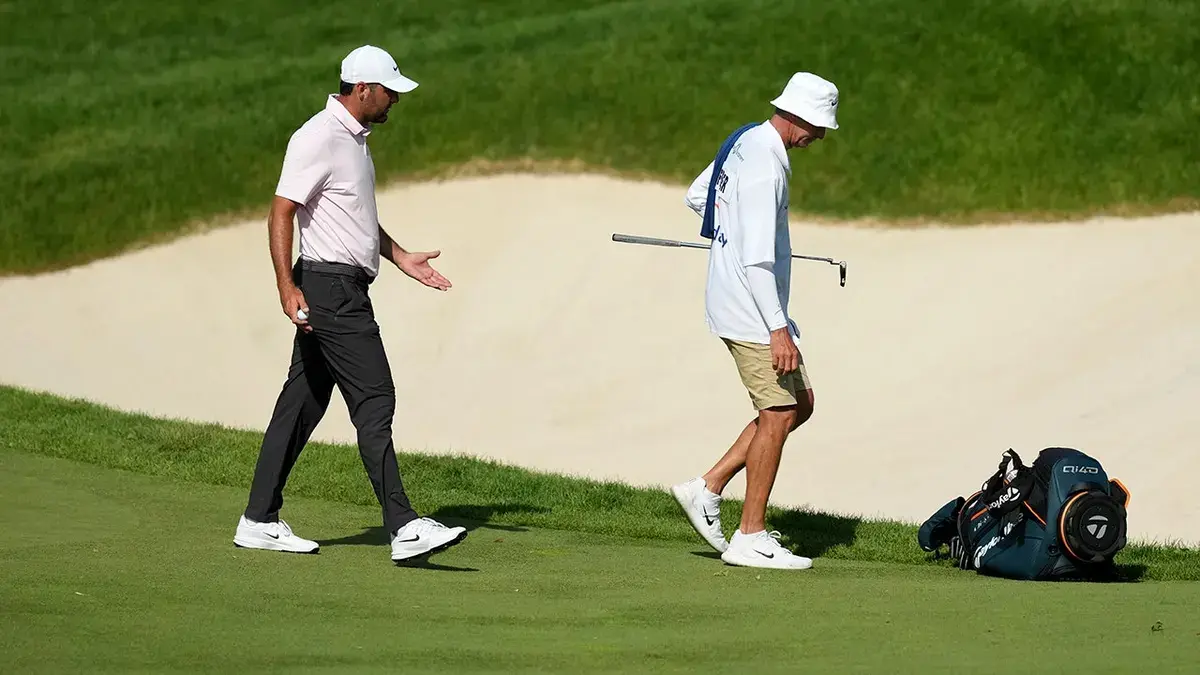
As he continued discussing the hole with Scott, Scheffler repeatedly expressed disbelief at the outcome.
He explained that he had hit a strong 7-iron and felt the shot should have produced a much better result. Instead, changing wind conditions appeared to push the ball into trouble.
For elite golfers, those moments can be among the most frustrating experiences in the sport.
Players spend countless hours refining their swings, studying course strategy, and preparing for every possible scenario. When a shot feels perfect but produces a disastrous result, it can create a unique kind of frustration.
Scheffler’s reaction reflected that reality.
The World No. 1 was not angry because he had mishit the ball.
He was frustrated because he believed he had done everything correctly and still paid a heavy price.
After completing the round, Scheffler addressed the incident directly.
His explanation offered valuable insight into what was happening during those emotional moments.
“It was another really good iron shot,” he told reporters.
According to Scheffler, the wind shifted significantly during the shot. What initially appeared to be manageable conditions suddenly became far more difficult, leaving him feeling as though there was little else he could have done.
“If the ball is on the right side, that’s probably where I’m hitting a wedge from,” he explained.
“I really don’t know what I’m supposed to do besides hit a good shot.”
Those comments quickly became a major talking point among golf fans.
Many supporters sympathized with Scheffler’s frustration. Golf is one of the few sports where a perfectly executed action can still produce a disappointing outcome because of factors beyond a player’s control.
Wind changes.
Firm greens.
Unexpected bounces.
Tiny variables can completely alter the result.
That unpredictability is part of what makes golf fascinating, but it can also make the sport maddening.
The incident also provided a rare glimpse into Scheffler’s competitive mindset.
For years, fans have admired his calm demeanor, often wondering whether anything truly bothers him on the course. Thursday’s outburst offered proof that beneath the composed exterior lies the same competitive fire shared by every great champion.
Champions care deeply.
They expect excellence.
They demand precision.
And when circumstances appear unfair, emotions can emerge.
Ironically, many fans came away from the moment with even greater respect for Scheffler.
The exchange with Ted Scott did not reveal weakness.
Instead, it highlighted how invested he remains in every shot, every decision, and every tournament.
The relationship between Scheffler and Scott has long been considered one of the strongest partnerships in professional golf. Their communication, trust, and teamwork have played a major role in many victories.
That is why few observers interpreted the incident as genuine conflict.
Rather, it looked like two highly competitive professionals trying to solve a difficult problem in real time.
By the end of the day, Scheffler managed to recover slightly with a birdie on the 17th hole.
He finished the round at one-over par, six shots behind the leader.
Not the start he wanted.
Not the position many expected.
But perhaps the most memorable takeaway from Thursday had little to do with the leaderboard.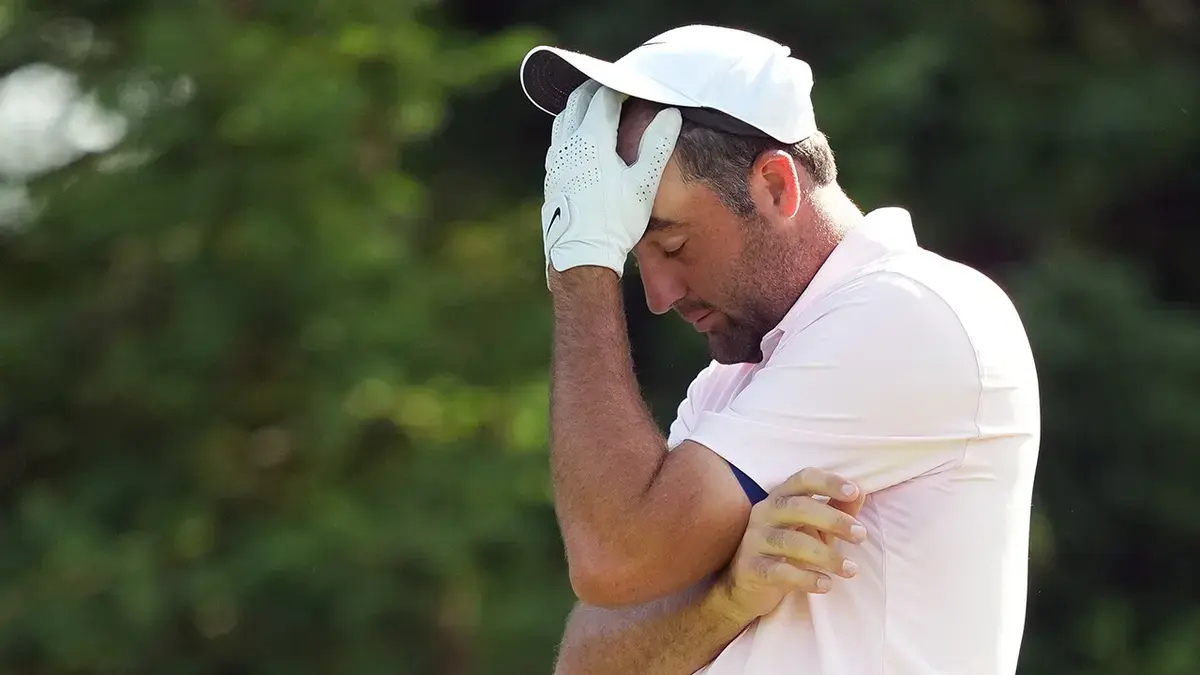
Instead, it was a reminder that even the best golfer in the world occasionally experiences the same frustrations felt by millions of weekend players.
The difference is that when Scottie Scheffler gets frustrated, the entire golf world is watching.
And on a windy afternoon at Muirfield Village, fans were given a rare look behind the curtain—one that revealed not just the World No. 1 golfer, but the fiercely competitive human being behind the ranking.