🚨NOT A COACH, NOT AN EXPERT: Bryson DeChambeau Stuns Fans By Secretly Turning To An Unexpected Source To Fix His Swing
Bryson DeChambeau has never been afraid to do things differently. Throughout his career, the two-time U.S. Open champion has built a reputation as one of golf’s most unconventional thinkers, constantly experimenting with equipment, training methods, and swing mechanics in search of an edge. But even by his standards, his latest decision caught the golf world completely off guard.
After weeks of frustration and growing concern about the state of his game, DeChambeau quietly turned to an unlikely source for help. It was not a famous swing coach. It was not a sports psychologist. It was not a former champion offering advice behind the scenes.
Instead, it was artificial intelligence.
The revelation emerged following LIV Golf Korea, where DeChambeau produced an impressive final-round charge that nearly forced him into a playoff. While fans were focused on his resurgence, few knew about the unusual process that had taken place behind the scenes just hours earlier.
According to DeChambeau, the breakthrough did not come during a lengthy range session. In fact, despite spending hours hitting balls and searching for answers, he left the practice area feeling more frustrated than ever.
For a player known for understanding every detail of his swing, the situation was particularly unsettling. Something felt wrong, but he could not fully identify the cause. His hands seemed out of sync. The club would not rotate naturally through impact. The movements that normally felt automatic suddenly became difficult to trust.
As the night continued, DeChambeau decided to explore a different route.
He began discussing swing mechanics, physics principles, and club movement with Google’s Gemini AI system.
To many people, the idea sounds unusual. Yet for DeChambeau, it was a natural extension of how he has approached golf for years. Nicknamed “The Scientist” by fans, he has always relied heavily on data, biomechanics, and technical analysis to improve his performance.
The AI conversation reportedly focused on concepts such as torque, clubface rotation, grip pressure, and the relationship between tension and swing efficiency. Rather than receiving traditional coaching advice, DeChambeau was looking for a deeper explanation of why certain movements were happening.
What he discovered surprised him.
The solution, at least for that particular moment, appeared to be remarkably simple.
He realized that excessive grip pressure and tension were preventing the club from releasing naturally through the swing. Instead of forcing the movement, he needed to relax his hands and allow the club to rotate more freely.
The next day, the difference was noticeable.
DeChambeau played with greater freedom and confidence, producing one of his strongest rounds of the tournament. Although he ultimately finished just short of victory, the performance immediately sparked conversation throughout the golf community.
Social media reacted exactly as one might expect.
Some fans were fascinated by the story. Many saw it as another example of DeChambeau pushing the boundaries of what modern golf could become. Others joked that artificial intelligence was now competing with golf instructors for jobs. A few critics questioned whether technology should play such a large role in a sport traditionally built on feel, instinct, and personal coaching.
The mixed reaction was hardly surprising.
Artificial intelligence has become one of the most debated topics in sports. Teams across multiple leagues are increasingly using advanced analytics to evaluate players, predict injuries, and improve performance. Golf, however, has often remained more personal. Players typically rely on trusted coaches who understand not only mechanics but also emotions, confidence, and competitive pressure.
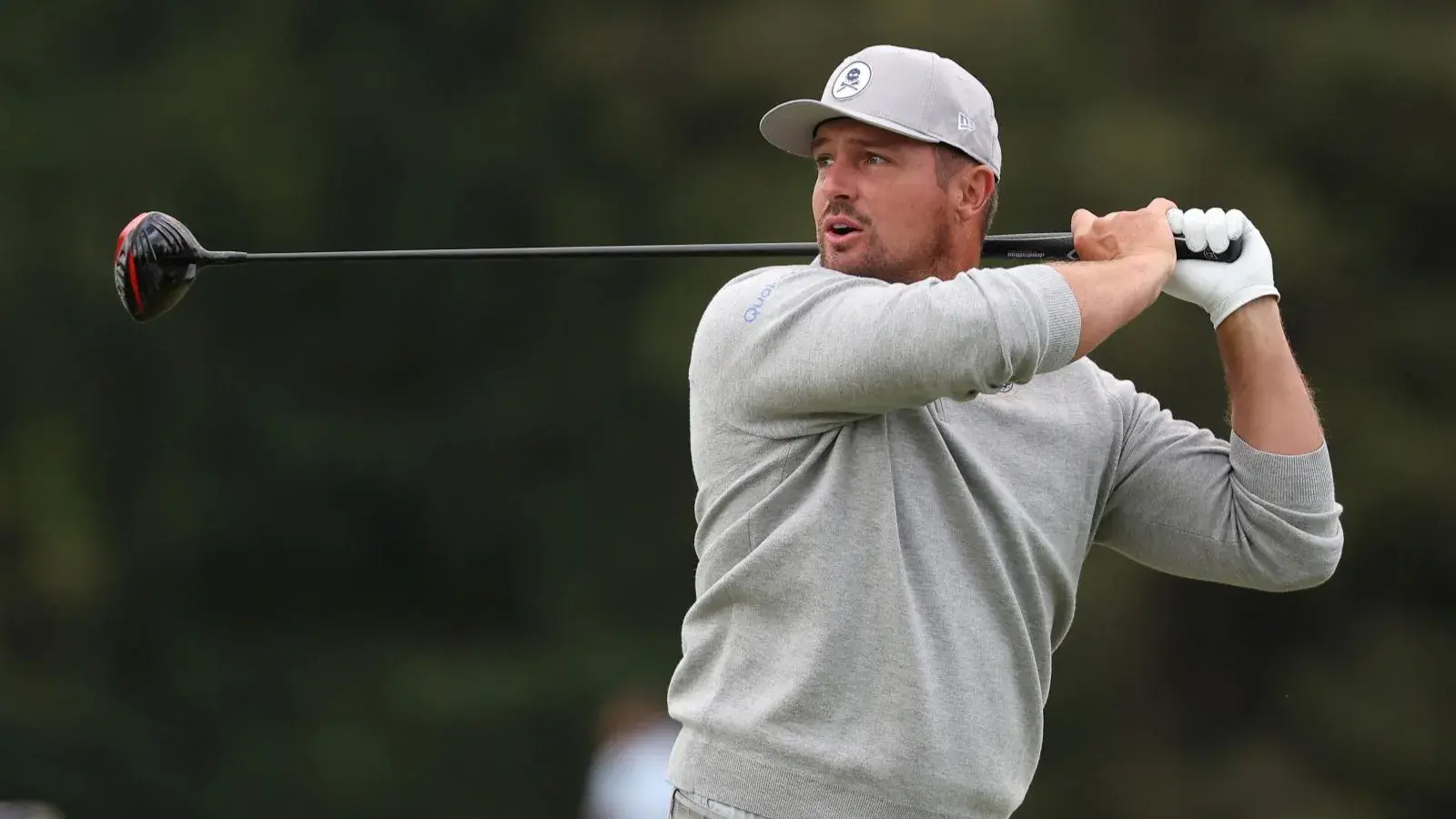
That is why DeChambeau’s comments generated so much attention.
Yet those who have followed his career closely were not entirely shocked.
Over the last several years, DeChambeau has consistently embraced technology at a level few professional golfers have matched. From his famous one-length irons to detailed launch-monitor analysis and biomechanics research, he has spent much of his career searching for scientific explanations behind athletic performance.
In recent interviews, he has even discussed the possibility of AI-powered golf coaching systems capable of analyzing thousands of swing metrics within seconds. According to DeChambeau, such technology could identify subtle deviations that might otherwise take weeks for players to recognize.
For him, AI is not replacing coaches. It is becoming another tool in the toolbox.
That distinction matters.
Despite the headlines, DeChambeau never claimed artificial intelligence had completely solved his swing problems. In fact, he openly admitted that he is still working through the issues and continues searching for greater consistency. The AI conversation simply helped him identify a direction that felt promising.
That honesty may be one reason why the story resonated with so many golfers.
Every player, from beginners to major champions, experiences periods when nothing seems to work. Hours of practice produce few answers. Advice starts to blend together. Confidence disappears. During those moments, people become willing to explore ideas they might normally ignore.
DeChambeau’s experience reflected a reality many athletes understand well. Sometimes breakthroughs come from unexpected places.
Interestingly, the timing could not have been more important.
The American entered this stretch of the season carrying significant pressure. Earlier major championships had produced disappointing results, including missed cuts that raised questions about his form. While his LIV Golf performances remained strong overall, many observers wondered whether he could regain the level that made him one of the most dangerous players in the world.
His strong finish in Korea offered a reminder that he remains a serious threat whenever his game begins to click.
It also reinforced another truth about DeChambeau: he is unlikely to stop experimenting anytime soon.
Whether fans love him or criticize him, his willingness to challenge conventional thinking has become a defining part of his identity. Golf has always evolved through players willing to try something different. In previous generations, new equipment, fitness programs, and analytical techniques often faced skepticism before eventually becoming accepted.
Artificial intelligence may represent the next chapter of that evolution.
Of course, AI cannot stand over a golf ball and execute a pressure-packed shot on Sunday afternoon. It cannot replace experience, touch, creativity, or competitive nerve. Those qualities still belong entirely to the player.
But if technology can help athletes better understand their own movements, identify hidden flaws, and accelerate learning, its influence on professional sports will likely continue growing.
For now, DeChambeau’s late-night conversation with an AI assistant remains one of the most fascinating stories in golf this season.
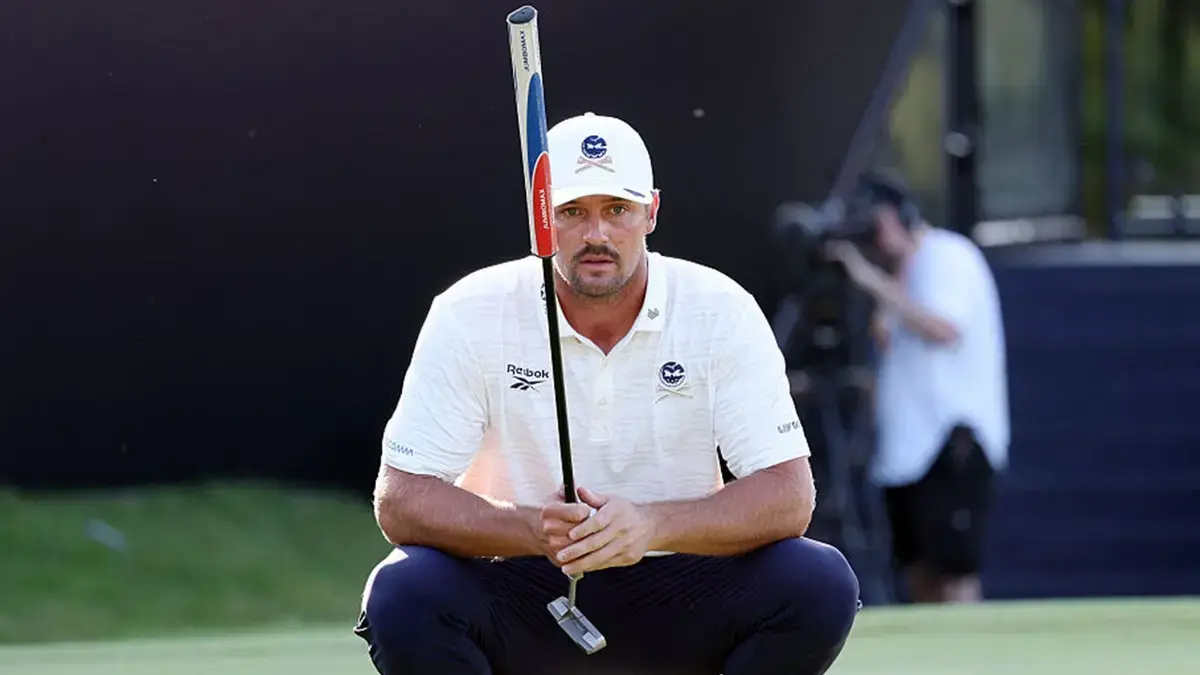
Not because it instantly transformed his game.
Not because it proved technology is superior to human coaching.
But because it revealed the mindset of a player who refuses to stop searching for answers.
And in a sport where tiny details can separate victory from defeat, that relentless pursuit of improvement may be the most valuable advantage of all.