IF THERE HAD BEEN NO INCIDENT AT TASMANIA SUPER 440… HE WOULDN’T BE AT THE TOP.
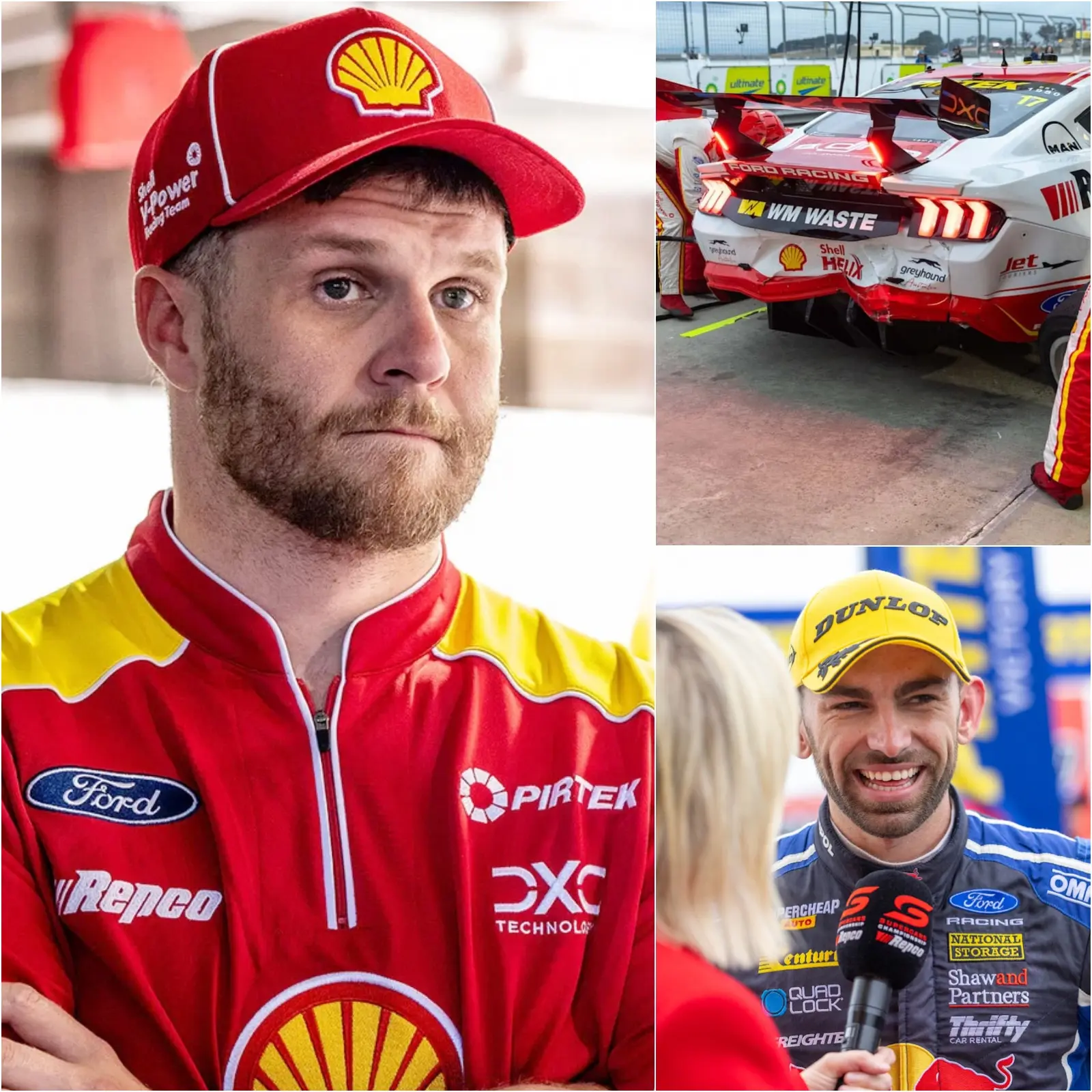
Former Supercars champion Brodie Kostecki delivered that bombshell statement inside the Shell V-Power Racing Team garage late on Sunday night, just minutes after a gruelling three-hour post-race meeting that left team personnel visibly shaken. The 2023 title winner’s words cut through the tension like a knife, instantly reframing the entire 2026 Repco Supercars Championship narrative around one burning question: how much of Broc Feeney’s sudden surge to the top is genuine skill, and how much is simply the product of extraordinary good fortune at the expense of his closest rival?
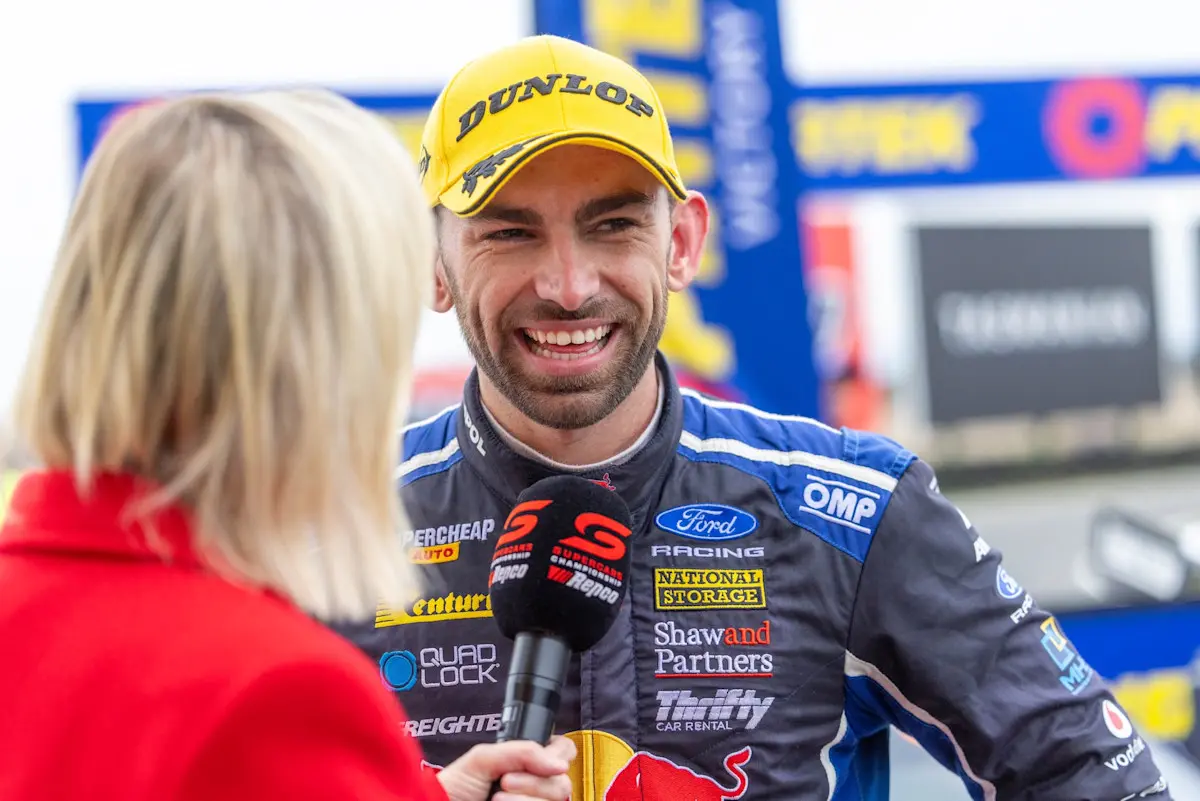
The atmosphere inside the DJR compound at Symmons Plains had already been heavy. Race 15 of the Tyrepower Tasmania Super 440 had unravelled in spectacular fashion for the #17 Shell V-Power Mustang. What began as a strong weekend — Kostecki had looked sharp in qualifying and delivered a podium in the opening race — collapsed in a single, costly moment on lap 23 of Race 15. David Reynolds, running sixth and closing rapidly on the battle for fourth between Kostecki and Ryan Wood, locked his brakes approaching the Turn 4 hairpin.
Despite a last-second swerve, Reynolds speared into the rear of Kostecki’s Ford, ripping bodywork, damaging the diffuser and sending the car skating across the grass. Kostecki, already committed to a wheel-to-wheel fight with Wood’s Toyota, clipped the sister car as well before limping home last.
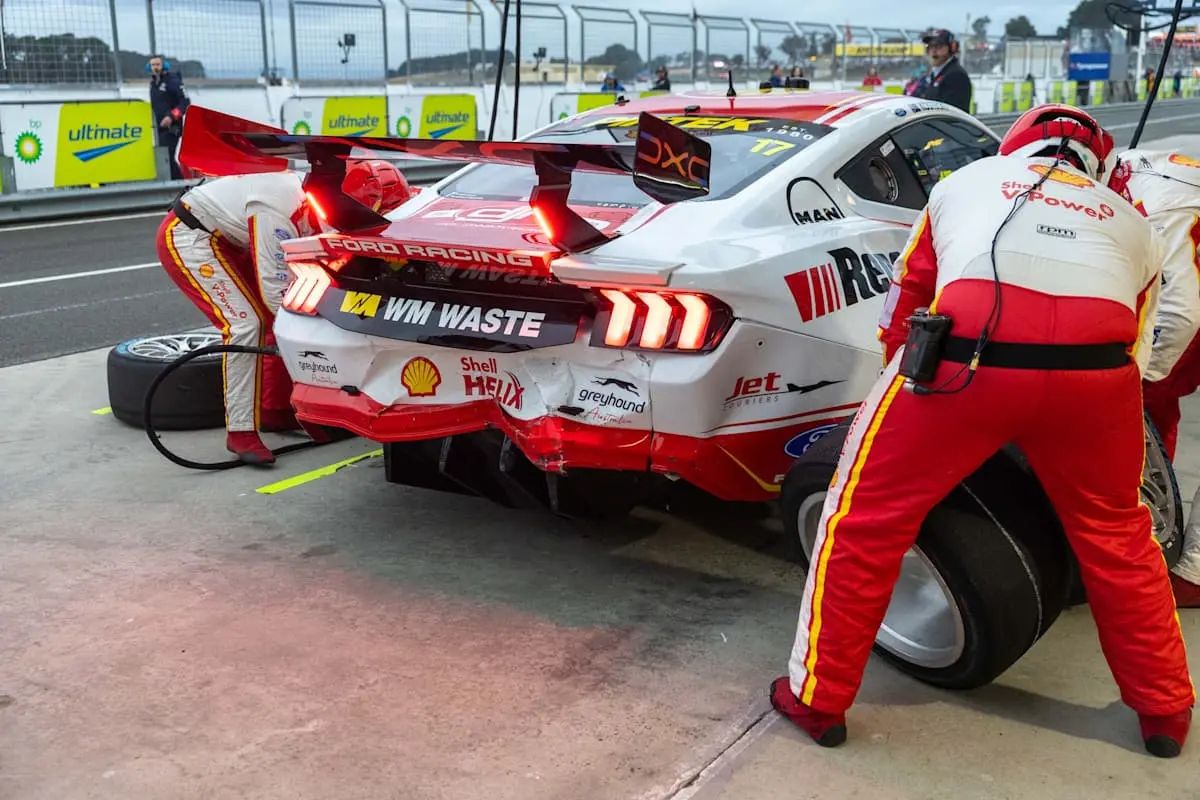
Reynolds was immediately contrite. “Sorry man, that was just a complete balls up,” he told Kostecki over the radio. The Team 18 driver later shouldered full responsibility in the media pen, admitting he had simply got the braking point wrong while trying to capitalise on the scrap ahead. A 15-second penalty followed, dropping Reynolds from a potential points finish to 17th. For Kostecki, the damage was far more profound. The compromised Mustang struggled for grip and straight-line speed for the remainder of the race. He crossed the line at the back of the field, his championship hopes suddenly in freefall.
By the time the chequered flag fell on Race 16 the following day, the scale of the weekend’s disaster was clear. Kostecki had shipped approximately 150 points to Feeney across the Tasmania double-header. The Triple Eight driver, who had been trailing or level only days earlier, now sat 173 points clear at the top of the standings. The once-dominant Shell V-Power machine that had led six consecutive races earlier in the season was suddenly nursing wounds both visible and invisible.
Kostecki himself suspected the collision damage had lingered into Race 16, while the team separately identified a costly refuelling issue that cost precious seconds in the pits. DJR team principal confirmed they would be conducting a full forensic investigation back at their Queensland headquarters.
It was against this backdrop of frustration, fatigue and forensic debriefing that Kostecki finally spoke. The three-hour meeting had dissected every lap, every data trace and every strategic decision. When the room fell silent, the 2023 champion leaned forward and delivered his verdict with quiet intensity: if the Reynolds incident had never happened, Feeney would not be leading the championship. The implication was unmistakable. In Kostecki’s mind, the points swing was not merely the result of superior pace or better execution from the #88 Red Bull Ampol Racing entry.
It was the direct consequence of one rival’s misfortune opening the door for another.
The statement sent a ripple of discomfort through the Shell V-Power garage. Several team members exchanged glances. No one contradicted him outright, but the discomfort was palpable. In the hyper-competitive world of Supercars, where every point is fought for with ruthless precision, publicly framing a rival’s lead as the product of luck rather than merit is rare — and risky. Yet Kostecki’s frustration was understandable. Only weeks earlier he had held a slender advantage. A string of incidents, some his own making and others entirely outside his control, had reversed that momentum with alarming speed.
The Tasmania weekend had simply accelerated a trend that began in Christchurch and continued through Melbourne.
The broader paddock reaction has been divided. Some observers argue that Feeney has simply been the most consistent performer when it mattered most, capitalising on every opportunity and avoiding the mistakes that have plagued Kostecki’s recent form. Feeney himself expressed surprise at the scale of his rival’s slump, describing it as “crazy” how quickly the points had flipped. Others, however, point to the “line between luck and skill” that Kostecki himself referenced.
In a season already littered with controversial incidents — from wheel-locking clashes to strategic gambles gone wrong — the question of whether championship success is earned or gifted by circumstance has become impossible to ignore.
Reynolds’ apology, while sincere, does little to change the mathematics. One clumsy braking moment at Symmons Plains has effectively handed Feeney a buffer that may prove decisive with only a handful of rounds remaining. Kostecki’s car was undeniably quick in patches — he even “fluked” a provisional pole lap on Sunday morning according to his own assessment — yet the underlying damage and subsequent operational gremlins prevented that pace from translating into results. The refuelling issue identified by DJR only compounded the pain, turning what should have been a damage-limitation weekend into a full-scale crisis.
For Feeney and Triple Eight, the narrative is far more comfortable. Their car has been a model of reliability, and the driver has shown maturity beyond his years in managing pressure. Yet even Feeney’s staunchest supporters would admit that a clean run for Kostecki through Tasmania would have kept the championship far tighter. The hypothetical Kostecki posed — what if that one collision had never occurred? — now hangs over the entire title fight like a shadow.
The coming weeks will reveal whether Kostecki’s assessment was bitter defeatism or cold-eyed realism. Shell V-Power Racing has the resources and the talent to fight back, but the psychological blow of seeing months of hard work erased in a single lap cannot be underestimated. Feeney, meanwhile, must prove he can defend the lead with the same composure he showed while building it. Motorsport has always existed at the intersection of skill and fortune; the 2026 season is simply making that truth more visible than ever.
As the transporters rolled out of Symmons Plains and the Supercars circus headed north, one thing was certain: Brodie Kostecki’s blunt assessment had succeeded where weeks of on-track action had failed. It had forced everyone — teams, drivers, fans and media — to confront an uncomfortable possibility. In a championship this tight, sometimes the difference between first and second is not the driver who was fastest, but simply the one who stayed out of harm’s way when others did not.
The final verdict on whether that constitutes skill, luck, or something in between will be written on the track in the months ahead. For now, the debate rages on, and the Shell V-Power garage remains in a state of quiet, simmering determination.