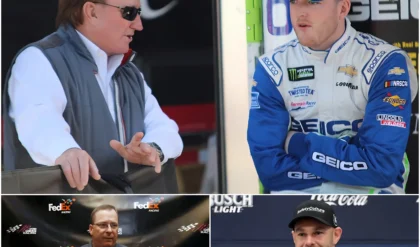
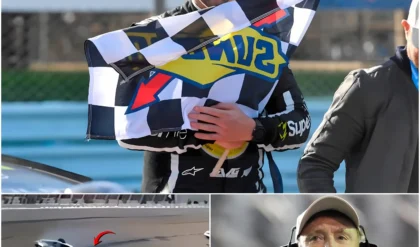
In the electric atmosphere of Charlotte Motor Speedway on a rain-soaked Sunday evening, Daniel Suárez crossed the finish line to claim a victory that transcended the typical highs of NASCAR competition. The 2026 Coca-Cola 600, shortened by persistent weather delays, ended with Suárez piloting his Spire Motorsports Chevrolet to his third career Cup Series win. Yet, as the checkered flag waved and the crowd erupted, the celebration quickly gave way to profound emotion.
Suárez, visibly fighting back tears in victory lane, removed his helmet to reveal a No.8 hat honoring the late Kyle Busch, a gesture that immediately signaled the deeper significance of the moment.
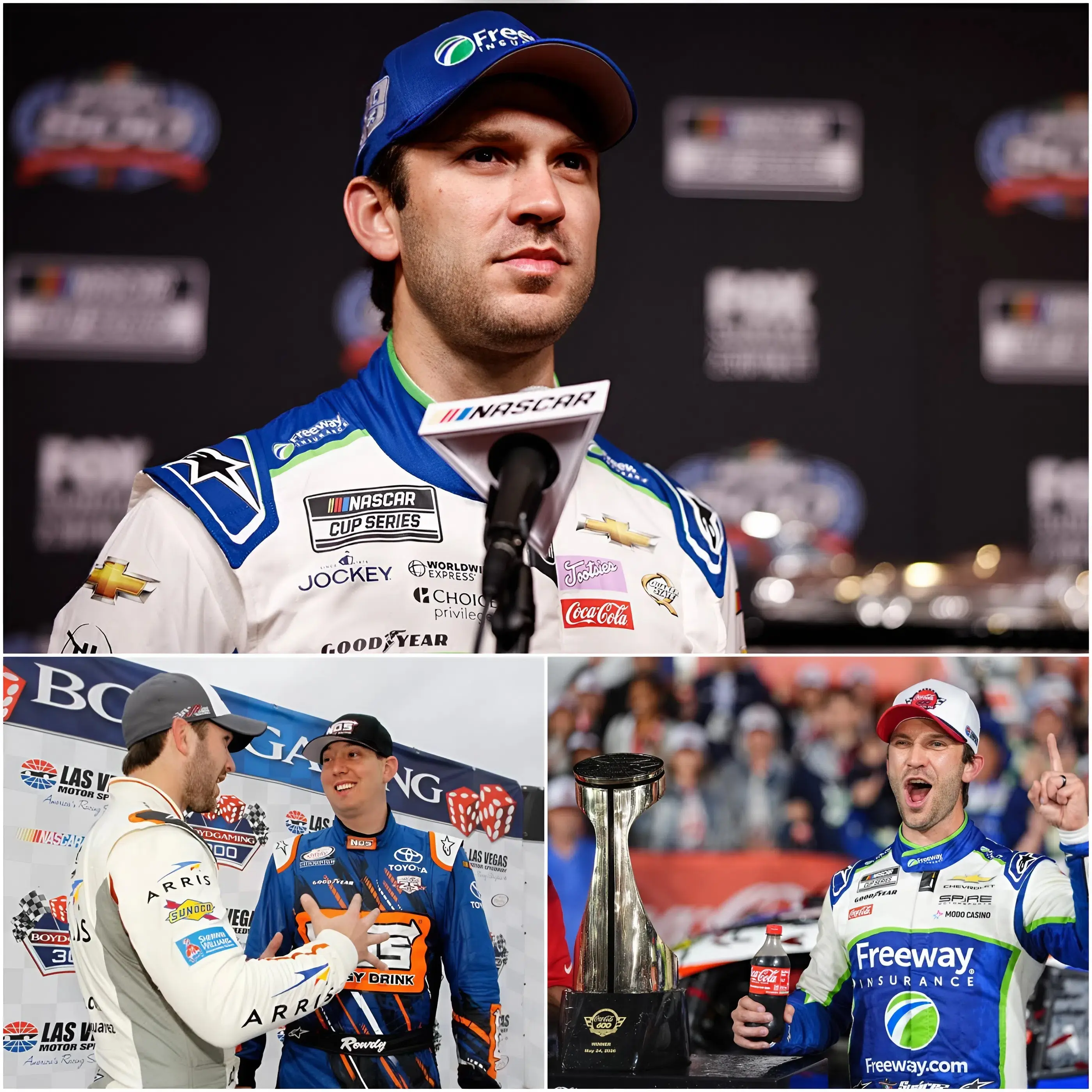
The entire NASCAR community was still reeling from the sudden loss of Busch just days earlier. The two-time Cup Series champion, known for his fiery competitiveness and record 234 career victories, had passed away at age 41 after a rapid battle with severe pneumonia that progressed into sepsis. His death sent shockwaves through the garage, prompting tributes from every corner of the sport. Drivers wore special decals, teams observed moments of silence, and the race itself carried an undercurrent of remembrance. For Suárez, however, the connection ran far deeper than shared asphalt.
Born in Monterrey, Mexico, Suárez arrived in American stock car racing as a trailblazer, navigating cultural and linguistic barriers in a sport traditionally dominated by American drivers. His path was challenging, marked by early struggles in the lower series where adaptation was everything. It was during his rookie season in the Xfinity Series in 2015 that Busch stepped into his life not merely as a rival or team owner, but as a silent guardian and mentor.
What began as occasional advice evolved into weekly phone calls, where Busch offered guidance on everything from race strategy to handling the pressures of professional motorsports.
“Kyle, he was special, man,” Suárez said in his post-race interview, his voice cracking as emotions overwhelmed him. “This one is for Kyle. For Kyle, for Samantha, for Brexton, for Lennix, all his family. This win has a special flavor because of Kyle. If it wasn’t for Kyle, I wasn’t going to be an Xfinity champion. I wasn’t going to have my shot in the Cup Series.” These words, delivered amid the roar of engines cooling down and the patter of rain on the grandstands, moved hardened crew members and fans alike to tears.
The racetrack, usually a cauldron of high-octane energy, fell into a respectful hush as Suárez spoke.

Those close to the story knew that Busch’s support had been unwavering yet understated. As owner of Kyle Busch Motorsports, he had given Suárez opportunities that propelled his career forward, but it was the personal investment that truly stood out. Suárez later recounted how, as a young driver still mastering English and the nuances of American racing culture, he would reach out to Busch after tough races. The veteran, despite his own demanding schedule and reputation for intensity on the track, always made time. “He was the person I could ask for advice.
I could call him anytime,” Suárez reflected in the days leading up to the race. These silent sacrifices—late-night conversations, honest feedback, and quiet encouragement—formed the backbone of Suárez’s development into a Cup Series contender.
The Coca-Cola 600 itself was a fitting stage for such an emotional tribute. Traditionally one of NASCAR’s crown jewel events, the 600-mile endurance test at Charlotte demands strategy, stamina, and resilience. This year’s edition was anything but ordinary. Rain interrupted the proceedings multiple times, leading NASCAR officials to call the race official after 373 laps. Suárez had positioned himself strongly throughout the night, benefiting from timely pit calls and capitalizing on the chaos of restarts.
When the final caution flew and the decision came to end the event under wet conditions, Suárez was at the front, securing a win that felt predestined given the week’s events.
In victory lane, Suárez clutched the trophy with both hands, raising it high before dedicating it explicitly to Busch. The gesture was more than symbolic; it represented gratitude for years of mentorship that helped bridge the gap for international talent in NASCAR. Suárez’s journey from Mexico to the pinnacle of American stock car racing had been paved with obstacles, but Busch’s belief in him provided the necessary momentum. “Kyle saw something in me when others might not have,” Suárez explained later. “He pushed me to be better, not just as a driver but as a person.”
The audience’s stunned reaction peaked not during the trophy presentation, but in the final moments of Suárez’s remarks. Fighting through tears, he delivered an 11-word message directed straight to his mentor: “Thank you for believing in me when no one else did.” Those words hung in the air, bringing the entire speedway to a standstill. Crews paused their cleanup duties, fans in the stands lowered their phones, and fellow drivers gathered nearby nodded in solemn agreement. It was a raw, unscripted expression of loss and appreciation that captured the fraternity of NASCAR in its purest form.
Beyond the immediate victory, Suárez’s win highlighted broader themes within the sport. NASCAR has long prided itself on its family-like atmosphere, where rivalries on the track often give way to profound respect and support off it. Busch’s passing served as a stark reminder of the fragility of life, even for athletes at the peak of their powers. His legacy—marked by aggressive driving style, business acumen, and now, quiet philanthropy through mentorship—will endure. Drivers like Denny Hamlin and Tyler Reddick echoed similar sentiments in their post-race comments, emphasizing Busch’s impact on the entire field.
For Suárez, this moment marked a personal milestone. Having faced skepticism early in his career about his ability to compete at the highest level, the victory validated not only his talent but the investment others had made in him. Spire Motorsports, his current team, celebrated alongside him, recognizing the emotional weight carried by their driver. Team owner Jeff Dickerson praised Suárez’s resilience, noting how the week’s grief had fueled a focused performance rather than hindering it.
As the lights dimmed on Charlotte Motor Speedway and fans began their journeys home, the story of Suárez’s emotional triumph spread rapidly across social media and sports networks. Clips of his tearful dedication circulated widely, drawing praise from celebrities, fellow athletes, and racing enthusiasts worldwide. It was a night that reminded everyone why motorsports captivate audiences: the blend of speed, skill, and human connection.
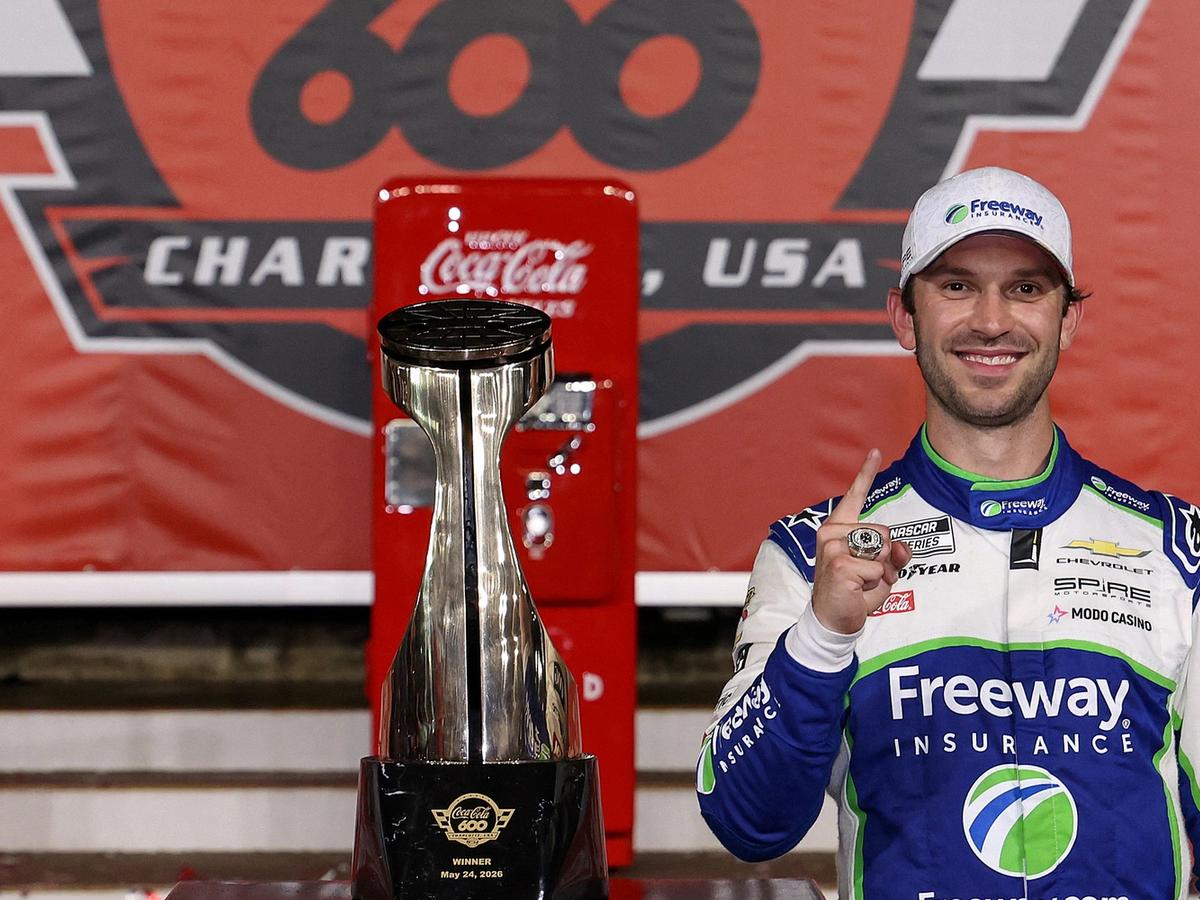
In the days following the race, Suárez planned to visit Busch’s family, carrying with him the memories of their shared history and the trophy that now symbolized a bond unbroken by death. NASCAR, too, continues to honor Busch’s contributions through various initiatives, ensuring that his influence on the next generation of drivers remains alive.
Daniel Suárez’s Coca-Cola 600 victory will be remembered not just for the rain-shortened drama or the strategic masterclass, but for the heartfelt tribute that brought a racetrack to tears. In paying homage to his late friend and mentor, Suárez illustrated the enduring power of mentorship, gratitude, and the human stories that fuel the roar of engines. As the 2026 season progresses, this win stands as a beacon of resilience, proving that even in loss, racing can forge legacies that outlast any single lap.