There are moments in sports that transcend wins and losses, moments that remind us that the people we cheer for on Sundays are human beings first — parents, children, spouses, family members. While headlines often focus on Kyle Larson’s on‑track exploits — his victories, championships, and daring attempts at racing milestones — there is another story, quieter but deeply moving, that has brought NASCAR fans together in empathy and support: the story of his daughter Audrey.
Audrey Layne Larson, born in May 2018, is Kyle and Katelyn Larson’s only daughter amidst a family of three children. Fans of the Hendrick Motorsports star have watched his career with admiration — from his rise through the ranks to become a two‑time NASCAR Cup Series champion and one of the sport’s most versatile drivers. But in 2022, Larson and his wife shared with the world something more personal: that little Audrey was living with alopecia, a medical condition that leads to significant hair loss due to an autoimmune response.
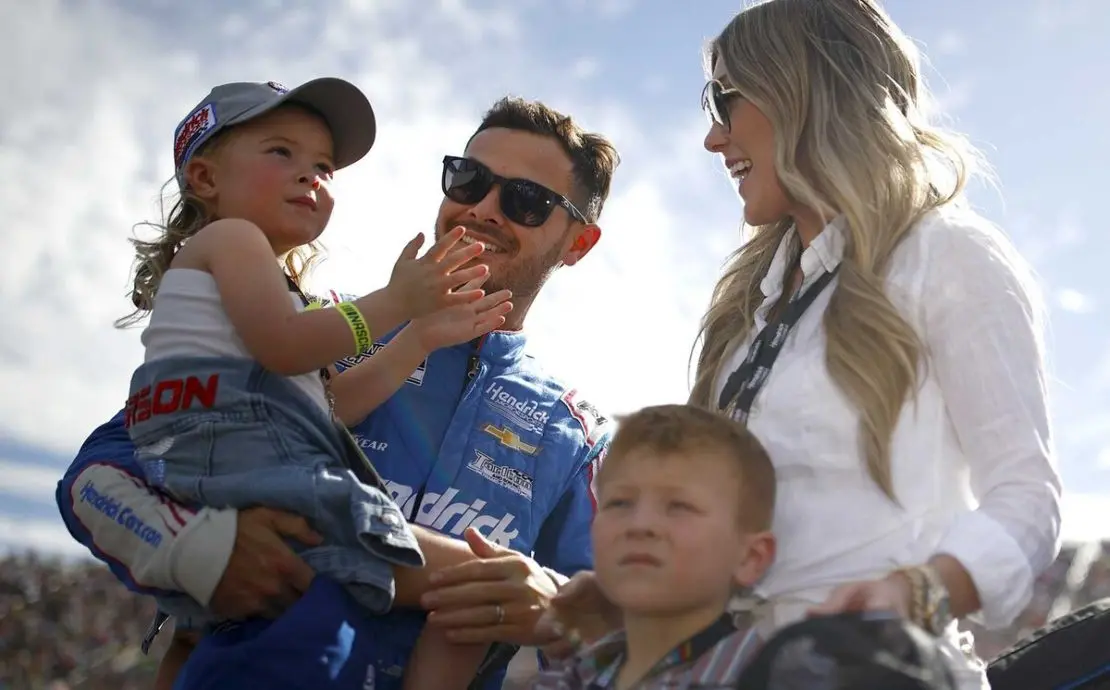
Alopecia areata is not a life‑threatening disease, but for a child, the experience of losing hair — something so tied to appearance and the very way others see you — can be emotionally challenging. For parents, there is the dual burden of protecting their child from hurt while also being honest about the journey they are navigating together. Larson’s wife, Katelyn, chose transparency, posting about Audrey’s condition to raise awareness, to protect her from misinterpretation by strangers, and to show that love and strength can carry a child through hardship.
The reaction from the NASCAR community and fans was immediate and heartfelt. Social media feeds filled with messages of support, stories of families facing similar circumstances, and expressions of admiration for the Larsons’ openness. In a world where athletes’ personal lives can be scrutinized and sensationalized, this felt different — it felt human. It was not about gossip, but about empathy.
What struck many fans was not just the condition itself, but the way the Larson family chose to embrace normal life in spite of it. Audrey was often seen participating in family outings, smiling in pictures posted by her parents, and even taking part in racing culture in her own way — visiting racetracks, celebrating her father’s achievements, and showing a fearless spirit that charmed many. Social posts by Katelyn and others showed Audrey wearing hats and accessories, not as a symbol of shame but as playful adornments, teaching a subtle lesson about confidence and self‑acceptance.
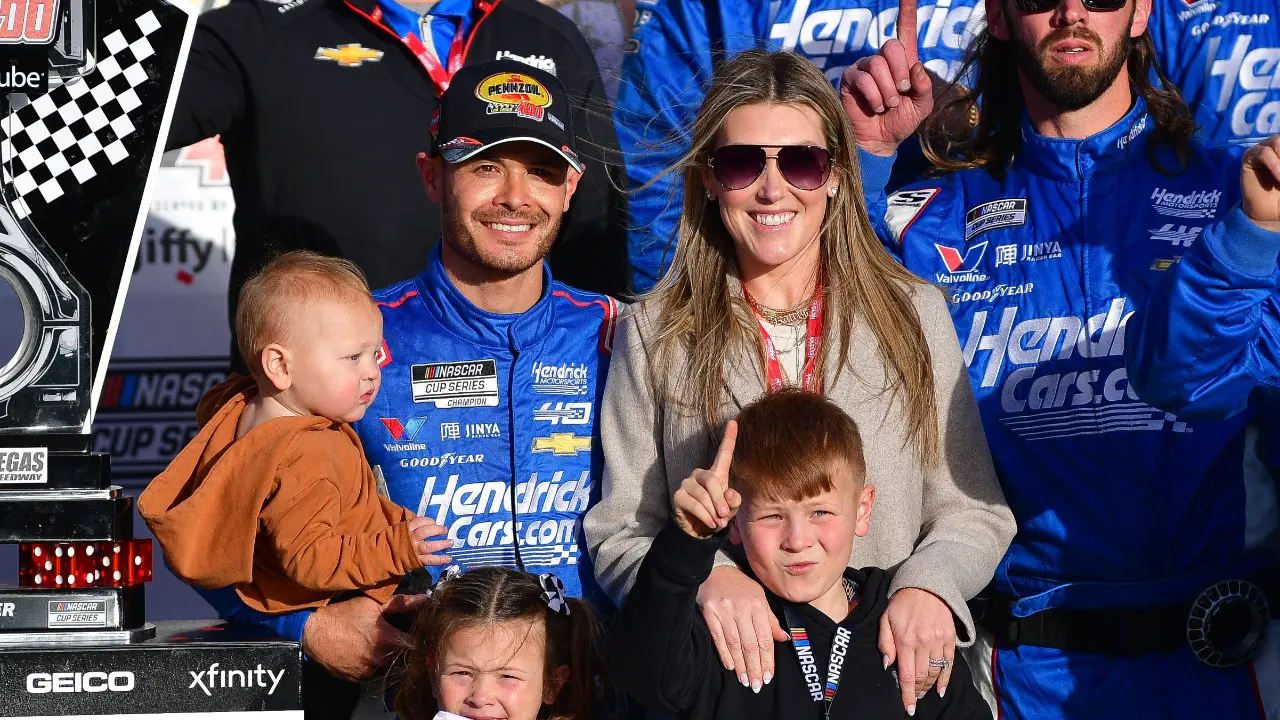
Byron, Hamlin, Busch, Elliott — across a sport defined by competition and rivalry, there was unanimity here: fans and drivers alike shared love for a young girl whose story had become a quiet but powerful part of the NASCAR narrative. In online forums, grandstands, and garages, strangers tweeted prayers, shared stories of their own children, and lifted up the Larsons in collective goodwill.
The feelings poured in from around the globe. NASCAR’s international followers — who might never have encountered the term “alopecia” before — learned about it that year, posting supportive messages and educating others. By autumn 2025, as Audrey began racing herself on smaller dirt tracks and speedways, fans were cheering not just for Kyle but for his daughter, celebrating her first wins, and marveling at the lineage of racing passion being passed down.
For Kyle Larson, widely respected for his racing genius and feared by competitors for his aggressive, calculating style on the track, fatherhood has brought a different kind of spotlight. In interviews, he has spoken about the balance between being a competitor and being a dad, about moments when a win feels great but a hug from a child feels even more meaningful.
In 2025, when Audrey claimed her first career victory at Millbridge Speedway — a moment that brought Larson close to tears — the racing world watched not just a proud father, but a cheering community, share in that joy.
Fans sometimes talk about legacy in terms of championships and statistics, but for many who have followed this story, legacy looks different. It looks like photos of Audrey holding a trophy far smaller than her hand, the freckles on her cheeks visible under the bright sun of a dirt track. It looks like a father putting aside his own podium celebrations to take pictures of his daughter on hers. It looks like a community that redefined cheering — not just for racing wins, but for courage, resilience, and growth.
There have been tough days, of course. There are moments of frustration, of difficulties that any family dealing with a child’s medical condition faces. There are the stares of strangers, the questions from curious onlookers, the private worries every parent keeps in their heart. But alongside that has been support — from fans, fellow drivers, and even families who have walked similar paths. For every negative whisper in a crowd, there has been a thousand voices of encouragement online. For every hair‑raising turn on the racetrack, there has been a wave of genuine concern for a little girl’s well‑being.
It is true that this story is not built on tragedy alone — Audrey’s alopecia is not life‑threatening, and she continues to grow, play, and race with joy in her eyes. But the emotional reaction from fans — the tears, the prayer emojis, the heartfelt messages — speaks to something deeper: the way sport can connect us not just to feats of speed, but to people’s lives beyond the racing circles. When fans say they “pray” or “shed tears,” they are expressing solidarity, affection, and shared humanity.
It is a recognition that behind every helmet is a person with a full life, full of everyday challenges just like everyone else.
In the world of NASCAR, where engines roar and lives are measured in tenths of seconds, it’s easy to get swept up in competition. But the story of Kyle Larson’s daughter reminds us why we care so much about the people in the sport: because they live real lives, with real struggles and real triumphs. And when a parent and child navigate those moments together in the open, it invites us all to cheer not just for the driver, but for the heart behind the wheel.