🛑 Shocking AFL medical scandal: AFL Director Andrew Dillon makes a decision on a severe penalty regarding the controversial Carlton vs. Collingwood game.

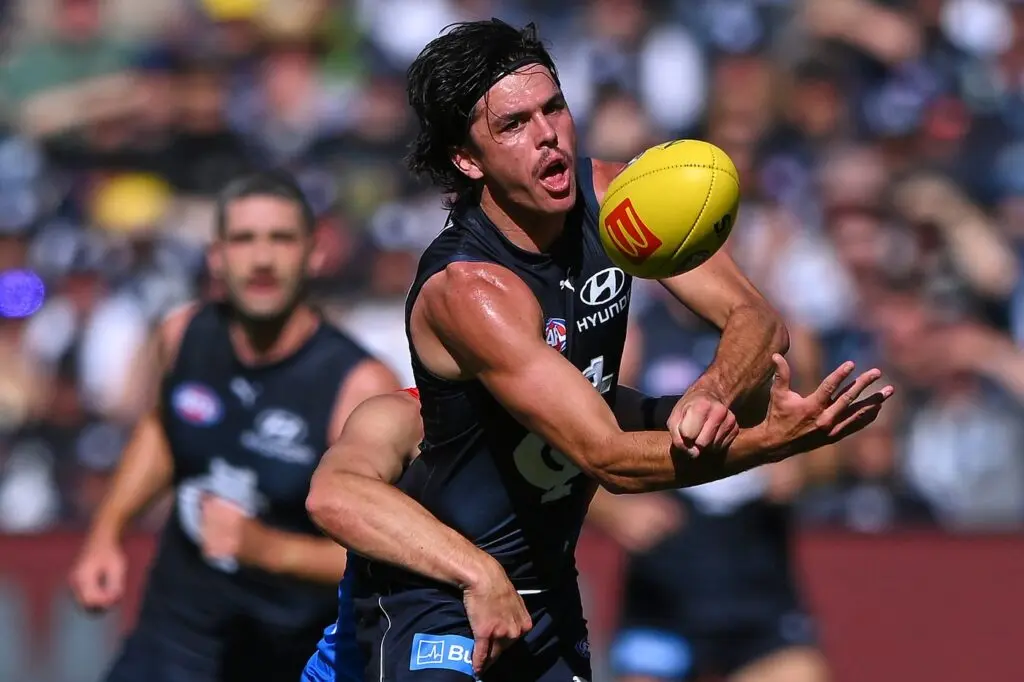
The Australian Football League has been plunged into one of its most confronting controversies in recent memory after revelations surrounding the treatment of 23-year-old Carlton midfielder Elijah Hollands during the Round 6 clash against Collingwood on April 16, 2026, at the Melbourne Cricket Ground. What began as a routine Friday night fixture quickly descended into a public spectacle of concern when Hollands exhibited clear signs of distress on the field, only to be left in the game for the vast majority of the contest before finally being substituted with around 20 minutes remaining in the final quarter.
The young forward managed just a single disposal in a performance that left fans, commentators, and league officials deeply unsettled, culminating in his hospitalization days later for what Carlton officially described as a serious mental health incident.

Hollands, a talented player with a documented history of anxiety and panic attacks during matches, had been cleared to play despite the club’s awareness of his vulnerabilities. Visual evidence from the broadcast showed erratic behavior that raised immediate red flags among viewers, yet on-field medical staff and coaching personnel did not intervene promptly. The Blues ultimately fell to the Magpies, but the post-match focus shifted entirely away from the result and toward player welfare.
Hollands was admitted to a Melbourne hospital on April 20, where he has remained under care with the support of his family, including heartfelt public messages from his father emphasizing love and recovery.
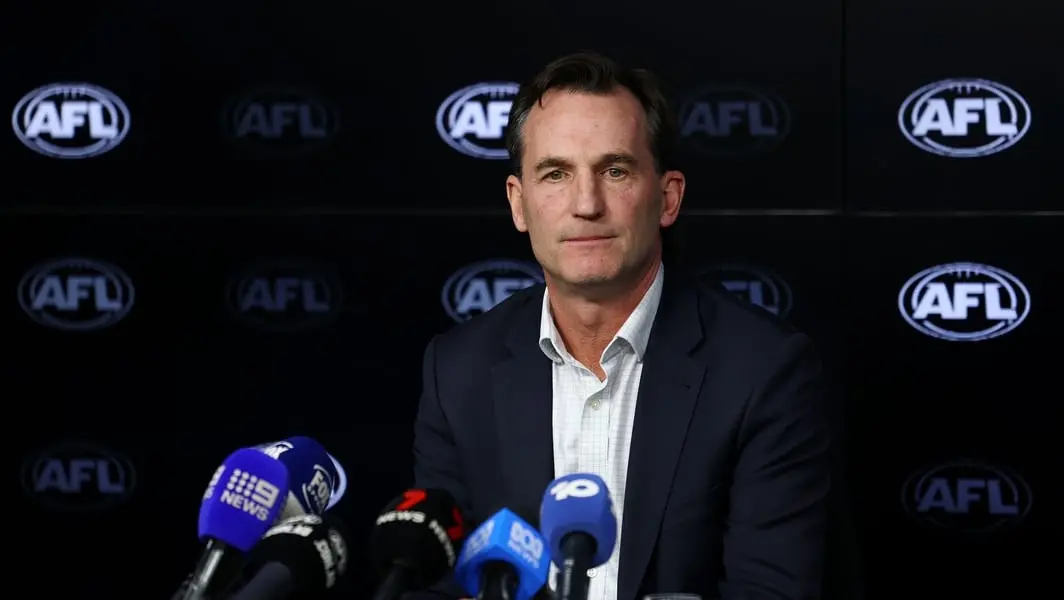
The AFL moved swiftly to investigate after receiving Carlton’s internal review. League Chief Executive Andrew Dillon, who has taken a leading role in addressing the matter, convened a thorough examination that incorporated performance data, match footage, and the club’s prior knowledge of Hollands’ mental health challenges. On May 5, 2026, Dillon delivered the findings in a press conference that underscored the gravity of the situation. “What transpired during the game was something we haven’t seen before,” Dillon stated.
“We found that there was sufficient visual cues, performance data during the match, and an understanding of Elijah’s individual circumstances to indicate that he should have been removed from play earlier than he was. The delay in removing Elijah from the field resulted in an outcome that brought the game into disrepute.”
Dillon was unequivocal that the episode constituted a genuine mental health crisis rather than any other factor, though he respected medical confidentiality and declined to speculate on private details. He noted that while Hollands had undergone some checks, the failure to act decisively represented a clear lapse in the duty of care. The league’s determination was made collectively against the Carlton Football Club, not targeting any single individual such as the coach, medical staff, or executives. This collective accountability reflected the systemic nature of the shortcomings exposed by the incident.
In a significant and widely viewed as severe penalty, the AFL imposed a $75,000 fine on Carlton, with the entire amount directed to the mental health support organization Headspace. The sanction serves both as punishment for allowing the situation to escalate publicly and as a signal that player wellbeing protocols must evolve rapidly. Although speculation had circulated about potentially harsher measures such as match bans for the club, the AFL’s chosen path emphasized financial accountability alongside immediate structural reforms rather than punitive suspensions. This approach aims to drive lasting change without further destabilizing the competition.
Carlton has accepted the outcome while firmly defending its people. Club chief executive Graham Wright released a statement acknowledging the AFL’s conclusion that Hollands should have been withdrawn sooner and confirming the club’s commitment to moving forward constructively. “We accept the outcome in the interest of enabling all parties to move forward, while continuing to ensure the health and wellbeing of our people remains a priority,” Wright said. The Blues have stood by their medical and wellbeing staff, describing them as highly professional individuals operating with genuine care and integrity.
Coach Michael Voss had earlier pushed back against intense media scrutiny, accusing outlets of bullying the club amid the fallout, adding another layer of tension to an already charged environment.
The ramifications extend far beyond a single fine. In direct response to the Hollands case, the AFL announced a suite of sweeping changes designed to strengthen mental health support across the league. All clubs will now be required to employ a full-time psychologist within their AFL and AFLW programs, moving beyond previous part-time arrangements. A new AFL health and wellbeing committee will advise the executive and commission on clinical governance, while industry-wide standards for “psychological fitness to play” are being developed in consultation with club healthcare teams.
Expanded mental health literacy training will become mandatory for football departments, and the league will review the soft cap on football department spending to ensure greater investment in expert care. Additionally, a mental health media roundtable in partnership with the Black Dog Institute is planned ahead of Spud’s Game, and an industry-wide healthcare incident management system is in development.
These reforms address a longstanding gap highlighted by Dillon: while the AFL has robust protocols for physical injuries, mental health presentations are more variable and complex, requiring standardized, proactive responses on match day. Laura Kane, the AFL’s head of health and football operations, reinforced this point, stating that the duty of care must continue to evolve and that lessons from this incident apply to the entire competition. “There are lessons in this for all of us,” Kane noted. “The main one is that our duty of care must continue to evolve, and that must include mental health and wellbeing.”
The scandal has ignited broader conversations about the immense pressures faced by elite athletes in the modern game. High-stakes environments, constant public scrutiny, travel demands, and the emotional toll of performance can exacerbate underlying mental health conditions. Hollands’ case, following other high-profile player welfare incidents in recent years, has prompted calls for even greater transparency and support structures. Fans expressed outrage on social media and in forums, with many questioning how a visibly distressed player was permitted to remain on the field for so long.
The AFL Players’ Association has welcomed the findings and outcomes, with CEO James Gallagher acknowledging that Hollands remained on the field too long and emphasizing opportunities to enhance governance, policy, resourcing, and education.
WorkSafe Victoria has also launched its own inquiries into the workplace health and safety aspects of the incident, adding another dimension of regulatory oversight. Throughout the process, the league and Carlton have maintained that Hollands’ privacy and recovery remain paramount. Dillon expressed personal hope that the young player will one day return to the field, stressing that the focus remains on ensuring he receives the best possible care and support from his club and the wider AFL community.
As the dust settles on this deeply unsettling episode, the AFL finds itself at a crossroads. The $75,000 penalty and accompanying reforms represent a decisive step toward prioritizing mental health alongside physical safety, yet they also expose how far protocols still have to go in recognizing and responding to acute psychological distress in real time. Carlton’s acceptance of the sanction, coupled with its defense of its staff, illustrates the delicate balance clubs must strike between competitive demands and player protection.
For Hollands and his family, the immediate priority is recovery; for the league, it is ensuring that no other player endures a similar ordeal on the national stage.
The coming weeks and months will test whether these changes translate into meaningful improvements on the field and in club environments. What is clear is that the events of April 16, 2026, have left an indelible mark on Australian football, forcing a reckoning with the human cost of the game and the urgent need for compassion, vigilance, and systemic evolution. The AFL’s response, while criticized by some as insufficiently harsh and by others as overreaching, signals a commitment to learning from this painful chapter.
As Dillon concluded, the game must strengthen how it responds to acute mental health episodes, ensuring that welfare always comes first. In doing so, the league honors not only Hollands but every player who steps onto the field carrying invisible burdens alongside their talent and ambition. The road ahead will require sustained effort, but the foundation for better care has now been laid in the wake of this shocking medical scandal.