The world of NASCAR has once again been thrust into the spotlight—not for a dramatic finish or a photo-finish victory, but for a growing controversy surrounding driver safety. At the center of this storm is none other than racing legend Dale Earnhardt Jr., whose recent remarks about Texas Motor Speedway have sent shockwaves throughout the motorsports community.
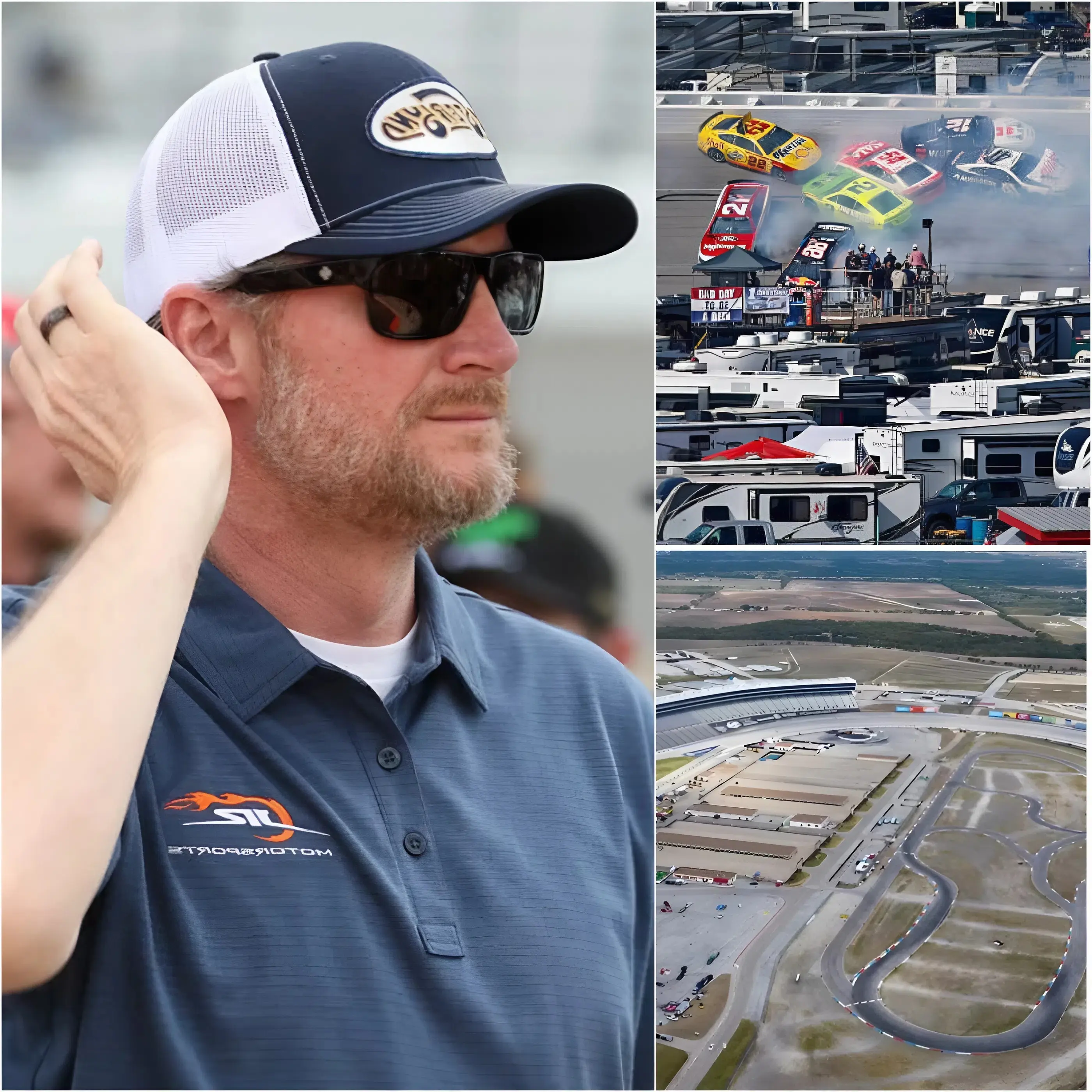
In a candid and unusually direct statement, Earnhardt Jr. described the track as “one of the most dangerous and hardest-to-control” venues on the current NASCAR calendar. Known for his measured tone and deep respect for the sport, his words carried significant weight—and immediately sparked intense debate among drivers, fans, and officials alike.
A Track Under Scrutiny
Texas Motor Speedway has long been a staple of NASCAR racing, hosting some of the sport’s most memorable moments. However, in recent years, criticism of the track has steadily grown. Drivers have pointed to its unique layout, aging surface, and inconsistent grip levels as factors that make it particularly unpredictable.
According to Earnhardt Jr., the issue goes beyond mere difficulty. He emphasized that the track forces drivers into an uncomfortable and potentially dangerous position—operating “right on the edge” at all times. In such conditions, even a minor miscalculation can result in a major accident.
“It’s not just about pushing limits,” he suggested. “It’s about being forced into a situation where the margin for error is almost nonexistent.”
This sentiment resonates with many within the racing community who believe that certain tracks may prioritize spectacle over safety. High speeds and tight racing often make for thrilling entertainment, but they can also increase the likelihood of serious incidents.
Behind the Scenes Concerns
What makes Earnhardt Jr.’s comments particularly significant is his claim that these concerns are not new. He revealed that he has previously raised the issue with NASCAR leadership, urging them to take a closer look at the track’s conditions and their potential impact on driver safety.
While it is not uncommon for drivers to voice concerns privately, going public with such strong criticism is relatively rare—especially for someone of Earnhardt Jr.’s stature. His willingness to speak out suggests a level of urgency that cannot be easily dismissed.
Insiders indicate that discussions about track safety are ongoing within NASCAR, with officials regularly evaluating data and feedback from drivers. However, critics argue that progress has been slow and that more proactive measures are needed.
The Nine-Word Warning
Perhaps the most attention-grabbing aspect of Earnhardt Jr.’s statement was a cryptic nine-word warning that followed his critique. While he did not elaborate extensively, the remark has fueled speculation and concern across the racing world.
Fans and analysts have been left to interpret its meaning. Was it a warning about an inevitable accident? A prediction of future controversy? Or a call to action for NASCAR leadership?
Whatever the intent, the message was clear: the current situation at Texas Motor Speedway cannot be ignored.
Divided Reactions
As expected, Earnhardt Jr.’s comments have sparked a wide range of reactions. Many drivers have quietly expressed support, acknowledging that the track presents unique challenges that can quickly escalate into dangerous situations.
Others, however, have taken a more cautious stance. Some argue that risk is an inherent part of motorsports and that drivers are fully aware of the dangers when they take the wheel. For them, adapting to difficult track conditions is simply part of the job.
Fans, too, are divided. While some appreciate the transparency and concern for safety, others worry that increased scrutiny could lead to changes that might reduce the excitement and unpredictability that define NASCAR racing.
NASCAR’s Balancing Act
For NASCAR officials, the situation presents a delicate balancing act. On one hand, ensuring driver safety is paramount. On the other, maintaining the competitive intensity and entertainment value of the sport is essential for its continued growth.
In recent years, NASCAR has introduced a variety of safety measures, from improved car designs to enhanced track barriers. However, track-specific issues—such as those raised about Texas Motor Speedway—require targeted solutions that can be more complex to implement.
Potential changes could include resurfacing sections of the track, adjusting banking angles, or even modifying race formats to reduce risk. Each option comes with its own set of challenges, both logistical and financial.
A Turning Point?
Earnhardt Jr.’s comments may ultimately prove to be a turning point in how NASCAR approaches track safety. His influence within the sport, combined with the seriousness of his concerns, makes it difficult for officials to simply move on without addressing the issue.
Historically, major changes in motorsports have often been driven by moments of controversy or outspoken advocacy from respected figures. Whether this situation will follow a similar path remains to be seen.
What is certain, however, is that the conversation has been reignited—and it is unlikely to fade anytime soon.
Looking Ahead
As NASCAR continues its season, all eyes will be on how the organization responds. Will there be immediate action, or will the issue be studied further before any decisions are made?
For drivers, the focus remains on competing at the highest level while navigating the inherent risks of the sport. For fans, the hope is that the excitement of racing can coexist with a commitment to safety.
And for Dale Earnhardt Jr., the message is clear: when it comes to protecting those behind the wheel, silence is not an option.
In a sport defined by speed, precision, and courage, his voice serves as a powerful reminder that even the most thrilling moments must never come at the expense of driver well-being.