The collective gasp inside Target Field on Saturday afternoon was immediate and unmistakable. For a fan base already conditioned by weeks of injury updates and cautious optimism, the sight of George Springer crumpling in the batter’s box felt like a cruel twist in an already taxing early-season narrative. The veteran outfielder, who had only just returned to the lineup after recovering from a fractured toe, found himself once again at the center of concern after being struck by a pitch—painfully, and alarmingly, in the same area that had sidelined him.
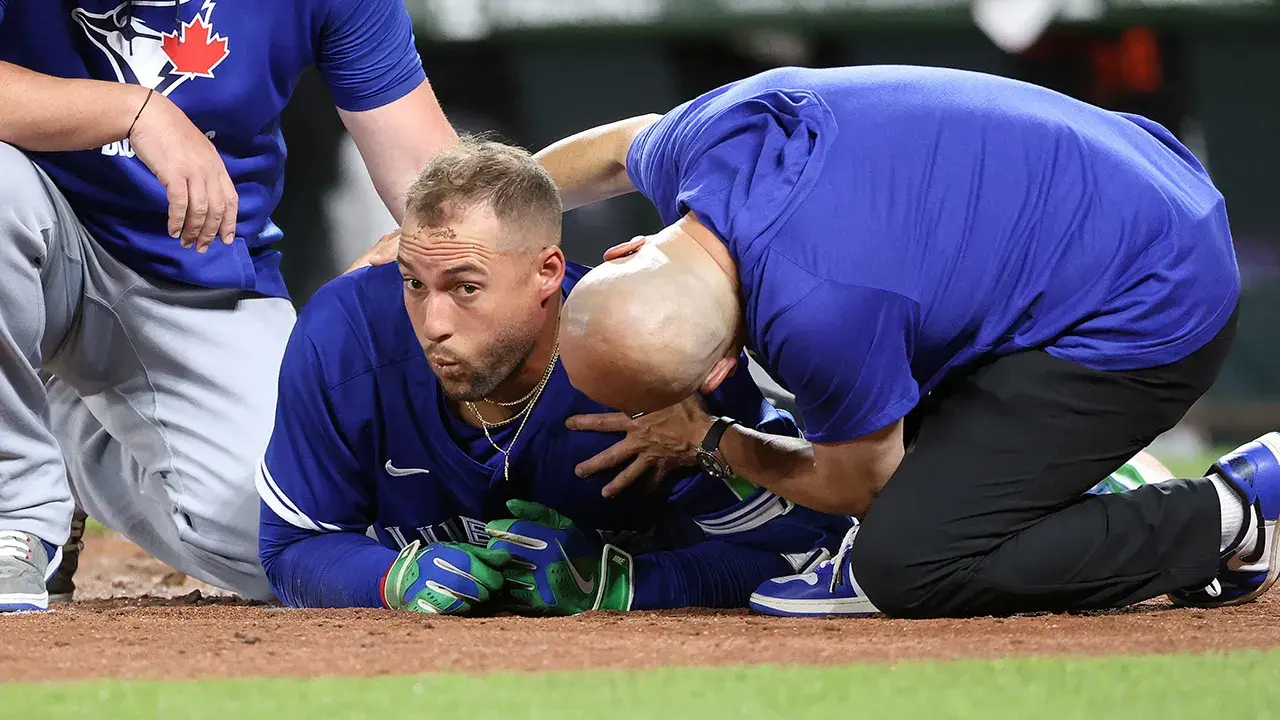
For the Toronto Blue Jays, the moment carried a weight that extended far beyond a single at-bat. April had been defined by resilience, improvisation, and a steady stream of medical bulletins that forced the club to constantly adjust its lineup and expectations. Springer’s return earlier in the week had been viewed as a stabilizing development, a sign that the team might finally be turning a corner toward health and continuity. That sense of progress, however, appeared to hang in the balance as he limped off the field under the watchful eyes of trainers and teammates.
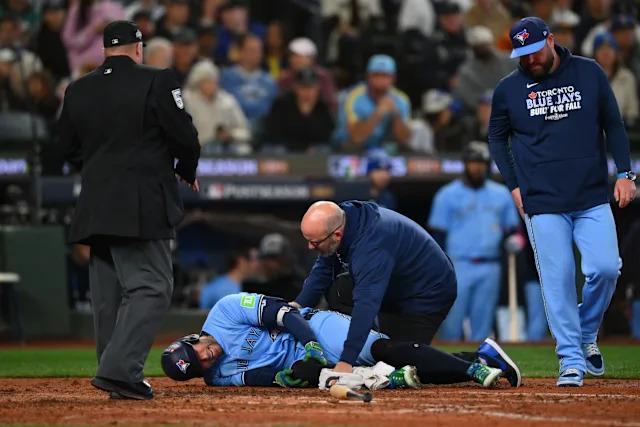
The incident itself unfolded quickly but left a lasting impression. Facing a Minnesota Twins pitcher in a tense mid-game situation, Springer was struck by a fastball that rode inside, catching him squarely near the foot that had only recently healed. His immediate reaction—dropping to the ground, clutching the area, and grimacing in visible pain—sent a ripple of concern through both dugouts. For a player known for his toughness and composure, the display was enough to suggest that the situation might be serious.

As he was helped off the field, the uncertainty began to build. In the dugout, teammates exchanged quiet glances, while the coaching staff shifted its focus from strategy to concern. For fans watching in the stadium and at home, the scene was all too familiar—a key player, an unfortunate pitch, and the looming question of how much time might be lost. Given the timing and the location of the impact, speculation quickly turned toward the possibility of a re-fracture or a setback that could sideline Springer for weeks.
Yet, as is often the case in baseball, the narrative shifted as quickly as it had formed. Within hours, the initial fear gave way to cautious optimism as medical evaluations revealed a far more encouraging outcome. X-rays taken shortly after the incident came back negative, confirming that there was no new fracture and no structural damage to the previously injured area. The diagnosis—a significant bruise—was far from trivial, but it was a best-case scenario given the circumstances.
For the Blue Jays, the news was met with a collective sense of relief. In a season where momentum has been difficult to sustain, avoiding a major injury to one of their most important players felt like a small but meaningful victory. Springer’s presence in the lineup is about more than just statistics; it represents experience, leadership, and a spark at the top of the order that can influence the tone of an entire game.
Managerial comments following the game reflected that balance between relief and caution. While acknowledging the positive nature of the test results, there was also an emphasis on the need to monitor Springer’s condition closely in the coming days. Bruising in such a sensitive area can linger, affecting mobility and comfort at the plate. The team’s medical staff is expected to take a measured approach, ensuring that any return to action does not risk aggravating the injury.
Springer himself, known for his competitive drive, reportedly expressed a desire to return as soon as possible. That mindset has long defined his career, earning him respect within the clubhouse and across the league. However, the organization is likely to prioritize long-term health over short-term urgency, particularly given the lessons learned during a challenging April.
The broader context of the Blue Jays’ season adds another layer of significance to the incident. Injuries have tested the depth and adaptability of the roster, forcing contributions from a wide range of players. While this has, at times, highlighted the team’s resilience, it has also underscored the importance of having key veterans available and productive. Springer’s role as a catalyst—setting the tone offensively and providing stability defensively—cannot be easily replicated.
His absence, even for a short period, would require adjustments both in the lineup and in the team’s overall approach. Batting order changes, defensive realignments, and shifts in clubhouse dynamics are all part of the ripple effect that follows when a player of his stature is unavailable. That reality makes the outcome of Saturday’s incident all the more significant; what could have been a major setback has instead become a manageable concern.
From a psychological standpoint, the episode also serves as a reminder of the unpredictable nature of the game. Baseball, with its long season and daily grind, often demands a balance between preparation and adaptability. Players and teams alike must navigate not only the challenges posed by opponents but also the inherent risks that come with each pitch, swing, and play.
For Springer, the experience may reinforce an already well-established perspective on resilience. Throughout his career, he has faced and overcome various obstacles, emerging each time with a renewed sense of purpose. This latest scare, while unsettling, fits into that broader narrative—a moment of adversity met with determination and, ultimately, relief.
The reaction from fans further illustrates his importance to the team. Social media and fan forums quickly filled with messages of concern during the game, followed by widespread relief once the X-ray results were announced. In many ways, Springer embodies the connection between the team and its supporters, serving as both a performer on the field and a symbol of the club’s aspirations.
Looking ahead, the focus will shift toward recovery and readiness. The Blue Jays will continue their series in Minneapolis, with each game offering an opportunity to build momentum as the season progresses. Whether Springer returns to the lineup immediately or after a brief period of rest, his presence will be closely watched, not only for what it means in the moment but for its implications over the coming weeks.
In the larger arc of the season, Saturday’s incident may ultimately be remembered as a near-miss—a moment that could have altered the course of the team’s campaign but instead reinforced its resilience. For a roster that has already navigated its share of challenges, that distinction matters.
As May unfolds, the Blue Jays find themselves at a crossroads between the uncertainty of the past month and the potential of what lies ahead. The return of key players, the emergence of young talent, and the steady influence of veterans like Springer all contribute to a sense that the team is beginning to find its footing.
In that context, the phrase “bruised, but unbroken” resonates not only with Springer’s individual situation but with the team as a whole. It captures the essence of a group that has absorbed setbacks without losing its identity, that continues to push forward despite the obstacles encountered along the way.
Baseball seasons are rarely defined by a single moment, but they are often shaped by how teams respond to them. For the Blue Jays, the events at Target Field represent both a challenge and an affirmation—a reminder of the fragility of progress, and the strength required to sustain it.