The roar inside the Melbourne Cricket Ground should have been the story that night. Tens of thousands packed into the historic stadium for the ANZAC Day Eve clash, a fixture that carries more than just premiership points. It carries memory, symbolism, and a weight that players feel long before the first bounce. But by the time the final siren echoed across the stands, the conversation had already shifted. This wasn’t just about football anymore. It was about judgment, pressure, and a league trying to hold its line in the face of growing scrutiny.
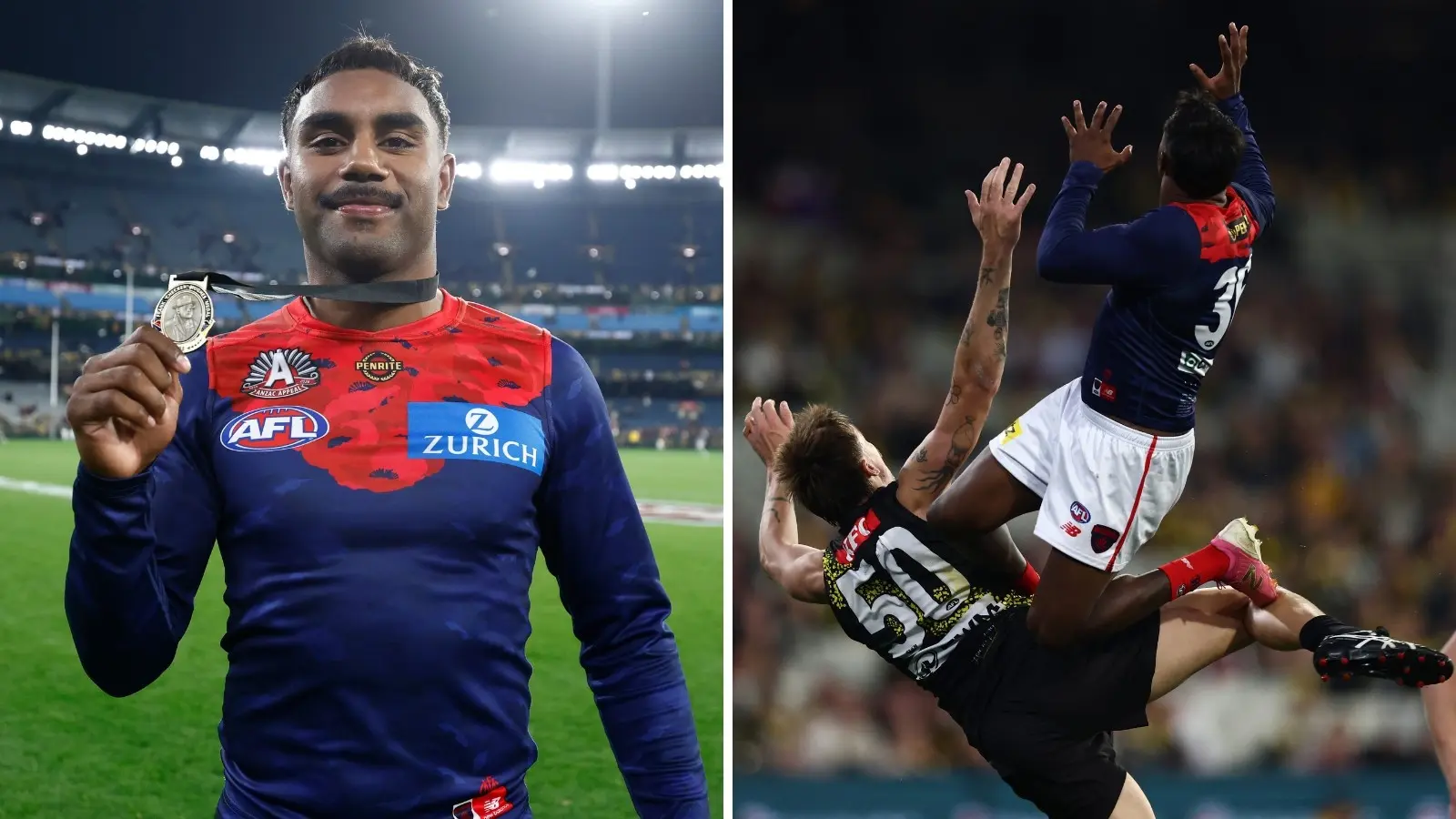
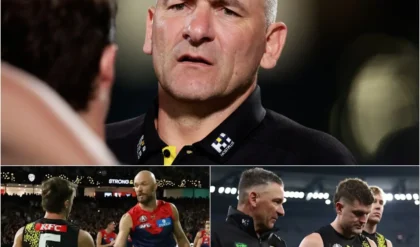
On paper, the result was emphatic. Melbourne dismantled Richmond with clinical precision, finishing 19.12 (126) to 11.6 (72), a 54-point margin that left little doubt about who controlled the game. The Dees were sharper, faster, more composed. Richmond had moments, flashes of resistance, but they never truly threatened to take control. Yet the scoreboard, decisive as it was, quickly became secondary.
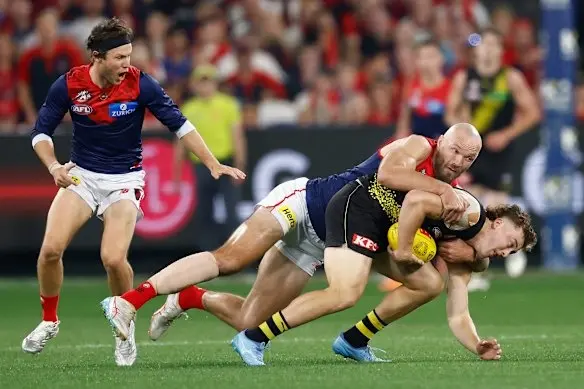
Because in the middle of that contest, in a split second that might have gone unnoticed on any other night, two players collided—and the fallout would ripple far beyond the boundary line.
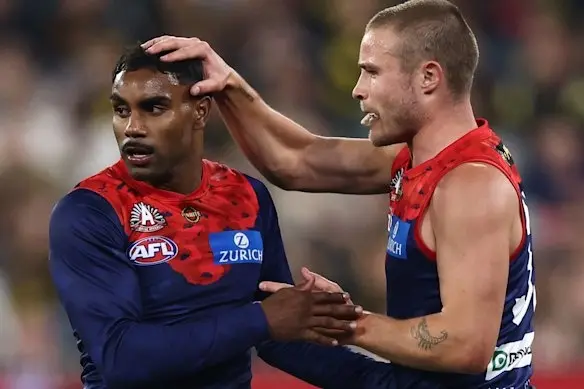
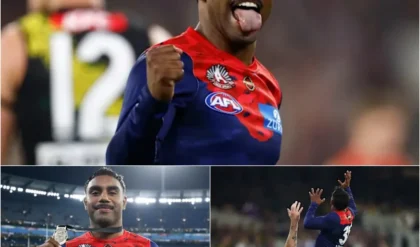
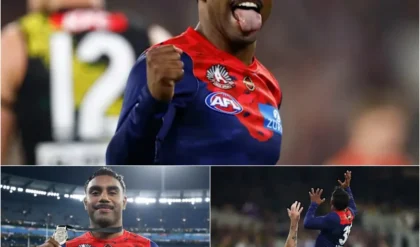
It happened fast. Kysaiah Pickett, one of Melbourne’s most electric talents, surged into a contest with the kind of explosive movement that has defined his career. At the same time, Jacob Hopper moved into position, eyes on the ball, bracing for impact. Then came the contact. A shoulder. A head. A moment that froze just long enough for everyone watching to wonder if something had gone wrong.
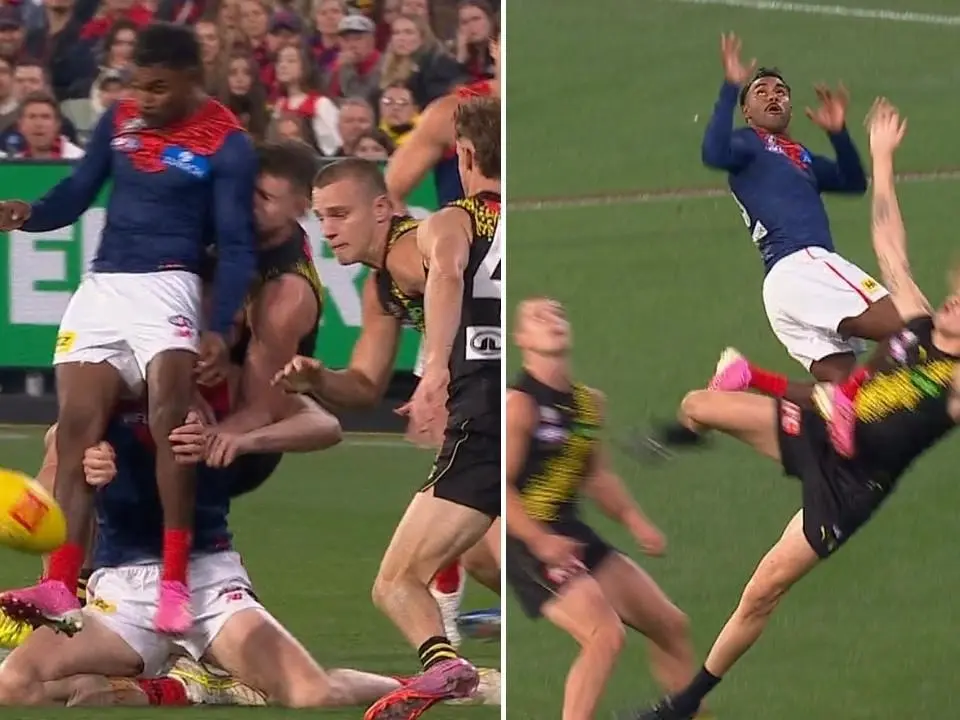
From the stands, it looked dangerous. On replay, it looked even worse. Social media lit up almost instantly, dissecting angles, slowing frames, assigning blame before the dust had even settled on the turf.
But football, like life, often lives in the grey area between intention and consequence.
According to the league’s post-match review, the collision wasn’t what it seemed at first glance. Pickett, they determined, had leapt in an attempt to avoid a sliding teammate—an instinctive reaction in a chaotic, high-speed environment. The contact with Hopper’s head was described as incidental, not deliberate. Crucially, Hopper got up. He stayed in the game. He played on without visible impairment, a detail that would weigh heavily in what came next.
By Saturday, the AFL’s Match Review Officer had delivered its verdict: no charge, no suspension, no further explanation required.
It was, in many ways, a straightforward decision. And yet, nothing about the broader situation felt simple.
Because this ruling didn’t land in isolation. It landed in the middle of a storm the league was already struggling to contain.
Just hours before the game, the Australian Football League found itself under intense public pressure over a completely separate controversy—one that struck at the heart of the sport’s values. The case involved Lance Collard, a player whose suspension for homophobic abuse in the VFL had been reduced on appeal.
The decision triggered immediate backlash. Fans, commentators, and advocacy groups questioned how a league that had publicly committed to inclusivity could appear to soften its stance on discrimination. The criticism was sharp, relentless, and impossible to ignore.
And the AFL responded.
On the very same day as the Richmond–Melbourne clash, the league made a move that sent shockwaves through its own governance structure. Will Houghton KC, the chairman of the Appeals Board, was dismissed. The message was unmistakable: the AFL was drawing a line, reasserting a zero-tolerance policy toward discriminatory behavior, and doing so in the most public way possible.
It was a dramatic escalation—one that raised as many questions as it answered.
Was this decisive leadership, or damage control? A principled stand, or a reaction to mounting pressure? Inside the league, those distinctions matter. Outside it, perception often matters more.
So when the Pickett–Hopper incident was reviewed and ultimately dismissed without sanction, it didn’t exist in a vacuum. It became part of a broader narrative about consistency, accountability, and where exactly the AFL chooses to draw its boundaries.
For players, the situation is no less complex. They operate in a sport defined by speed, instinct, and physicality. Decisions are made in fractions of a second, often with bodies already in motion and collisions unavoidable. The expectation, however, is clarity—that the rules will be applied consistently, regardless of context or external pressure.
For fans, the expectation is simpler: fairness.
And fairness, as this week has shown, is rarely straightforward.
Some saw the non-decision on Pickett as the correct call, a recognition of the realities of the game. Others viewed it as another example of ambiguity in a system that often feels reactive rather than consistent. The debate unfolded across talk shows, comment sections, and living rooms, each opinion shaped as much by emotion as by evidence.
Meanwhile, Melbourne walked away with the four points, their performance overshadowed by a narrative they didn’t fully control. Richmond, beaten but not broken, left with more questions than answers about where they stand in a season already testing their resilience.
And the AFL? It finds itself at a crossroads.
The events of this week have exposed the delicate balance the league must maintain—between enforcing rules and interpreting them, between protecting players and preserving the essence of the game, between responding to public sentiment and standing firm in its principles.
There are no easy answers. There rarely are.
What remains is a sense that every decision now carries greater weight, every incident is magnified, and every ruling is scrutinized not just for what it is, but for what it represents.
Because in modern sport, the game is never just the game.
It’s the moments around it. The decisions after it. The conversations that follow long after the final siren has faded.
And on that ANZAC Eve in Melbourne, under the bright lights of the MCG, football once again found itself at the center of something much bigger than a scoreline.