THE MAN WHO WANDERED FAR — AND STILL BELONGED TO THE HEART OF COUNTRY MUSIC
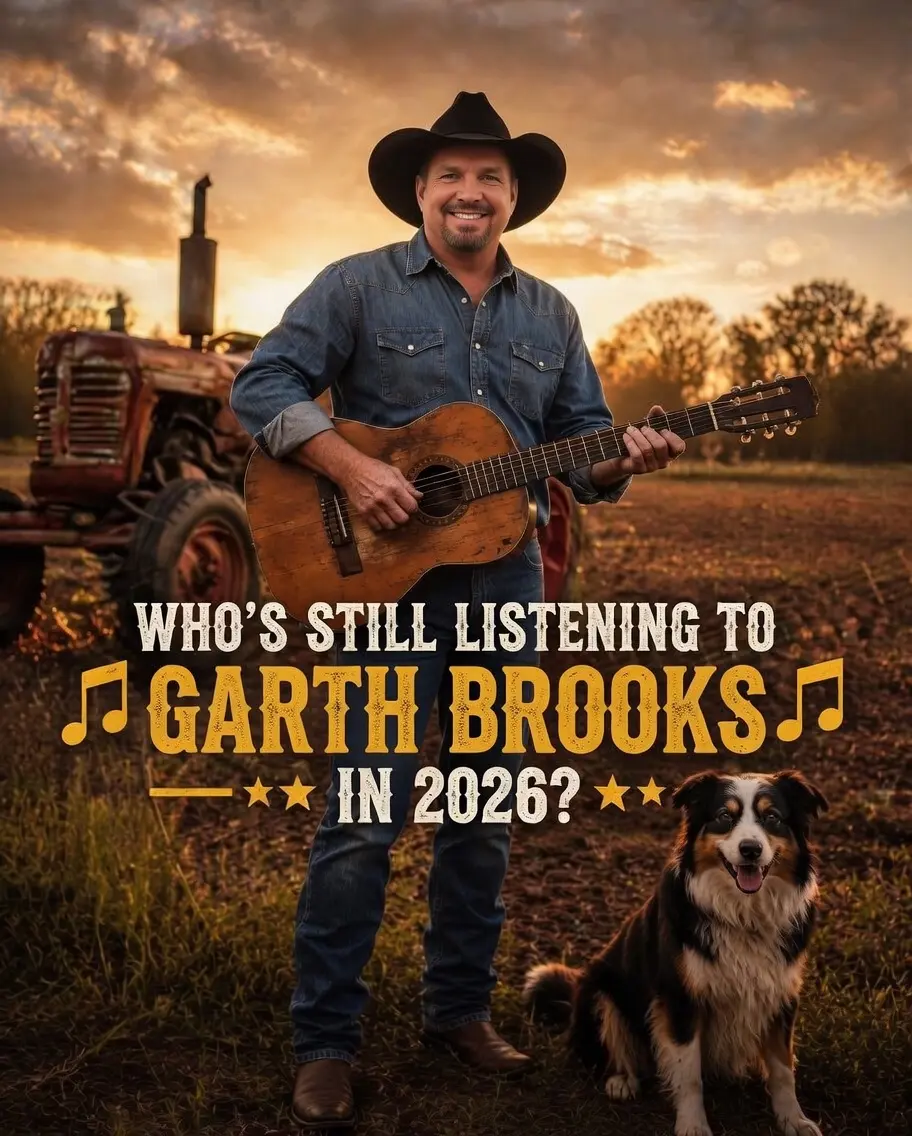
In the golden fields of Oklahoma, under vast skies that stretch forever, a boy named Troyal Garth Brooks once dreamed of baseball and rock ’n’ roll. Few could have predicted that this same boy would grow into one of the most successful recording artists in history — a man who sold more than 170 million albums worldwide, shattered records once thought unbreakable, and yet somehow never truly left the dirt roads and small-town values that shaped him.
Garth Brooks is more than a country star. He is a cultural phenomenon who wandered far from Nashville’s traditional sound, embraced stadium rock production, and still managed to remain the beating heart of country music for over three decades. His story is one of bold risks, massive success, painful reinvention, and an unwavering commitment to authenticity.
From Yukon to the World Stage
Born February 7, 1962, in Tulsa, Oklahoma, and raised in the small town of Yukon, Garth was the youngest of six children in a musical family. His mother, Colleen, had been a professional country singer in the 1950s. Music filled the Brooks household — everything from Merle Haggard and George Jones to James Taylor and Dan Fogelberg. Young Garth absorbed it all.
After a brief attempt at a college baseball scholarship, he chose music. In 1984 he moved to Nashville, but the city wasn’t ready for him yet. Disheartened, he returned to Oklahoma, married his college sweetheart Sandy Mahl, and worked as a shoe salesman. That humility would later become part of his legend.
In 1988, he tried Nashville again. This time, lightning struck. His self-titled debut album in 1989 went multi-platinum, driven by hits like “If Tomorrow Never Comes” and “The Dance.” By 1991, he had released No Fences, an album that sold over 18 million copies in the U.S. alone. Songs like “Friends in Low Places,” “Thunder Rolls,” and “Unanswered Prayers” became anthems for an entire generation.
The Stadium Years: Country Goes Arena
What set Garth apart was his refusal to stay inside country music’s comfort zone. While many artists played modest theaters and honky-tonks, Garth looked at Bruce Springsteen and U2 and said, “Why not country?” He brought pyrotechnics, moving stages, rope lights, and pure theatrical energy to country audiences. His concerts became events — three-hour marathons of music, storytelling, and pure emotion.
Between 1991 and 2000, Garth Brooks dominated the charts in a way rarely seen. He released a string of diamond-certified albums (Ropin’ the Wind, The Chase, In Pieces, Sevens). In 1996, he released Fresh Horses, featuring the controversial hit “The Thunder Rolls” (with its domestic violence theme) and the soaring “The Beaches of Cheyenne.”
Perhaps his most ambitious project was Garth Brooks in… The Life of Chris Gaines (1999) — a rock-pop alter-ego experiment that confused many fans but proved his artistic restlessness. Though commercially disappointing, it revealed a truth about Garth: he was never content to repeat the same formula. He wanted to wander.
Retirement, Fatherhood, and the Long Road Back
In 2001, at the peak of his career, Garth shocked the industry by announcing his retirement to focus on raising his three daughters. For the next several years, he largely disappeared from the spotlight, living quietly in Oklahoma. Many wondered if the man who had conquered the world was gone for good.
But country music never forgot him.
In 2005, he began performing again selectively. Then came the monumental Garth Brooks: Live in Las Vegas residency and the slow-burn return with new music. In 2014, he released a box set and began the “World Tour” that would run for years. By 2016, he had married fellow country star Trisha Yearwood, his longtime friend and duet partner. Their partnership — both personal and professional — added new warmth and depth to his music.
His later albums — Man Against Machine (2014), Gunslinger (2016), and especially the massive Fun (2020) — showed an artist comfortable in his own skin, willing to experiment with pop, rock, and even disco influences while keeping country at the core.
The Numbers and the Legacy
The statistics are staggering:
Over 170 million albums sold in the U.S. 9 diamond albums (more than any other artist) Two GRAMMY Awards, multiple CMA and ACM awards The only artist in history to have nine albums debut at No. 1 on the Billboard 200 Induction into the Country Music Hall of Fame (2022)
Yet Garth’s true legacy cannot be measured in sales alone. He brought country music to audiences who never thought they would love it. He performed for troops overseas, raised millions for charity (especially through his Teammates for Kids Foundation), and consistently used his platform to promote kindness, family, and resilience.
He also never forgot where he came from. In interviews, Garth still speaks with the same Oklahoma drawl, still credits his mother and the working-class values of Yukon. Even after selling out stadiums worldwide, he remains the guy who loves coaching his daughters’ sports teams and singing at local benefits.
Still Belonging to the Heart of Country
In an era when country music has splintered into pop-leaning bro-country, traditional revivalists, and everything in between, Garth Brooks stands as a bridge. He proved you could push boundaries — bring in rock production, personal storytelling, and massive spectacle — without abandoning the emotional honesty that makes country music powerful.
He wandered far: into pop experimentation, into rock-star theatrics, even into a strange alter-ego project. But he always came back to the same place — the simple stories of love, heartbreak, faith, and second chances that connect with everyday people.
Today, in 2026, Garth Brooks continues to tour selectively, release music when inspiration strikes, and enjoy life with Trisha. His voice may have aged, but his ability to move audiences remains undiminished. When he steps on stage, whether it’s a massive stadium or a surprise appearance at the Grand Ole Opry, the reaction is the same: pure joy and recognition.
He is living proof that you can wander far from home — musically, geographically, and culturally — and still belong completely to the heart of what made you. In Garth Brooks, country music found not just a superstar, but a man who reminded the world that this genre’s greatest strength has always been its soul.
And that soul, it turns out, sounds a lot like a guy from Yukon, Oklahoma, singing his heart out under the lights, one more time.