We are deeply saddened by the “unbelievable” scene at the site where Gold Dancer was euthanized after suffering a broken back while winning the Mildmay Novices’ Chase race on Friday, a race that shocked the horse racing world, and the truth behind the accident.
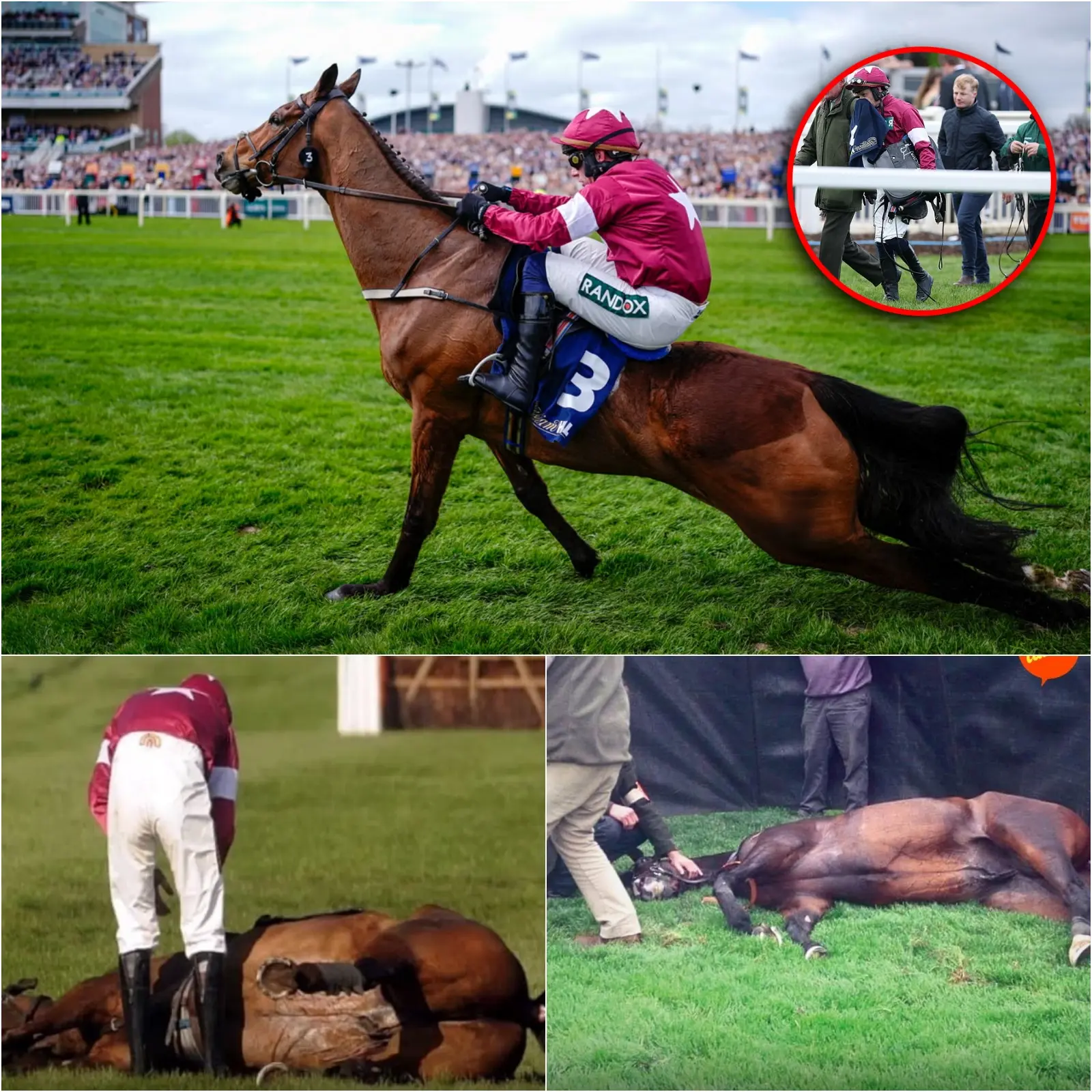
Aintree Racecourse, April 10, 2026 – In a harrowing moment that has sent shockwaves through the global horse racing community, Gold Dancer, the seven-year-old gelding trained by Willie Mullins and ridden by Paul Townend, crossed the finish line victorious in the William Hill Mildmay Novices’ Chase, only to be euthanized minutes later after sustaining a catastrophic broken back. The incident, described by connections as “terribly sad” and by onlookers as “unbelievable,” unfolded on Ladies Day at the Grand National Festival, casting a dark shadow over what should have been a day of celebration.
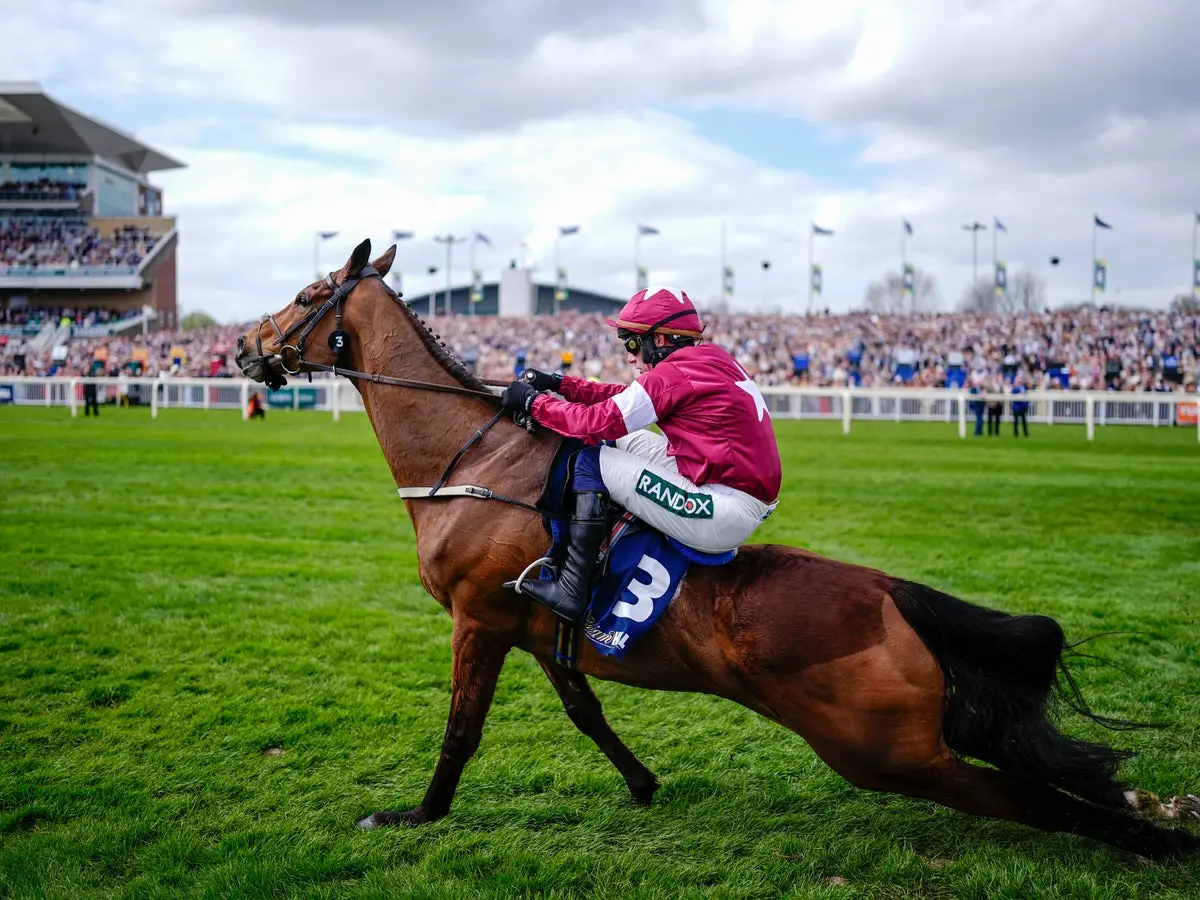
Gold Dancer, a 10-3 favourite carrying the famous colours of Gigginstown House Stud, had produced a commanding performance over the 3m 210yds trip. He led or disputed the lead for much of the race, jumping with fluency until the final fence. There, in a split-second error, the horse dragged his hind legs through the obstacle while clearing it from the front. Video replays showed him sprawling badly on landing, yet he somehow regained his stride.
Townend, one of the sport’s most accomplished jockeys, continued to ride him out, and Gold Dancer powered on to win by approximately four lengths from Regent’s Stroll.
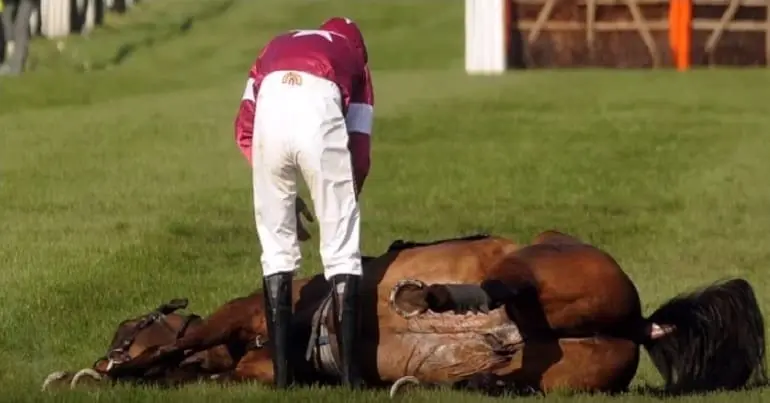
The crowd’s cheers quickly turned to stunned silence as the horse was immediately pulled up after the line. Townend dismounted swiftly, and green screens were erected around the animal as veterinary teams rushed in. Despite their best efforts, the injury was deemed irreversible. Eddie O’Leary, racing manager for owners Gigginstown House Stud (owned by Ryanair boss Michael O’Leary), confirmed the devastating news: “He’s been put down. He broke his back. It’s terribly sad for the horse.”
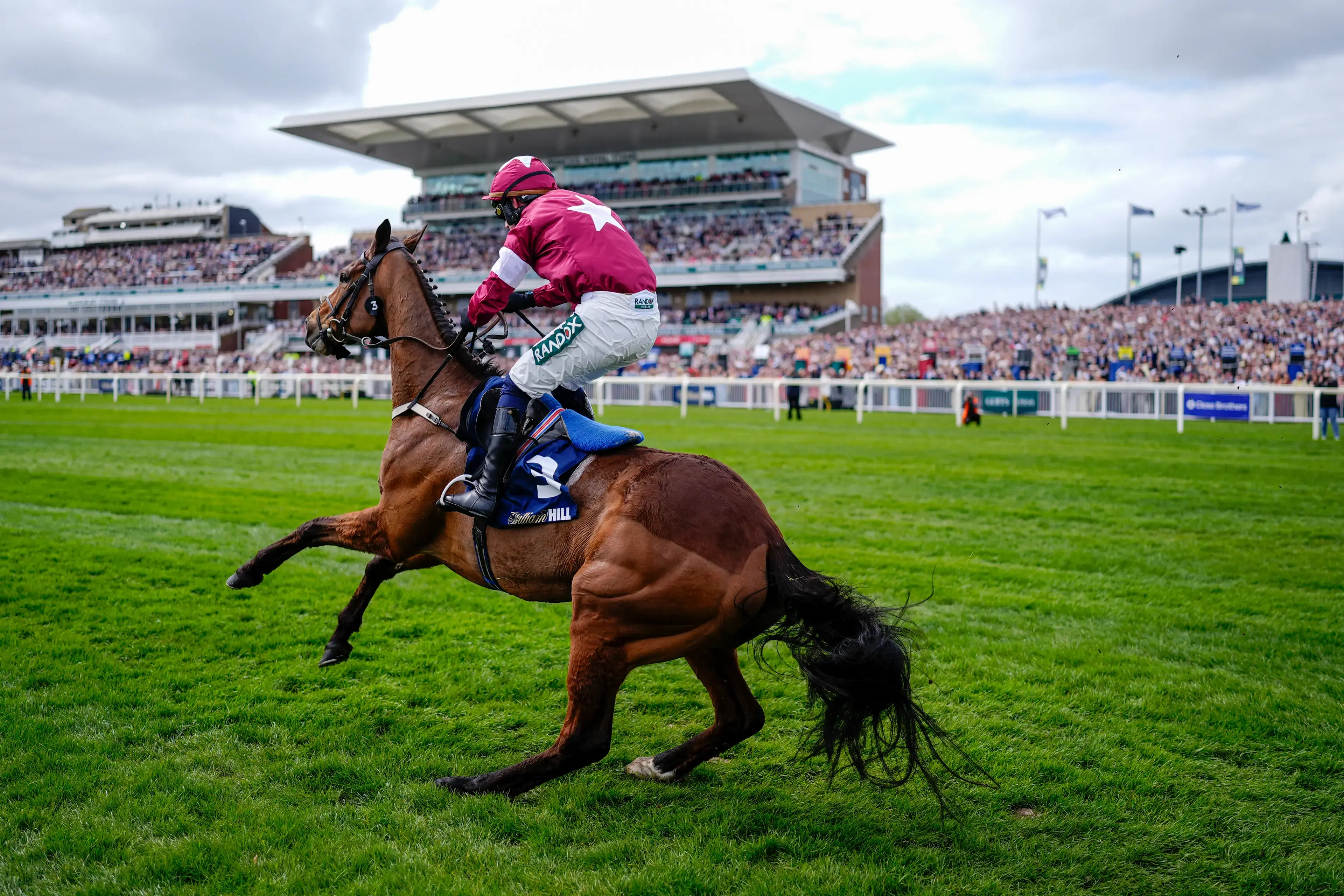
Aintree Racecourse issued a poignant statement that captured the collective grief: “The winner of our second race of the day, Gold Dancer, was pulled up after the line and dismounted. He was immediately attended to by our expert veterinary team but sadly he could not be saved. Our heartfelt condolences are with his connections.” ITV Racing, broadcasting the event, echoed this sentiment, interrupting coverage to express their sorrow.
The truth behind the accident lies in the unforgiving nature of steeplechase racing. Gold Dancer made “one mistake” at the last, according to Townend’s account to stewards. The jockey reported that the horse initially felt sound after the error, running straight and strongly to the line. It was only when slowing down around the bend toward the pull-up area—transitioning from canter to trot—that the full extent of the injury became apparent. Townend dismounted instantly. Stewards reviewing footage noted that the horse’s action in the closing stages was consistent with a tired but sound 3-mile chaser, supporting the rider’s evidence.
This incident has reignited intense debates about horse welfare in National Hunt racing. Animal rights groups and some observers questioned whether the horse should have been asked to continue after the visible stumble. Others, including connections, pointed out the split-second decisions involved and the fact that Gold Dancer showed no immediate signs of distress severe enough to warrant pulling up mid-race. Paul Townend, speaking through the inquiry process, emphasized that he felt nothing amiss until the slowdown.
Gold Dancer’s career had shown great promise. A French-bred gelding, he had built a solid record under Mullins, winning convincingly at times and placing in competitive fields. His victory in the Mildmay Novices’ Chase – a prestigious Grade 1 event – would have been a career highlight, potentially opening doors to even bigger targets like the Grand National itself in future years. Instead, it became a hollow triumph. Mullins and his team, known for their dominance in Irish and British jumps racing, were said to be deeply affected.
The broader context at Aintree adds layers to the tragedy. The Grand National Festival is one of racing’s crown jewels, drawing massive crowds and global attention. Yet it has a history of high-profile incidents, prompting ongoing safety improvements such as modified fences, better ground management, and enhanced veterinary protocols. In 2026, this was the first fatality of the meeting, but it has amplified calls for further reforms. The RSPCA and other organizations have long highlighted the risks in jump racing, where speeds, obstacles, and fatigue combine in a high-stakes environment.
Supporters of the sport argue that such tragedies, while heartbreaking, are rare relative to the thousands of safe runs each season, and that significant strides have been made in welfare standards. They point to data showing declining fatality rates due to better breeding, training, and course design. Critics counter that any loss of life for entertainment is unacceptable, fueling petitions and campaigns to limit or ban certain races.
For Gigginstown, this loss is personal. The stud has enjoyed tremendous success with stars like Tiger Roll, but the emotional toll of losing a horse in such dramatic fashion is profound. O’Leary’s straightforward words reflected a mix of pride in the performance and raw sorrow: “What could Paul Townend do?” The jockey, himself a multiple champion, will no doubt carry the memory of that final fence for some time.
As the sun set on Aintree that Friday, the atmosphere remained subdued. The racing continued – as it must in this tough sport – but conversations in the stands, press room, and social media revolved around Gold Dancer. Tributes poured in from across the racing world, with many expressing admiration for the horse’s courage while mourning his fate.
This event serves as a stark reminder of the thin line between glory and tragedy in horse racing. Gold Dancer gave everything in his final race, embodying the bravery that defines the sport’s greatest athletes. Yet his story also underscores the urgent need for continued vigilance on welfare. As the industry reflects, one hope remains: that lessons from this “unbelievable” scene drive even safer practices, honouring the memory of a talented horse who won against the odds, only to pay the ultimate price.
The Mildmay Novices’ Chase will be remembered not just for its result, but for the profound sadness it left behind. Gold Dancer’s legacy, though cut short, highlights both the thrill and the fragility of National Hunt racing. The horse racing world stands united in grief, deeply saddened by the loss of a gallant competitor.