The game itself gave the moment weight. LeBron finished with 26 points, 11 assists and eight rebounds as the Lakers beat Golden State on the road, while Bronny logged 21 minutes and contributed 10 points, three assists and two steals. Stephen Curry did not play, but that did not reduce the importance of the result for Los Angeles, which snapped a three-game losing streak and kept building momentum late in the regular season. When a father and son share meaningful minutes in a game with that much energy, even small exchanges start to feel bigger than basketball.
What truly caught the imagination of fans was not a verified tearful monologue, but the way the game itself told the story. NBA.com’s game page highlighted the sequence with labels that said “Bronny to LeBron, LeBron to Bronny” and “LeBron dishes to Bronny for the triple,” making clear that the father-son combination was central to the night’s emotional pull. The power of that sequence came from its simplicity. It was not staged, not ceremonial, and not nostalgic theater. It was real NBA action, in a real game, helping the Lakers close out a win against one of their biggest rivals.
That is why the reaction online became so intense. Fans were not only responding to a highlight. They were responding to everything that highlight represented: family, endurance, legacy, pressure, and the surreal image of LeBron James still shaping winning basketball while sharing the floor with his oldest son. The verified coverage from this game centered on that exchange and on the box score, not on a documented emotional postgame speech. But in some ways, the silence people imagined in the arena reflects something true anyway. Basketball history rarely looks this personal when it unfolds in real time.
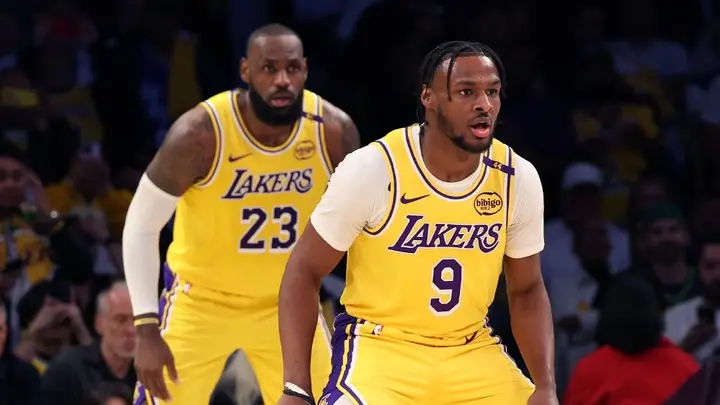
The deeper emotional force behind the Warriors game becomes even clearer when placed next to what happened just days earlier. On March 27, LeBron and Bronny became the first father-son duo in NBA history to record an assist to each other during the Lakers’ win over Brooklyn. Bronny described that earlier milestone as a special moment for the two of them and said there was more to come.
That quote matters now because it makes the Warriors sequence feel less like a random viral clip and more like the continuation of a bond that is becoming part of league history one possession at a time.
LeBron’s own public comments around these milestones also explain why fans attached so much emotion to the moment. After that historic Brooklyn game, he said he did not want to take for granted the chance to be on the floor with Bronny in meaningful minutes, and he called it a cool moment not just for the two of them, but for the family. That perspective gives the Warriors game its real emotional frame. The lasting image is not simply of a father helping his son or a son finding his father in transition.
It is of both understanding how rare this all is.
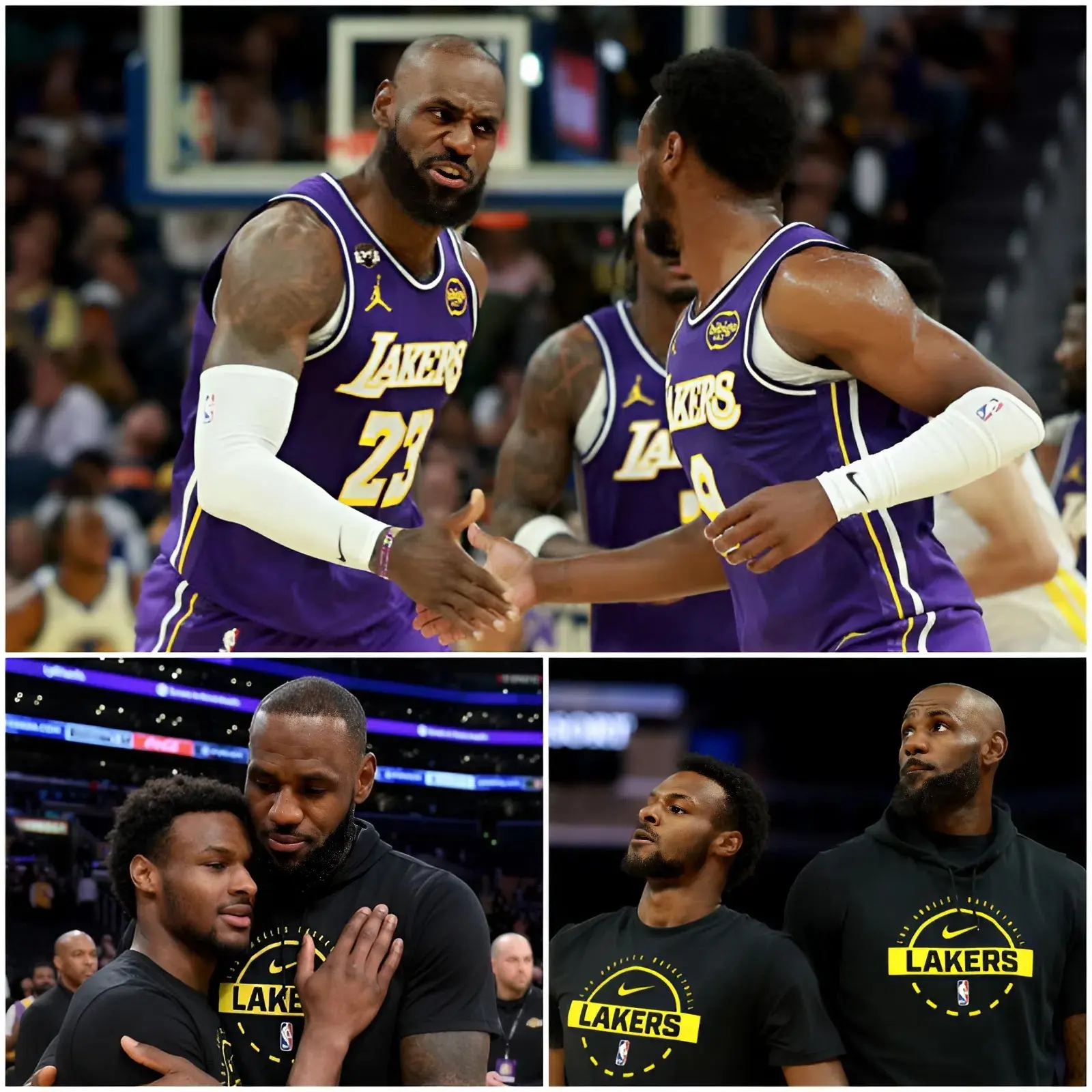
Bronny’s side of the story adds even more depth. In the same stretch of public comments, he said playing professional basketball is a dream come true and that he loves every second of it. He also said he feels embraced by his teammates and coaches. That matters because one of the quiet truths of this season has been Bronny’s battle to be seen as more than a symbol. The most moving part of the Lakers-Warriors moment may be that it did not feel ceremonial. It felt earned, competitive, and fully inside the rhythm of a real NBA game.
There is an even deeper layer that many casual fans forget. LeBron explained that he has watched Bronny’s confidence gradually return after the cardiac arrest that disrupted his freshman year at USC. He said the shooting touch had always been there, but that rhythm, strength, wind, and confidence were still coming back over time. Seen through that lens, every meaningful Bronny contribution carries added significance. The Warriors game was not just a pleasant father-son highlight. It was another visible checkpoint in a longer comeback story that has taken place under relentless public scrutiny.
People close to the team have reinforced that view. After an earlier late-season stretch in which Bronny played real rotation minutes, JJ Redick said the Lakers genuinely needed him and pointed to his athleticism, defense, and growth as a player. That is the kind of inside-the-team signal that changes how nights like the Warriors game are interpreted. Once coaches begin describing a young player as useful rather than symbolic, every possession takes on different meaning. The “secret” behind the emotion is not a hidden speech. It is the visible transformation of Bronny from storyline to contributor.
Another revealing family detail surfaced in that same public window, and it is the sort of anecdote that explains why fans keep leaning into this story emotionally. Bronny recounted a one-on-one game at the family home in Miami that ended with LeBron breaking a backboard, and Austin Reaves, listening nearby, jumped in to tease that it happened because Bronny had won. It was a light, funny moment, but it also revealed the competitive current underneath the warmth. The relationship is affectionate, but it is also built on challenge, pressure, and standards that never really relax.
That is why the Lakers’ win over Golden State resonated beyond the scoreboard. Yes, LeBron was the dominant veteran presence again, and yes, Bronny’s line was modest by star standards. But fans saw something bigger: trust in live action, mutual recognition on the court, and a family dynamic operating under playoff-level attention. The viral headline exaggerated the evidence, but it captured one thing accurately: the moment hit people emotionally. Not because of a confirmed tearful speech, but because the game itself showed how far this father-son journey has already come.
In the end, the most powerful line from the night may not have been spoken after the buzzer at all. It may have been written in the sequence itself: Bronny to LeBron, and LeBron back to Bronny. That exchange said what words often fail to express in sports. It showed legacy without forcing it, pride without sentimentality, and love filtered through competition. The world of basketball did not need an invented speech to feel the meaning of that victory. The real story was already there, unfolding possession by possession, with the entire league watching.