HE DOESN’T DESERVE IT, HE GAVE HIMSELF TO HORSE RACING AND NOW..
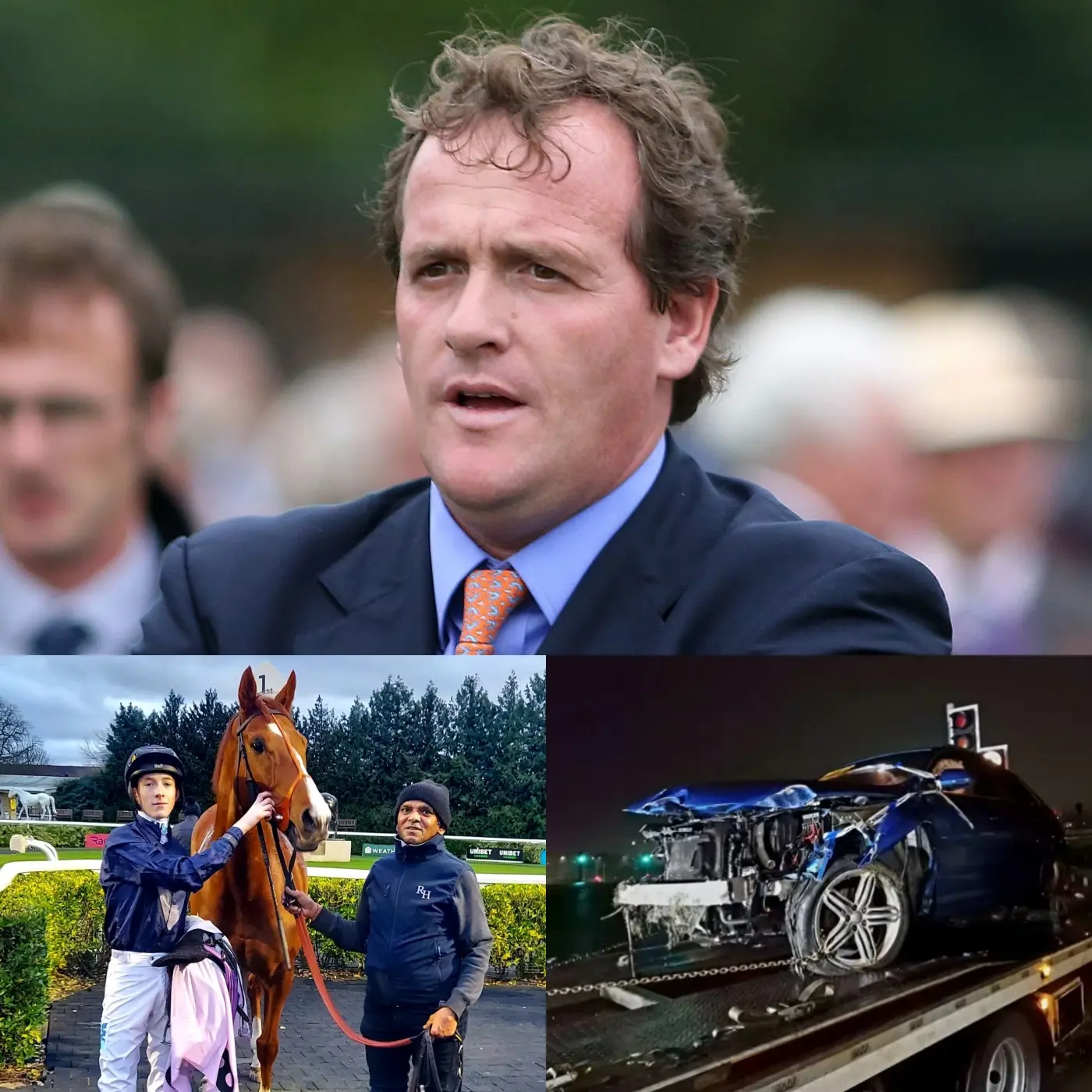
Richard Hannon suddenly became emotional, his voice trembling as he explained the car crash involving young racer Joe Leavy early Sunday morning, just hours after the teenager’s victory at Wolverhampton Racecourse. The seasoned trainer, known for his composure in the high-pressure world of British flat racing, struggled to find the words. “He doesn’t deserve it,” Hannon said, pausing to compose himself. “He gave himself to horse racing completely, and now this.” His words captured the shock rippling through the racing community following the single-vehicle accident that left the 20-year-old champion apprentice jockey hospitalized with serious injuries.
The incident occurred around 1:26 a.m. on Newbury Road in Eastbury, near Hungerford, Berkshire, not far from the Lambourn training hub that serves as the heartbeat of British racing. Leavy had been behind the wheel of the car, which carried two passengers: fellow jockey William Carver, 26, and a female companion. Emergency services responded swiftly, and all three were transported to hospital. While Carver and the woman were treated and later discharged, Leavy sustained a broken jaw and collarbone, initially requiring intensive care and sedation at Oxford’s John Radcliffe Hospital.
Thames Valley Police confirmed no arrests were made, describing the collision as a single-vehicle incident under ongoing investigation.
Just hours earlier, the atmosphere at Wolverhampton had been celebratory. Leavy rode a winner on Saturday evening, pushing his season’s tally to 61 victories. As the 2025 Champion Apprentice, crowned dramatically on Champions Day at Ascot in October, he was on track to smash personal records and establish himself as one of the sport’s brightest young talents. Based at Richard Hannon’s yard, Leavy had already accumulated 41 wins in the apprentice championship, showcasing maturity and skill beyond his years.
His dedication was legendary among colleagues – early mornings on the gallops, relentless fitness work, and an unwavering commitment that defined his rapid rise.
Hannon’s emotional reaction stemmed not only from concern for his stable jockey but from a deeper sense of injustice. The trainer, who has guided generations of young riders, spoke of Leavy’s total immersion in the sport. “This lad lives and breathes racing,” Hannon continued, his voice cracking. “He’s given everything to it since he was a teenager. To see him like this, right at the peak of what should be his breakthrough year… it’s heartbreaking.” Colleagues echoed similar sentiments across social media and in the weighing room.
Leavy’s agent, Phil Shea, offered reassurance that the jockey was conscious and communicating with family, but emphasized the road to recovery would be the priority. “They were all lucky,” Shea noted. “Now it’s about getting him fit and back where he belongs – on a horse.”
This is not Leavy’s first brush with adversity. At just 16, he suffered a horrifying fall on the gallops that left him in an induced coma for a week. That earlier trauma tested his resilience, yet he returned stronger, channeling the setback into fuel for his ambition. Friends and mentors described him as quietly determined, someone who let his riding do the talking. His recent success – riding out for top stables and forming productive partnerships with horses like the one that triumphed at Wolverhampton – suggested a bright future.
Now, the racing world finds itself pausing once more to reflect on the fragility that shadows even the most promising careers.
The British Horseracing Authority (BHA) and police were involved in the immediate aftermath, ensuring welfare protocols were followed. Leavy and Carver were stood down from rides at Kempton the following day, a standard precaution that underscored the seriousness of the situation. Racing insiders noted the timing: the crash came deep into the night after a long day at the track, a reminder of the demanding schedules that young professionals navigate. While fatigue or other factors may emerge from the investigation, the focus remains firmly on Leavy’s well-being rather than speculation.
In the days following the accident, tributes poured in from across the industry. Fellow jockeys shared memories of Leavy’s professionalism and good humor. Trainers praised his work ethic, and owners who had backed him expressed hopes for a swift return. Hannon, whose yard has produced countless stars, positioned himself as a father figure in the narrative. “Joe’s mum is grateful he’s out of the woods,” the trainer added in a later update. “We’re all thankful to the paramedics and the medical team.
The focus now is full recovery.” Leavy was reported to have come off sedation and begun speaking with loved ones, offering a glimmer of optimism amid the uncertainty.
The broader implications for the sport are significant. Horse racing has long grappled with safety concerns, both on and off the track. While catastrophic injuries during races often dominate headlines, incidents like this highlight the risks riders face in their personal lives. Young apprentices, balancing intense physical demands with the pressures of building a career, operate in a world where margins are slim. Leavy’s story serves as a poignant reminder that behind the glamour of winners’ enclosures and roaring crowds lies a community bound by shared vulnerabilities.
As Leavy begins his rehabilitation, support networks within racing have mobilized. Facilities like Oaksey House, which provides specialized care for injured jockeys, stand ready to aid his return. His determination, proven after the earlier gallops accident, suggests he will approach recovery with the same focus that earned him the apprentice title. Colleagues predict he could be back riding within months, though timelines remain cautious given the nature of his injuries.
Hannon’s trembling voice and heartfelt words resonated far beyond his stable. They articulated a collective sentiment: Joe Leavy had earned his success through sacrifice and talent. He didn’t deserve this sudden interruption to a flourishing career. Yet in the unforgiving arena of professional sport, resilience often defines legacies. The racing fraternity watches closely, united in hope that this talented young man will soon reclaim his place among the sport’s rising stars. His journey, marked by setbacks and triumphs, continues to inspire – a testament to the enduring spirit that keeps horse racing alive.