The 26–12 victory over the Gold Coast Titans has reinforced the sense that the Brisbane Broncos are steadily rediscovering the consistency and resilience that defined their premiership-winning campaign just a season ago. Yet beneath the surface of what appears to be another strong performance lies a more complex and evolving narrative—one shaped by injuries, internal adjustments, and the ongoing demands of maintaining elite standards in the National Rugby League.
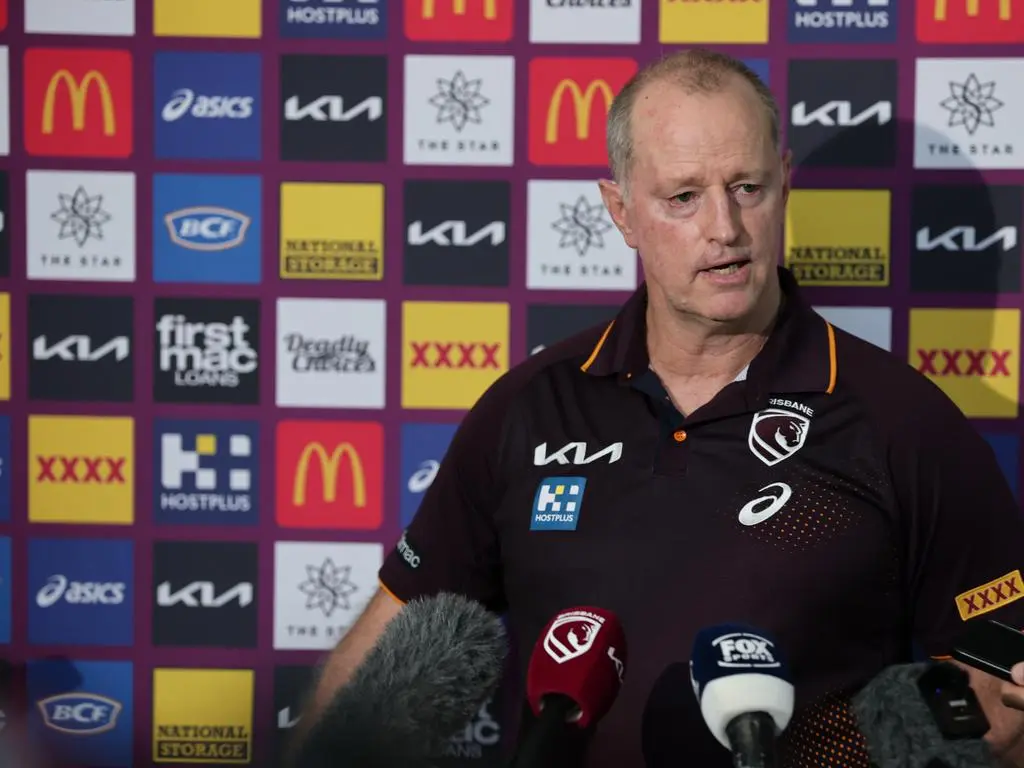
Coming into the 2026 season as defending champions, Brisbane carried both expectation and scrutiny. Their triumph in the 2025 NRL Grand Final, which ended a 19-year premiership drought, marked the beginning of a new era under head coach Michael Maguire. Known for his disciplined approach and emphasis on defensive structure, Maguire has sought to instill a culture built on accountability and sustained performance. (Wikipedia)
The early rounds of the 2026 season, however, have demonstrated that success in rugby league is rarely linear. Brisbane’s form has fluctuated, with moments of dominance offset by lapses in execution. In earlier matches, issues such as missed tackles, handling errors, and inconsistency in completion rates raised questions about whether the team could replicate the intensity of their title-winning run. (FOX SPORTS) These concerns, while not uncommon for a defending champion, highlighted the fine margins that separate winning from losing in a competition as physically and tactically demanding as the NRL.
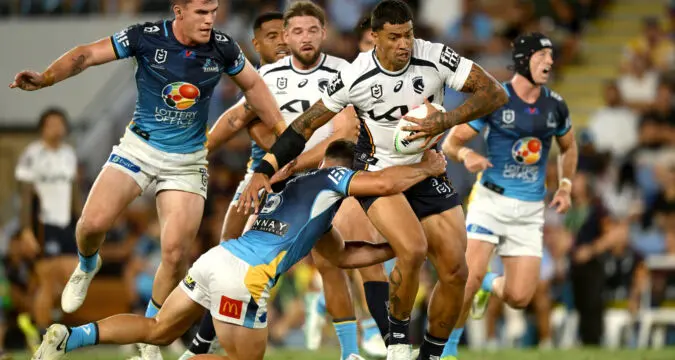
Against this backdrop, the win over the Titans represented more than just two competition points. It was a test of depth, adaptability, and composure under pressure. Brisbane entered the match with renewed confidence following consecutive victories, but the contest quickly evolved into a challenging scenario that demanded significant in-game adjustments.
Despite leading narrowly at halftime, the Broncos were forced to confront a difficult reality in the second half. Key playmakers, including captain Adam Reynolds and fullback Reece Walsh, were sidelined due to injury during the match. Walsh, in particular, had been influential early on, scoring a try before being ruled out following a concussion incident. (News.com.au) Reynolds’ departure further compounded the challenge, removing an experienced organizer and tactical leader from the field.
In many respects, this moment became the defining passage of the match. Rather than retreat under pressure, Brisbane responded with composure and cohesion. Players such as Ezra Mam and Ben Hunt assumed greater responsibility, orchestrating attacking sequences that ultimately shifted the momentum decisively in Brisbane’s favor. (couriermail.com.au) Their ability to adapt mid-game reflects a broader structural strength within the squad—one that extends beyond individual brilliance to encompass collective understanding and execution.
The contributions of emerging and supporting players also deserve recognition. The introduction of less experienced squad members, including debutant Antonio Verhoeven, demonstrated the club’s commitment to developing depth across all positions. Even in high-pressure situations, these players showed a willingness to engage physically and contribute to the team’s overall performance. (couriermail.com.au)
At the same time, the match underscored a potential vulnerability that could influence Brisbane’s trajectory in the coming weeks. Injuries to key personnel are not merely short-term setbacks; they test the structural integrity of a squad over time. Walsh is expected to miss at least one match due to concussion protocols, with additional concerns surrounding a possible facial injury that could extend his absence. Reynolds’ condition also remains a point of concern, given his central role in guiding the team’s attacking framework. (News.com.au)
Beyond the immediate implications of player availability, the Broncos are also navigating broader organizational developments. The recent departure of assistant coach Ben Te’o, reportedly following internal disagreements, has added another layer of complexity to the club’s environment. While such changes are not uncommon in professional sport, they inevitably influence preparation, communication, and continuity within the coaching structure. (couriermail.com.au)
Maguire’s response to these challenges has been measured and consistent. His emphasis on discipline—both on and off the field—has been evident in selection decisions and team management. The decision to omit certain players due to off-field incidents reflects a broader commitment to maintaining standards, even when it may impact short-term performance. (couriermail.com.au) This approach aligns with the culture he has sought to establish since his arrival, one that prioritizes long-term stability over immediate convenience.
From a tactical perspective, Brisbane’s recent performances suggest a gradual refinement of their playing style. The ability to generate attacking momentum without relying exclusively on established stars indicates a more balanced and adaptable system. At the same time, defensive organization remains a critical focus area, particularly in light of earlier matches where lapses proved costly.
The broader competitive landscape of the NRL further contextualizes Brisbane’s current position. As reigning premiers, they are not only competing against opponents but also against expectations. Every performance is scrutinized, and every result contributes to an evolving narrative about their capacity to sustain success. The win over the Titans, while significant, is one step within a longer journey that will be defined by consistency, resilience, and the ability to respond to adversity.
It is also worth noting the historical significance of the Broncos within the NRL. As one of the most widely supported clubs in the competition, with a substantial fan base and a legacy of success, Brisbane carries a level of visibility that amplifies both achievements and challenges. (Wikipedia) This context adds an additional dimension to their performances, as the team’s progress is closely followed by supporters, analysts, and stakeholders across the rugby league community.
Looking ahead, the immediate priority for Brisbane will be managing player recovery and maintaining momentum. The depth demonstrated against the Titans provides a foundation for optimism, but sustained success will depend on the integration of returning players and the continued development of emerging talent. Matches in the coming rounds will offer further insight into the team’s capacity to adapt and evolve under pressure.
In many ways, the current phase of the Broncos’ season reflects the natural progression of a team transitioning from success to sustained excellence. The challenges they face—injuries, internal adjustments, and heightened expectations—are characteristic of elite sport. How they navigate these challenges will ultimately determine whether their recent premiership represents a peak or the beginning of a longer period of dominance.
For now, the victory over the Titans stands as a reminder of the qualities that define Brisbane at their best: composure under pressure, collective responsibility, and a willingness to adapt when circumstances demand it. These attributes, more than any individual performance, will shape the trajectory of their 2026 campaign and their place within the evolving landscape of the NRL.