From a Cold, Icy Surface to a Close Relationship!
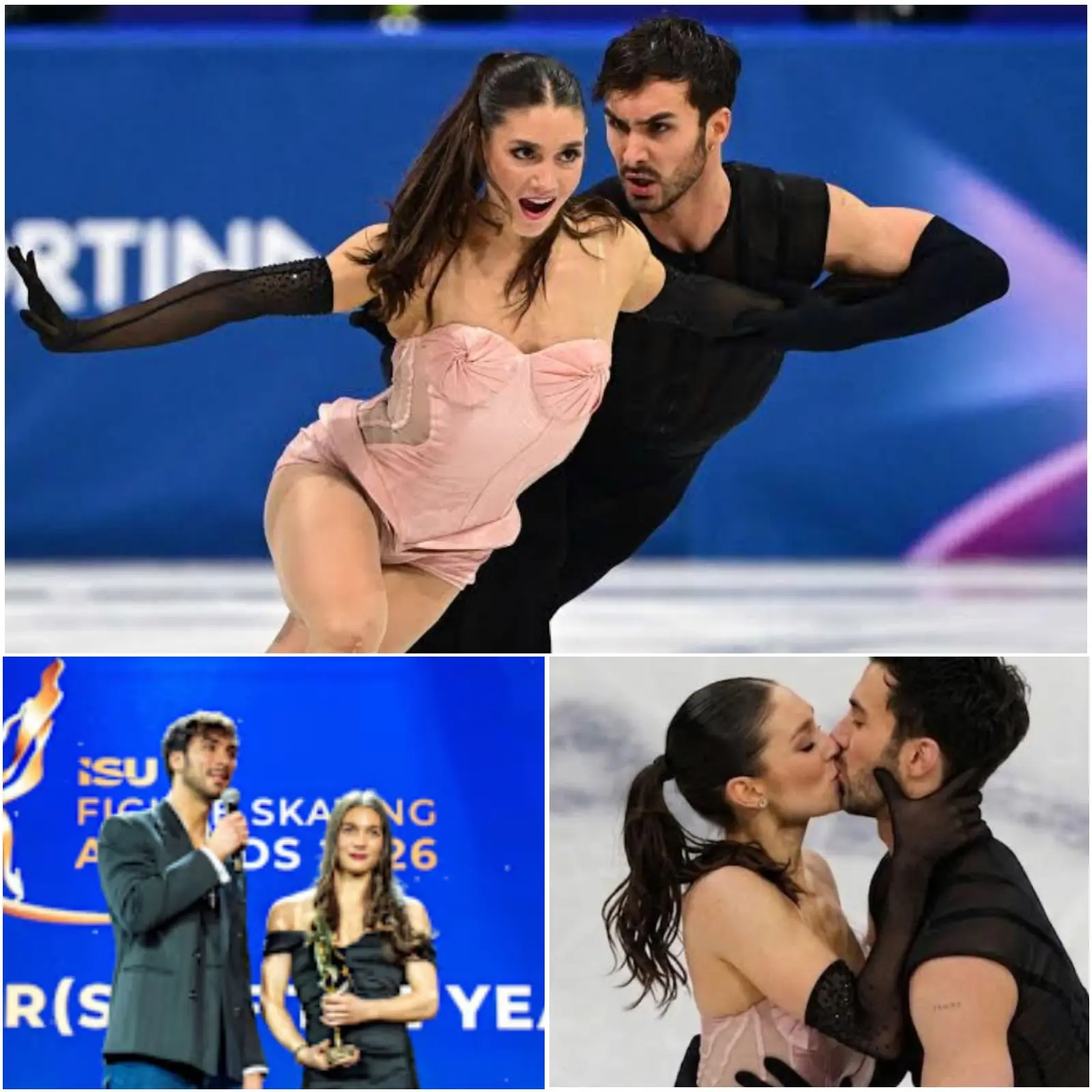
When Laurence Fournier Beaudry and Guillaume Cizeron stepped onto the ice at the 2026 ISU World Figure Skating Championships in Prague, few could have predicted the depth of emotion that would unfold before a packed O2 Arena. The French duo, competing in their first season together as a team, had already achieved the extraordinary by winning Olympic gold just weeks earlier in Milano Cortina. Yet in Prague on March 28, it was not merely their technical mastery or record-breaking scores that left spectators spellbound.
It was the palpable connection between them—a seamless blend of athletic precision and raw human intimacy—that transformed their free dance into something far more profound than a competitive routine.
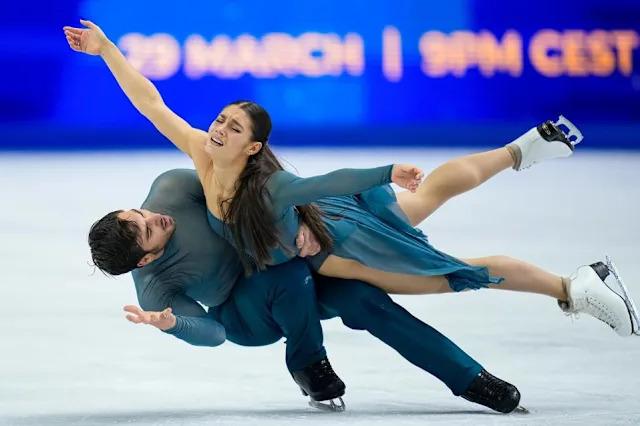
From the opening notes of their rhythm dance through to the climactic free dance, Fournier Beaudry and Cizeron moved as one. Their lifts were effortless, their spins synchronized to perfection, and their transitions flowed with an almost telepathic understanding. Every glide across the cold, unforgiving ice surface told a story of trust built in record time. Cizeron, the seasoned veteran who had previously claimed Olympic gold in 2022 with Gabriella Papadakis, had stepped away from the sport before returning with a bold new partner.
Fournier Beaudry, a talented ice dancer formerly representing Canada, brought her own resilience and elegance to the partnership. Their union, announced in March 2025, began as a friendship over a casual conversation, yet it quickly evolved into one of the most remarkable debut seasons in figure skating history.
In Prague, they delivered personal bests in both segments, amassing a total score of 230.81 points—winning gold by a staggering 19.29-point margin over Canada’s Piper Gilles and Paul Poirier. This victory completed a historic treble: Olympic, European, and now World champions all in their inaugural season together. Only a handful of teams in the sport’s long history have achieved such a feat. As they concluded their free dance, the arena erupted in applause, but the most memorable moment came in the final seconds.
After the music faded, the pair shared a lingering pause, a deep glance into each other’s eyes, and then a kiss that felt utterly spontaneous and genuine. It was not part of any choreographed ending. Time seemed to stand still on the ice as the crowd’s cheers swelled around them. What began as a professional collaboration had visibly blossomed into something deeper—a close, affectionate bond that transcended the boundaries of sport.
This moment, captured on video and now circulating widely across social media, has captivated audiences far beyond the figure skating community. Clips of the kiss have been rewatched millions of times, with viewers commenting on the evident chemistry and emotional authenticity. “It’s like watching two souls connect in real time,” one fan posted, while others described the performance as “pure magic.” The viral spread reflects a universal fascination: in a discipline often defined by rigorous training and calculated artistry, here was a rare glimpse of unscripted humanity.
Fournier Beaudry and Cizeron have repeatedly emphasized in interviews that their success stems from a foundation of genuine friendship. “We knew each other before we decided to skate together,” Cizeron noted after their Olympic triumph. That pre-existing rapport allowed them to bypass the usual years-long adjustment period required for new ice dance partnerships.
The journey from a “cold, icy surface” to this evident closeness was anything but straightforward. Ice dance demands not only technical excellence—edge control, intricate footwork, and flawless lifts—but also an emotional synchronization that can take seasons to develop. Many teams spend a decade or more refining their partnership before reaching elite levels. Fournier Beaudry and Cizeron achieved elite synergy in months. Their training reportedly focused heavily on building trust off the ice as much as on it. Shared meals, honest conversations, and mutual respect helped them navigate the pressures of returning to competition after personal and professional challenges.
Both athletes had faced scrutiny in the lead-up to their partnership, yet they channeled that energy into a unified vision.
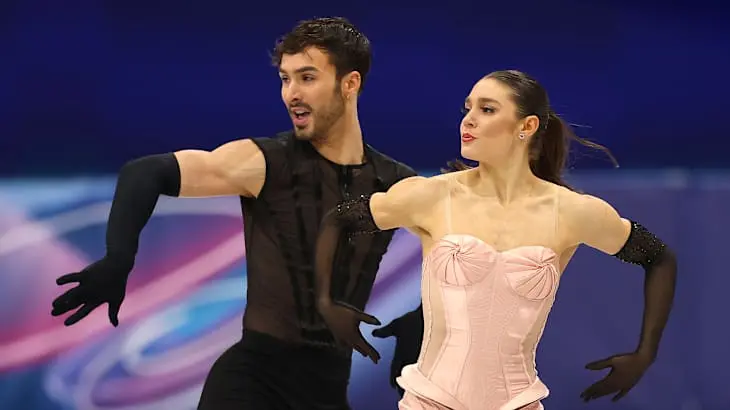
On the ice in Prague, their free dance showcased this evolution beautifully. The program featured lyrical, romantic elements that mirrored their growing connection. Lifts soared with confidence, spins rotated in perfect harmony, and their storytelling through movement conveyed vulnerability and strength. Judges awarded them the highest scores of the night, praising the depth of their interpretation alongside technical brilliance. Gilles and Poirier took silver with 211.52 points, while the American duo of Emilea Zingas and Vadym Kolesnik claimed bronze.
Yet even among strong competition, the French pair stood apart—not just for their scores, but for the way they made the audience feel part of something intimate.
Beyond the medals, their story highlights the human side of elite sports. Figure skating, particularly ice dance, has long been romanticized for its beauty and passion, but real-life partnerships rarely reveal themselves so openly. The kiss in Prague blurred the lines between performance and reality, inviting viewers to ponder the nature of closeness forged through shared ambition and physical proximity. Are they simply best friends whose chemistry enhances their skating, or has something more romantic developed? The pair has remained private about their personal lives, focusing instead on the joy of their on-ice journey.
“These moments are precious,” Cizeron reflected post-competition, describing the satisfaction of soaking in the applause after months of intense preparation.
Their rapid rise has also sparked broader discussions within the skating world. Traditional wisdom suggests that successful ice dance teams require years of development, yet Fournier Beaudry and Cizeron have rewritten that narrative. Their success validates the power of emotional compatibility and quick adaptation. It also underscores the importance of mental resilience. Both skaters had stepped back from the sport at different points—Cizeron after his 2022 Olympic win, Fournier Beaudry amid changes in her career. Reuniting on the ice with a new partner could have been risky, but their mutual support turned potential uncertainty into triumph.
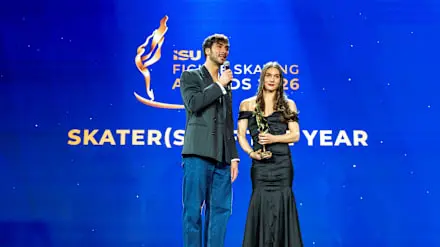
As the 2025-26 season concludes, the duo has been named Skaters of the Year by the ISU, a fitting recognition of their monumental achievements. Fans and analysts alike are already speculating about future programs and whether they will continue competing. For now, the focus remains on celebrating a debut season that few could have imagined. The viral clip from Prague serves as a reminder that sport at its best is not only about winning but about connection—between partners, with the audience, and within oneself.
In an arena filled with thousands, Laurence Fournier Beaudry and Guillaume Cizeron created an island of intimacy. From the first tentative steps of their new partnership on a cold training rink to the electric atmosphere of the World Championships, they have shown that great skating is as much about heart as it is about technique. That final kiss was not just the end of a routine; it was the celebration of a bond that turned ice into something warm and alive.
As viewers continue to replay the moment, they are witnessing more than athletic excellence—they are seeing the beautiful possibility of human connection blooming under the brightest lights of competition.