THE PROCESS OF CREATING A CHAMPION: “I was fascinated by Gaelic Warrior from the moment it was a tiny foal, willing to pay £20,000 to own it, but no one would even look at it or want to sell it to me!”
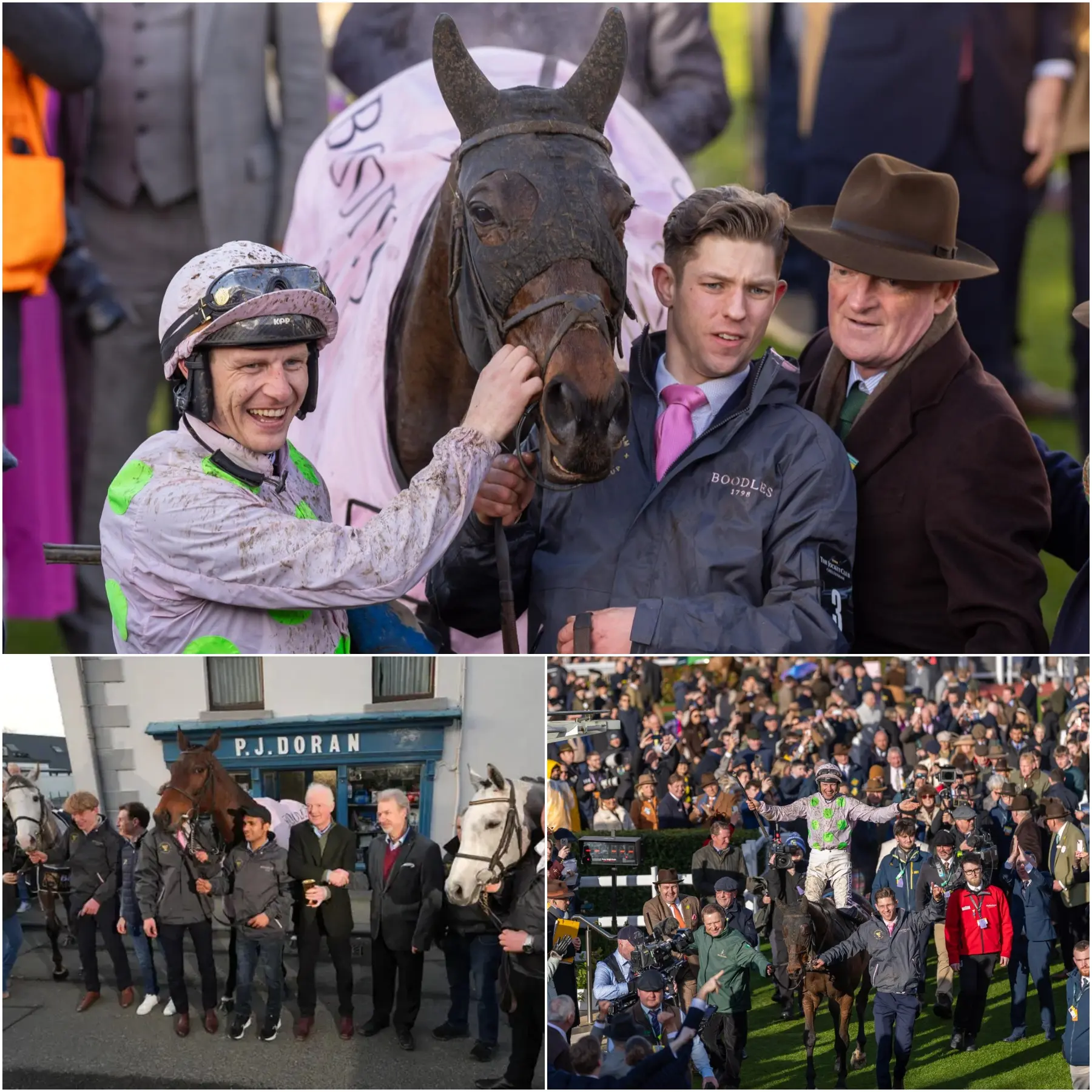
In the world of National Hunt racing, few stories capture the essence of transformation quite like that of Gaelic Warrior. What began as an overlooked foal, dismissed by potential buyers despite an enthusiastic offer of £20,000, has evolved into one of the most dominant forces on the obstacle course. Today, this remarkable gelding stands as a Cheltenham Gold Cup winner, a testament to patience, expert training, and the unpredictable magic that can turn raw potential into greatness.
The journey started in France, where Gaelic Warrior made his initial appearances on the track under the guidance of jockey James Reveley. As a young horse, he showed flashes of talent but remained unpolished—inexperienced and not yet equipped to harness his immense raw power. Reveley, a capable rider, partnered with the promising prospect in those early outings, yet the partnership never quite clicked into the extraordinary. The horse appeared somewhat lazy at times, a trait that hindsight reveals was simply the mark of immaturity rather than any inherent flaw.
“I’ve been thinking about it all day yesterday,” Reveley reflected emotionally just 24 hours after Gaelic Warrior’s crowning achievement. “It seemed a little lazy back then, but that was just because it was still young and immature – absolutely not because of bad attitude. It really wasn’t a finished horse… until everything exploded!”
That explosion came after the horse’s relocation to Ireland and the renowned stable of Willie Mullins in County Carlow. Under Mullins’ meticulous care, Gaelic Warrior began his ascent. The legendary trainer, known for his ability to unlock the potential in complex characters, took on a horse with a notoriously difficult temperament. Gaelic Warrior often veered to the right, displayed moments of aggression, and could become overly “keen” when he spotted an opening ahead—qualities that demanded constant vigilance from anyone in the saddle. Yet these same traits contributed to his fearsome reputation on the track.
Patrick Mullins, Willie’s son and a key figure in the yard who has ridden the horse extensively at home, has described the experience vividly. He likened controlling Gaelic Warrior to wrestling a tame bear—manageable yet powerfully untamed—or even riding a “tank,” an unstoppable machine built for destruction over fences. The comparisons are apt: once Gaelic Warrior locks onto his target, his power becomes overwhelming, turning races into demonstrations of sheer dominance.
The transformation under Mullins has been nothing short of spectacular. From those modest beginnings, Gaelic Warrior has amassed an impressive record: 11 victories from 22 starts, accumulating prize money exceeding £1.1 million. Each win built on the last, showcasing not just physical prowess but a growing mental maturity. The horse’s quirks never fully disappeared, but they were channeled into strengths. His keenness became explosive acceleration; his aggression fueled relentless finishing kicks. Mullins’ academy proved the perfect environment to refine this raw material into a champion.
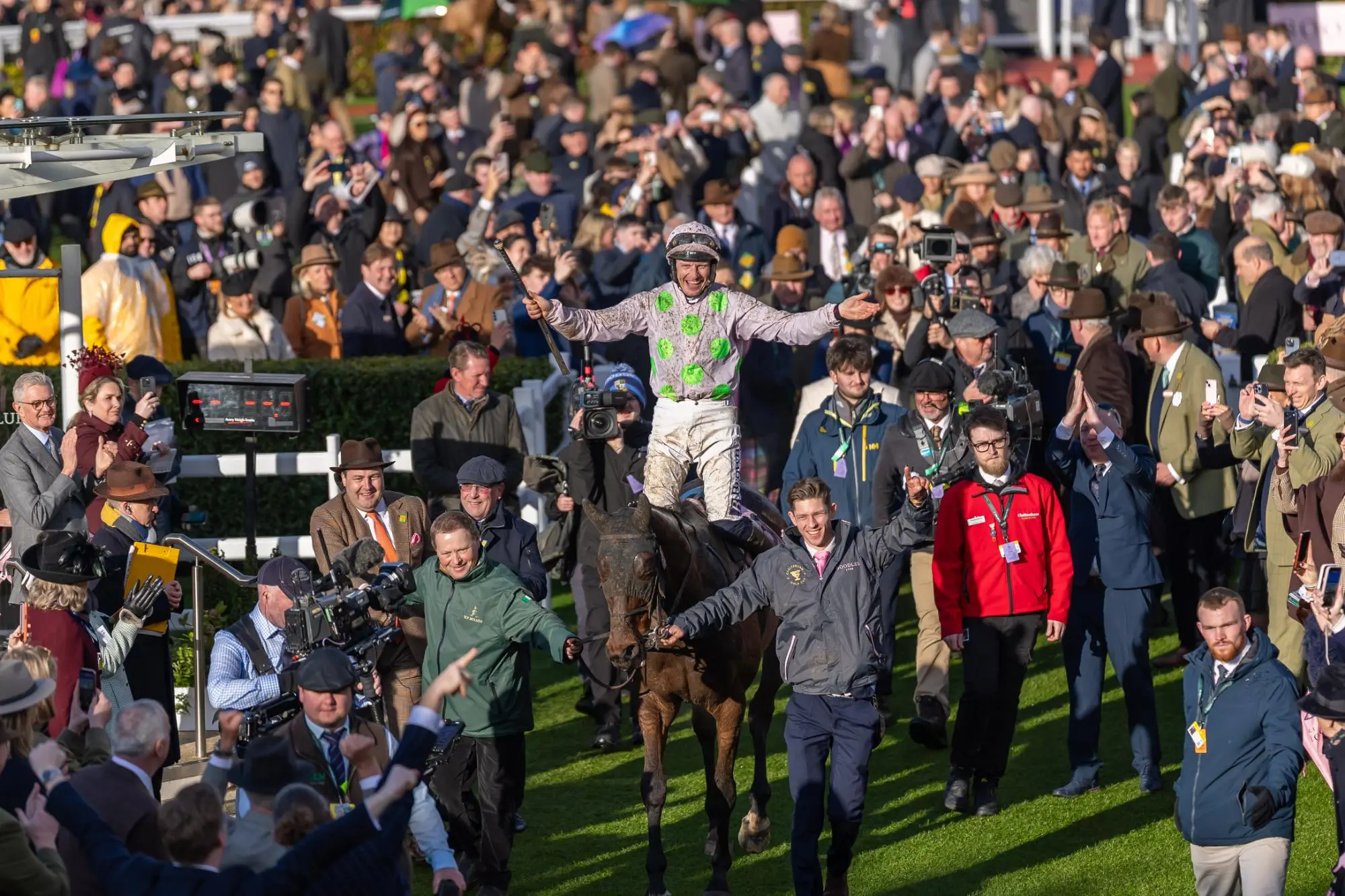
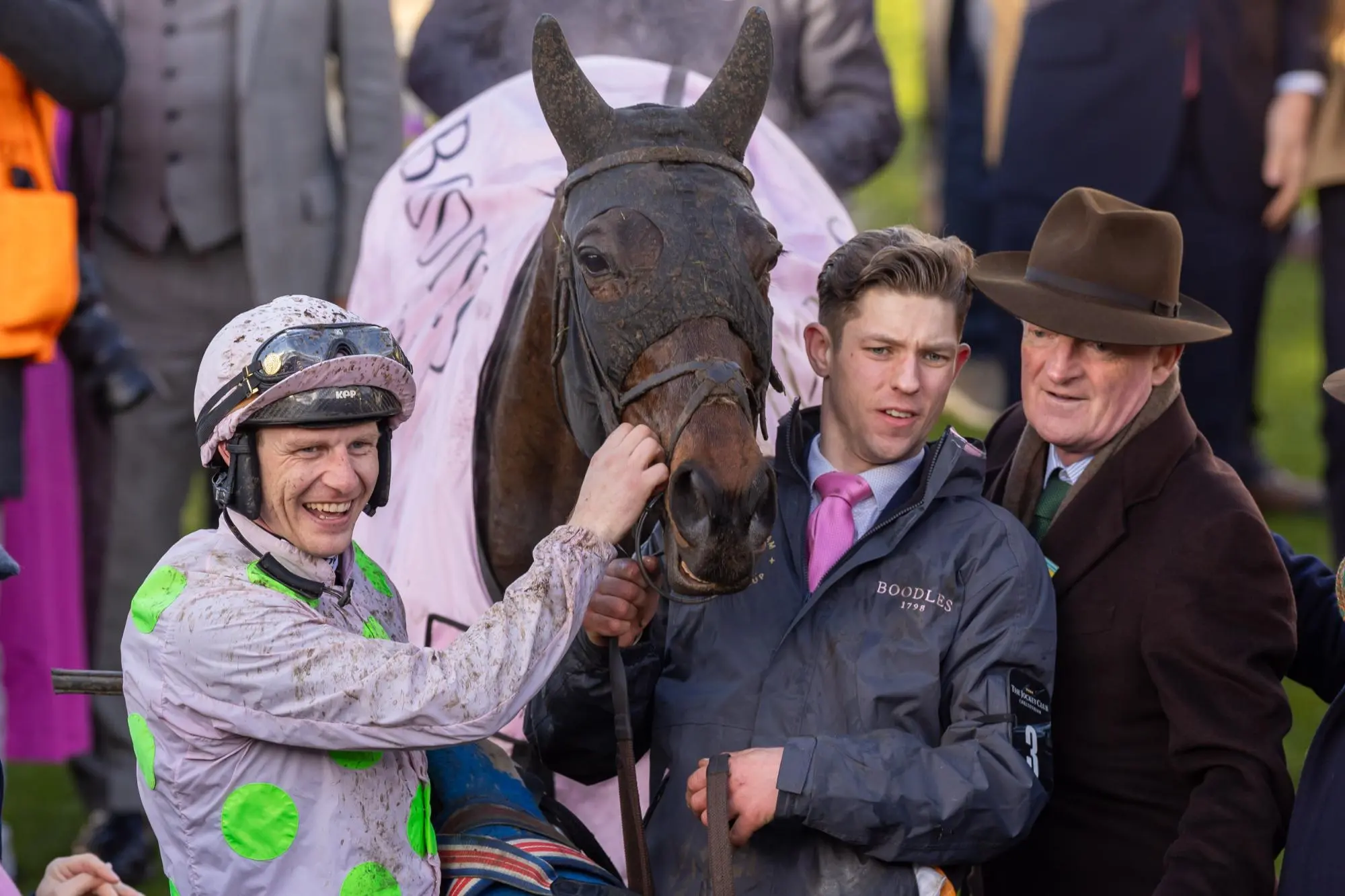
The pinnacle arrived at the 2026 Cheltenham Festival. In the Boodles Cheltenham Gold Cup—the blue-riband event of jump racing—Gaelic Warrior delivered a performance for the ages. Sent off as the 11-4 joint-favorite alongside Nicky Henderson’s Jango Baie, he was Willie Mullins’ sole runner in the feature race. Ridden by Paul Townend, the partnership produced a masterclass. After early leaders faded and contenders like Harry Redknapp’s The Jukebox Man lost momentum, Gaelic Warrior surged clear. He powered up the famous Cheltenham hill with effortless authority, crossing the line eight lengths ahead of Jango Baie, with Inothewayurthinkin taking third.
The victory was emphatic and historic. It marked Willie Mullins’ fifth Gold Cup success, equaling the all-time record held by Tom Dreaper, the trainer of the legendary Arkle. For Paul Townend, it was his fifth Gold Cup win, placing him alone at the top of the jockeys’ list for the modern era. The crowd erupted as the pair returned to the winner’s enclosure, the culmination of years of careful development. Gaelic Warrior’s demolition of the field left no doubt: this was a horse operating at a different level.
What makes the story even more compelling is the contrast between the early dismissal and this triumphant reality. No one wanted to sell the foal to the admirer willing to invest £20,000. Yet that same horse, once ignored, has become a “killing machine” on the track, as described by those closest to him. His path from overlooked youngster to undefeated force in elite company illustrates the patience required in racing. Mullins’ stable provided the structure, the expertise, and the understanding needed to manage a temperament that could have derailed lesser handlers.
James Reveley’s retrospective insight adds a poignant layer. The early “laziness” was misinterpreted; it was merely the horse waiting to mature. When maturity arrived, combined with Mullins’ training, the result was explosive. Gaelic Warrior’s success is a fairytale built on sweat, strategic decisions, and fiery passion. From a foal no one would sell to a Gold Cup hero receiving rapturous welcomes home in Leighlinbridge, his story resonates as proof that greatness often hides in plain sight, waiting for the right circumstances to emerge.
In an sport where outcomes hinge on fractions of seconds and unpredictable variables, Gaelic Warrior’s rise stands out. He has not only won races but rewritten expectations, turning early rejection into enduring legacy. As the prize money climbs and the victories accumulate, one truth remains clear: the process of creating a champion is rarely straightforward, but when it succeeds, the result can be nothing short of legendary. Gaelic Warrior, once unwanted, is now unforgettable—a true warhorse who conquered the pinnacle of equestrian sport.