INTENSE CONTROVERSY IN THE UK’S Equestrian Industry

The British horse racing community has been rocked by a high-profile dispute that has ignited fierce debate about fairness, evidence, and accountability in the sport. At the center of the storm is an incident during last week’s Cheltenham Festival, where leading jockey Nico de Boinville was accused of directing repeated racial abuse toward Irish amateur rider Declan Queally. The allegations, which surfaced publicly on live television, have now been formally dismissed by the British Horseracing Authority (BHA) following a thorough investigation.
Yet the decision has only intensified outrage among fans, who question whether the governing body has adequately addressed the concerns or simply hidden behind a lack of concrete proof.
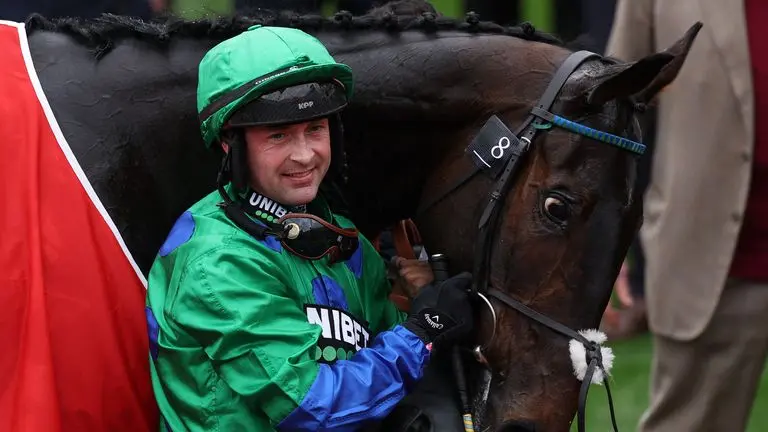
The confrontation unfolded chaotically at the start of the Turners Novices’ Hurdle on day two of the prestigious Cheltenham Festival. As riders jostled for position amid a false start delay, tensions boiled over between de Boinville, riding Act Of Innocence, and Queally, aboard I’ll Sort That. Video footage captured by ITV cameras showed de Boinville appearing visibly frustrated, shouting at Queally to move aside. While the audio did not clearly pick up any racial language, the exchange was heated, with strong words exchanged in full view of spectators and viewers at home.
In the immediate aftermath, Queally spoke candidly to ITV Racing reporters. He described the encounter as “horrific,” emphasizing that he felt abused by an English rider while competing as an amateur in front of his children. He later escalated the matter by lodging a formal complaint with the race stewards, alleging that de Boinville had subjected him to repeated racial abuse. De Boinville, a prominent figure in National Hunt racing and regular partner to trainer Nicky Henderson, categorically denied the claims, insisting no racial slurs were used.
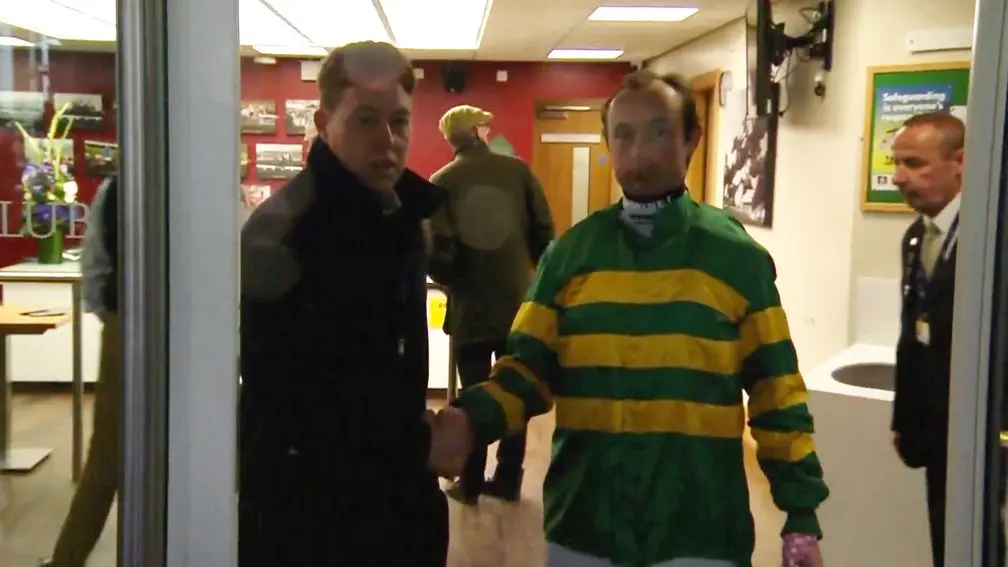
The pair even appeared to reconcile the following day, shaking hands in the weighing room with former jockey Davy Russell acting as a peacemaker, suggesting on camera that the issue was resolved personally between them.
Despite this apparent resolution, the BHA pressed ahead with its inquiry. The investigation reviewed statements from both jockeys, testimony from additional riders present at the start, input from the starter and an independent contractor, and careful examination of available audio and video recordings from the broadcast and other sources. After compiling all evidence, the stewards concluded there was no substantiation for the racism allegation. Their report explicitly stated that while a verbal altercation had occurred and strong language from de Boinville toward Queally was accepted, no audio or verbal evidence from any party corroborated claims of racist content.
As a result, Queally’s complaint was not upheld.
In a relatively mild response, the BHA reminded de Boinville of his professional obligations, underscoring the expectation that all participants conduct themselves appropriately, especially under the intense scrutiny of a major event like Cheltenham. No further sanctions were imposed on either party. The governing body has since remained notably quiet on the broader implications, offering no additional public commentary beyond the official findings.
This outcome has sparked widespread backlash across the horse racing fanbase. Social media platforms and racing forums have erupted with criticism, with thousands expressing frustration over what they perceive as a failure of justice. Many point to the circulating video footage—widely shared and viewed—as compelling visual evidence of an aggressive confrontation, even if the specific words in question remain inaudible or unproven as racial.
Critics argue that dismissing the allegations outright on technical grounds ignores the lived experience of the complainant and the potential chilling effect on riders from minority backgrounds who might hesitate to report similar incidents in the future.
Questions abound about the thoroughness of the process. Was sufficient weight given to Queally’s account as an amateur rider navigating a high-pressure environment against established professionals? Did the absence of clear audio automatically equate to exoneration, or should contextual factors—like the visible anger and the power dynamics in the weighing room—have prompted deeper scrutiny? Some fans have gone further, accusing the BHA of protecting high-profile figures within the industry at the expense of transparency and inclusivity.
The silence from the BHA since publishing its report has only fueled the discontent. In an era where sports governing bodies face increasing pressure to demonstrate robust anti-discrimination policies, the lack of proactive engagement—such as reaffirming commitments to equality or outlining steps to prevent future escalations—has left many feeling unheard. Supporters of Queally, including voices from the Irish racing community, have voiced disappointment that the public denunciation on ITV appears to have been rendered inconsequential without stronger institutional acknowledgment.
De Boinville, who has maintained his denial throughout, has received vindication from the inquiry. In brief comments following the clearance, he referenced staying composed amid scrutiny, suggesting time would prove his position correct. Yet for many observers, the episode underscores deeper tensions in the sport. Horse racing prides itself on tradition and camaraderie, but incidents like this highlight how quickly professionalism can fray under competitive stress, particularly when cultural or national differences come into play.
As the dust settles on Cheltenham 2026, the controversy refuses to fade quietly. Thousands of fans continue to debate online whether true justice exists in the industry or if “lack of evidence” serves as a convenient shield for uncomfortable truths. The BHA’s handling of the matter has placed the spotlight not just on two jockeys, but on the sport’s ability to confront serious allegations head-on. Whether this leads to meaningful reforms—stronger protocols for on-course disputes, better training on conduct, or more transparent investigative processes—remains to be seen.
For now, the intense controversy serves as a stark reminder that in equestrian sport, as in society, perceptions of fairness matter as much as the facts themselves. The racing world watches closely to see if lessons will be learned or if the outrage will eventually subside without change.