When Ilia Malinin walked out onto the illuminated ice at Art on Ice, the energy inside the arena shifted instantly. The Olympic spotlight had barely dimmed, and yet here he was again — not in pursuit of judges’ scores or podium placements, but chasing something arguably more powerful: connection. The 19-year-old American figure skating sensation has built his reputation on pushing technical limits, but in this exhibition setting, he showed that artistry and spectacle are equally within his command.
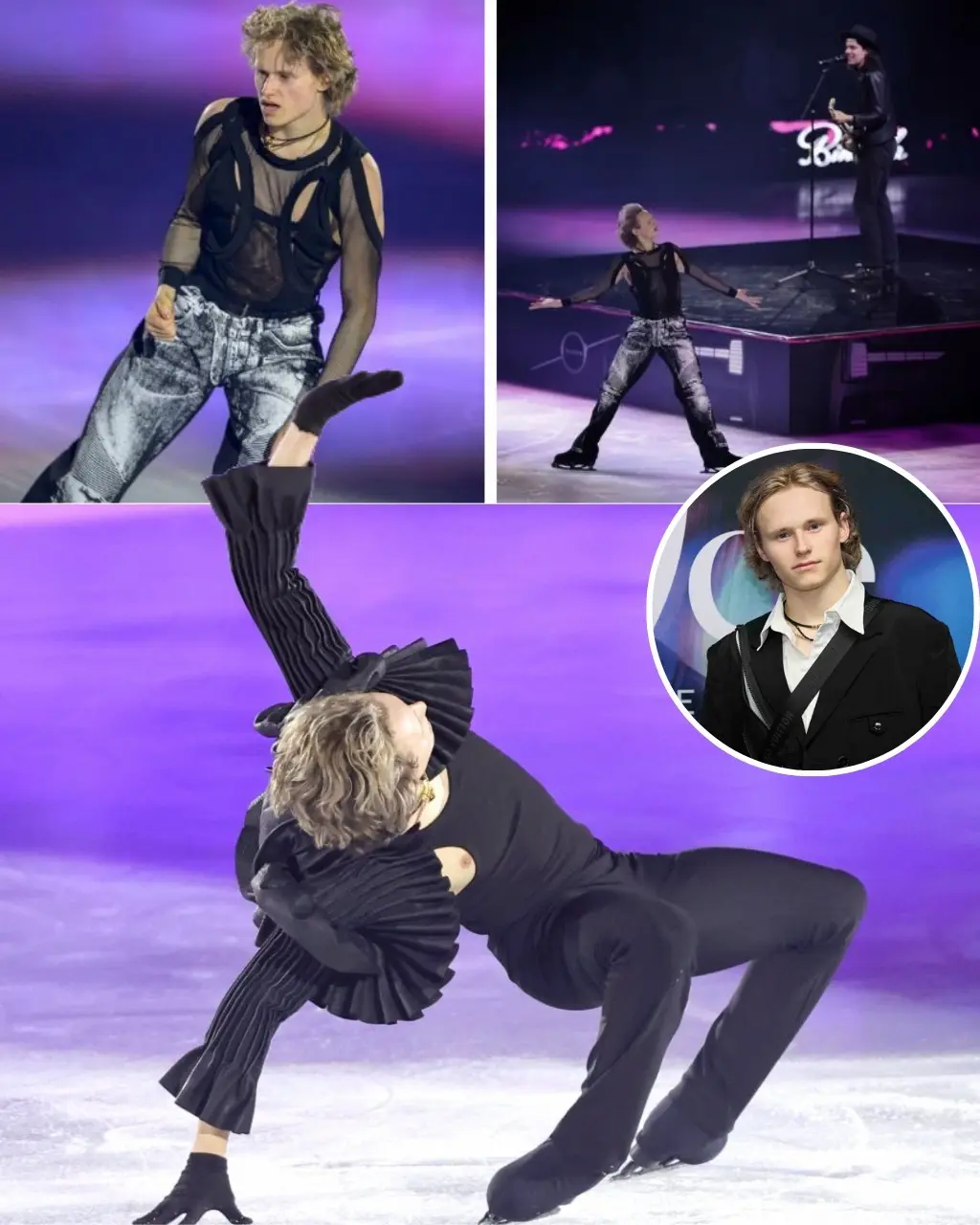
Art on Ice, known for blending world-class skating with live music, provided the perfect canvas. This year’s edition featured British singer-songwriter James Bay and powerhouse vocalist Jess Glynne performing live, their voices echoing through the arena as skaters moved in synchrony with every lyric and guitar riff. But when Malinin took center ice, the atmosphere transformed from elegant gala to electric concert.
From the opening notes, he attacked the choreography with an intensity that felt deliberate and cinematic. His footwork cut sharply across the rink, perfectly aligned with the beat. Each movement seemed less like a planned routine and more like instinctual expression. It was not just skating; it was performance art infused with athletic audacity.
Then came the moment that fans have come to expect yet still cannot fully believe: the quadruple axel. The jump that redefined modern figure skating. Malinin has already cemented his legacy as the first skater to land it cleanly in international competition, earning him the nickname “Quad God.” But executing it in a live-show environment, without the controlled conditions of a championship event, was another statement entirely. As he launched into the air, the crowd collectively held its breath.
Four and a half rotations later, he landed with remarkable precision, flowing seamlessly into the next step sequence as if gravity had briefly paused to admire him.
The roar that followed was immediate and thunderous. It was not polite applause. It was a stadium-level eruption more common at a sold-out arena concert. Fans leapt to their feet. Phones shot into the air. In an era where moments are captured and shared in seconds, Malinin’s jump began trending before the encore.
Yet the technical mastery was only part of the story. Midway through the program, Malinin executed a backflip — a move long banned in competitive figure skating but a crowd favorite in exhibitions. It was a playful nod to showmanship, a reminder that skating can be both disciplined sport and exhilarating spectacle. The risk, the height, the flawless landing — it amplified the performance’s rock-star energy.
James Bay’s live guitar solos provided a gritty backdrop, while Jess Glynne’s soaring vocals elevated the emotional arcs of the routine. Unlike pre-recorded competition tracks, live music introduces unpredictability. Tempos shift slightly. Vocals swell differently each night. Malinin adapted effortlessly, matching every musical nuance with crisp timing. The synchronization felt organic rather than rehearsed, giving the performance a spontaneous electricity rarely seen in competitive skating.
Within hours, social media platforms were flooded with fan-shot clips. One video of the quadruple axel surpassed one million views in less than a day. Comment sections filled with awe-struck reactions: “This isn’t skating, this is evolution.” “He’s rewriting what’s possible.” “Olympics to rockstar in one week.” The viral spread underscored something deeper — Malinin’s appeal extends far beyond traditional figure skating audiences.
For years, the sport has searched for ways to captivate younger viewers and compete in a crowded entertainment landscape. Malinin’s Art on Ice appearance suggested a blueprint. Technical innovation paired with bold stage presence. Athletic excellence fused with modern musical collaboration. It is a formula that feels fresh and accessible, even to those who have never watched a Grand Prix event.
Observers within the skating community noted that transitioning so quickly from the emotional intensity of the Winter Olympics to a high-profile exhibition could have been challenging. Olympic competition demands focus, discipline, and mental resilience. The pressure is relentless. Yet Malinin appeared energized rather than drained. His smile at the program’s conclusion was not one of relief, but of exhilaration.
Behind the scenes, Art on Ice producers praised his professionalism. Rehearsals reportedly ran long as Malinin fine-tuned timing cues with the musicians. The quadruple axel, they revealed, was not a last-minute addition but a calculated decision to elevate the show’s climax. “He wanted to give the audience something unforgettable,” one production member shared.
In many ways, the performance felt symbolic. The Olympics solidify champions. Exhibitions reveal personalities. At Art on Ice, Malinin showed that his competitive dominance is only one dimension of his identity. He can command silence before a jump and ignite chaos after a landing. He can embody precision and rebellion in the same breath.
The nickname “Quad God” once referred strictly to his unparalleled jumping arsenal. After this performance, it carries broader meaning. It represents ownership of space, of atmosphere, of narrative. Whether under Olympic scrutiny or concert lights, Malinin moves with the confidence of someone redefining boundaries.
As the final chords rang out and the spotlight dimmed, the message lingered. Greatness does not remain confined to championship ice. It expands. It adapts. It performs. And if Art on Ice was any indication, Ilia Malinin’s stage is no longer limited by rink boards or score sheets. Wherever he steps — competition arena or live concert spectacle — he commands it fully.
The crowd did not just witness a routine. They experienced a declaration. The future of figure skating may still revolve around medals and records, but Malinin proved that its heartbeat can pulse just as powerfully in the realm of pure entertainment.