In the unpredictable world of horse racing, where every jump carries risk and every fall can change a rider’s life, few incidents have captured public attention quite like the bizarre sequence of events that befell jockey Chris Meehan. What began as a routine hurdle race at Merano Racecourse in Italy quickly spiraled into a nightmare of compounded misfortune, drawing widespread scrutiny to on-track emergency protocols and sparking debates about safety standards in the sport.
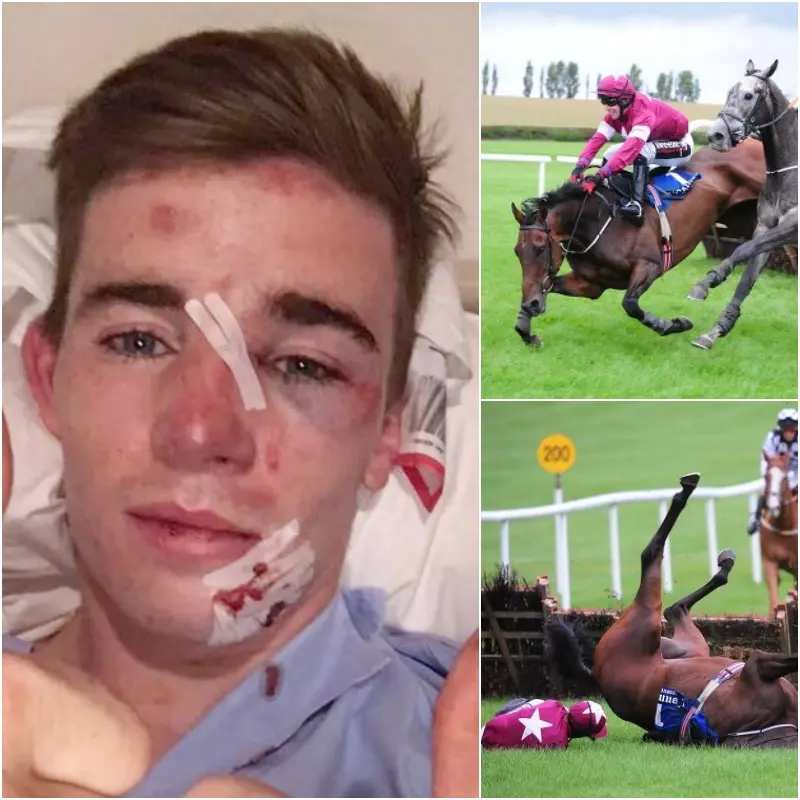
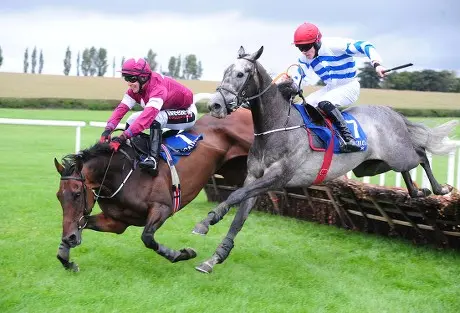
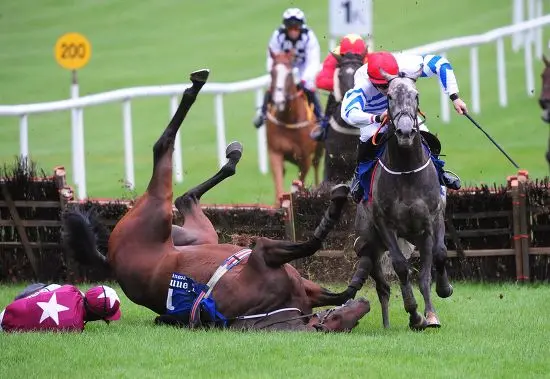
The incident occurred on a Sunday in early July 2016, during a hurdle event at the picturesque but tight Merano track in northern Italy. Meehan, then a 22-year-old conditional rider from County Down in Northern Ireland, was nearing the end of a riding stint abroad when disaster struck. As his mount approached a fence, the horse faltered, unseating the young jockey and sending him crashing to the ground. In the chaos of the fall, Meehan was kicked squarely in the face by an oncoming runner.
The impact was devastating: it broke his nose outright, split his jaw open in a deep gash that later required 27 stitches, and knocked him unconscious. Blood filled his mouth, and he struggled to breathe as he lay on the turf.
Help arrived swiftly in the form of the starter, who rushed to Meehan’s side and carefully positioned him in the recovery position to prevent choking on his own blood. With his right leg extended straight out for stability, Meehan began to regain awareness amid the pain and disorientation. What should have been the beginning of proper medical attention turned into an unimaginable escalation of bad luck. The on-course ambulance, tasked with transporting the injured rider to hospital, pulled up alongside the group.
Due to the confined space of the small, winding track, the vehicle needed to maneuver in order to position itself correctly for loading.
In a moment that defied belief, as the ambulance reversed to turn around, it rolled directly over Meehan’s outstretched right leg. The weight of the vehicle crushed down, breaking the bone instantly and causing additional trauma, including a dislocated ankle. Screams filled the air as those nearby—including the starter and other officials—scrambled to push the ambulance off the stricken jockey. “They stopped it on top of my leg so I started screaming; it broke it straight away,” Meehan later recounted in interviews.
“Everyone around me had to push it off me.” The scene was chaotic, with the young rider enduring not one but two severe sets of injuries in quick succession.
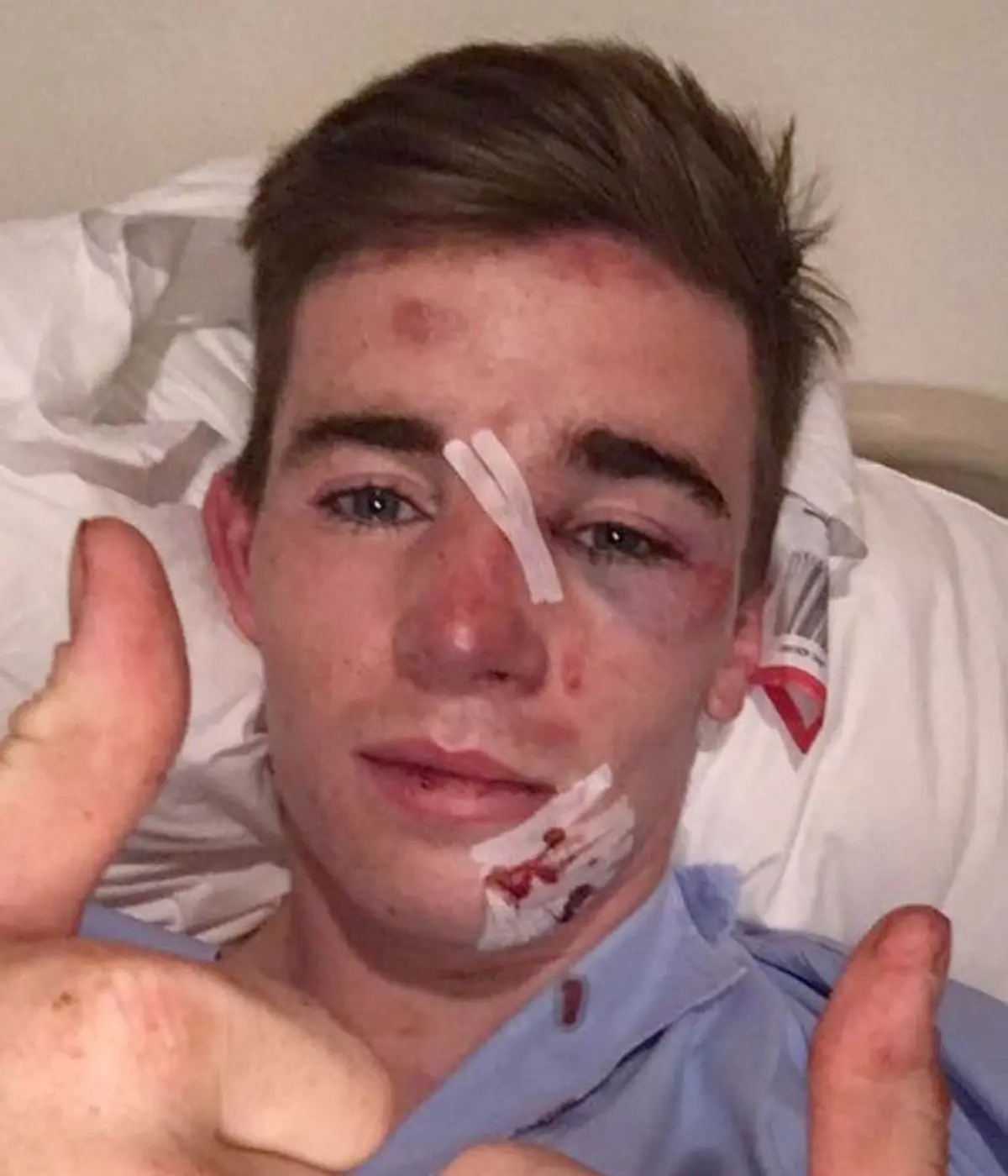
Meehan was eventually stabilized and transported to a local hospital, where he underwent treatment for his facial wounds and the newly fractured leg. He required surgery upon returning to Ireland, and recovery proved lengthy and challenging. Remarkably, the jockey maintained a positive outlook despite the ordeal. In conversations with media outlets like the Racing Post and Sky Sports, he emphasized taking the positives from the situation and insisted that thoughts of quitting the sport had not crossed his mind. “I’m itching to get back to riding,” he said, showcasing the resilience that defines many in the racing community.
The accident quickly made headlines around the world, with outlets from the BBC to CNN describing it as a story “you couldn’t make up.” It highlighted the razor-thin margin between routine mishap and catastrophe in horse racing, but it also raised serious questions about emergency response procedures at racetracks, particularly those with challenging layouts like Merano. Critics pointed to the need for better training in vehicle handling in tight spaces, clearer protocols for positioning ambulances during incidents, and perhaps dedicated medical protocols that minimize movement risks near fallen riders.
In the aftermath, the incident fueled broader discussions on rider safety. While no formal suspension of stewards or organizers was reported specifically tied to this event—unlike more recent unrelated ambulance mishaps elsewhere in racing—the case underscored persistent concerns in the industry. Organizations like the British Horseracing Authority (BHA) and equivalent bodies in other jurisdictions have long emphasized the importance of robust on-course medical teams, but rare lapses can have life-altering consequences. Meehan’s story served as a stark reminder that even well-intentioned responses can go tragically wrong without meticulous preparation.
Despite the physical and emotional toll, Meehan’s career trajectory showed determination. He returned to competitive riding later that year, though further setbacks—including an unrelated leg fracture in a trampoline accident just months later—tested his resolve. Through it all, he became something of a symbol of perseverance in a high-risk profession. The Merano mishap, while freakish, prompted quiet reflections among track officials globally about refining emergency drills and vehicle protocols to prevent any repetition.
Nearly a decade later, the episode remains one of the most cited examples of extraordinary misfortune in sports. It illustrates how quickly triumph can turn to tragedy on the racetrack and how human error, even in moments of crisis aid, can compound an already dire situation. For Chris Meehan, what began as a standard fall evolved into a cautionary tale of resilience amid absurdity—one that continues to resonate whenever discussions turn to improving safety in horse racing’s unforgiving arena.