DETAILS REVEALED ABOUT ADMIRE RAKTI’S DEATH: World Animal Protection recently presented new evidence regarding the death of Admire Rakti, the highly anticipated champion, from heart failure shortly after finishing last at the prestigious Melbourne Cup, sparking a wave of fierce protests from animal welfare organizations about the harshness of the sport, as presented by WAP in a press conference.
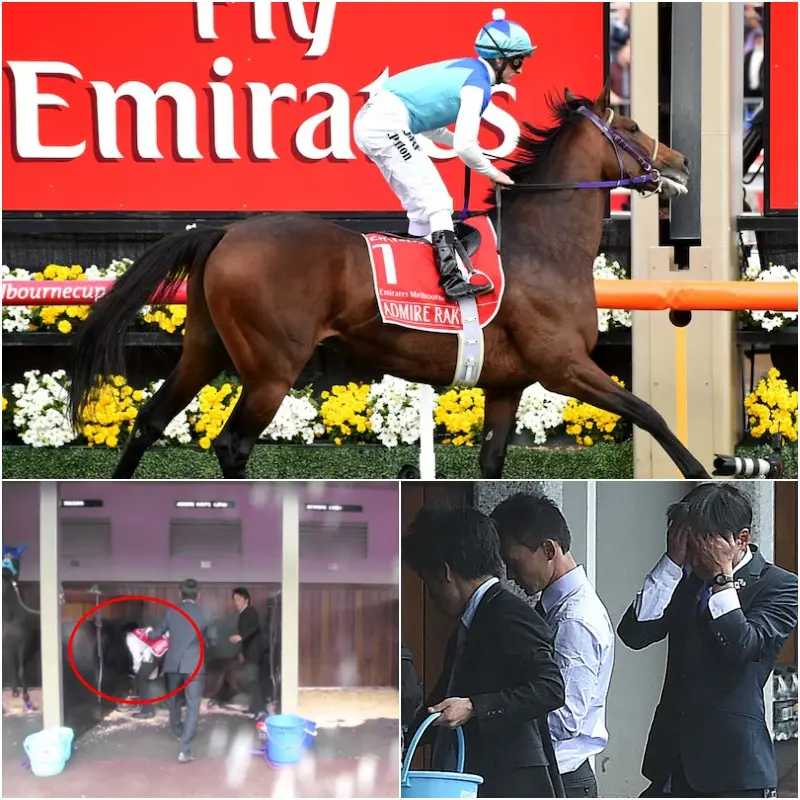
The racing world was shaken once again as World Animal Protection (WAP) brought fresh attention to one of the most tragic incidents in Melbourne Cup history. In a recent press conference, the organization highlighted new evidence and analysis surrounding the death of Admire Rakti, the Japanese-trained thoroughbred who collapsed from acute heart failure moments after crossing the finish line in last place during the 2014 Melbourne Cup.
Though the event occurred over a decade ago, WAP’s presentation revives the debate over the welfare implications of high-stakes horse racing, framing Admire Rakti’s demise not as an isolated misfortune but as part of a broader pattern of systemic risks inherent in the sport.

Admire Rakti entered the 2014 Melbourne Cup as the clear favorite, having claimed victory in the Caulfield Cup just weeks earlier—a feat that marked him as the first Japanese horse to win that prestigious lead-up race. Expectations were sky-high for the seven-year-old stallion, owned by a syndicate eager to see him conquer Australia’s premier racing event. The “race that stops a nation” drew massive crowds to Flemington Racecourse, with millions more watching worldwide. Yet the day ended in heartbreak.
After struggling throughout much of the 3,200-meter endurance test and finishing well behind the winner, Protectionist, Admire Rakti returned to his stall only to collapse suddenly. Veterinary assessments quickly pointed to acute heart failure as the cause, a diagnosis later confirmed through autopsy and investigation by Racing Victoria.

Initial reports described the incident as sudden and rare, with experts noting that such catastrophic cardiac events in thoroughbreds occur infrequently during races. However, WAP’s recent spotlight draws on updated perspectives, including references to ongoing scrutiny of racing fatalities and the cumulative stresses placed on horses in elite competitions. The organization presented materials emphasizing how grueling preparations, long-distance travel, intense physical demands, and the sheer exertion of a demanding handicap race can contribute to fatal outcomes like heart failure.
While no groundbreaking forensic “new evidence” alters the original medical conclusion, WAP underscores contextual details—such as the horse’s performance dip during the race and the extreme pressures of international campaigning—to argue that these incidents reveal deeper welfare failures.

The Melbourne Cup has long been celebrated for its glamour, tradition, and economic impact, generating millions in betting turnover and tourism revenue. Yet beneath the pageantry lies a sobering reality. Admire Rakti’s death was not solitary that day; another runner, Araldo, suffered a fatal leg fracture after being spooked post-race and had to be euthanized. These back-to-back tragedies amplified public outrage and fueled calls for reform. Animal advocacy groups, including WAP, have consistently pointed to patterns in which horses endure breakdowns, injuries, or sudden deaths linked to overexertion, medication use, or breeding for speed over soundness.
In their press conference, WAP representatives detailed statistics from recent years to contextualize Admire Rakti’s case within a larger crisis. Reports from coalitions tracking racing fatalities indicate hundreds of thoroughbred deaths annually on Australian tracks, with numbers climbing in some seasons despite industry promises of improved welfare standards. Horses like Admire Rakti, Verema (who died in 2013), Red Cadeaux (2015), and others are frequently cited as emblematic victims of a sport that prioritizes spectacle and profit.
WAP argues that the Melbourne Cup, with its grueling distance and high weights, exemplifies the “harshness” of racing, where animals are pushed to limits that can prove lethal.
Protests sparked by the renewed focus have intensified in recent months, with activists staging demonstrations outside racecourses and online campaigns urging sponsors and broadcasters to reconsider their involvement. Critics accuse the racing industry of downplaying risks while promoting an image of equine excellence and care. Defenders counter that thoroughbred racing includes stringent veterinary oversight, pre-race examinations, and ongoing reforms such as reduced whip use and better aftercare for retired horses. Yet incidents continue to fuel skepticism, with WAP and allies insisting that true reform would require phasing out elements that inherently endanger participants.
Admire Rakti’s story resonates particularly because of his status as an international star. His journey from Japan to Australia symbolized the global allure of the Melbourne Cup, but his abrupt end highlighted the perils of such ambitions. Trainers, jockeys, and owners involved expressed profound grief, with connections describing the loss as devastating. The jockey, who had ridden him to Caulfield success, faced scrutiny over past rides, though no direct link to the fatal event was established.
As WAP’s presentation circulates, it reignites broader ethical questions: Is the pursuit of racing glory worth the inevitable toll on animal lives? Can the sport evolve sufficiently to eliminate such tragedies, or do they represent an unavoidable cost? For many in the animal welfare community, Admire Rakti’s death remains a powerful symbol of an industry in need of fundamental change.
The press conference has not only revived memories of that fateful November day but amplified demands for accountability, transparency, and ultimately, a reevaluation of whether traditions like the Melbourne Cup can—or should—persist in their current form amid growing awareness of animal sentience and rights.
The conversation extends beyond one horse or one race. It touches on breeding practices that produce fragile athletes, the commercialization of gambling tied to racing, and the cultural weight of events that blend festivity with fatality. As protests grow and evidence is revisited, the legacy of Admire Rakti endures not in victory, but as a catalyst for ongoing scrutiny of a sport forever shadowed by its losses.