The recent Unser INDYCAR Open Test at Phoenix Raceway marked a significant moment for the NTT INDYCAR SERIES as the series prepares for its return to the 1-mile oval after an eight-year absence. Held over two days in mid-February 2026, the test brought together 25 drivers, including veterans and rookies, to shake down cars ahead of the Good Ranchers 250 scheduled for March 7.
The session was full of upheaval, from variable weather conditions to crashes and evolving setups, but it delivered valuable insights into how the track has evolved and how the current IndyCar package performs on this challenging configuration.
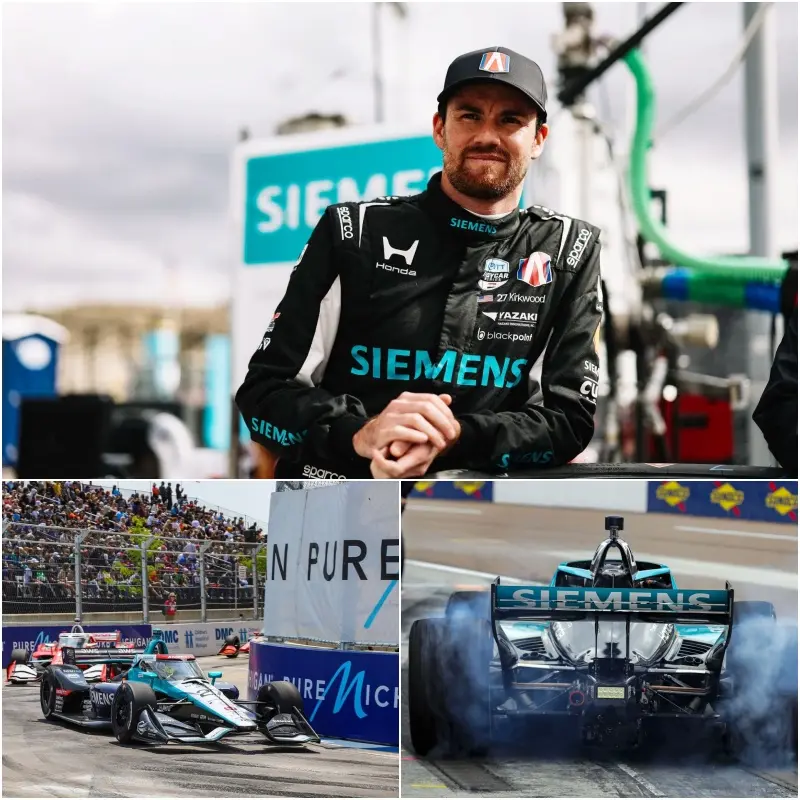
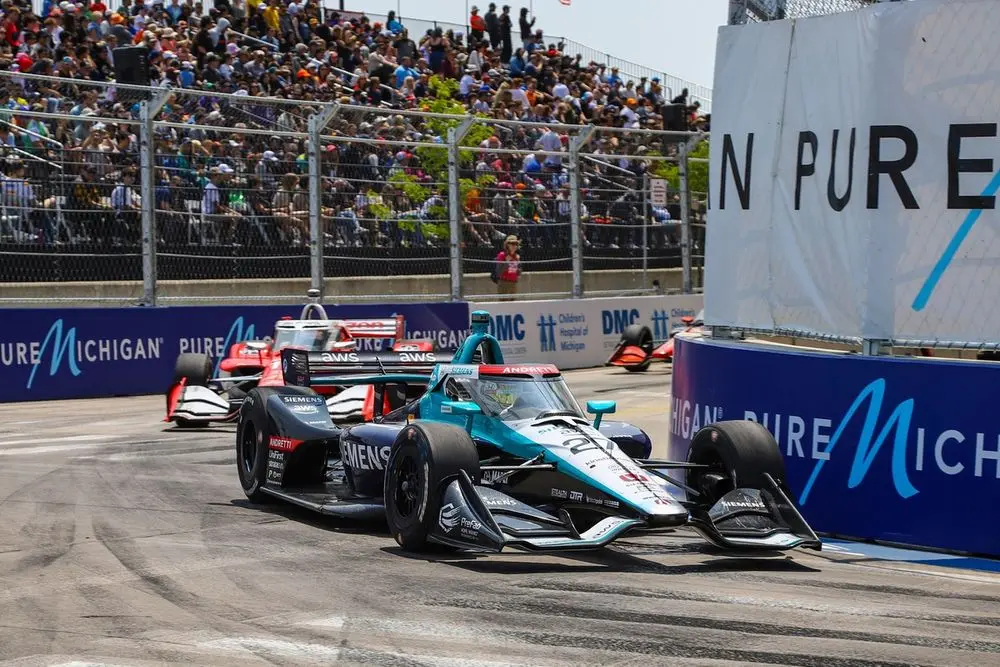
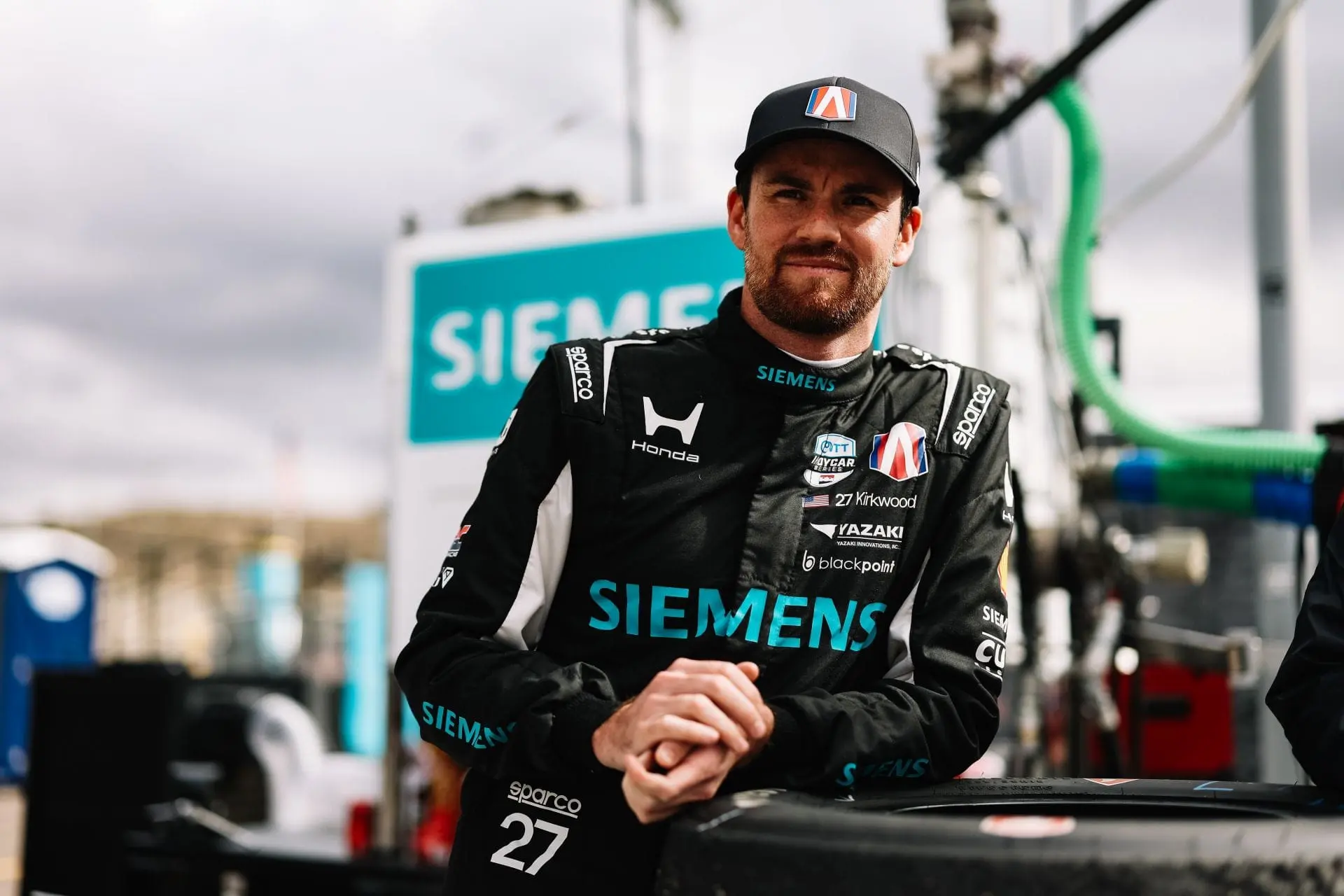
Andretti Global driver Kyle Kirkwood, coming off a breakout 2025 season where he secured three wins—including his first on an oval at World Wide Technology Raceway (formerly Gateway)—emerged as one of the most vocal and positive voices from the test. After logging 242 laps across the two days, one of the highest totals, Kirkwood shared his impressions in a post-test interview. He described the Phoenix layout in glowing terms, comparing it favorably to Gateway but with amplified intensity. “It’s kind of like Gateway on steroids,” Kirkwood said, highlighting the stark differences between the two ends of the track.
Turns 1 and 2 felt flatter and faster, while Turns 3 and 4 carried significantly higher banking, creating a demanding contrast that required precise adjustments in setup and driving style.
This comment drew immediate parallels to a recent remark from Formula 1 star Max Verstappen. Just days earlier, during F1’s preseason testing in Bahrain, Verstappen had critiqued the direction of the 2026 regulations, likening the heavier emphasis on electric power to “Formula E cars on steroids.” While Verstappen’s statement carried a tone of frustration about the sport’s future, Kirkwood’s was one of genuine enthusiasm and surprise at the track’s character.
The similarity in phrasing sparked lighthearted discussions across social media and within the motorsport community, underscoring how drivers from different series occasionally echo each other in colorful ways when describing new challenges.
Phoenix Raceway’s unique layout— a 1-mile oval with asymmetric corners—presents a rare puzzle in modern IndyCar. Unlike more symmetrical ovals such as Gateway, where corners are relatively uniform, Phoenix forces teams to compromise. Drivers must dial in the car for high-speed stability through the flatter, lower-banked Turns 1 and 2 while maintaining grip and control in the steeply banked Turns 3 and 4. Kirkwood noted that the track demands “vastly different” setups and approaches on each end, adding “character” that sets it apart.
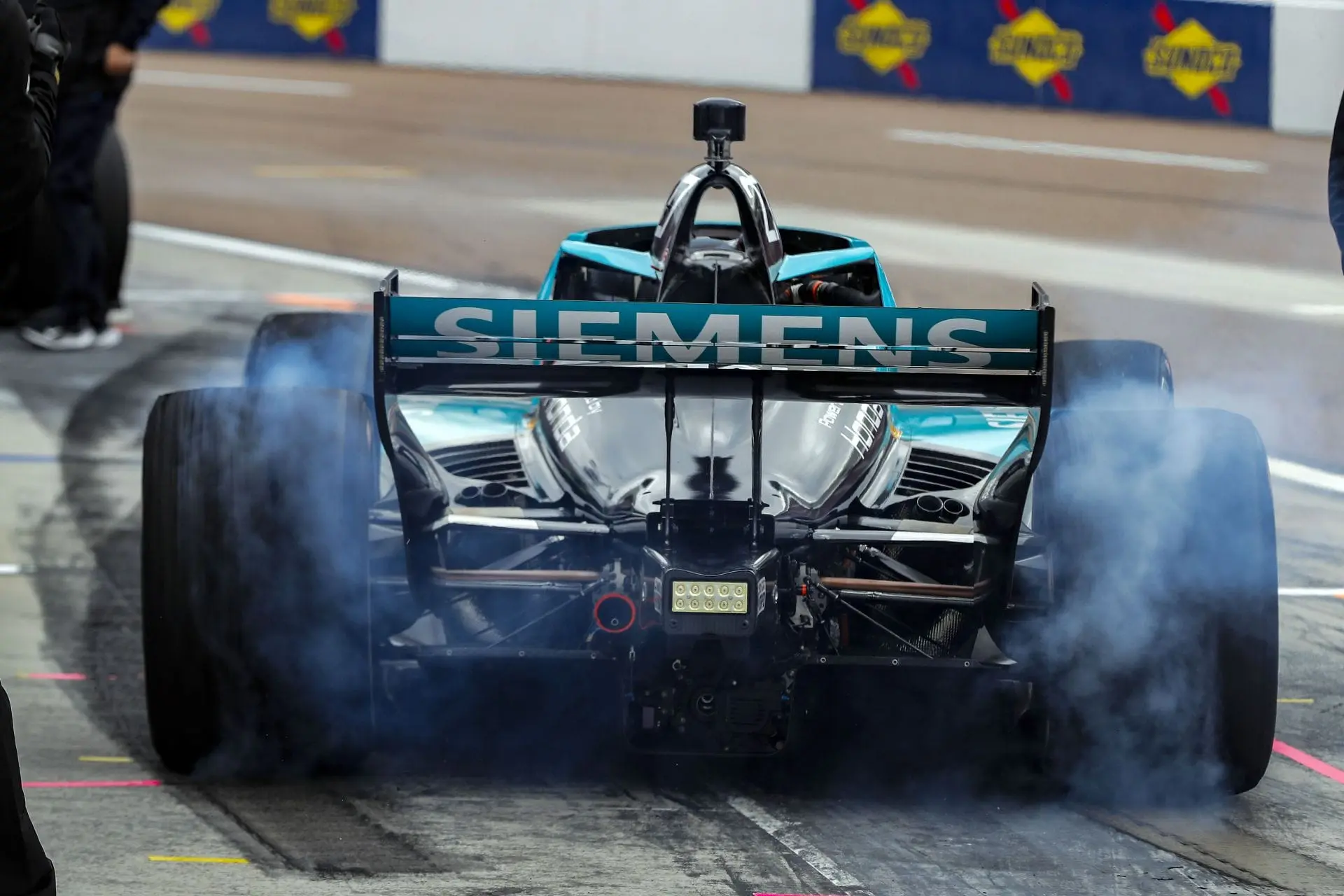
He appreciated the high grip levels, particularly in Turns 1 and 2, which were easier than anticipated, though he admitted some nuances caught him off guard initially. The pit entry also proved tricky, with Kirkwood describing it as “hectic” due to the tight transition from the track.
The test itself was marked by disruption and adaptation. Day 1 saw David Malukas of Team Penske top the speeds, leading a strong Penske showing as the organization integrates new talent. Will Power, now with Andretti Global, logged the most laps overall at 259, demonstrating his work ethic and providing crucial data for his new team. Kirkwood himself ran consistently, posting speeds in the 170-173 mph range and finishing among the top performers in multiple sessions.
Day 2 brought rain delays and shortened runs, but Alexander Rossi of Ed Carpenter Racing dominated, topping both morning and afternoon sessions with a blistering 174.542 mph lap—the fastest of the test—in the No. 20 Chevrolet. Rossi’s performance highlighted ECR’s preparation for the oval-heavy early part of the schedule.
Rookies like Mick Schumacher continued their oval education, gaining confidence after an earlier solo test at Homestead-Miami. Schumacher completed 222 laps total, showing steady improvement despite being among the slower overall times. Other standouts included Christian Rasmussen, who ran strong alongside Rossi, and veterans like Scott Dixon and Alex Palou, who provided consistent feedback. The test totaled 4,853 laps across all participants, a testament to the series’ commitment to thorough preparation.
The upheaval during testing stemmed not only from weather but from the learning curve of a track absent from the calendar since 2018. Teams experimented with setups to balance the car across the asymmetric banking, dealing with sun glare in late-afternoon runs and occasional incidents, such as Marcus Ericsson’s rearward crash in Turn 4. These moments underscored the physical and technical demands of oval racing, where small errors can lead to big consequences.
For Kirkwood, the test reinforced his growing comfort on ovals following his 2025 success. His Gateway win last year proved he could translate street-course aggression to high-speed circles, and Phoenix felt like a natural evolution. The “on steroids” analogy captured the amplified challenge: faster entry speeds, more pronounced banking differences, and the need for razor-sharp adaptability. It also hinted at excitement for the upcoming race, where strategy, tire management, and traffic will play outsized roles on a track that rewards precision.
As the series heads toward the March 1 opener in St. Petersburg before returning to Phoenix, the test provided a clear signal: the oval’s return is not just a nostalgic nod but a legitimate test of the current cars and drivers. Kirkwood’s Verstappen-esque quip may have been the headline-grabber, but the real story is the data gathered and the enthusiasm it generated. With grip levels high and setups still evolving, Phoenix promises to deliver close, intense racing when the green flag drops in early March.